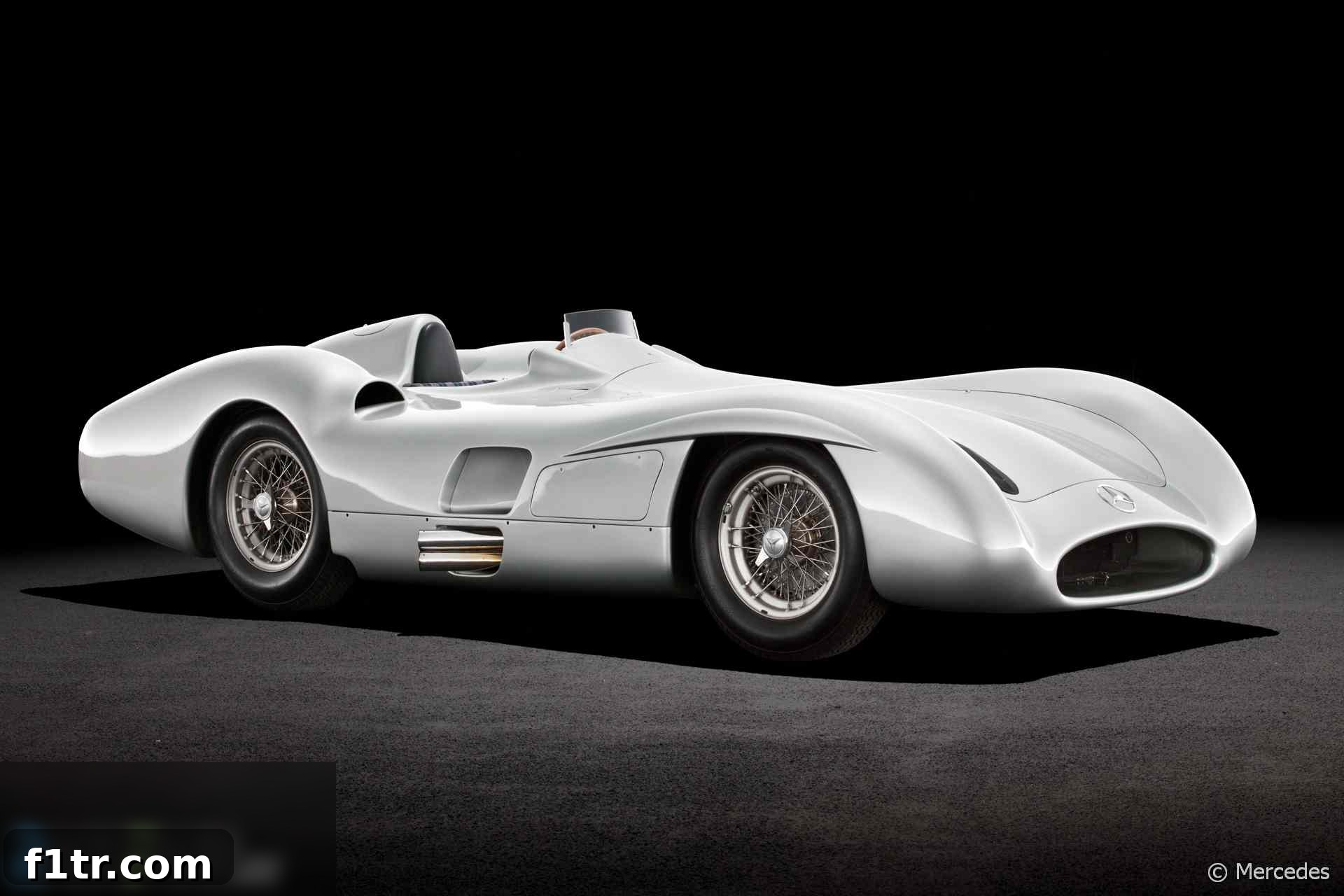
Mercedes W196R Streamliner Set to Shatter Formula 1 Auction Records
A monumental event in the world of motorsport memorabilia is on the horizon, as a legendary 1955 Mercedes-Benz W196R in its rare ‘Streamliner’ configuration is poised to be offered at auction this autumn. This exceptional vehicle has the potential to redefine the market for Formula 1 cars, with estimates suggesting it could comfortably become the most expensive F1 car ever sold.
The sale of this historically significant machine is being orchestrated by RM Sotheby’s, acting on behalf of the Indianapolis Motor Speedway. This strategic decision forms a crucial part of the museum’s ongoing efforts to bolster its long-term financial sustainability, allowing it to continue preserving and showcasing automotive history for future generations.
The Golden Era: Mercedes-Benz Dominance in 1950s Formula 1
The Mercedes-Benz W196 machine holds an almost mythical status in Formula 1 history. Making its dramatic entrance into the world championship in mid-1954, Mercedes immediately established an unparalleled dominance that lasted until their departure at the close of the 1955 season. This brief but brilliant era saw the Silver Arrows set new benchmarks for engineering excellence and on-track performance.
At the heart of this success was the Argentinian maestro, Juan Manuel Fangio. Widely considered one of the greatest drivers of all time, Fangio expertly wielded the W196, securing eight pivotal victories and clinching two consecutive drivers’ titles in 1954 and 1955. His partnership with Mercedes-Benz cemented his legacy and the car’s place in the pantheon of motorsport legends. Beyond Fangio’s triumphs, the W196 also played host to another significant milestone: Stirling Moss’s inaugural world championship victory, further illustrating the car’s formidable capabilities and the strength of the Mercedes-Benz team.
The W196R Streamliner: A Visionary Design for Speed
What sets the car offered for auction apart is its distinctive ‘Streamliner’ configuration. While another W196, in a more conventional open-wheel, non-streamlined form, currently holds the record for the most expensive F1 car sold – fetching £19.6 million at the Goodwood Festival of Speed in July 2013 – this ‘Streamliner’ variant promises to eclipse that figure considerably. Sotheby’s anticipates the 1955 W196R ‘Streamliner’ to command a price between an staggering 50 and 70 million dollars (approximately £38-£53 million), placing it in an entirely different league.
The ‘Streamliner’ W196 cars were characterized by their unique, wheel-enclosing bodywork, a design conceived by Mercedes-Benz engineers to minimize aerodynamic drag on the fastest circuits of the F1 calendar. This radical design, a testament to Mercedes’ relentless pursuit of speed and innovation, was particularly suited for high-speed tracks like Monza and Reims. However, not every driver found immediate synergy with its unconventional handling. Juan Manuel Fangio, for instance, famously struggled with the ‘Streamliner’ during the 1954 British Grand Prix at Silverstone. The enclosed wheels made judging the car’s width and apexes challenging, leading to Fangio repeatedly striking the oil barrels that marked the inside of the corners, leaving dents on his car’s distinctive front bodywork. Despite these initial challenges, the team and Fangio quickly adapted, harnessing the Streamliner’s aerodynamic advantages to devastating effect.
The Streamliner design was more than just aesthetic; it represented a frontier of racing technology. Beneath its sleek exterior, the W196 featured groundbreaking innovations such as the desmodromic valve actuation system, which allowed for higher engine speeds and greater reliability, and mechanical direct fuel injection, a technology derived from Mercedes’ aviation engines. These advancements gave the W196 a significant edge over its competitors, solidifying Mercedes-Benz’s reputation as a technological leader in motorsport.
A Price Beyond Records: Valuing Automotive Masterpieces
Even a sale at the lower end of the Sotheby’s estimate would comfortably establish a new world record for the most expensive F1 machine ever sold, immediately positioning the W196R ‘Streamliner’ among the most valuable cars of any type globally. However, for context, it is important to note that even if this ‘Streamliner’ reaches the upper echelons of its valuation, it would still fall short of the all-time record for the most expensive car ever auctioned. That distinction belongs to another Mercedes of the same illustrious era: a road-going 1955 300 SLR ‘Uhlenhaut’ Coupe, which achieved an astronomical $142 million two years ago. The ‘Uhlenhaut’ Coupe, named after its designer Rudolf Uhlenhaut, was essentially a street-legal version of the W196R’s sports car sibling, the 300 SLR, and its unparalleled rarity and stunning design commanded a price reflecting its status as one of only two ever built.
The valuation of such rare automotive artifacts is a complex process, influenced by a myriad of factors including historical significance, racing provenance, originality, condition, and, crucially, rarity. The W196R ‘Streamliner’ excels in all these areas: it is a genuine piece of Formula 1 history, driven by legends like Fangio, represents a peak of engineering innovation, and very few examples survive in this specific, iconic configuration.
Mercedes-Benz: A Commitment to Excellence and a Triumphant Return
Demonstrating an unwavering commitment to success, Mercedes-Benz continued to evolve and refine the ‘Streamliner’ design, even after announcing its withdrawal from F1 at the end of the 1955 season. For their final appearance at the Italian Grand Prix at Monza, updated versions of the ‘Streamliner’ were provided for Fangio and Moss. Fangio, ever the champion, delivered a stellar performance, securing a memorable victory on the banked section of the circuit, providing a fitting farewell for the team. Moss, unfortunately, retired from that race due to an engine problem. Following this magnificent, yet poignant, departure, Mercedes-Benz would not grace the Formula 1 grid again for over half a century, making a triumphant return only in 2010.
Since their re-entry, Mercedes has once again asserted its dominance, creating a modern dynasty that echoes the achievements of its 1950s predecessors. This historical arc adds another layer of gravitas to the W196R’s legacy, connecting the foundational glories of the past with the unprecedented successes of the present.
The Enduring Allure of Modern F1 Collectibles
While the W196R ‘Streamliner’ represents the pinnacle of vintage F1 collecting, the market for more modern F1 cars has also seen astonishing growth in recent years. These contemporary machines, which embody the cutting edge of racing technology and the careers of modern legends, are increasingly sought after by collectors. For example, Lewis Hamilton’s first Mercedes F1 car, which he drove during the 2013 season, fetched a remarkable £15.1 million at auction last year. The year prior, an iconic ex-Michael Schumacher Ferrari from the 2003 championship season commanded over £12 million. These sales highlight a vibrant and expanding market that celebrates the entirety of Formula 1 history, from its foundational moments to its current era of technological marvels.
Pictures: Mercedes’ F1 Cars of the Fifties
Video: Fangio’s Victory in the 1955 Italian Grand Prix
Conclusion: A New Chapter for a Racing Icon
The upcoming auction of the 1955 Mercedes-Benz W196R ‘Streamliner’ is more than just a sale; it’s a celebration of motorsport history, a testament to groundbreaking engineering, and a recognition of the legendary figures who pushed the boundaries of speed. As this magnificent piece of automotive heritage goes under the hammer, it not only promises to redefine auction records but also to continue inspiring generations with its story of innovation, dominance, and the enduring spirit of Formula 1 racing. Its sale will mark a new chapter in its illustrious history, cementing its place as an automotive icon of unparalleled value and significance.