Formula 1 Unlocks Extra MGU-K Allowance for 2020 Season Amidst Calendar Expansion
In a significant development for the Formula 1 paddock, teams are now permitted to utilize an additional MGU-K (Motor Generator Unit – Kinetic) during the expanded 2020 season. This crucial change, which sees the allocation increase from two to three units per driver, was a direct result of Renault’s strategic demand, made in exchange for their approval of a larger, 22-race calendar for the upcoming championship year.
Advert | Become a Supporter & go ad-free
Understanding the MGU-K: A Core Component of F1 Hybrid Power Units
To fully grasp the implications of this regulatory shift, it’s essential to understand the role of the MGU-K within a Formula 1 power unit. The MGU-K is a vital part of the complex hybrid engine system, responsible for recovering kinetic energy during braking and converting it into electrical energy. This stored energy is then redeployed to provide an additional boost of power to the powertrain, enhancing acceleration and overall performance on track. Alongside the MGU-H (Motor Generator Unit – Heat), the turbocharger, internal combustion engine, energy store, and control electronics, the MGU-K forms one-sixth of the highly intricate and technologically advanced F1 power unit. The limitation on these components is a cornerstone of the sport’s regulations, designed to control costs, promote reliability challenges, and prevent an arms race of endless component development.
Under the standard regulations, exceeding the allotted number of components for the season results in grid penalties. For instance, using a third MGU-K would typically incur a 10-place grid penalty for the first infringement, followed by five-place penalties for subsequent uses. These penalties can significantly hinder a team’s race weekend, potentially relegating them from a strong qualifying position and compromising their chances of scoring points.
Renault’s Strategic Play: Connecting Reliability to Calendar Growth
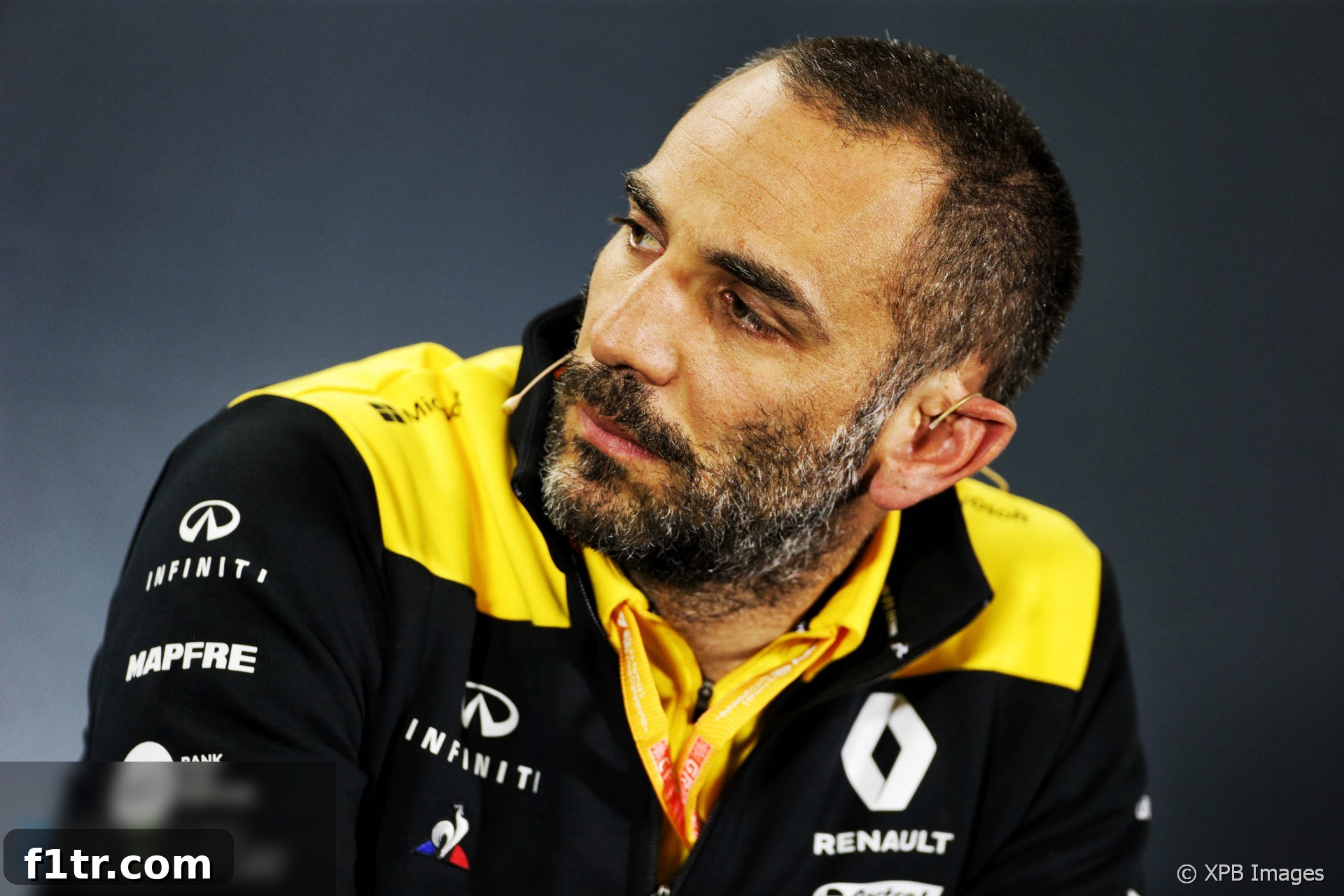
Cyril Abiteboul, the team principal of Renault, publicly confirmed his team’s request for the increase in MGU-K allocation. Speaking during an FIA press conference, Abiteboul clarified the rationale behind Renault’s stance, stating, “I can confirm that we asked for the principle that is already agreed for 2021 to apply for 2020.” This statement underscores a key point: the underlying principle of increasing component allowances for longer calendars was not new; it had already been a subject of discussion and agreement for the 2021 season, particularly for calendars exceeding 21 races.
Renault’s demand was not merely a tactical manoeuvre but stemmed from very real operational challenges. The 2019 season saw all four Renault-powered drivers—Daniel Ricciardo and Nico Hülkenberg at the factory team, and Lando Norris and Carlos Sainz Jr. at customer team McLaren—exceed their permitted MGU-K allocation. This highlighted a clear reliability concern for the French manufacturer, prompting a need for greater flexibility in component usage. Abiteboul emphasized the difficulty of making such late engineering changes, explaining, “it’s very late to change the duty cycle of a component for next year.” The “duty cycle” refers to the expected operational lifespan and performance demands placed on a component. With the 2020 calendar expanding to 22 races, the engineers would have to design and build MGU-Ks to withstand greater strain and usage than initially planned, a task made immensely difficult with limited lead time.
The Budapest Compromise: A Win for the Expanded Calendar and Teams
The negotiation for this rule change was not without its typical Formula 1 drama. As Abiteboul recounted, “There was a bit of discussion as always in Formula 1 but eventually we reached a compromise in Budapest that everyone managed to stick to for once in Formula 1 and eventually it was good to confirm the 22 races.” This compromise reflects the ongoing tension between Formula 1’s commercial ambitions—to expand its global footprint with more races—and the technical and financial realities faced by the teams. An expanded calendar, while exciting for fans and potentially lucrative for the sport, places additional strain on team personnel, logistics, and, critically, the power unit components.
The agreement reached in Budapest signifies a pragmatic approach. By allowing an extra MGU-K, the sport acknowledged the increased demands of a longer season while securing the necessary team consensus for calendar expansion. This move ensures that the ambitious growth strategy of Formula 1 does not inadvertently penalize teams through excessive grid drops or force them into untenable engineering challenges.
The Ripple Effect: How More MGU-Ks Impact Teams and Race Strategy
The decision to permit an additional MGU-K will have several positive repercussions across the paddock, extending beyond just Renault’s immediate concerns. Firstly, it brings the MGU-K allowance into line with other key power unit components, such as the internal combustion engine, turbocharger, and MGU-H, which are also capped at three units per season. This consistency simplifies the regulatory framework and component management for teams.
More importantly, it offers teams greater strategic flexibility and reduces the likelihood of grid penalties. With an extra MGU-K available, teams can better manage component lifecycles, replace units preventatively if wear is detected, or even push the performance of existing units harder knowing they have an extra one in reserve without immediate penalty. This could lead to fewer drivers starting from the back of the grid, thereby enhancing the sporting spectacle and maintaining competitive integrity throughout the season.
Abiteboul also highlighted a less obvious but equally significant benefit: “That’s going to make the life of the technicians and mechanics in the garage an awful lot simpler. Sometimes we don’t really think about these type of things but they do make a difference in addition to the prospect of penalty.” The constant pressure to manage fragile and limited components, often requiring late-night replacements and meticulous monitoring, places immense stress on garage personnel. The added allowance offers a degree of breathing room, reducing the urgency and potential for costly errors, ultimately contributing to a more sustainable working environment for the dedicated crews.
For smaller teams or those with tighter budgets, fewer penalties translate directly into more competitive races and potentially more points, which can be vital for their financial health and championship standing. While allowing more components might seem counter-intuitive to cost-saving efforts, the avoidance of penalties and the reduced risk of component failure can lead to overall savings in the long run, both in terms of repair costs and lost championship points.
Setting a Precedent: 2020’s Change Mirrors 2021 Regulations
This rule modification for 2020 is not an isolated incident but rather an acceleration of an already agreed-upon principle. The draft regulations for 2021 had already stipulated that if the F1 calendar were to exceed 21 races, an additional power unit component allocation would be granted. By implementing this for the 2020 season, Formula 1 demonstrates a proactive approach to its evolving calendar, aligning current rules with future intentions and providing continuity for teams. This foresight helps to future-proof the regulations as Formula 1 continues to explore opportunities for further global expansion, potentially leading to even longer race calendars in the coming years. The precedent set ensures that the sport remains adaptable without compromising the competitive balance or placing undue burden on its participants.
Beyond the Technicality: F1’s Balancing Act of Performance and Control
The MGU-K allocation debate is a microcosm of Formula 1’s broader challenge: balancing technological advancement and performance pursuit with cost control, sporting fairness, and sustainability. The intricate power unit regulations are designed to push the boundaries of engineering while simultaneously imposing constraints to prevent runaway spending and ensure a degree of parity. Every rule change, no matter how specific, carries implications for the sport’s competitive landscape, its financial model, and its appeal to fans.
This particular decision highlights the sport’s ability to adapt and find consensus among its stakeholders—the FIA, Formula 1 management, and the teams. It underscores a willingness to make pragmatic adjustments when faced with new challenges, such as an expanding race calendar, ensuring that the spectacle of Formula 1 remains thrilling and accessible while supporting the operational realities of its participants.
In conclusion, the decision to allow an additional MGU-K for the 2020 Formula 1 season is a pragmatic and well-reasoned compromise. Driven by Renault’s reliability concerns and the broader demands of an expanded calendar, this change will undoubtedly ease the pressure on teams, reduce grid penalties, and simplify the lives of dedicated garage personnel. It also serves as a testament to Formula 1’s ability to adapt its complex regulatory framework to meet the evolving demands of a global sport, setting a sensible precedent for future seasons as the championship continues to grow.
2019 F1 season
- Crying in the Melbourne car park at 2019 grand prix was my career low – Ocon
- McLaren Racing reports reduced £71 million loss in 2019
- Kvyat: Hockenheim podium last year was “my biggest achievement” so far
- How the FIA’s new encrypted fuel flow meter targets Ferrari’s suspected ‘aliasing’ trick
- “He smashed my office door”: 23 must-see moments from ‘Drive to Survive’ season two
Browse all 2019 F1 season articles