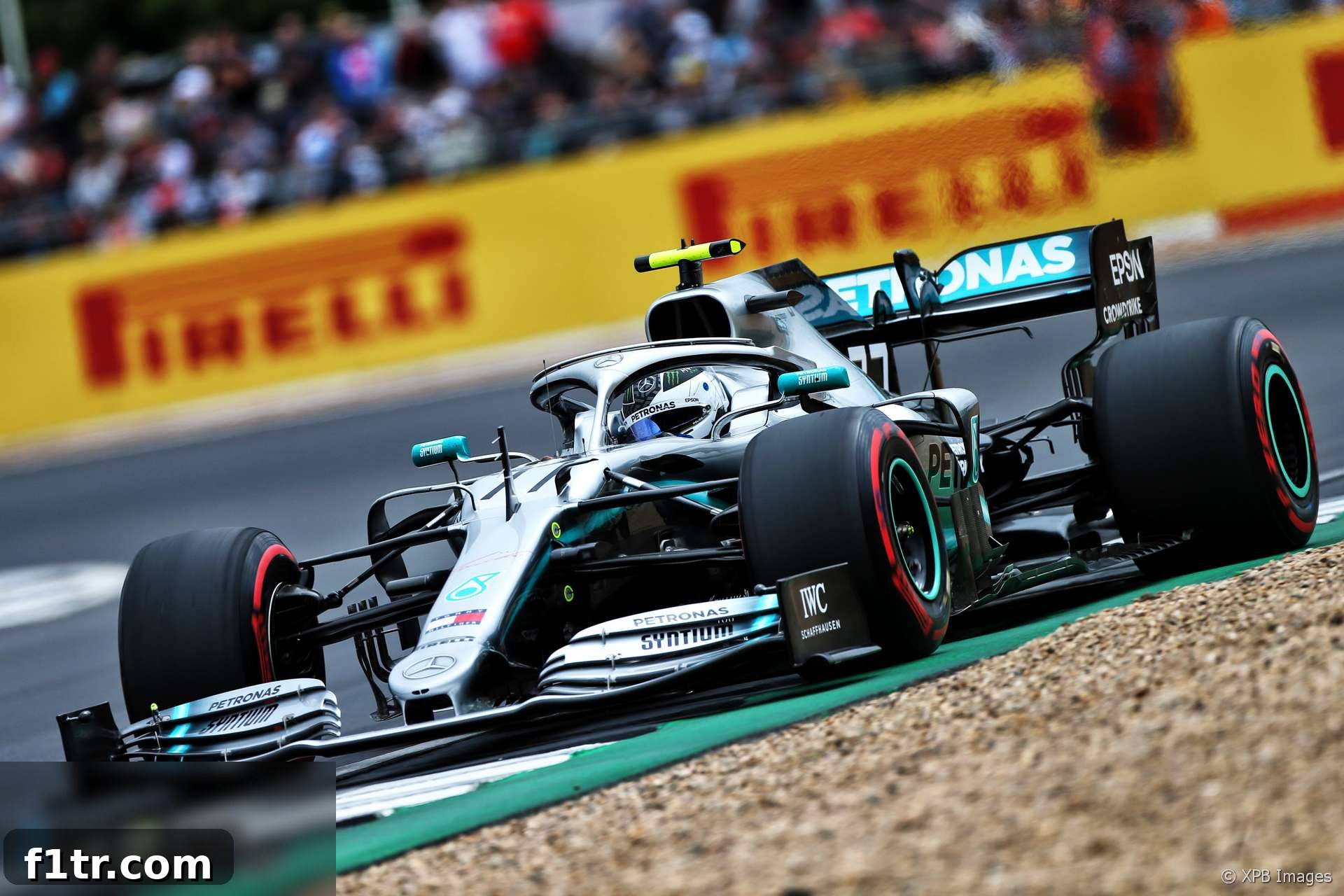
Hamilton’s Shocking Fastest Lap on Old Hards Leaves Bottas Puzzled
The exhilarating world of Formula 1 consistently delivers moments of high drama and unexpected brilliance, and the 2019 season was no exception. One such instance left even seasoned drivers scratching their heads, particularly Valtteri Bottas. The Finnish driver openly admitted his astonishment after his Mercedes-AMG Petronas teammate, Lewis Hamilton, managed to snatch the fastest lap of the race on significantly older hard tyres, a feat that narrowly eluded Bottas despite his fresh set of soft compounds.
This particular incident underscored not only the fierce internal rivalry within the dominant Mercedes team but also Lewis Hamilton’s uncanny ability to extract every ounce of performance from his machinery, regardless of the challenging circumstances. It was a testament to his exceptional race craft and a stark reminder that in Formula 1, predictions often fall short in the face of raw talent and strategic execution.
The Battle for the Bonus Point: Hard vs. Soft Tyres
The race saw Lewis Hamilton deliver a truly remarkable performance, setting the fastest lap of the event on a set of hard compound tyres that had already endured a staggering 32 laps. This was in stark contrast to Valtteri Bottas, who had pitted with just seven laps remaining, equipping his W10 with brand new, faster soft tyres specifically to target the fastest lap bonus point. Despite his fresh rubber, Bottas missed out on the coveted extra point by a mere three hundredths of a second, a margin so minuscule it truly highlights the razor-thin differences at the pinnacle of motorsport.
The strategic move to fit soft tyres for a late fastest lap attempt is a common tactic in modern F1, especially since the reintroduction of a point for the fastest lap. Teams meticulously calculate the optimal window, often deploying their second driver to attempt the feat if their lead driver is managing a race win. Bottas was tasked with this very mission, yet the outcome defied conventional wisdom, leaving him searching for answers.
Bottas’s Analysis: Battery and Fuel Constraints
When questioned about his inability to secure the fastest lap despite the clear tyre advantage, Bottas offered a candid explanation, pointing to a confluence of factors that prevented him from maximizing his potential. “I tried pretty hard, but I didn’t have a really full battery level at the moment,” he explained, shedding light on the intricate energy management systems that are crucial in hybrid-era Formula 1. He further elaborated, “Even though with the mode I was running the lap before, it should have been.”
This reveals a subtle but critical technical limitation. Drivers rely heavily on the Electrical Power Unit (EPU) for bursts of acceleration and top-end speed, especially when pushing for a single fast lap. If the battery isn’t optimally charged, the electrical deployment, and thus the overall power available, is compromised. Bottas acknowledged this as a team-wide issue they were actively addressing: “It’s something we actually raised up in the meeting that can be a lot better in the races, so we really have some margin to go for the fastest lap to charge the pack more to really deploy more. I feel I lost a bit there.”
Beyond the battery issues, Bottas also cited carrying a slightly higher fuel load as another detrimental factor. In Formula 1, every gram counts, and even a small amount of extra fuel can translate into crucial milliseconds lost over a lap. This combination of suboptimal battery charge and increased weight created a significant hurdle for Bottas in his quest for the fastest lap, emphasizing the precision required in modern F1 performance optimization.
The Adrenaline and the Small Mistake
Valtteri Bottas had initially set his fastest lap of the race with five laps remaining, believing he had done enough to secure the bonus point. However, Hamilton’s incredible final lap effort on worn hard tyres then eclipsed it, adding another layer of frustration for Bottas. Reflecting on his own attempt, Bottas admitted that a minor error at a critical juncture might have cost him dearly. “I was surprised that with the hard tyre at the end he could do a lap like that,” Bottas confessed, highlighting the unexpected nature of Hamilton’s pace. “Obviously the hard tyre was very solid. It was not much I had: A bit of a lock-up into the last couple of corners so lost maybe a tenth there.”
In the high-stakes environment of Formula 1, even a momentary lapse of concentration or a tiny misjudgment can have disproportionate consequences. A “tenth” of a second might seem negligible in everyday life, but in a battle for the fastest lap decided by three hundredths, it is monumental. This small mistake, coupled with the technical limitations, illustrates the fine margins that separate success from disappointment at the elite level of motorsport.
Hamilton’s Masterclass: Extracting Performance from Worn Rubber
Lewis Hamilton’s ability to set the fastest lap on heavily degraded hard tyres was nothing short of a masterclass. Hard tyres are designed for durability and consistency over long stints, not outright single-lap pace, especially after 32 laps of gruelling racing. Their grip levels are inherently lower than soft compounds, and they become even less effective as they wear down and lose temperature.
Hamilton’s performance showcased several facets of his legendary talent:
- Exceptional Tyre Management: He must have maintained the structural integrity and optimal temperature window of his tyres throughout their long stint, allowing him to push hard at the very end.
- Pinpoint Accuracy: Driving a compromised car on worn tyres requires incredible precision and control to avoid oversteer or understeer, placing the car perfectly through every corner.
- Adaptive Driving Style: Hamilton likely adapted his driving style to compensate for the lower grip, perhaps smoothing out inputs and carrying immense corner speed where possible.
- Mental Fortitude: To push so hard on the very last lap of a race, knowing the fastest lap point was at stake, demonstrates incredible mental strength and focus.
This unexpected turn of events not only thrilled spectators but also provided valuable data for Mercedes engineers, who would undoubtedly dissect Hamilton’s lap to understand how he defied the odds.
The Significance of the Fastest Lap Point
The reintroduction of a championship point for the fastest lap in 2019 added a new layer of strategic complexity and excitement to Formula 1 races. While a single point might seem insignificant in isolation, especially for a dominant team like Mercedes, in a tight championship battle, every point can be the difference between glory and second place. This rule incentivizes drivers to push hard until the very end, even if their race position is secure, often leading to thrilling late-race surges. For a team, securing this point means preventing rivals from gaining an extra advantage, making the internal competition for it even more intense.
Internal Dynamics at Mercedes-AMG Petronas F1 Team
The incident also highlights the fascinating dynamic within the Mercedes team. While outwardly harmonious, the pursuit of individual achievements like the fastest lap fosters a healthy, albeit intense, internal competition. Bottas’s frustration was palpable, not just at missing the point but at being outdone by his teammate in such an unexpected manner. These moments, while minor in the grand scheme of a championship, contribute to a driver’s confidence and standing within the team. For Hamilton, it was another demonstration of his unparalleled ability to deliver under pressure, reinforcing his status as a multiple world champion. For Bottas, it served as a learning experience, prompting further discussions with the team on how to better prepare for such late-race challenges.
Conclusion: A Lesson in F1’s Unpredictability
Valtteri Bottas’s candid admission of surprise following Lewis Hamilton’s fastest lap on old hard tyres perfectly encapsulated the unpredictable and demanding nature of Formula 1. It was a race within a race, decided by the slimmest of margins and influenced by a myriad of factors, from tyre degradation and battery management to driver skill and momentary errors.
Hamilton’s ability to defy conventional tyre strategy and extract peak performance from worn rubber underscored his exceptional talent and relentless pursuit of excellence. For Bottas, it was a valuable lesson, prompting introspection and a deeper understanding of the fine details required to master every aspect of a Grand Prix weekend. This incident serves as a powerful reminder that in Formula 1, the pursuit of perfection is an ongoing journey, where every lap, every compound, and every battery charge plays a crucial role in shaping the outcome.
2019 F1 Season Insights and More
- Crying in the Melbourne car park at 2019 grand prix was my career low – Ocon
- McLaren Racing reports reduced £71 million loss in 2019
- Kvyat: Hockenheim podium last year was “my biggest achievement” so far
- How the FIA’s new encrypted fuel flow meter targets Ferrari’s suspected ‘aliasing’ trick
- “He smashed my office door”: 23 must-see moments from ‘Drive to Survive’ season two
Browse all 2019 F1 season articles