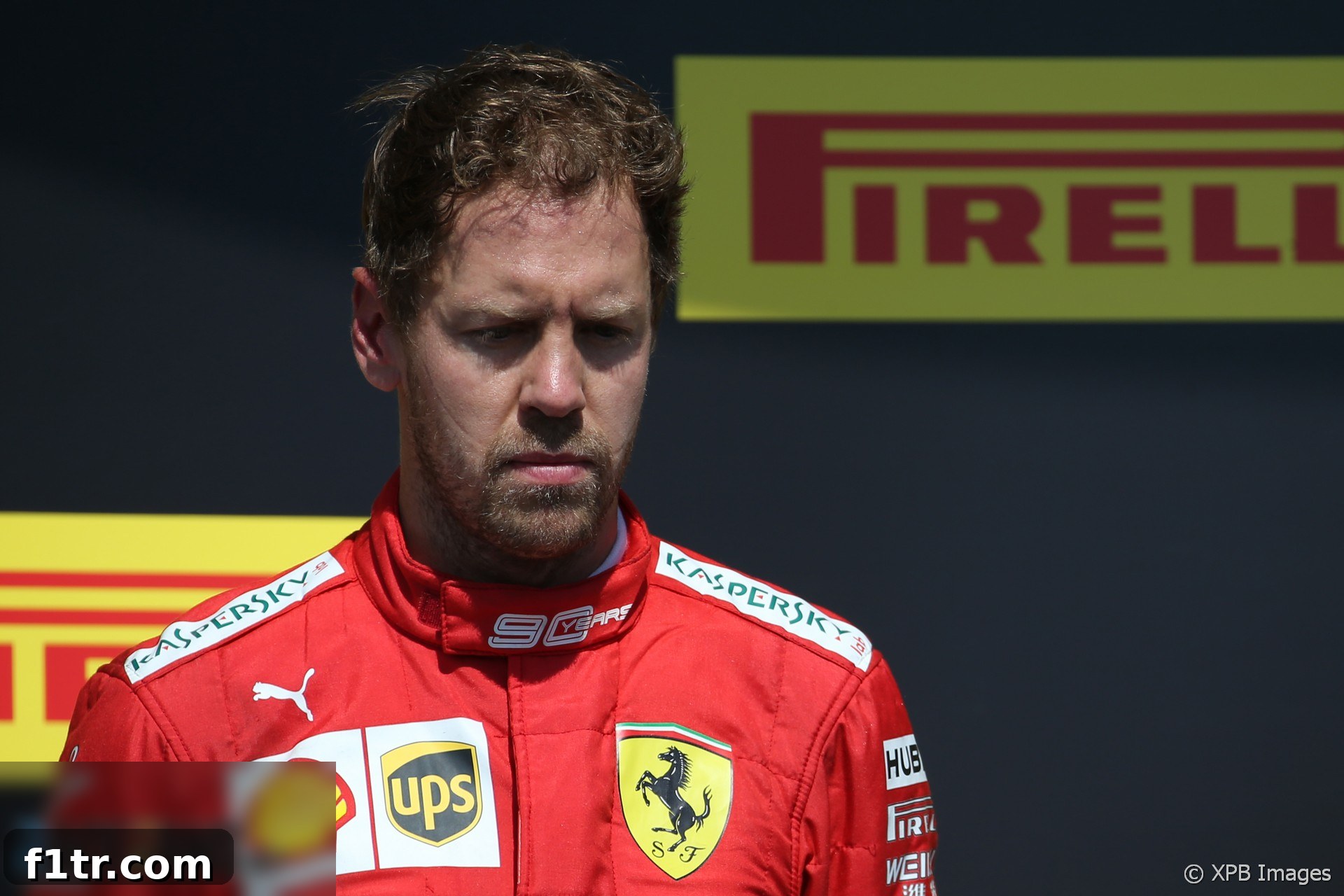
Ferrari Seeks Review of Controversial Canadian Grand Prix Penalty for Sebastian Vettel
Maranello, Italy – In a dramatic turn of events following the highly contentious Canadian Grand Prix, Scuderia Ferrari has officially confirmed its request for a Right to Review concerning the five-second time penalty imposed on Sebastian Vettel. This penalty ultimately cost the German driver a crucial victory at the Circuit Gilles Villeneuve, handing the win to Mercedes’ Lewis Hamilton.
Advert | Become a Supporter & go ad-free
The incident that sparked this controversy occurred during the latter stages of the race in Montreal. Vettel, leading the race comfortably, momentarily lost control of his Ferrari SF90 at Turn 3, driving over the grass run-off area. Upon rejoining the track, stewards deemed his return to be unsafe, impeding Hamilton who was closely following. The race officials immediately handed Vettel a five-second time penalty, a decision that polarized fans, pundits, and drivers alike.
The immediate aftermath of the race saw a visibly frustrated Vettel swap the first-place board in parc fermé with the second-place one, expressing his profound disagreement with the ruling. Ferrari swiftly announced their intention to appeal the penalty, signaling their belief that their star driver had been unfairly treated. However, despite their initial notification, the final classification was issued with Lewis Hamilton officially recognized as the Canadian Grand Prix winner, a result that significantly impacted the Formula 1 Drivers’ and Constructors’ Championships.
Under FIA regulations, teams are granted a 96-hour window to lodge a formal protest after notifying their intention to appeal. Interestingly, instead of pursuing the formal appeal process, Ferrari chose to withdraw their initial intention to appeal last Thursday. This strategic move, however, did not signify the end of their quest for justice. At the time of the withdrawal, the Italian team indicated that they were exploring alternative avenues within the FIA regulations to challenge the stewards’ decision, specifically hinting at the “Right to Review” provision.
Understanding the FIA’s “Right to Review”
The “Right to Review” is a critical component of the FIA’s International Sporting Code (ISC), the overarching regulatory document that governs all championships under the FIA’s purview, including the pinnacle of motorsport, Formula 1. Article 14 of the ISC meticulously details the conditions under which a decision taken by FIA stewards can be re-evaluated:
14.1.1 If, in Competitions forming part of an FIA Championship, cup, trophy, challenge or series, or of an international series, a significant and relevant new element is discovered which was unavailable to the parties seeking the review at the time of the Competition concerned, whether or not the stewards have already given a ruling, these stewards or, failing this, those designated by the FIA, must meet (in person or by other means) on a date agreed amongst themselves, summoning the party or parties concerned to hear any relevant explanations and to judge in the light of the facts and elements brought before them.
This article underscores the strict criteria for a successful review request. For Ferrari to proceed, they must present new evidence that is both “significant and relevant” and, crucially, was unavailable to the stewards at the moment they made their original decision during the 2019 Canadian Grand Prix. This is a high bar to clear, as the stewards typically have access to all available camera angles, telemetry, and audio during the race.
The Path Forward for Ferrari: What “New Evidence” Could Entail?
Ferrari had a 14-day window from the original decision to lodge their request for a Right to Review, bringing them right up to the weekend of the French Grand Prix. Today, a Ferrari spokesperson confirmed that the team has indeed submitted this request, adhering to the conditions stipulated in Article 14 of the International Sporting Code.
The critical next step for Ferrari is to formally submit the purported “new evidence.” This evidence will then undergo a preliminary evaluation by the stewards to determine if it meets the stringent criteria of being “significant and relevant” enough to warrant a full review of the incident. Only if this initial hurdle is cleared will the original stewards, or a newly designated panel, reconvene to reassess the circumstances of the penalty.
What kind of new evidence could Ferrari possibly present? Speculation is rife. It could range from previously unseen onboard camera angles, enhanced telemetry data revealing nuances of Vettel’s steering or throttle inputs, expert witness testimony from a former F1 driver or race director, or perhaps even a more detailed accident reconstruction analysis. The challenge lies in proving that this information was genuinely “unavailable” at the time of the initial decision, rather than simply being a reinterpretation of existing data.
Implications and Precedents
The decision to pursue a Right to Review, rather than a conventional appeal, suggests Ferrari believes they have genuinely uncovered new material. A conventional appeal would typically review the application of the rules based on the evidence available at the time, whereas a Right to Review specifically focuses on newly discovered facts. This distinction is crucial and highlights the difficulty of overturning a stewards’ decision once it has been made.
Should Ferrari succeed in having the penalty reviewed and subsequently overturned, the ramifications for the 2019 Formula 1 season would be immense. It would not only reinstate Vettel’s Canadian Grand Prix victory, restoring valuable championship points to both driver and team, but also send a powerful message about the robustness and fairness of the stewarding process. Conversely, if the request is denied or the review upholds the original penalty, it could be a significant blow to Ferrari’s morale and their championship aspirations.
The incident at the Canadian Grand Prix sparked a widespread debate about the interpretation of racing rules and the increasing frequency of penalties for on-track incidents. Many argue that a certain degree of aggressive racing should be allowed, while others prioritize safety and fair play. Ferrari’s pursuit of a review reflects this ongoing discussion and their determination to challenge what they perceive as an unjust decision that profoundly impacted their season.
Adding another layer of intrigue, at least one steward from the Canadian Grand Prix is scheduled to be part of the stewarding panel for the upcoming French Grand Prix. This continuity could be seen as either an advantage or a disadvantage for Ferrari, depending on how open the stewards are to re-evaluating their initial assessment based on new information.
As the Formula 1 circus heads to Paul Ricard for the French Grand Prix, all eyes will be on the FIA’s response to Ferrari’s request. The outcome will not only determine the final standings of one race but could also set an important precedent for future stewarding decisions in the fast-paced world of Formula 1.
Advert | Become a RaceFans supporter andgo ad-free
2019 F1 Season Insights
- Crying in the Melbourne car park at 2019 grand prix was my career low – Ocon
- McLaren Racing reports reduced £71 million loss in 2019
- Kvyat: Hockenheim podium last year was “my biggest achievement” so far
- How the FIA’s new encrypted fuel flow meter targets Ferrari’s suspected ‘aliasing’ trick
- “He smashed my office door”: 23 must-see moments from ‘Drive to Survive’ season two
Browse all 2019 F1 season articles