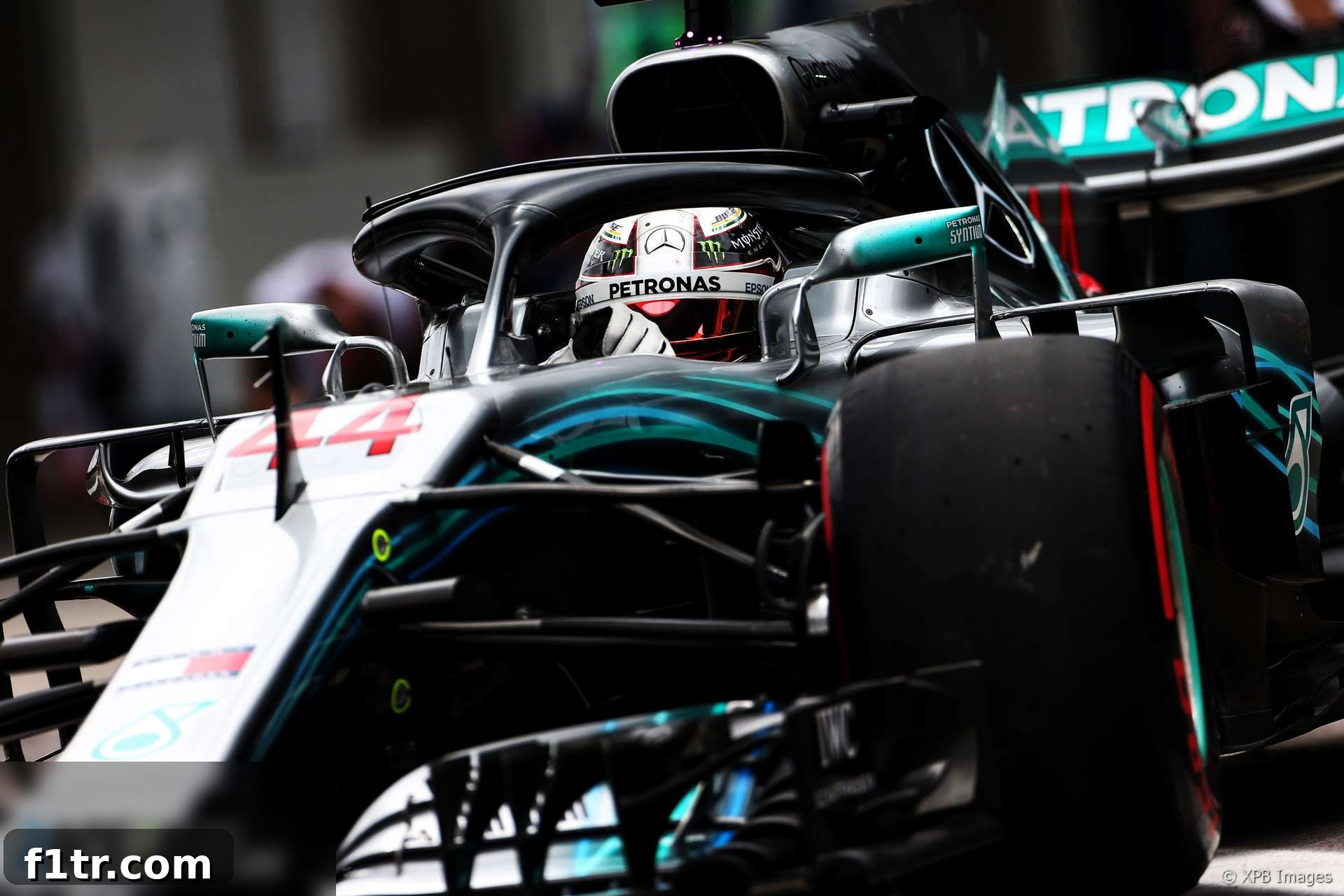
2018 Brazilian Grand Prix Qualifying Report: Hamilton Secures Pole in Thrilling Interlagos Session
The Autódromo José Carlos Pace in Interlagos, Brazil, once again delivered an electrifying qualifying session for the penultimate race of the 2018 Formula 1 season. While the Drivers’ Championship had already been decided in favor of Lewis Hamilton, the battle for pole position, team bragging rights, and crucial championship points for constructors remained fiercely contested. The unique, undulating layout of Interlagos, combined with its often unpredictable weather, always promises high-stakes drama, and the 2018 qualifying was no exception.
As the drivers pushed their machines to the absolute limit across the challenging corners and straights of this historic circuit, the tension was palpable. Fans witnessed breathtaking speed, strategic gambles, and unexpected upsets, all culminating in a starting grid that set the stage for a potentially unforgettable race. This detailed report breaks down the qualifying results, analyses key performances, and looks ahead to what promises to be a spectacular Brazilian Grand Prix.
A Masterclass from Lewis Hamilton on Pole Position
In a display of his unparalleled skill and precision, Lewis Hamilton, driving for Mercedes, secured a sensational pole position for the 2018 Brazilian Grand Prix. His blistering lap time of 1’07.281 not only demonstrated the raw pace of the Mercedes W09 but also underscored Hamilton’s ability to extract every ounce of performance when it matters most. This pole marked a significant achievement, further solidifying his status as a qualifying maestro.
Hamilton’s lap was a testament to his confidence and mastery of the Interlagos circuit, a track known for its technical demands and unforgiving nature. The minimal margin separating him from his closest rivals highlighted the intense competition at the very front of the grid. Securing pole was a crucial psychological boost for both Hamilton and Mercedes, proving their dominance even after the championship had been clinched, and laying down a formidable challenge for race day.
The Front Row Battle: Vettel Pushes Hamilton Closely
Lining up alongside Hamilton on the front row was Sebastian Vettel of Ferrari, who posted a highly competitive lap time of 1’07.374. The incredibly tight gap of just 0.093 seconds between the two championship rivals underscored the relentless battle between Mercedes and Ferrari throughout the 2018 season. Vettel’s performance demonstrated Ferrari’s strong one-lap pace, suggesting that they had found a sweet spot for the SF71H around the challenging Interlagos track.
While missing out on pole, Vettel’s second-place start positioned him perfectly to challenge Hamilton from the outset of the race. His qualifying effort kept Ferrari’s hopes alive for a strong performance, crucial for their fight in the Constructors’ Championship. The direct confrontation on the front row set the stage for an immediate and thrilling contest into turn one, promising an explosive start to the Grand Prix.
Mercedes and Ferrari Dominate the Top Four
The second row of the grid further cemented the dominance of the two leading constructors, with Valtteri Bottas in the second Mercedes securing third place (1’07.441) and Kimi Raikkonen in the second Ferrari in fourth (1’07.456). The tight grouping of the top four drivers, all within a quarter of a second, showcased the incredible performance parity and competitive intensity between the two top teams in 2018.
Bottas’s third position gave Mercedes a strong strategic advantage, providing two cars at the very front to potentially work together and control the race pace. Similarly, Räikkönen’s fourth place meant Ferrari also had two drivers well-placed to challenge for victory. This setup promised a fascinating strategic battle on Sunday, with both teams eager to maximize their points haul in the penultimate round of the championship.
Best of the Rest: Verstappen Leads the Midfield Charge
Leading the charge from the “best of the rest” was Max Verstappen of Red Bull Racing, who secured a commendable fifth position with a time of 1’07.778. Verstappen’s raw talent shone through, placing him ahead of many strong midfield contenders and underscoring Red Bull’s strong chassis capabilities despite a power deficit to Mercedes and Ferrari. His aggressive driving style and ability to extract maximum performance made him a significant threat from the third row.
Perhaps one of the most surprising and impressive performances came from Sauber. Marcus Ericsson qualified an outstanding sixth (1’08.296), showcasing a remarkable improvement for the team throughout the season. Hot on his heels was teammate Charles Leclerc in seventh (1’08.492), confirming Sauber’s unexpected but undeniable pace at Interlagos. This strong showing put both Saubers firmly within the points-scoring positions for the race.
Rounding out the top ten were Romain Grosjean (8th, 1’08.517) and Kevin Magnussen (10th, 1’08.659) for Haas, sandwiching Pierre Gasly (9th, 1’09.029) from Toro Rosso. This competitive midfield battle highlighted the intense fight for every grid position, with fractions of a second often separating drivers. Their positions set up what promised to be exciting wheel-to-wheel action through the race.
Navigating the Mid-Grid: Penalties and Close Fights
The midfield battles were particularly fierce, with several notable drivers just missing out on the coveted Q3 session. Daniel Ricciardo, another Red Bull driver, initially qualified sixth with a time of 1’07.780, an excellent performance. However, a five-place grid penalty for a power unit component change meant he would start further down the grid in eleventh. This was a significant blow for Ricciardo, who consistently demonstrated strong pace but was often plagued by reliability issues and subsequent penalties throughout the season.
Behind Ricciardo, Sergio Perez of Force India secured twelfth (1’08.741), followed by Nico Hulkenberg for Renault in thirteenth (1’08.834). These drivers were all in close contention, illustrating the competitive nature of the midfield where even minor errors or strategic missteps could lead to a significant loss of grid positions. Their starting places set them up for a challenging race, requiring smart strategy and aggressive overtaking to climb into the points.
The Back of the Grid: Challenges and Notable Absences from Q3
Further down the grid, the struggles of some teams became apparent. Sergey Sirotkin of Williams started fourteenth (1’10.381), while Carlos Sainz Jnr (Renault, 1’09.269) and Brendon Hartley (Toro Rosso, 1’09.280) filled the fifteenth and sixteenth spots respectively after some reshuffling due to penalties. Legendary driver Fernando Alonso for McLaren found himself in seventeenth (1’09.402), a testament to McLaren’s difficult season rather than a reflection of Alonso’s immense talent.
Esteban Ocon of Force India had initially qualified a strong eighteenth (1’08.770) but suffered a five-place grid penalty for a gearbox change, dropping him to a challenging eighteenth position. This penalty was particularly harsh given his competitive lap time. Finally, the grid was completed by Lance Stroll (Williams, 1’09.441) in nineteenth and Stoffel Vandoorne (McLaren, 1’09.601) in twentieth. The back of the grid reflected the ongoing difficulties for teams like Williams and McLaren, who faced significant performance deficits throughout the 2018 campaign.
Full 2018 Brazilian Grand Prix Starting Grid
Here is the complete starting grid for the 2018 Brazilian Grand Prix, taking into account all qualifying performances and subsequent grid penalties:
| Row 1 | 1. Lewis Hamilton 1’07.281 Mercedes |
|
| 2. Sebastian Vettel 1’07.374 Ferrari |
||
| Row 2 | 3. Valtteri Bottas 1’07.441 Mercedes |
|
| 4. Kimi Raikkonen 1’07.456 Ferrari |
||
| Row 3 | 5. Max Verstappen 1’07.778 Red Bull |
|
| 6. Marcus Ericsson 1’08.296 Sauber |
||
| Row 4 | 7. Charles Leclerc 1’08.492 Sauber |
|
| 8. Romain Grosjean 1’08.517 Haas |
||
| Row 5 | 9. Pierre Gasly 1’09.029 Toro Rosso |
|
| 10. Kevin Magnussen 1’08.659 Haas |
||
| Row 6 | 11. Daniel Ricciardo* 1’07.780 Red Bull |
|
| 12. Sergio Perez 1’08.741 Force India |
||
| Row 7 | 13. Nico Hulkenberg 1’08.834 Renault |
|
| 14. Sergey Sirotkin 1’10.381 Williams |
||
| Row 8 | 15. Carlos Sainz Jnr 1’09.269 Renault |
|
| 16. Brendon Hartley 1’09.280 Toro Rosso |
||
| Row 9 | 17. Fernando Alonso 1’09.402 McLaren |
|
| 18. Esteban Ocon** 1’08.770 Force India |
||
| Row 10 | 19. Lance Stroll 1’09.441 Williams |
|
| 20. Stoffel Vandoorne 1’09.601 McLaren |
*Five-place grid penalty for power unit component change (Daniel Ricciardo)
**Five-place grid penalty for gearbox change (Esteban Ocon)
Interlagos: A Circuit for Champions
Autódromo José Carlos Pace, affectionately known as Interlagos, is one of the most iconic and beloved circuits on the Formula 1 calendar. Its unique anti-clockwise layout, challenging elevation changes, and combination of fast and technical sections make it a true test of a driver’s skill and a car’s setup. The circuit’s location in São Paulo, often prone to sudden weather changes, adds an unpredictable element that has historically led to some of the sport’s most memorable and dramatic races.
From the sweeping Senna ‘S’ to the tight infield section and the long run up the hill to the finish line, Interlagos demands precision and courage. It’s a track where champions are often crowned or where dramatic events unfold that shape the course of a season. Its rich history, passionate Brazilian fans, and the constant threat of rain ensure that a Grand Prix weekend here is always a spectacle, and the 2018 edition, with such a tightly packed grid, promised nothing less.
Race Day Outlook and Strategic Considerations
With Lewis Hamilton on pole and Sebastian Vettel right alongside him, the stage was set for an immediate showdown at the start of the 2018 Brazilian Grand Prix. The weather forecast, always a crucial factor at Interlagos, would play a significant role in tire strategy and potential safety car periods. The highly abrasive track surface meant tire degradation would be a key consideration for all teams, potentially opening up varied strategies.
The strong performance of Sauber, coupled with the midfield grid penalties affecting drivers like Ricciardo and Ocon, meant there would be plenty of overtaking opportunities and intense battles throughout the pack. Mercedes and Ferrari would undoubtedly be focused on their respective championship objectives, while the midfield teams would be fighting for every precious point. The combination of high-speed sections, tricky braking zones, and the passionate Brazilian crowd guaranteed a thrilling race full of strategic decisions and daring maneuvers.
2018 Brazilian Grand Prix Highlights
- “I have this Force India behind…”: Team radio highlights from the Brazilian GP
- Hamilton takes 19th win in two years, needs 19 more to equal Schumacher
- 2018 Brazilian Grand Prix Star Performers
- Top ten pictures from the 2018 Brazilian Grand Prix
- Verstappen’s ruined masterpiece becomes Hamilton’s latest triumph
Browse all 2018 Brazilian Grand Prix articles
Explore More 2018 F1 Grids
Browse all 2018 F1 grids