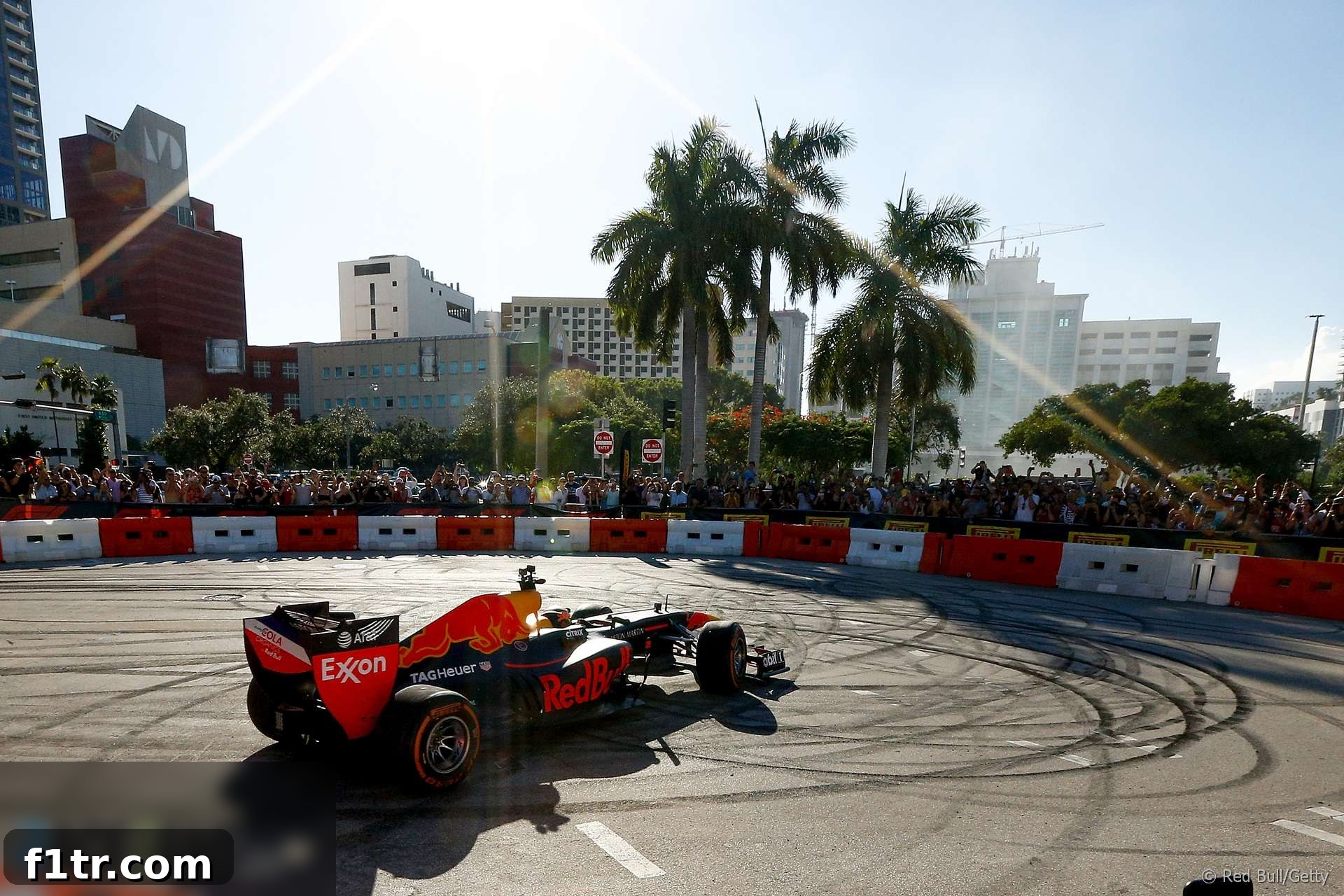
After a prolonged period of negotiation and several initial setbacks, Formula 1’s commercial rights holder, Liberty Media, has finally announced an “agreement in principle” for a highly anticipated Grand Prix in Miami. This development marks a significant step towards expanding Formula 1’s footprint in the crucial North American market, a long-held ambition for the sport’s current owners.
Advert | Become a Supporter & go ad-free
Should this “agreement in principle” successfully translate into a confirmed event, the 2021 F1 season could feature an unprecedented two rounds in the United States. This potential expansion has generated considerable buzz, though the final confirmation remains subject to various practical and logistical considerations, as evidenced by ongoing discussions and public relations efforts surrounding the proposed race.
The Strategic Significance of Miami for Formula 1
The persistent pursuit of a Miami Grand Prix by Formula 1 has raised questions among fans and pundits alike. With America’s vast landscape offering numerous potential venues, why the unwavering focus on Miami, especially amidst reports of minimal hosting fees? Furthermore, the insistence on negotiating with the owners of the Miami Dolphins NFL franchise, despite numerous obstacles and community resistance, speaks to a deeper strategic imperative for Liberty Media. Adding to the intrigue is the proposed May date for the race, a month traditionally packed with established European events, including three races in 2020 alone, posing significant calendar challenges.
For years, speculation has linked the Miami Dolphins partnership to a pivotal moment in F1’s recent history: September 2016. This was when Liberty Media was in the final stages of its bid to acquire the sport’s commercial rights. Paddock whispers at the time suggested that Liberty Media was on the verge of sealing the deal. However, Donald Mackenzie, then-boss of F1’s owner CVC Capital Partners, revealed that another formidable entity was still actively in the running, effectively driving up the acquisition price.
The Bidding War: Liberty Media vs. RSE Ventures
This competing entity was identified as RSE Ventures, an investment firm under the control of Stephen Ross, the influential owner of the Miami Dolphins. RSE Ventures had reportedly submitted a compelling bid in collaboration with a consortium backed by a Qatari sovereign wealth fund and an undisclosed private equity firm. The entry of RSE Ventures into the bidding war significantly heightened the stakes, causing the valuation of Formula 1’s commercial rights to escalate, much to Liberty Media’s initial dismay and financial recalculations.
Advert | Become a RaceFans supporter andgo ad-free
The alleged resolution to this intense bidding scenario was for Liberty Media to persuade RSE Ventures to withdraw its interest in acquiring F1. The rumored payoff for this withdrawal was the lucrative hosting rights to a Miami Grand Prix, structured on a profit-sharing basis with Liberty Media. This arrangement, once it entered the public domain, naturally sparked discontent among existing Grand Prix promoters, many of whom subsequently demanded similar favorable treatment. While these demands were largely resisted and thwarted by F1 management, the broader consequence was increased pressure on traditional hosting fees, as promoters sought more equitable terms.
Ultimately, RSE’s withdrawal from the bidding process is widely believed to have saved Liberty Media a substantial sum in the acquisition, while simultaneously securing a prized second race in the USA for the sport. In this high-stakes commercial chess match, CVC Capital Partners, as the former owner, emerged as the overall financial loser, having seen their final selling price capped by the removal of a competitive bidder.
Calendar Conundrums: The May Date and Atlantic Crossings
Another particularly surprising element of the Miami Grand Prix announcement is the suggested May 2021 date for its inaugural race. This scheduling choice immediately raises significant logistical questions, particularly concerning the prospect of two distinct Atlantic crossings within a mere two months. Given that the Canadian Grand Prix, another North American staple, is typically staged in June, usually a fortnight after the iconic Monaco Grand Prix, the calendar becomes exceptionally dense and geographically challenging.
It is evident that Liberty Media harbors hopes of persuading the principality of Monaco to advance its race from its traditional Ascension Day long-weekend slot. Such a shift would enable a more efficient “twinning” of the Miami and Montreal rounds, creating a North American double-header that would streamline logistics and reduce travel burdens for teams and personnel. However, this is no small feat, as the Monaco Grand Prix holds a unique, almost sacrosanct, status within the Formula 1 calendar.
Pressure on Monaco and the Future of European Races
Intriguingly, Monaco’s current contract with Formula 1 is also set to expire after the 2020 season. Considering its historical “zero-fee” hosting status – a privilege enjoyed due to its immense prestige and promotional value – one cannot help but wonder if Liberty Media intends to exert some form of commercial or scheduling pressure on the Automobile Club de Monte Carlo. This pressure could be aimed at compelling them to accept an earlier race date and perhaps even to reconsider their famously “wasteful” Wednesday-Sunday format, all in return for retaining their highly advantageous, bargain-basement hosting terms.
However, such a move by Formula 1 would undoubtedly trigger further complex questions, particularly regarding the long-term viability and future of the Spanish Grand Prix. The Catalan round is currently scheduled for mid-May in 2020, precisely the timeframe being eyed for Miami. Compounding its precarious position, the Spanish Grand Prix only managed to secure a one-year deal for the upcoming season at the eleventh hour, indicating its fragility within the F1 calendar. This naturally leads to an obvious and concerning question: having narrowly avoided extinction this year, will Spain’s cherished race ultimately disappear from the Formula 1 calendar after 2020, making way for new venues like Miami?
Sustainability Concerns and the “Vanity Race” Debate
Regardless of the specific calendar configuration, if Formula 1 does indeed find itself crisscrossing the Atlantic Ocean four times in the course of a single season – once for Miami, once for Montreal, another for Austin/Mexico, and a fourth for Brazil – the environmental implications are stark. Such a significant hike in air miles and carbon emissions would undeniably undermine the credibility of the sport’s highly publicized sustainability project, which is purportedly set to launch by the year’s end. This considerable expenditure of resources and increased carbon footprint for what many observers might argue amounts to a “vanity race” on Liberty Media’s home turf, raises serious ethical and environmental questions for a sport striving to present a greener image.
The pursuit of a second US race, particularly in a high-profile location like Miami, is undeniably a strategic play by Liberty Media to tap into new markets and expand F1’s global appeal. However, the commercial benefits must be carefully weighed against the logistical nightmares and environmental impact. The complexities of integrating new races into an already packed calendar, while balancing historical venues and promoting sustainability, represent a significant challenge for Formula 1’s future direction. The Miami Grand Prix, therefore, symbolizes not just an expansion, but a crucial test of Liberty Media’s ability to navigate these intricate commercial, logistical, and ethical considerations, shaping the very identity of Formula 1 for years to come.
Advert | Become a RaceFans supporter andgo ad-free
Explore More: 2021 F1 Season Insights
- Masi ‘basically gifted the championship’ to Verstappen says 2021 FIA steward Sullivan
- Las Vegas race backers looking to extend F1 deal beyond 2025
- Why Mercedes put ‘a reminder of joy and pain’ on display in their factory lobby
- Verdict on error in GT race suggests Mercedes would have lost 2021 Abu Dhabi GP appeal
- Title ‘stolen’ from Mercedes made us ‘underdogs people cheer for’ – Wolff
Browse all 2021 F1 season articles