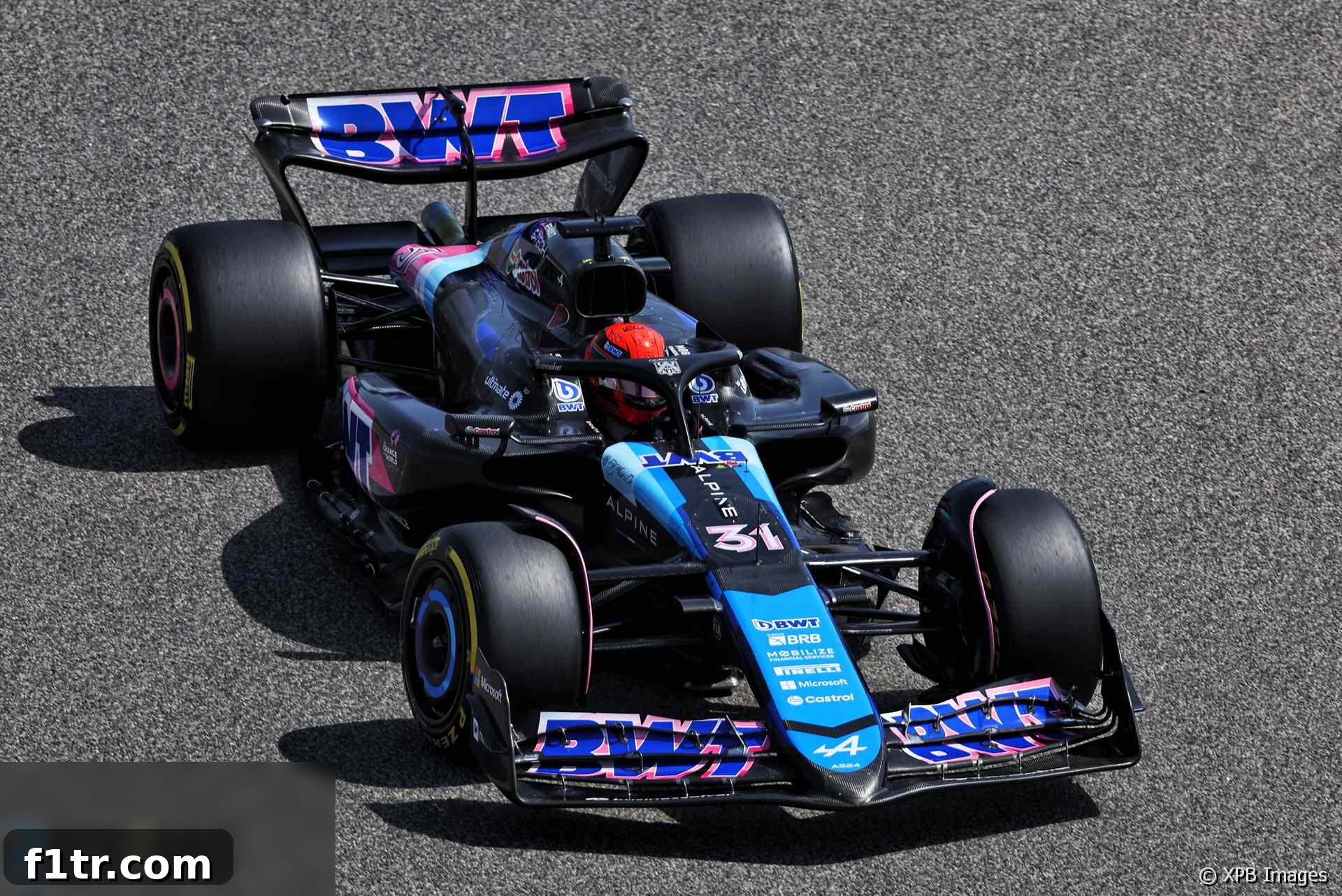
The dawn of a new Formula 1 season often brings with it a mix of anticipation and trepidation, especially for teams introducing radical new designs. For Alpine, the sentiment within the garage is one of stark realism, as both drivers concede that the initial races of the 2024 championship will likely be a challenging uphill battle. The French outfit, having committed to an ambitious overhaul of its chassis design following a disappointing slide from fourth to sixth in the constructors’ standings over the past two seasons, now grapples with the fallout of a difficult pre-season testing period where their A524 machine was notably the slowest on the grid.
This candid assessment from within the team underscores the significant task ahead. While the decision to fundamentally redesign the car was born from a clear desire to break free from performance plateaus, it has seemingly presented a steep learning curve. The journey to unlock the full potential of this new concept appears to be a long-term endeavour, requiring patience, meticulous data analysis, and an unwavering commitment to development throughout the grueling F1 calendar.
The Genesis of a Challenge: Unpacking Alpine’s A524 Development
Alpine’s strategic shift to an entirely new chassis concept for the A524 was a bold move, designed to address the inherent limitations of its predecessors. After two consecutive seasons witnessing a regression in performance, culminating in a drop out of the top five in the constructors’ championship, the pressure to innovate and climb back up the ranks was immense. This overhaul, however, has not yielded immediate dividends, as evidenced by the car’s performance during the crucial pre-season testing sessions. Being definitively the slowest car in Bahrain sent a clear message: the team is indeed starting the season from a challenging position.
The complexities of introducing a new car concept in Formula 1 are vast. It’s not merely about redesigning components but understanding their intricate interactions, optimizing aerodynamic flow, integrating the power unit seamlessly, and ensuring the car behaves predictably for the drivers. Any deviation from expected performance in such a radical design requires a comprehensive and systematic approach to problem-solving, a task that often extends well beyond the initial races and into the heart of the season.
Pierre Gasly’s Realistic Horizon: Patience Amidst the Struggle
Pierre Gasly, a driver known for his analytical approach and candid communication, has been forthright in his assessment of Alpine’s immediate prospects. He openly suspects that the team will begin the new year on the back foot, a position that necessitates a long-term perspective rather than a search for quick fixes. Reflecting on the pre-season activities, Gasly explained, “We just focused on ourselves, did our own programme without too much stress and conducted so many tests as we learn more and more about our overall car package. I expect it will take some time for us to unlock the performance we want from the car but that is no surprise given it’s a new concept.”
Gasly’s words highlight the critical importance of internal focus and data accumulation during the initial phase of a car’s life cycle. For a completely new design like the A524, every lap, every sensor reading, and every driver feedback point is invaluable in building a comprehensive understanding of the car’s characteristics. This meticulous approach, though perhaps not yielding immediate headline-grabbing lap times, is fundamental to establishing a solid foundation for future development.
His emphasis on realism is a guiding principle for the team’s approach. “I’m remaining realistic,” Gasly affirmed. “I know it will not be an easy start for us but what is most important is to keep identifying the key areas of work and to learn and progress.” This pragmatic outlook is crucial for maintaining morale and directing efforts efficiently. Rather than succumbing to pressure for instant results, the focus remains on understanding the car’s limitations, prioritizing areas for improvement, and fostering a culture of continuous learning and adaptation within the team.
Esteban Ocon’s Glimmer of Progress: Small Victories and Maximum Extraction
While sharing a similar realistic view on the team’s starting point, Esteban Ocon, Gasly’s teammate, offered a slightly more optimistic observation regarding the A524’s immediate development trajectory. Ocon noted tangible improvements in the car’s behaviour and performance throughout the testing days, suggesting that the team’s efforts are indeed yielding incremental gains. “The car improved from the first to the last day in testing, so we’re hoping to see similar improvements over the course of the race weekend,” he stated.
This indication of progress, however modest, provides a vital psychological boost for the team. It suggests that the A524 possesses a foundational capacity for improvement, even if its ultimate ceiling remains to be discovered. For the initial races, Ocon’s strategy, much like Gasly’s, revolves around maximizing the current package, extracting every ounce of performance available. “We know what we’re working with heading into the opening race of the season, and we must extract the maximum from our package to give us the best possible chance of coming away with something from the weekend.”
Ocon also acknowledged the inherent challenges in accurately gauging the competitive pecking order after a brief testing schedule. The varied programmes, fuel loads, and testing objectives of different teams make direct comparisons misleading. “It’s difficult to gauge the pecking order after such a short testing schedule, with teams running different programmes and fuel loads,” he added. “We just focused on ourselves and gathered as much data as possible.” This internal focus, a recurring theme from both drivers, is key to preventing distractions and ensuring resources are directed towards understanding their own machine.
Reiterating the difficult starting position, Ocon confirmed the team’s commitment to relentless development: “The same also applies for this weekend in Bahrain. We know we’re entering this season slightly on the back foot with the new car concept and the team is working incredibly hard to bring more performance to the car in the coming races.” His words reinforce the understanding that while the current situation is tough, the focus is firmly on the future, with significant upgrades and performance enhancements expected to be introduced as the season progresses.
Team Leadership’s Resolve: Bruno Famin’s Call for Collective Effort
The sentiments of Gasly and Ocon are unequivocally echoed by Team Principal Bruno Famin. Famin, who stepped into the leadership role last year following Otmar Szafnauer’s departure, is tasked with the crucial mission of reinvigorating Alpine’s performance and steering the team towards its ambitious long-term goals. While acknowledging the productivity of the testing phase in terms of data collection and learning, Famin readily accepted that the forthcoming Bahrain Grand Prix would present a significant challenge for the squad.
Famin’s leadership is now critical in uniting the team and directing their collective energy towards overcoming the initial hurdles. “We knew it was not going to be an easy start to the season,” Famin stated, displaying a pragmatic understanding of the situation. “Accepting these challenges is all part of racing in Formula 1 and it is important that we all push very hard to develop the A524 in the coming weeks and months.” This direct address to the inherent difficulties of F1 racing sets a clear expectation for the entire team: perseverance and intensive development are paramount.
His emphasis on aggressive development in the “coming weeks and months” indicates a well-defined strategy for improvement. This involves a continuous cycle of design, simulation, manufacturing, and track testing for upgrades. The early races will serve as crucial testing grounds, providing real-world data under competitive conditions, which will then inform subsequent development cycles. Famin’s steady hand and clear communication are essential in guiding Alpine through this challenging period, ensuring that the team remains focused and motivated despite the early setbacks.
The Road Ahead: Strategies for Recovery and Evolution
Alpine’s journey to unlock the true performance of the A524 will be a litmus test of their engineering prowess and strategic agility. “Unlocking performance” in Formula 1 involves a multifaceted approach. It means refining the aerodynamic package to generate more downforce without excessive drag, optimizing the car’s mechanical setup for different tracks and tyre compounds, and continuously improving the integration of the power unit for maximum efficiency and power delivery. The early races will be critical for understanding how the A524 performs under varied conditions, providing invaluable data for the engineers back at the Enstone and Viry facilities.
The team’s success in mitigating its initial performance deficit will depend heavily on its ability to rapidly introduce effective upgrades. The F1 development race is relentless, and standing still means falling further behind. Alpine’s history, both as Renault and in its current guise, has shown periods of strong development and resilience. The current situation demands a similar, if not greater, level of innovation and execution.
The strategic importance of the constructor’s championship cannot be overstated. While a difficult start may temper immediate ambitions, the long-term goal of climbing back into contention for podiums and eventually challenging for wins remains. This will require not only car development but also flawless execution on race weekends, precise pit stops, and shrewd race strategies. The synergy between drivers, engineers, and strategists will be paramount as Alpine navigates the complexities of the 2024 F1 season.
Conclusion: A Marathon, Not a Sprint, for Alpine F1
In essence, Alpine’s outlook for the 2024 Formula 1 season is one of realistic optimism tempered by an acknowledgement of current challenges. Both Pierre Gasly and Esteban Ocon, supported by Team Principal Bruno Famin, understand that the A524, while a radical new concept, will require significant development to reach its competitive potential. The initial races will be about learning, gathering data, and maximizing the existing package, rather than aiming for immediate glory.
The narrative unfolding at Alpine is a testament to the unforgiving nature of Formula 1. Success is not merely about ambition but about the relentless pursuit of perfection, adapting to setbacks, and demonstrating unwavering resilience. The team’s commitment to hard work, continuous development, and a realistic approach positions them for a challenging but potentially rewarding season of evolution. For Alpine and its loyal fan base, the 2024 season appears to be a marathon, not a sprint, with the hope that their dedication will eventually pay dividends on track.
Related Formula 1 Reads
- Understanding F1 Car Development Cycles Throughout a Season
- How New Regulations Impact F1 Chassis Design: A Deep Dive
- The Psychological Battle: Coping with F1 Performance Challenges
- Key Moments in Alpine’s (Renault’s) F1 History
- Analyzing the 2024 F1 Pre-Season Testing Data: Who’s Up and Who’s Down?
Browse all Formula 1 articles