FIA Race Director Charlie Whiting Discusses F1 Safety Car Speed: A Deep Dive into Safety vs. Performance
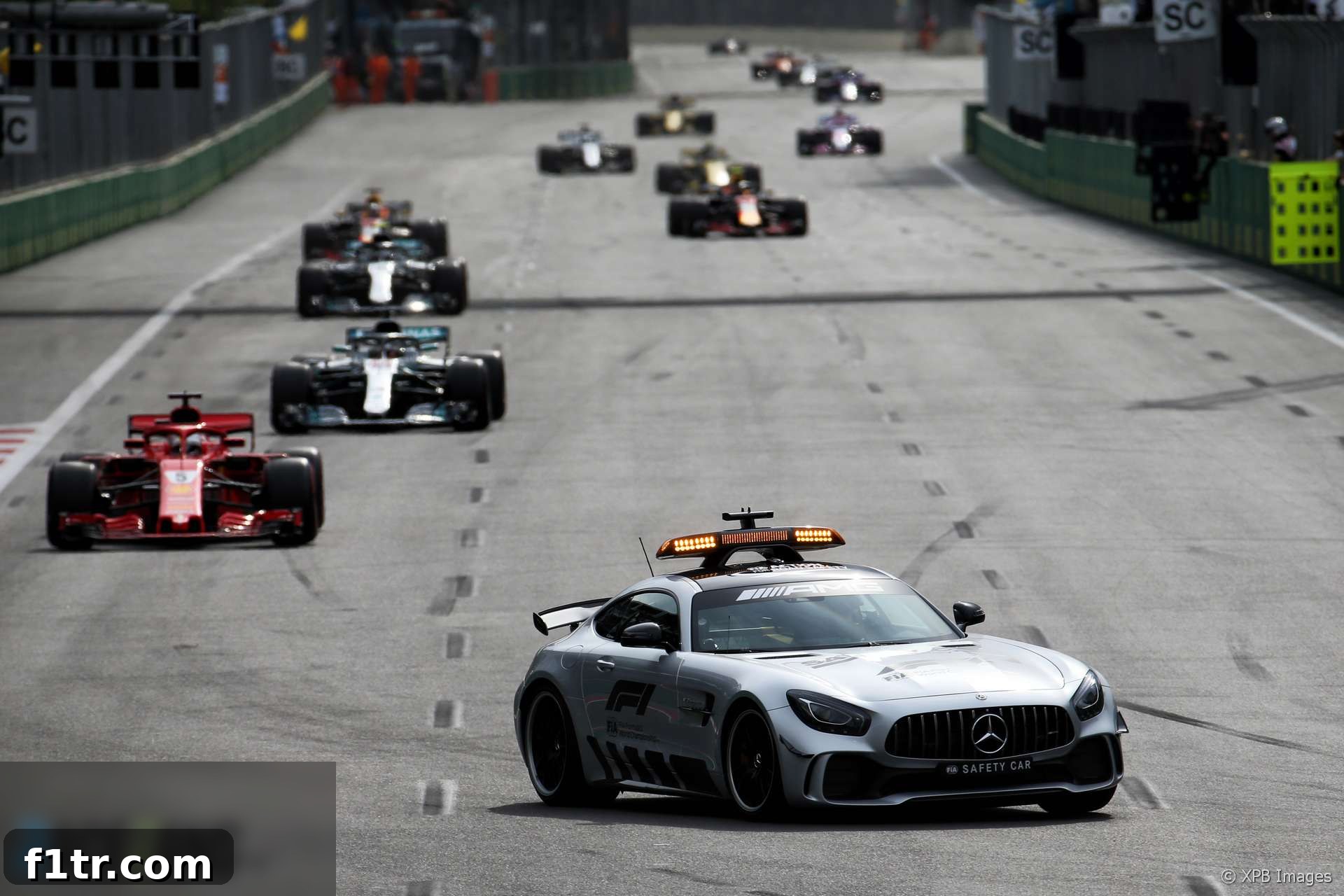
The perennial debate surrounding the speed of Formula 1’s Safety Car continues to draw attention, with FIA Race Director Charlie Whiting firmly reiterating his stance against calls from drivers for a faster pace. Despite the introduction of the most powerful Safety Car in F1 history, a Mercedes-AMG GT R boasting an impressive 585bhp, Whiting remains unconvinced that increasing its speed further would serve the primary objective of safety.
This discussion highlights a fundamental tension at the heart of Formula 1: the relentless pursuit of peak performance versus the paramount need for driver and track personnel safety. While drivers are understandably focused on maintaining optimal tire and brake temperatures to ensure immediate competitiveness upon a race restart, Whiting emphasizes that the Safety Car’s role is not to facilitate their performance but to control the field and mitigate risks during dangerous situations.
The Drivers’ Dilemma: Cold Tires and Braking Challenges
F1 drivers frequently voice concerns about the Safety Car’s pace, particularly regarding its effect on their tires and brakes. Modern Formula 1 cars operate within extremely narrow performance windows, especially concerning tire temperatures. When the Safety Car is deployed, the reduced speed means less energy is transferred into the tires, causing them to cool rapidly. This drop in temperature significantly compromises grip, making the cars incredibly challenging to drive and increasing the risk of accidents, particularly on the restart. Similarly, brakes also cool down, reducing their efficiency and the drivers’ confidence under heavy braking.
For a Formula 1 driver, maintaining rhythm and ensuring all components are at their optimal operating temperature is crucial for performance and safety. A slow Safety Car period can disrupt this delicate balance, forcing drivers to employ various techniques – weaving, accelerating, and braking harshly – to try and keep heat in their tires and brakes. However, these actions often yield limited success and can sometimes be seen as aggressive or dangerous if not performed carefully within the confines of the rules.
Charlie Whiting’s Unwavering Focus on Safety
Charlie Whiting, as the chief arbiter of safety in Formula 1, approaches the issue from a different perspective. His primary responsibility is the safety of everyone involved in a Grand Prix, from the drivers themselves to the marshals, medical staff, and recovery personnel on track. He views the Safety Car not as a performance enhancer for the racing cars, but as a critical tool for managing incidents and ensuring a controlled environment.
Whiting’s counter-argument is straightforward: “The thing’s there to slow them down.” He acknowledges the drivers’ complaints about cold tires and brakes but points out that these conditions apply equally to all competitors. “It is the same for everybody and they just have to drive accordingly afterwards if they’ve got less grip then they have to drive a little slower until they get more grip.” This pragmatic view underscores the regulatory body’s position that adapting to changing conditions is an inherent part of motor racing.
He further illustrates the Safety Car’s indispensable role by recalling specific incidents. “This is why we use the Safety Car, for example, past the marshals when they were recovering Grosjean’s car. We couldn’t rely upon the drivers to go that slowly past that incident, that’s what the Safety Car’s there for.” This statement highlights the crucial element of human error and the necessity of enforced safety protocols. In high-pressure racing scenarios, expecting every driver to exercise the utmost caution at reduced speeds around incident zones, especially when marshals are on track, is an unrealistic expectation. The Safety Car provides a definitive, controlled pace, removing any ambiguity and ensuring the safety of personnel.
The Mighty Mercedes-AMG GT R: Still Not Fast Enough?
The Safety Car currently in service, the Mercedes-AMG GT R, is a testament to automotive engineering, packing 585 horsepower. It is, by all accounts, an exceptionally fast road car, capable of speeds that would put many supercars to shame. Yet, in the context of Formula 1 machinery, which possesses orders of magnitude more downforce, grip, and power, even this potent vehicle can feel comparatively slow to an F1 driver. The gap in performance between an F1 car and the Safety Car, however powerful, is immense, and it is this differential that contributes to the drivers’ struggles with tire and brake temperatures.
Whiting acknowledges the continuous effort to enhance the Safety Car’s capabilities: “Every year we try and make it a little bit faster but how fast do you want to go?” This rhetorical question suggests a limit to how much faster the Safety Car can become while still effectively performing its function of *slowing down* the world’s fastest racing cars. The balance lies in finding a pace that is quick enough to lead the F1 field safely, but crucially, not so fast that it compromises the very safety protocols it is designed to enforce for marshals and recovery crews.
Defending Deployments: The Azerbaijan Grand Prix 2018
The 2018 Azerbaijan Grand Prix served as a notable example where the Safety Car’s deployment and duration came under scrutiny. Having been deployed in three of the first four races of the season, its presence in Baku drew criticism regarding how long it remained on track. Whiting, however, staunchly defended the decisions made by race control during that event.
He explained that the Safety Car’s lengthy presence was not arbitrary but a direct consequence of established FIA procedures and specific track conditions. “I don’t think there was anything wrong with the length of time the Safety Car was out, personally. It was brought in as soon as it could be brought in.”
One critical procedure that influences Safety Car duration is the “un-lapping” process. This rule allows cars that have been lapped by the leader to un-lap themselves and rejoin the back of the queue, ensuring a fairer restart with all cars on the lead lap. This process inherently adds time to a Safety Car period. In Azerbaijan, further complexities arose. “At that point [Romain] Grosjean had his accident so we left the Safety Car out for a bit longer. It took a little while to clear the car up because it was a very difficult place to recover a car from.”
Grosjean’s unfortunate incident, involving a solo crash behind the Safety Car while weaving to warm his tires, compounded the situation. The recovery of his Haas F1 car from a challenging location on the circuit necessitated additional time for marshals to work safely. Whiting concluded with confidence, “I don’t think it could have been any shorter under those circumstances. When the Safety Car restarted we were pretty confident everything was clear on the track. So I’m perfectly at ease with the decisions that were made around that Safety Car intervention.” This demonstrates that Safety Car decisions are not made lightly but are the result of careful consideration of multiple factors, all prioritized by safety.
The Enduring Conflict: Driver Instinct vs. Race Control Imperative
Ultimately, the discussion around F1 Safety Car speed represents an enduring conflict between the racing driver’s instinct to push the limits and the race director’s imperative to maintain absolute safety. Drivers are wired to maximize performance, and any factor that compromises their ability to do so, such as cold tires under a slow Safety Car, will naturally be a source of frustration. Their feedback is valuable in understanding the operational challenges from within the cockpit.
However, the FIA, through its Race Director, bears the ultimate responsibility for overall safety management. The Safety Car is a critical tool in this arsenal, designed to be a buffer against chaos and a guardian of track safety. Its speed is calibrated not for the optimal performance of the following F1 cars, but for the optimal safety of the event. While continuous improvements to the Safety Car and its deployment protocols are always considered, Whiting’s stance clearly indicates that the core principle of safety will always supersede calls for marginal performance gains for the competitors during neutralisation periods.
The dialogue between drivers and race control is a healthy part of Formula 1’s evolution. It ensures that all perspectives are heard and that the sport continues to refine its procedures. Yet, as long as safety remains the sport’s highest priority, it is likely that the Safety Car will continue to be precisely what Charlie Whiting intends it to be: a mechanism to slow things down when necessary, ensuring a safe environment for all, even if it means a momentary dip in driver performance.
F1’s Safety Car in Action: A Visual History
Related Articles from the 2018 F1 Season
- F1 feared “death knell” for Drive to Survive after Ferrari and Mercedes snub
- McLaren staff told us we were “totally crazy” to take Honda engines in 2018 – Tost
- ‘It doesn’t matter if we start last’: How Red Bull’s junior team aided Honda’s leap forward
- Honda’s jet division helped F1 engineers solve power unit problem
- McLaren Racing losses rise after Honda split
Browse all 2018 F1 season articles