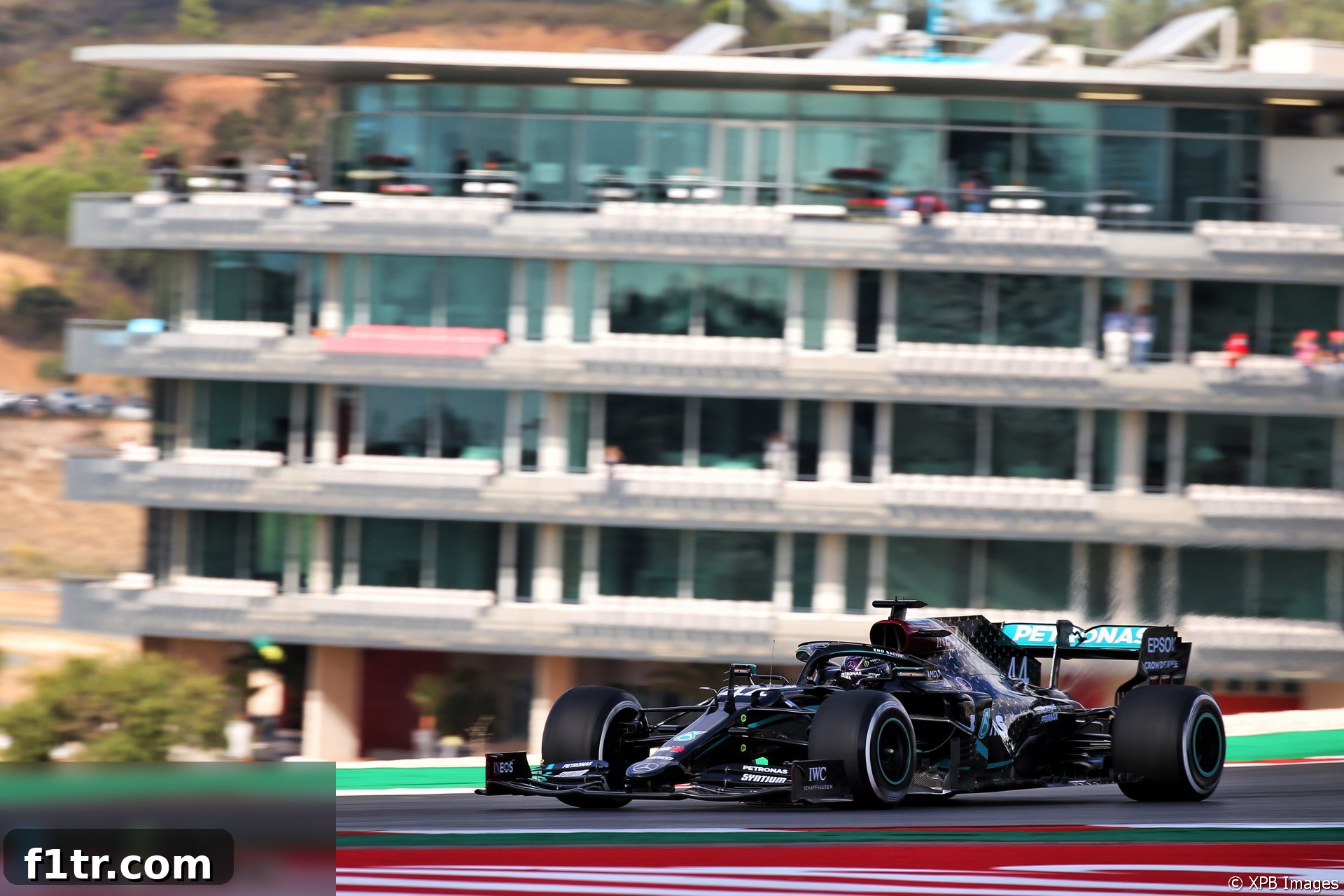
2020 Portuguese Grand Prix Practice Report: Drivers Tackle Portimao’s Unique Challenge and Low Grip Conditions
The highly anticipated return of Formula 1 to Portugal, specifically to the breathtaking Autodromo do Algarve, presented an exhilarating challenge for all twenty drivers. Following their initial two practice sessions, a consistent theme emerged from the F1 paddock: the circuit’s distinctive character and its remarkably low-grip surface. These factors set the stage for a fascinating weekend of racing, pushing teams and drivers to their absolute limits as they adapted to this unfamiliar yet invigorating new venue on the Formula 1 calendar.
Portimao’s Dynamic Layout: A Breath of Fresh Air for F1
The first point of universal driver feedback centered on the Autodromo do Algarve’s extraordinary layout. Departing significantly from the flat, more conventional circuits that often populate the F1 calendar – such as the Sochi Autodrom – Portimao distinguishes itself with its dramatic undulations. Its steep drops, blind crests, and high-climbing sections create an exhilarating, roller-coaster-like experience that drivers found both challenging and immensely rewarding. This topographical variability demands a unique driving style and setup approach, forcing teams to quickly understand how their cars would react to the constant changes in elevation and camber. The circuit’s dynamic nature was universally praised, offering a refreshing departure from the norm and promising spectacular racing as the weekend progressed. Drivers especially noted how the elevation changes impacted visibility and braking points, adding an extra layer of difficulty and excitement that has been missing from some modern tracks.
The Grip Enigma: A Shared Challenge with Sochi
In stark contrast to the praise for the circuit’s design, the second major talking point among drivers and engineers was the exceptionally low level of grip offered by the newly laid track surface. This characteristic, surprisingly, drew parallels to the aforementioned Russian Grand Prix venue, known for its slick asphalt. The lack of adhesion posed a significant challenge for all competitors, making it difficult to find traction, generate tire temperature, and push the limits with confidence. This low-grip environment not only tests driver skill but also places immense pressure on engineers to fine-tune suspension settings and aerodynamic balance to compensate for the compromised mechanical grip. The lack of grip translated into cars sliding more, making consistent lap times harder to achieve and increasing the likelihood of small errors.
Tyre Strategy and Qualifying Prep Laps
The peculiar grip conditions led to immediate strategic discussions within the teams, particularly concerning qualifying. Many anticipate that drivers will be forced to undertake additional preparation laps before their flying laps in Q1, Q2, and Q3 to bring their Pirelli tyres into the optimal operating window. Renault’s chief race engineer, Ciaron Pilbeam, articulated this concern clearly: “Hopefully we’ll see the grip come up a bit tomorrow but it’s quite far off the first timed lap today.” He added, “So I wouldn’t be surprised if there’s still some prep laps out there tomorrow. It tends to come to you a bit during qualifying but I think it’s quite a long way off the first timed lap today, so we might see some prep laps tomorrow which is a bit of a new thing. I don’t think we’ve seen that for a while now.” This unusual requirement for warm-up laps could add an intriguing layer of complexity to qualifying, potentially catching some teams off-guard and influencing the strategic use of tyres, as drivers will need to balance tyre preparation with fuel load and track position.
Curiously, during the first free practice session, teams reported better initial grip on the harder compound tyres compared to the softer ones. This counter-intuitive finding suggests a unique interaction between the Portimao asphalt and Pirelli’s compounds, which could influence race day strategies significantly. However, track evolution is a crucial factor in Formula 1; as more rubber is laid down by the cars throughout Saturday’s qualifying and Sunday’s race, the grip levels are expected to improve significantly. This progressive enhancement will require teams to remain adaptable, constantly adjusting their car setups to match the evolving track conditions, and potentially altering their tyre choices as the weekend unfolds.
Competitive Landscape: Mercedes Still the Benchmark at Portimao
While two significant disruptions in the second practice session prevented a completely clear picture of the competitive hierarchy from emerging, there remains little doubt that Mercedes continues to be the team to beat at the Autodromo do Algarve. Valtteri Bottas demonstrated his strong form by topping both Friday sessions, showcasing the raw pace and exceptional balance of the Mercedes-AMG F1 W11 EQ Performance. His consistent performance across the low-grip conditions underscores the car’s inherent stability and the team’s ability to quickly adapt to new circuits. Meanwhile, teammate Lewis Hamilton embarked on a different setup direction during the afternoon session, a gambit he later admitted did not pay off. This exploration, though costly in terms of immediate lap times, often provides valuable data for the team to converge on an optimal race setup, ensuring their continued dominance at the front of the pack, even if it meant sacrificing some Friday performance for long-term gains.
Red Bull’s Persistent Challenge: A Closer Fight for Pole?
An intriguing question hanging over the paddock is just how close Red Bull Racing can get to Mercedes this weekend at the Portuguese Grand Prix. The Austrian outfit has demonstrably narrowed the gap to the reigning champions in recent races, a trend attributed by some to the ban on “qualifying modes” and by others to the natural development and optimization progress they make over the course of a season. Their performance at the Nurburgring two weeks prior offered a promising indicator: on an approximately 85-second lap, Red Bull was less than two-tenths of a second adrift of Mercedes. Crucially, they exhibited particular strength in the slow first sector of the German track, and the Autodromo do Algarve features a greater number of low-speed corners that could play into Red Bull’s hands. With lap times at the Portuguese circuit already falling below 78 seconds in practice, the stage is set for an even tighter contest for pole position, potentially delivering one of the closest qualifying battles of the season. Max Verstappen’s second place in combined practice times certainly hints at their potential to challenge for the front row.
Adding to Red Bull’s prospects, Max Verstappen emerged from his collision with Lance Stroll in second practice without any grid penalties, a relief that allows him to focus purely on performance. His aggressive driving style and ability to extract maximum performance from the car, especially in challenging conditions like those presented by Portimao, make him a formidable contender for a front-row start and a strong points finish. The incident, while requiring repairs, did not derail his weekend beyond the lost track time.
Midfield Dynamics: Ferrari’s Revival and AlphaTauri’s Setbacks
Further down the grid, the midfield battle continues to intensify, with several teams showing fluctuating fortunes at Portimao. Ferrari, following the latest update to their SF1000 chassis, appeared to start the weekend on a positive note. Encouragingly for Sebastian Vettel, he concluded Friday’s running just three-tenths of a second behind his teammate Charles Leclerc, a significantly improved performance compared to his recent struggles. This closer gap could signal a renewed sense of confidence for the four-time world champion and a more competitive Ferrari package overall, boosting their hopes for crucial Constructors’ Championship points.
In contrast, AlphaTauri, who harbour ambitions of leapfrogging Ferrari for sixth place in the Constructors’ Championship, endured a difficult start to the Portuguese Grand Prix weekend. Pierre Gasly, a standout performer in recent races, was plagued by technical problems in both practice sessions. His car notably caught fire during the second practice, raising significant concerns about the integrity of his power unit components. It remains to be seen whether this incident will necessitate the installation of new power unit elements, potentially leading to grid penalties and severely hampering AlphaTauri’s efforts to score valuable points this weekend, a crucial blow in their championship battle.
Other Midfield Contenders
McLaren continued their consistent form with Lando Norris placing a commendable third in combined practice times, showcasing the strengths of the McLaren-Renault package on this demanding circuit. Carlos Sainz Jnr was also comfortably within the top ten, further solidifying McLaren’s position as a strong midfield runner. Renault, with Esteban Ocon in tenth, also showed flashes of pace, although Daniel Ricciardo had a more challenging day, struggling to find the optimal balance. Racing Point, Williams, Alfa Romeo, and Haas all worked diligently to find grip and understanding of the new circuit, with driver feedback being crucial for their engineers to optimize setups. The diverse performance levels across these teams hint at another thrilling midfield showdown come qualifying and race day, where every tenth of a second will count.
Combined Practice Times: A Snapshot of Friday’s Pace at Portimao
| Pos | Driver | Car | FP1 | FP2 | Total laps |
|---|---|---|---|---|---|
| 1 | Valtteri Bottas | Mercedes | 1’18.410 | 1’17.940 | 67 |
| 2 | Max Verstappen | Red Bull-Honda | 1’19.191 | 1’18.535 | 66 |
| 3 | Lando Norris | McLaren-Renault | 1’20.207 | 1’18.743 | 64 |
| 4 | Lewis Hamilton | Mercedes | 1’18.749 | 1’19.308 | 62 |
| 5 | Charles Leclerc | Ferrari | 1’19.309 | 1’18.838 | 67 |
| 6 | Carlos Sainz Jnr | McLaren-Renault | 1’19.441 | 1’19.113 | 74 |
| 7 | Sebastian Vettel | Ferrari | 1’20.200 | 1’19.175 | 71 |
| 8 | Pierre Gasly | AlphaTauri-Honda | 1’20.124 | 1’19.178 | 55 |
| 9 | Alexander Albon | Red Bull-Honda | 1’19.365 | 1’19.643 | 71 |
| 10 | Esteban Ocon | Renault | 1’21.673 | 1’19.496 | 63 |
| 11 | George Russell | Williams-Mercedes | 1’21.374 | 1’19.821 | 64 |
| 12 | Sergio Perez | Racing Point-Mercedes | 1’19.907 | 1’19.901 | 65 |
| 13 | Kimi Raikkonen | Alfa Romeo-Ferrari | 1’19.954 | 1’20.490 | 69 |
| 14 | Daniel Ricciardo | Renault | 1’20.058 | 1’19.987 | 55 |
| 15 | Daniil Kvyat | AlphaTauri-Honda | 1’20.278 | 1’20.729 | 65 |
| 16 | Nicholas Latifi | Williams-Mercedes | 1’22.054 | 1’20.465 | 67 |
| 17 | Kevin Magnussen | Haas-Ferrari | 1’20.846 | 1’20.680 | 57 |
| 18 | Romain Grosjean | Haas-Ferrari | 1’21.169 | 1’20.867 | 63 |
| 19 | Lance Stroll | Racing Point-Mercedes | 1’20.954 | 1’20.983 | 58 |
| 20 | Antonio Giovinazzi | Alfa Romeo-Ferrari | 1’21.009 | 1’21.396 | 69 |
Fastest Sector Times – Second Practice: A Closer Look at Portimao
| Driver | Car | Sector 1 | Sector 2 | Sector 3 |
|---|---|---|---|---|
| Valtteri Bottas | Mercedes | 22.503 | 29.978 | 25.459 |
| Max Verstappen | Red Bull-Honda | 22.734 | 30.165 | 25.636 |
| Lando Norris | McLaren-Renault | 22.634 | 30.278 | 25.831 |
| Charles Leclerc | Ferrari | 22.857 | 30.246 | 25.575 |
| Carlos Sainz Jnr | McLaren-Renault | 22.75 | 30.228 | 26.058 |
| Sebastian Vettel | Ferrari | 22.969 | 30.279 | 25.775 |
| Pierre Gasly | AlphaTauri-Honda | 22.737 | 30.433 | 25.848 |
| Lewis Hamilton | Mercedes | 22.62 | 30.252 | 26.02 |
| Esteban Ocon | Renault | 23.064 | 30.441 | 25.946 |
| Alexander Albon | Red Bull-Honda | 22.904 | 30.434 | 26.13 |
| George Russell | Williams-Mercedes | 23.13 | 30.817 | 25.874 |
| Sergio Perez | Racing Point-Mercedes | 23.313 | 30.465 | 26.123 |
| Daniel Ricciardo | Renault | 23.135 | 30.856 | 25.996 |
| Nicholas Latifi | Williams-Mercedes | 23.131 | 30.817 | 26.517 |
| Kimi Raikkonen | Alfa Romeo-Ferrari | 23.303 | 31.037 | 26.15 |
| Kevin Magnussen | Haas-Ferrari | 23.348 | 30.862 | 26.47 |
| Daniil Kvyat | AlphaTauri-Honda | 22.965 | 30.518 | 26.217 |
| Romain Grosjean | Haas-Ferrari | 23.468 | 30.96 | 26.396 |
| Lance Stroll | Racing Point-Mercedes | 23.186 | 30.828 | 26.333 |
| Antonio Giovinazzi | Alfa Romeo-Ferrari | 23.578 | 30.97 | 26.096 |
Quotes: Dieter Rencken
Join Our F1 Community: Support RaceFans!
If you’ve enjoyed our dedicated Formula 1 coverage throughout the 2020 season, we invite you to consider joining the RaceFans Supporters Drive. Your support is vital in helping us continue to provide high-quality, original, and independent motorsport journalism. We aim to welcome 3,000 new Supporters to help fund our work, ensuring we can cover every twist and turn of the F1 season in detail.
Here’s why your support matters and how you can make a difference:
- By becoming a Supporter, you directly contribute to the sustainability of our in-depth F1 analysis and reporting, keeping our content accessible to all fans.
- You help us maintain our commitment to independent coverage, free from external influence, providing unbiased insights into the world of Formula 1.
- Your contribution allows us to invest in resources that enhance the quality and breadth of our content, bringing you closer to the action with expert commentary and analysis.
- Discover more and become a RaceFans Supporter today!
More on the 2020 Portuguese Grand Prix
Browse all articles related to the 2020 Portuguese Grand Prix weekend.