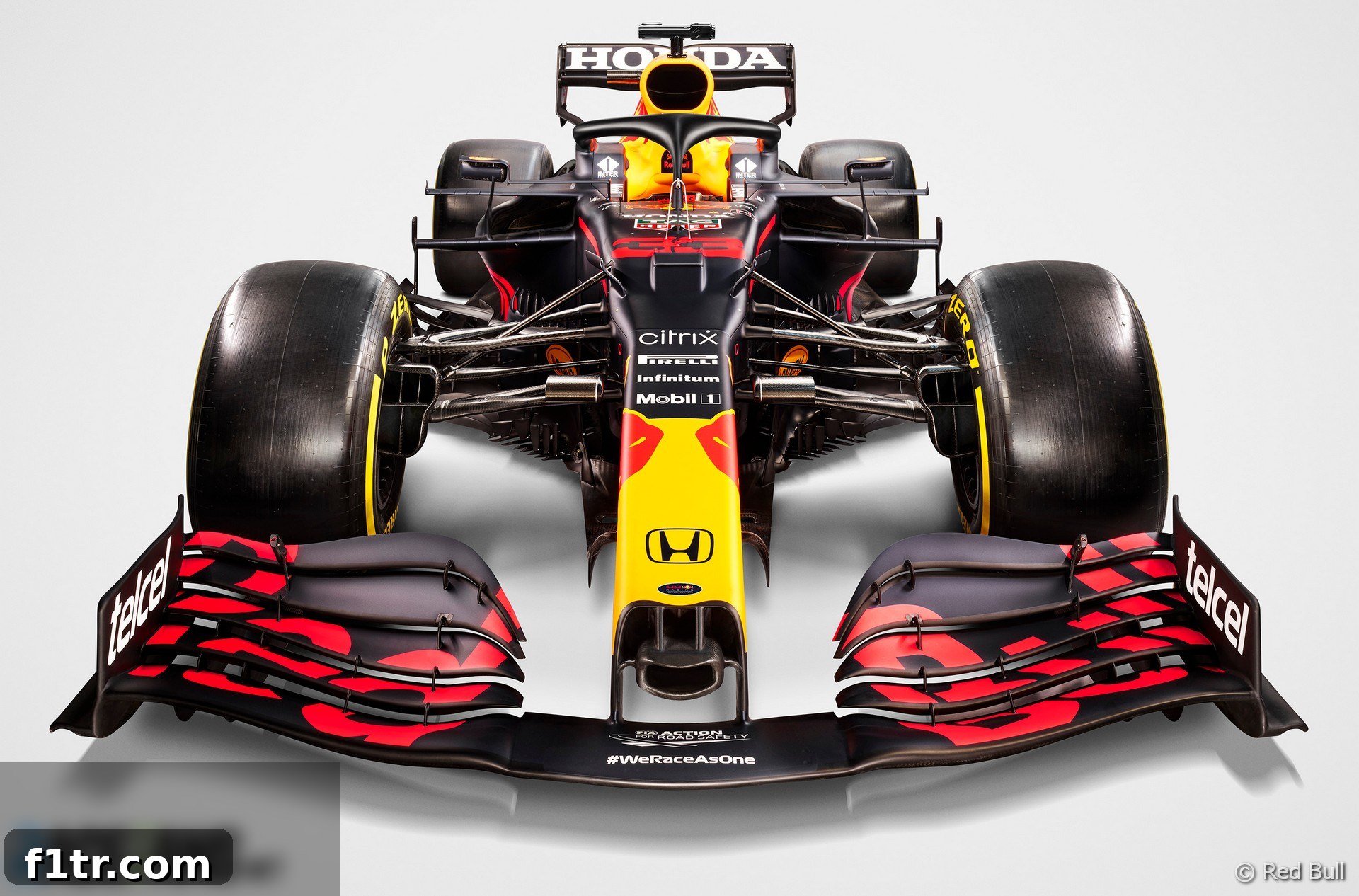
Red Bull RB16B: Can Max Verstappen Challenge Mercedes for the 2021 F1 Title?
The unveiling of Red Bull Racing’s RB16B for the 2021 Formula 1 season has ignited a fervent spark of anticipation among fans and pundits alike. After seven consecutive years of Mercedes’ iron grip on both the Drivers’ and Constructors’ Championships, a palpable yearning for a genuine multi-team title battle has swept across the motorsport world. All eyes are now fixed on Red Bull and their star driver, Max Verstappen, as they embark on what many hope will be a season-long duel to dethrone the reigning champions and their record-breaking driver, Lewis Hamilton.
For the past several seasons, the championship narrative has often revolved around Lewis Hamilton and, occasionally, his teammate Valtteri Bottas. However, Bottas has yet to consistently deliver the kind of sustained, season-long pressure that his predecessor Nico Rosberg mounted in 2016. Consequently, the prospect of Max Verstappen, armed with a finely-tuned RB16B, represents arguably the most credible threat to Lewis Hamilton’s pursuit of an unprecedented eighth world title. Verstappen’s aggressive driving style, raw speed, and unwavering ambition make him the ideal challenger to break Mercedes’ formidable reign.
Carrying Momentum: The Key to Red Bull’s Hopes
One of Red Bull’s recurring Achilles’ heels in recent memory has been their tendency for sluggish starts to new seasons. Technical complexities, development hurdles, and a sometimes-difficult-to-master chassis have often meant they play catch-up for the initial races, conceding valuable points to Mercedes. However, the conclusion of the 2020 season offered a glimmer of hope and a clear blueprint for success in 2021. Red Bull finished on a high, not only securing a dominant victory at the Abu Dhabi Grand Prix but, significantly, also clinching their first pole position of 2020. This late-season surge indicated a clear narrowing of the performance gap, particularly in crucial one-lap pace, which had long been Mercedes’ domain.
To truly challenge for the championship, Red Bull must capitalize on this momentum. They cannot afford to lose any ground over the winter break. Translating that late-season form into immediate competitiveness from the very first race is paramount. Their engineers and strategists will have diligently analyzed the data from their strong finish, seeking to carry forward every ounce of performance and understanding into the development and setup of the RB16B. A strong opening to the season would not only signal their readiness but also apply instant pressure on Mercedes, a scenario the reigning champions have rarely faced in the hybrid era.
The RB16B’s Debut: More Than Meets the Eye
As is customary with Formula 1 car launches, Red Bull opted for a minimalist reveal of the RB16B. The initial images shared today showcased a car that appears substantially similar to its predecessor, the RB16, which concluded the 2020 season in Abu Dhabi. This approach is hardly surprising; Red Bull, much like McLaren with their MCL35M, often employs strategic secrecy, obscuring key details or presenting launch-spec cars that do not fully represent their definitive race-spec configurations. This practice is aimed at keeping rivals guessing and protecting intellectual property during the crucial pre-season period.
Despite the apparent visual continuity, significant changes have been implemented to comply with the revised 2021 technical regulations. The most noticeable of these are modifications to the rear floor, an area crucial for generating downforce and managing airflow. These new rules, introduced to reduce downforce slightly and manage car speeds, require meticulous aerodynamic redesign. While the headline changes might seem subtle, the intricate details of airflow management and component integration are what truly differentiate a championship contender. The RB16B is, in essence, an evolution of its predecessor, refined and adapted to the new regulations, and hopefully, optimized to unlock its full performance potential.
A Balanced View: Understanding Mercedes’ Strengths
It is tempting, perhaps even instinctive, to succumb to the hype surrounding Red Bull as the most likely challenger to Mercedes. However, a balanced perspective requires acknowledging the formidable strength of the reigning world champions. Mercedes has consistently demonstrated an unparalleled ability to manage car development and optimize resources. In 2020, with their championship titles effectively secured well before the season’s end, they had the strategic luxury of easing back on the development of their W11 and diverting significant resources and engineering talent towards their 2021 machine. This early focus on the W12 could provide them with an inherent advantage, allowing them to hit the ground running with a highly refined package.
Furthermore, much has been made of Honda bringing forward their “2022 engine” for what is effectively their final season as Red Bull’s power unit supplier. While this aggressive development strategy is certainly commendable and indicates Honda’s commitment to leaving on a high, it also carries inherent risks. Technical director Toyoharu Tanabe has openly admitted that this power unit was originally slated for 2021 but was then postponed before being brought forward again for 2021. While the prospect of a more powerful, compact, and efficient engine is exciting, such accelerated development can sometimes compromise reliability, an area where Mercedes has historically excelled. The delicate balance between raw power and dependable performance will be crucial for both Red Bull and Honda.
The Advantage of Stable Regulations and a Strategic Driver Change
Crucially, the 2021 Formula 1 regulations mandate that cars remain largely based on their 2020 counterparts, with limited aerodynamic changes and the introduction of a ‘token system’ for component development. This regulatory continuity plays directly into Red Bull’s hands, given their strong finish to the previous season. The progress they made in understanding and optimizing their package towards the end of 2020 directly translates to a more refined starting point for 2021. Teams that struggled last year would have preferred more significant changes to overhaul their designs, but for Red Bull, the stability allows them to build upon an already competitive foundation.
Adding another layer of strategic depth is Red Bull’s driver line-up change. The arrival of Sergio Perez in place of Alexander Albon is a clear admission from the team that their previous approach – throwing a succession of inexperienced young talents into the second seat in the hope of unearthing another Max Verstappen – was not yielding the desired results. Perez brings a wealth of experience, race craft, and a proven ability to extract maximum performance from his machinery, often outperforming the car’s perceived capabilities. His stellar 2020 season, culminating in a dramatic victory at the Sakhir Grand Prix, solidified his reputation as one of the grid’s most consistent and strategic drivers.
While Perez might not pose a direct threat to Verstappen’s outright, one-lap pace, his true value lies in his consistent race performance. Throughout the V6 hybrid turbo era, few drivers outside the ‘big three’ teams managed to score podiums, yet Perez astonishingly secured four such finishes, demonstrating his ability to manage tires, execute strategy, and seize opportunities. Red Bull hopes he will consistently run closer to Verstappen than Albon did, thereby strengthening their strategic options on Sundays and effectively reducing Mercedes’ tactical flexibility. Having two cars consistently battling at the sharp end of the grid is a powerful weapon in any championship campaign, forcing rivals to split their focus and potentially compromising their own race plans.
The Crucial Opening Stages: Bahrain as the Litmus Test
Mercedes has cultivated a formidable reputation for their ability to start seasons with dominant performances. Over the past two seasons, they have swept the board in the early races, opening their 2020 account with an impressive four consecutive victories. This consistency and immediate competitiveness set a daunting benchmark for any aspiring challenger.
Therefore, for Red Bull to truly have a shot at championship silverware this year, they must avoid any early stumbles. This imperative is amplified by the impending major technical regulation overhaul for the 2022 F1 season. This is emphatically not the year to waste precious, tightly-limited development resources correcting fundamental problems on the current car. Teams face a delicate balancing act: push hard on the 2021 car to challenge for the title, or divert resources early to the entirely new 2022 car to gain a head start. Red Bull’s immediate performance will dictate this critical strategic allocation of resources under the new cost cap.
The first race of the season, scheduled to take place in Bahrain, will serve as a critical litmus test. Formula 1 raced on the same circuit just three months prior, providing a direct comparative benchmark. In that 2020 Bahrain Grand Prix, before the Safety Car intervention in the final laps, Max Verstappen was running over 20 seconds behind Lewis Hamilton. If Red Bull can significantly narrow that gap in the five weeks between the car launch and the season opener, it will be an incredibly encouraging sign. A truly competitive performance in Bahrain, indicating a genuine threat to Mercedes’ dominance, would ignite the hopes of fans worldwide for a thrilling and fiercely contested 2021 Formula 1 championship.