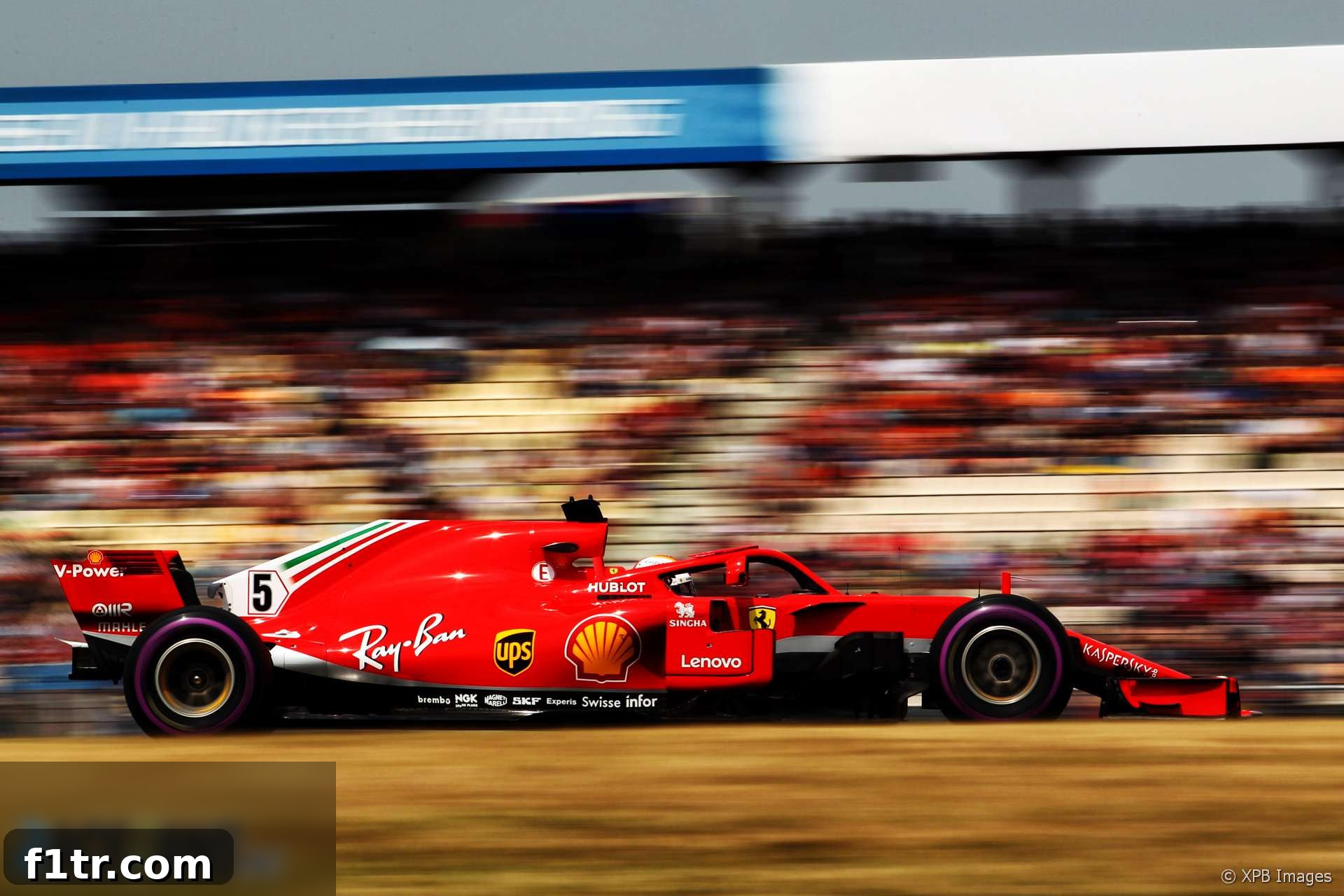
Mercedes Under Pressure: Toto Wolff Confirms Ferrari's Dominant Straight-Line Speed at Hockenheim
The high-stakes world of Formula 1 is a constant battle of innovation, engineering prowess, and raw speed. During a pivotal moment in the championship, Mercedes-AMG Petronas's Team Principal, Toto Wolff, made a candid admission that sent ripples through the paddock: Ferrari had established a significant straight-line speed advantage, particularly evident at the Hockenheimring. Wolff acknowledged his team was losing a crucial half a second per lap to their Italian rivals on the straights, signaling a worrying shift in the competitive landscape.
This revelation followed growing speculation and comments from other team principals, notably Red Bull's Christian Horner. Horner had previously asserted that Scuderia Ferrari now possessed the best power unit in Formula 1, a claim that Wolff, while initially dismissive of Horner's perennial complaints, ultimately had to concede was accurate regarding outright speed. The data from Hockenheim painted a clear and concerning picture for the Silver Arrows, indicating they were indeed lagging behind their main championship contenders in this critical performance area.
The Blatant Performance Gap: Half a Second on the Straights
Wolff didn't mince words when detailing the scale of the deficit. "As a matter of fact, it is where we lost out," he stated, referring to the straight-line sections of the Hockenheim circuit. He quantified this disadvantage precisely, noting Mercedes was "five tenths on the straights" behind Ferrari. This half-second gap is monumental in Formula 1, where races are often decided by mere milliseconds. Such a disparity on the straights suggests a fundamental difference in power unit output, aerodynamic efficiency, or a combination of both.
While Mercedes's chassis and overall package remained highly competitive, particularly through the challenging corners, Ferrari's power advantage negated this strength. Wolff highlighted Valtteri Bottas's exceptional performance in the third sector of the track, an area dominated by corners, as proof of Mercedes's strong chassis. "Valtteri [Bottas] was exceptional in the third sector, that’s why he was even close to pole position," Wolff remarked. However, even Bottas's brilliance in the twisty bits couldn't fully compensate for the sheer horsepower Ferrari was deploying on the long straights, ultimately impacting their qualifying and race potential.
The Mercedes chief admitted the extent of Ferrari’s advantage at Hockenheim was unexpected and stark. "No, it’s not expected but in Formula One you need to expect everything and we need to find out how we can increase our output," he acknowledged. The surprise wasn't just in the deficit itself, but in its obviousness. "I think we haven’t seen anything so obvious – so blatant," Wolff confessed, underscoring the severity of the challenge they faced.
Mercedes's Internal Scrutiny: A "Severe Warning" for the Championship
In the face of such a clear performance gap, Wolff emphasized an internal focus for Mercedes rather than external finger-pointing or questioning Ferrari's legality. His philosophy was clear: the team must first look within and exhaust every avenue for improvement before considering other possibilities. "There’s not one single second I want to look at Ferrari. I want to look at ourselves, I want to look at Mercedes and see how, is there anything we’ve missed," he asserted.
This introspection involved a comprehensive review of their entire power unit ecosystem. Wolff outlined the critical areas under investigation: "How can we increase our power output? On the ICE, on the electrical systems? From the battery, from the MGU-H – whatever we can look at because if we want to win this championship or stay in the hunt of the championship we’ve got a severe warning today, in terms of what we’ve seen." This statement underscored the immediate and significant threat Ferrari's performance posed to Mercedes's championship aspirations, elevating the situation to a critical engineering and strategic challenge.
Modern Formula 1 power units are marvels of complex hybrid technology, comprising an Internal Combustion Engine (ICE), two Motor Generator Units (MGU-H and MGU-K), a turbocharger, energy stores (battery), and control electronics. Each component plays a vital role in overall performance, and optimizing their synergy is key to maximizing power output and energy recovery. Wolff's directive to examine the ICE, electrical systems, battery, and MGU-H indicates a holistic approach to understanding where Ferrari might have found their edge and where Mercedes could unlock more performance.
The Ferrari Enigma: Innovation or Ingenuity?
The paddock had been abuzz with discussions surrounding the design of Ferrari’s power units and the "apparently novel methods they are employing to regenerate energy." These discussions often venture into the grey areas of technical regulations, where teams constantly push the boundaries of what is permissible. However, Wolff deliberately steered clear of such speculation initially, prioritizing Mercedes's own efforts.
"I think it’s very important, from the mindset you need to have, to be able to say ‘what can we do, in order to achieve that power output?’ Rather than looking over and as a default reaction to say it’s not legal," Wolff explained. This measured approach highlights the intricate balance between competitive drive and sporting integrity in F1. Only once Mercedes had fully explored its own potential to match Ferrari's output, would Wolff then consider the next step: "We are in a situation where we’re looking at ourselves, how can we achieve that and if we can not achieve it, how can somebody else?" This implies that if Mercedes, with all its resources and expertise, couldn't explain Ferrari's advantage through conventional means, then further scrutiny might become necessary.
The competitive nature of Formula 1 dictates that every team constantly monitors its rivals for potential technical breakthroughs. Ferrari’s significant leap in straight-line performance undoubtedly sparked intense analysis within Mercedes’s technical departments. Engineers would be dissecting telemetry data, studying onboard footage, and scrutinizing every detail visible to identify the source of Ferrari's newfound speed, all while rigorously evaluating their own power unit architecture for untapped potential.
Championship Implications and the Road Ahead
The Hockenheim revelation served as a potent reminder of the championship's dynamic and unforgiving nature. What might appear to be a comfortable lead can quickly evaporate with a rival's breakthrough. For Mercedes, maintaining their dominance meant not just reacting to Ferrari’s challenge but proactively out-developing them. The "severe warning" was a rallying cry for the entire team to intensify their efforts, pushing the limits of their engineering capabilities and operational efficiency.
The battle for the constructors' and drivers' championships is often won not just on track, but in the factories and design offices. Overcoming a half-second deficit on the straights requires a multi-faceted approach, encompassing not only power unit upgrades but also aerodynamic refinements that minimize drag without compromising cornering speed. This period of intense competition forces teams to innovate at an accelerated pace, ensuring Formula 1 remains at the pinnacle of motorsport and a crucible for technological advancement.
Toto Wolff's honest assessment at Hockenheim underscored the relentless pursuit of perfection required to succeed in Formula 1. It highlighted the ebb and flow of competitive advantage and the crucial mindset needed to respond to adversity. The challenge laid bare for Mercedes was immense, but so too was their resolve to reclaim the outright speed advantage and defend their championship titles. The season would undoubtedly continue to be a gripping spectacle, driven by the intense rivalry and the ceaseless quest for performance at the highest level of motorsport.
2018 F1 Season Insights and Related Content
The discussions and challenges highlighted during this period of the F1 season offer valuable insights into the competitive dynamics and technical innovations that define the sport. The ongoing quest for power unit supremacy, the strategic decisions made by top teams, and the constant evolution of technology are all central to the narrative of Formula 1. Exploring related articles can provide further context and understanding of the pressures and triumphs experienced throughout such an intense championship battle.
- F1 feared “death knell” for Drive to Survive after Ferrari and Mercedes snub
- McLaren staff told us we were “totally crazy” to take Honda engines in 2018 – Tost
- ‘It doesn’t matter if we start last’: How Red Bull’s junior team aided Honda’s leap forward
- Honda’s jet division helped F1 engineers solve power unit problem
- McLaren Racing losses rise after Honda split
Browse all 2018 F1 season articles