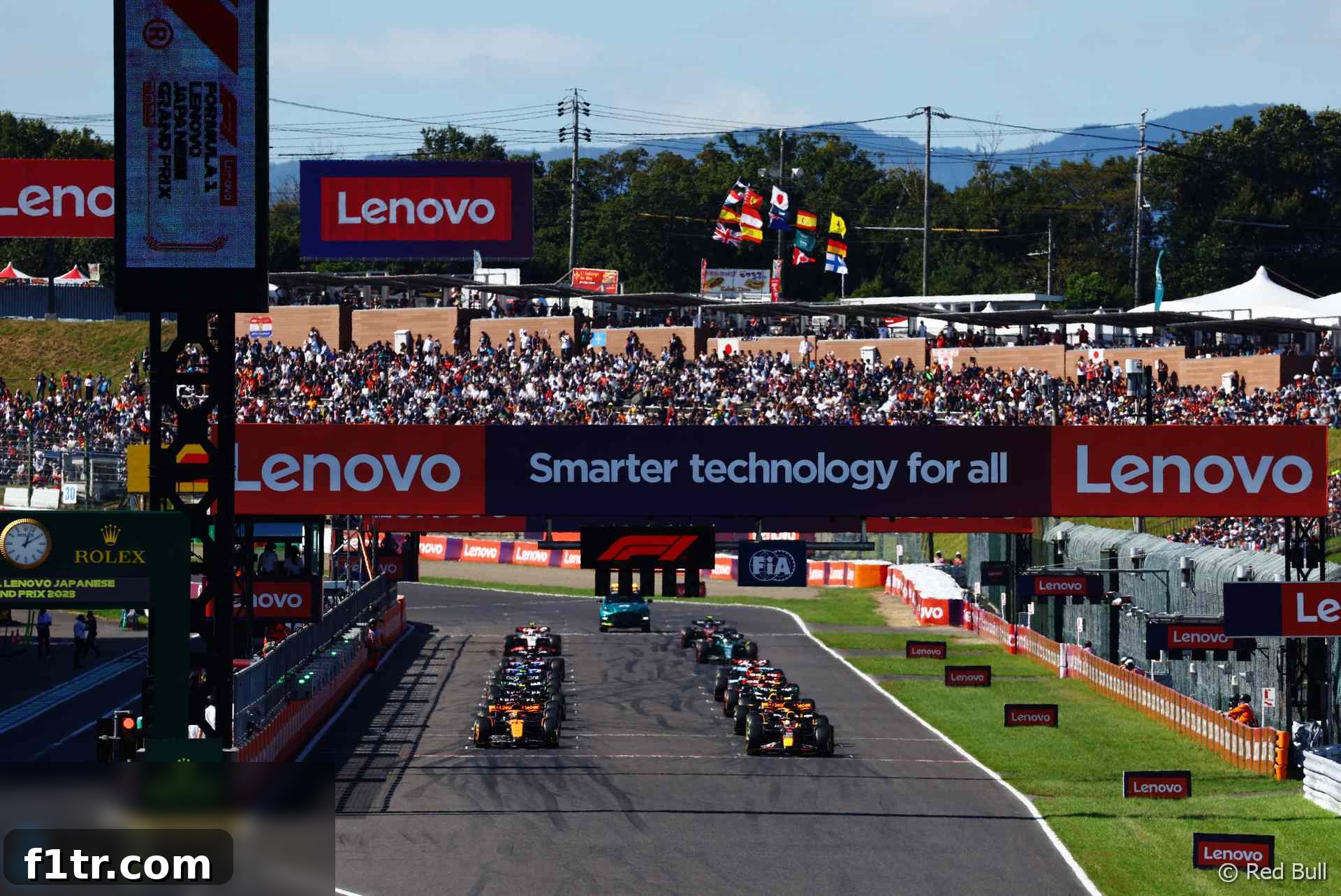
The Suzuka Circuit in Japan, an iconic fixture on the Formula 1 calendar, has secured a significant multi-year contract extension, ensuring its presence until at least 2029. This landmark agreement solidifies Suzuka’s position as a cherished venue for Formula 1 racing, much to the delight of drivers, teams, and dedicated fans worldwide.
This extension comes at a pivotal time, reinforcing the circuit’s enduring legacy within the sport. The news was officially announced by Formula One Management (FOM) and Mobilityland, the race promoter and owner of the Suzuka International Racing Course. The agreement underscores F1’s commitment to retaining its classic venues while embracing a more sustainable and rationalized global calendar.
Suzuka’s Enduring Legacy on the F1 Calendar
First joining the Formula 1 calendar in 1987, the Suzuka Circuit quickly established itself as one of the sport’s most challenging and revered tracks. Its unique figure-eight layout, combined with a thrilling sequence of high-speed corners and technical sections, has made it a favorite among drivers and a stage for countless memorable moments in Grand Prix history. Over the decades, Suzuka has played host to numerous championship deciders and witnessed some of the most heroic drives in F1 lore, cementing its status as a true motorsport icon.
The contract extension until at least 2029 is a testament to Suzuka’s indispensable role in Formula 1. F1 CEO Stefano Domenicali himself lauded the circuit, calling it “a special circuit and part of the fabric of the sport.” This sentiment is widely shared across the paddock, where drivers frequently express their appreciation for the circuit’s demanding nature and the sheer driving pleasure it offers. The long-term commitment from F1 highlights the mutual respect and recognition of Suzuka’s unique contribution to the spectacle of Grand Prix racing.
Strategic Calendar Shift: Embracing Sustainability
A notable aspect of Suzuka’s renewed commitment is its recent calendar shift. For the 2024 season, the Japanese Grand Prix moved from its traditional slot in the latter half of the year to April. This strategic change is part of Formula 1’s broader initiative to rationalize its global calendar, with a strong emphasis on reducing travel distances between races and, consequently, lowering the sport’s carbon footprint.
This forward-thinking approach aligns with F1’s ambitious sustainability goals, aiming for Net Zero Carbon by 2030. By grouping races regionally, F1 seeks to optimize logistics, minimize freight movements, and reduce the overall environmental impact of its extensive global travel schedule. The move to April for Suzuka not only contributes to these sustainability efforts but also offers potential benefits in terms of weather conditions, often avoiding the typhoon season prevalent later in the year.
Stefano Domenicali explicitly acknowledged Mobilityland’s support for these efforts: “As we prepare to return to Japan earlier than usual this season, I would like to express my huge gratitude to the promoter and team at Honda MobilityLand for supporting our effort towards greater calendar rationalisation as we look to make the sport more sustainable.” This collaborative spirit between F1 and its host circuits is crucial for achieving a more environmentally responsible future for the sport.
The Honda Connection: A Deep-Rooted Partnership
The race promoter, Mobilityland, has been instrumental in securing Suzuka’s long-term future. Mobilityland’s deep connection to the automotive industry is highlighted by its ownership by Honda, a name synonymous with motorsport excellence and innovation. This relationship adds another layer of significance to the Suzuka extension.
Honda’s legacy in Formula 1 is illustrious, marked by multiple championship victories and groundbreaking engine technology. The company recently announced its return to F1 as a full power unit manufacturer, supplying Aston Martin from the 2026 season. This upcoming partnership with Aston Martin, coupled with Honda’s ownership of Mobilityland, creates a powerful synergy that benefits both the Suzuka Grand Prix and the broader Formula 1 ecosystem. It ensures that the circuit remains closely tied to a major automotive powerhouse with a vested interest in the sport’s success and technological advancement.
The decision to secure Suzuka’s future further strengthens Honda’s overall presence and influence within Formula 1, providing a stable home for its motorsport endeavors in Japan and offering a platform to showcase its engineering prowess on a global stage.
Suzuka’s Iconic Layout: A Driver’s Paradise
What truly sets Suzuka apart is its extraordinary track layout. Designed by John Hugenholtz, the circuit is renowned for its unique figure-eight configuration, featuring a thrilling crossover bridge, making it one of the few tracks of its kind in the world. This design contributes to its exceptional flow and challenge.
Drivers consistently rate Suzuka among their top circuits, citing its demanding mix of medium-to-high speed corners that punish even the slightest error. The opening sector, with its famous ‘S’ curves, requires immense precision and commitment, setting the tone for the entire lap. Following this, sections like the challenging Degner corners, the long, sweeping Spoon Curve, and the legendary 130R high-speed corner demand absolute bravery and technical mastery. The track’s elevation changes and variety of corner types make it a true test of a car’s aerodynamic balance and a driver’s skill.
The physical and mental demands placed on drivers at Suzuka are immense, leading to races that are often characterized by strategic brilliance and spectacular overtaking maneuvers. This inherent challenge ensures that victories at Suzuka are hard-earned and particularly satisfying for any driver.
The Passionate Japanese F1 Fans
Beyond the technical merits of the circuit, the Japanese Grand Prix is celebrated for its incredibly passionate and dedicated fanbase. Japanese fans are globally recognized for their unique enthusiasm, creativity, and deep understanding of the sport. They bring a vibrant, carnival-like atmosphere to Suzuka, often arriving with elaborate homemade costumes, banners, and an infectious energy that electrifies the entire race weekend.
The sheer volume of spectators is consistently impressive. Last year’s event saw a total attendance of 222,000 across the Grand Prix weekend, marking a significant increase from 200,000 in the previous year. This robust attendance figure underscores the enduring appeal of Formula 1 in Japan and the circuit’s ability to draw massive crowds year after year. The fans’ unwavering support is a vital component of what makes the Japanese Grand Prix such a special event on the F1 calendar.
Stefano Domenicali highlighted this passion, stating, “Our fans in Japan embrace Formula 1 with a unique passion and we look forward to working with the promoter to give fans the experience they deserve for years to come.” This commitment to enhancing the fan experience ensures that Suzuka will continue to be a destination for motorsport enthusiasts from around the globe.
Recent Triumphs and Future Prospects
In recent years, the Suzuka Circuit has been the stage for dominant performances. Max Verstappen, driving for Red Bull Racing and powered by a Honda RBPT engine (a legacy of Honda’s previous involvement), has claimed victory for the second consecutive year. His prowess on this challenging circuit further exemplifies the skill required to conquer Suzuka’s twists and turns.
The multi-year contract extension for Suzuka is excellent news for Formula 1. It guarantees the continuation of a truly classic race on the calendar, one that holds immense historical significance and continues to deliver thrilling action. It reinforces F1’s blend of tradition and innovation, preserving beloved venues while pushing for a more sustainable future.
For the Japanese fans, the extension ensures that their beloved home race remains a highlight of the global sporting calendar, providing many more opportunities to witness the pinnacle of motorsport firsthand. The future of the Japanese Grand Prix at Suzuka looks brighter than ever, promising more iconic moments and unforgettable racing for years to come.
Discover More from the World of Formula 1
- Get the Latest F1 News
- Read Race Previews and Analysis
- Explore Classic F1 Races
- Learn About Your Favorite F1 Drivers
- Discover F1 Teams and Constructors
Browse All Formula 1 Articles