The Ultimate Showdown: Championship Tactics at the Abu Dhabi Grand Prix
The Yas Marina Circuit stands ready to host the dramatic climax of the Formula 1 season, where the coveted World Championship title hangs in the balance. For Lando Norris, securing his maiden championship on Sunday is a clear, yet challenging, objective: emulate his dominant performance from twelve months ago by leading from start to finish. However, the path to glory is rarely straightforward, especially with fierce rivals Max Verstappen and Oscar Piastri poised to seize any opportunity. Should either of them gain an early advantage, Norris could face a truly uncomfortable and strategically complex race evening.
Advert | Become a Supporter & go ad-free
The Shadow of 2016: Hamilton’s Controversial Tactics
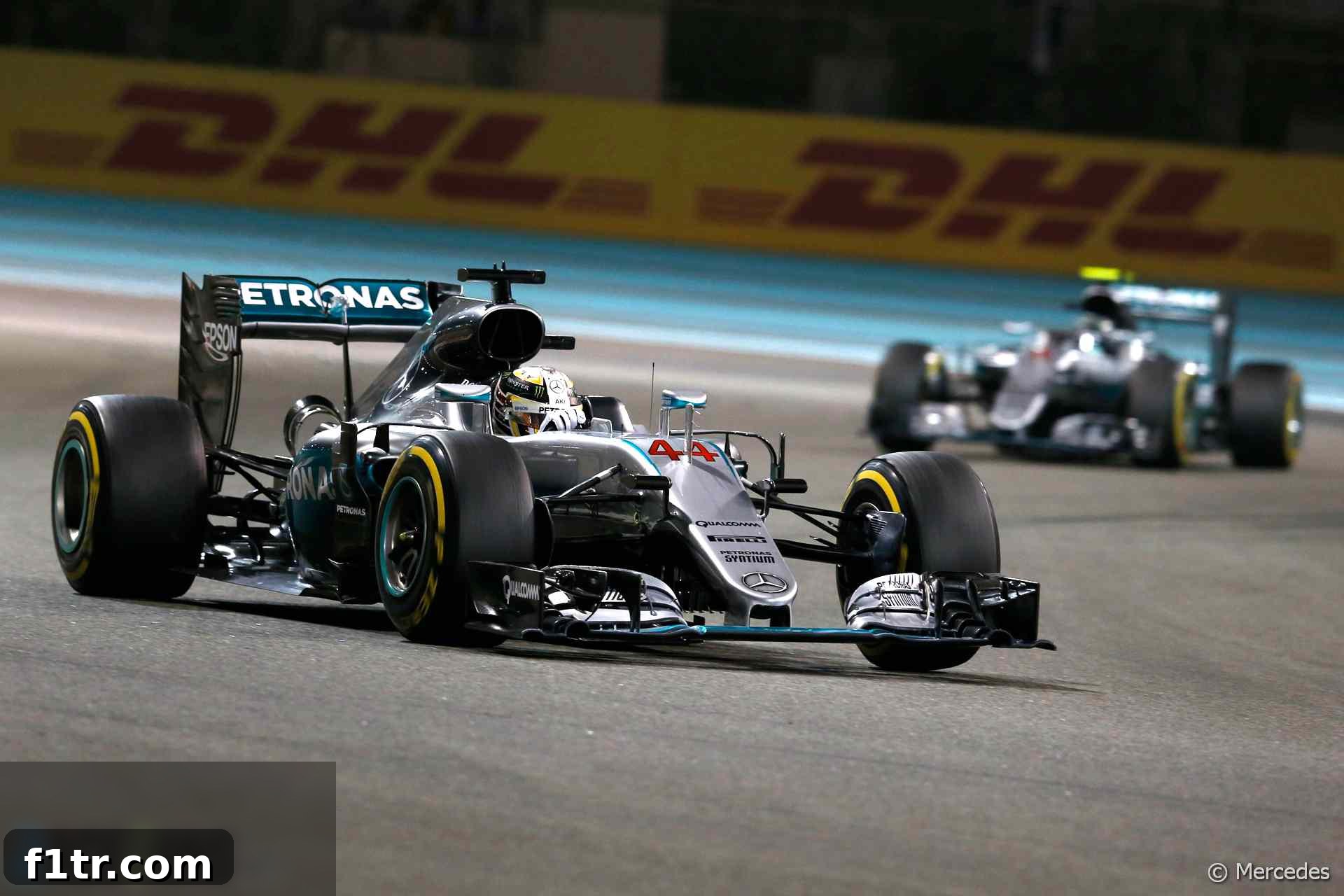
The high-stakes environment of a title decider at Abu Dhabi brings to mind the unforgettable 2016 season finale, a race that Nico Rosberg knows all too well. Heading into that showdown, Rosberg needed to finish at least third to claim the championship from his Mercedes teammate and bitter rival, Lewis Hamilton. Hamilton, fully aware of this arithmetic, employed a controversial yet ingenious tactic in the latter stages of the race. After their final pit stops, he deliberately slowed his pace, aiming to back Rosberg into the chasing pack and provoke overtakes from other competitors. This strategy was a desperate, last-ditch attempt to deny Rosberg the points he needed.
The Mercedes pit wall watched on, largely powerless, as their two star drivers engaged in a high-speed game of cat and mouse. Hamilton’s race engineer’s usual voice was replaced by that of a more senior team member, Paddy Lowe, who issued a direct instruction: “We need you to pick up the pace, that is an instruction.” Hamilton, focused solely on the championship, famously ignored the command. The tension was palpable as the gap between the lead Mercedes cars and their pursuers, most notably Sebastian Vettel in the Ferrari and Max Verstappen in the Red Bull, began to shrink dramatically. Despite Vettel successfully passing the Red Bulls and closing rapidly on Rosberg, he ultimately couldn’t find a way past the determined German. In the end, Hamilton crossed the finish line with Rosberg, Vettel, and Verstappen all within a mere 1.6 seconds, but the tactical gamble hadn’t paid off. Rosberg held on to secure third place and, with it, the World Championship.
While Hamilton’s audacious tactic in 2016 ultimately failed to alter the championship outcome, its legacy serves as a powerful reminder of the extreme measures drivers might take when everything is on the line. The fact that it didn’t work for Hamilton doesn’t mean that Verstappen or Piastri won’t consider a similar strategy this weekend if they find themselves in a comparable position with no other viable options.
Verstappen’s Strategy: A Replay of History?
For Max Verstappen, the championship arithmetic entering this final race bears an uncanny resemblance to the scenario Hamilton faced nine years ago. If Verstappen finds himself leading the race, he needs Lando Norris to finish outside the top three. This means if Verstappen is leading and Norris is running in second place, the Red Bull driver would strategically need to slow Norris down just enough for at least two other cars to overtake the McLaren and establish a buffer between the two championship contenders. This is a formidable challenge, requiring precision, track awareness, and perhaps a touch of aggression.
Such a tactic, while difficult, is fundamentally no different in principle from what Hamilton attempted. Verstappen, arguably, possesses a crucial advantage compared to Hamilton’s predicament in 2016: his championship rival, Lando Norris, drives for a competing team, McLaren. This crucial distinction means Verstappen wouldn’t have to concern himself with justifying his actions to his team bosses after the race, unlike Hamilton, who had to navigate the delicate internal politics of Mercedes-AMG Petronas. This freedom from internal team pressure could embolden Verstappen to push the boundaries of such a strategy if the opportunity arises, making his potential deployment of these tactics even more plausible.
Advert | Become a RaceFans supporter andgo ad-free
Piastri’s Challenge: McLaren’s Internal Battle
Oscar Piastri faces an even tougher task to claim the championship. His path to glory requires him to win the race with Lando Norris finishing outside the top five. This significantly increases the complexity of any “backing up” strategy. If Piastri is leading and Norris is in second, Piastri would need to slow his teammate down sufficiently for four other drivers to squeeze between them. This would be an extraordinarily difficult feat to achieve on any circuit, let alone Yas Marina, which, despite its changes, still presents challenges for such intricate maneuvering.
The situation becomes further complicated by McLaren’s explicit declaration that they are prepared to implement team orders to maximize the chances of one of their drivers winning the title. This introduces a fascinating layer of strategy and ethical consideration. For example, if Max Verstappen were to start backing Norris into Piastri, would McLaren instruct their drivers to maintain their positions, potentially sacrificing Norris’s championship hopes? Conversely, if Verstappen starts backing Piastri into Norris, would McLaren order Piastri to cede position to Norris? The logical answer to both questions is likely ‘yes,’ with the team prioritizing the driver with the stronger championship chances. However, the precise timing of such a critical decision would be paramount and fraught with potential for controversy.
The McLaren Conundrum: When to Act?
McLaren has publicly stated that they will only resort to team orders once it becomes unequivocally clear that one of their drivers can no longer realistically win the title, given the prevailing race situation. For obvious reasons, this scenario is highly probable to involve Oscar Piastri. The ambiguity lies in defining that exact point of no return. Is it when the final lap begins? Or when the final stint commences? This open-ended interpretation is almost guaranteed to ignite as much debate and discussion as their controversial team orders call at Monza earlier in the season. The pressure on the McLaren pit wall to make the right call at the right moment will be immense, scrutinized by fans, pundits, and, of course, their drivers.
Consider a scenario where Verstappen is on course for the title, but Piastri is in a position to assist Norris in winning it. Waiting until the very last lap to orchestrate a car swap carries a significant, undeniable risk: the potential for a late Safety Car or Virtual Safety Car period. Such an event could freeze the running order, effectively nullifying any last-minute team orders and leaving McLaren’s championship hopes in tatters. This exact scenario nearly played out during last year’s sprint race at Interlagos when McLaren attempted a late swap between their drivers. To mitigate this, McLaren might be forced into a drastic measure, such as summoning Piastri into the pits on the final lap, a move that would be both dramatic and deeply controversial.
Unforeseen Circumstances: Safety Cars and DNFs
Beyond the intricate dance of on-track tactics and team orders, there are always unpredictable elements in Formula 1. What happens if a championship contender drops out of the race? If Lando Norris retires, and Max Verstappen and Oscar Piastri are leading, the driver who finishes ahead will be crowned champion. However, if either Verstappen or Piastri retires, Norris’s remaining rival would still need to finish a certain number of places ahead of him, depending on the specific championship standings. These variables add layers of complexity, meaning teams and drivers must be prepared for every conceivable outcome.
The Yas Marina Variable: Track Changes and Modern F1
The very act of backing a rival into a group of others is inherently difficult and fraught with risk. This challenge may be even greater now than it was nine years ago due to the significant track changes implemented at Yas Marina in 2021. The revisions aimed to improve racing, but they also altered the dynamic of strategic play. When asked about the possibility of employing such tactics before the 2016 race, Lewis Hamilton himself highlighted these difficulties: “While in theory it sounds like it makes a lot of sense, practically it’s not very practical to do. You have two long DRS zones here. Wouldn’t be very easy and very wise to do so.”
Advert | Become a RaceFans supporter andgo ad-free
Nonetheless, Hamilton famously tried. Will Max Verstappen attempt the same this year? His public stance suggests caution. “It’s quite tough, probably, to do something like that,” he commented. “We just want to do our best race and the other things are not really in our control.” Verstappen, having observed Hamilton’s attempt nine years ago, is keenly aware of the difficulties involved. Whether he or Oscar Piastri will find themselves in a position to try such audacious tactics this weekend ultimately depends on how the cards fall between now and the checkered flag. The Abu Dhabi Grand Prix promises to be a race driven not just by raw speed, but by intelligence, strategy, and sheer will.
2025 Abu Dhabi Grand Prix Related Articles
- McLaren’s Las Vegas disqualifications cost them record points score in 2025
- 2025 Abu Dhabi Grand Prix weekend F1 driver ratings
- Antonelli asked team how many points Verstappen lost title by after online abuse
- Norris vs Verstappen vs Piastri: Full radio transcript from their championship showdown
- Norris’s engineer told him Tsunoda’s move was “classic Red Bull s***housing”
Browse all 2025 Abu Dhabi Grand Prix articles