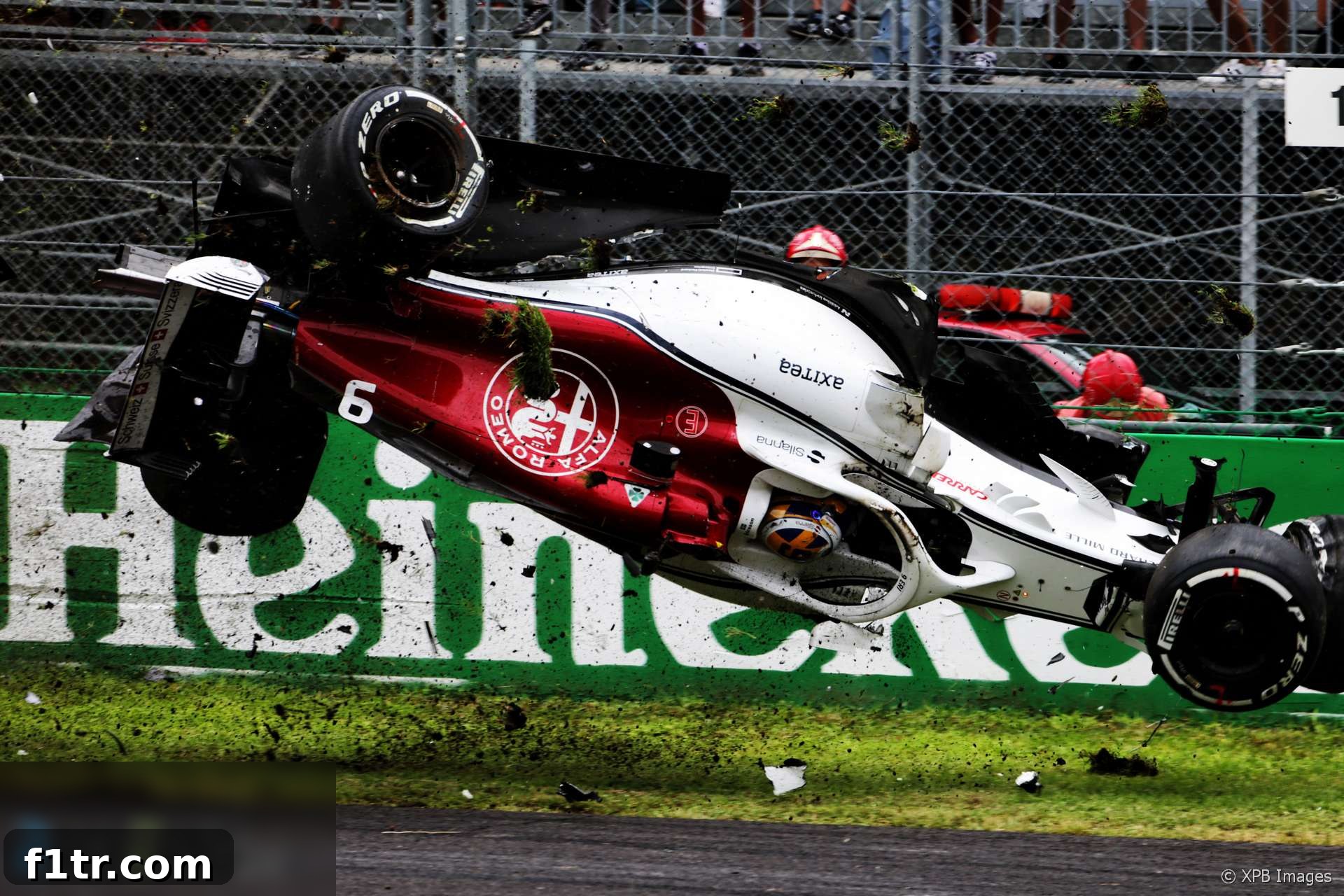
Sauber Rectifies DRS Fault After High-Speed Ericsson Crash, Eyes Full Performance for Weekend
The Sauber Formula 1 team has successfully identified and addressed a critical Drag Reduction System (DRS) malfunction that led to Marcus Ericsson’s dramatic high-speed crash during the second practice session of a recent Grand Prix weekend. While Ericsson thankfully emerged unharmed from the spectacular incident, which saw his C37 challenger pitch into multiple rolls, the team swiftly implemented a temporary fix and is now focused on deploying a more robust solution ahead of Saturday’s crucial qualifying session. This swift action underscores the paramount importance of safety and reliability in the demanding world of Formula 1.
Advert | Become a Supporter & go ad-free
The incident unfolded as Ericsson approached the braking zone for Turn One, a notoriously high-speed section of the track. The DRS, designed to reduce aerodynamic drag on the rear wing for increased straight-line speed, failed to close properly as he prepared to slow down. This critical failure resulted in a sudden and catastrophic loss of rear downforce, rendering the car unstable and uncontrollable at immense speed. The sight of the car tumbling into the barriers was a stark reminder of the inherent dangers drivers face and a testament to the incredible safety advancements in modern F1 chassis design, which undoubtedly played a crucial role in protecting Ericsson.
Compounding the concern, Ericsson’s teammate, Charles Leclerc, also experienced a similar DRS malfunction during the same session. Leclerc, though fortunate enough to avoid a crash, highlighted the perilous uncertainty drivers faced. “It was quite tricky, obviously, because we would arrive at the end of the straight and we didn’t really know if it would close or not,” Leclerc recounted. “I had the same issue, but I was a bit luckier with it; it closed a bit earlier than Marcus.” This candid admission revealed the pervasive nature of the problem within the Sauber garage, demanding an immediate and decisive response from the engineering team.
Understanding the Drag Reduction System (DRS) is crucial to grasping the severity of this malfunction. DRS allows the top element of the rear wing to open, reducing drag and increasing straight-line speed by up to 10-15 km/h. It’s a key tool for overtaking and is typically activated in designated zones on the track. However, it is imperative that the DRS closes instantaneously when the driver lifts off the throttle or applies the brakes, particularly before corner entry. Failure to do so means the car enters a corner with significantly less downforce than designed, leading to a dramatic loss of grip, especially at the rear axle, making the car incredibly difficult, if not impossible, to control. In Ericsson’s case, at the immense speeds attained before Turn One, such a failure almost inevitably results in a major incident.
Sauber’s engineering crew reacted with commendable speed and efficiency. During the very same practice session, a temporary solution was implemented to ensure the safety of both drivers for the remainder of the Friday running. This initial fix, while restoring a basic level of safety, came at a cost. “We found the issue, we resolved it, but that required a bit of sacrifice in performance,” explained Leclerc. This sacrifice likely meant either operating the DRS in a more conservative mode, limiting its use, or making mechanical adjustments that optimized safety over outright speed. The team’s priority immediately shifted from chasing lap times to ensuring the absolute reliability of the critical aerodynamic component.
Despite the initial performance compromise, the team is confident in regaining their competitive edge. Leclerc stated, “We know what to do for tomorrow to not have this problem and for there to be full performance. So there’s still a bit of potential.” This indicates that the temporary fix provided crucial data and time for the engineers to devise a more permanent and performance-optimized solution for Saturday’s practice and qualifying. The ability to quickly diagnose and rectify such a complex aerodynamic and mechanical issue under intense pressure is a testament to the expertise and dedication within a Formula 1 team.
Leclerc’s perspective after witnessing his teammate’s frightening crash was particularly insightful. He spoke of the mental resilience required to get back into the car, knowing a similar fault had just caused a major incident. “You just [have to] focus on the job and forget what happened before,” he reflected. More importantly, he expressed unwavering faith in his team. “I have full trust in my guys and that they were doing the job, and if they tell me that it will be fine next run, it means that it will be.” This level of trust between driver and engineer is fundamental in Formula 1, especially when safety is directly at stake. Leclerc’s confidence in Sauber’s ability to not only diagnose but also eliminate the problem speaks volumes about the team’s operational integrity and the effectiveness of their communication under duress. Finishing the day on a “high” after resolving the issue, as Leclerc put it, indicates a positive resolution to a potentially disastrous situation.
The implications of such an incident extend beyond just the immediate race weekend. For Sauber, a team constantly striving to climb the competitive ladder, reliability and safety are cornerstones of their development. Any question marks over fundamental systems like DRS can severely impact driver confidence and, consequently, their performance. Ensuring a robust, long-term fix is critical not only for this event but for the remainder of the season, protecting their drivers and their championship aspirations. The FIA, Formula 1’s governing body, also closely monitors such safety incidents, and teams are often required to provide detailed reports on failures and their remedies to ensure compliance with stringent safety regulations.
Ultimately, Ericsson’s crash, while terrifying, highlighted two critical aspects of modern Formula 1: the ever-present danger that lurks at the cutting edge of motorsport and the incredible strides made in driver safety. The integrity of the C37’s chassis, the survival cell, and driver protection systems like the Halo were instrumental in ensuring Ericsson walked away unharmed. This incident serves as a powerful reminder that while teams relentlessly push the boundaries of performance, the underlying commitment to driver safety remains absolute. Sauber’s rapid and effective response to this critical DRS fault showcases the professionalism and engineering prowess required to compete at the pinnacle of motorsport, allowing them to turn their attention back to maximizing performance for the rest of the Grand Prix weekend.
Advert | Become a RaceFans supporter andgo ad-free
2018 F1 season
- F1 feared “death knell” for Drive to Survive after Ferrari and Mercedes snub
- McLaren staff told us we were “totally crazy” to take Honda engines in 2018 – Tost
- ‘It doesn’t matter if we start last’: How Red Bull’s junior team aided Honda’s leap forward
- Honda’s jet division helped F1 engineers solve power unit problem
- McLaren Racing losses rise after Honda split
Browse all 2018 F1 season articles