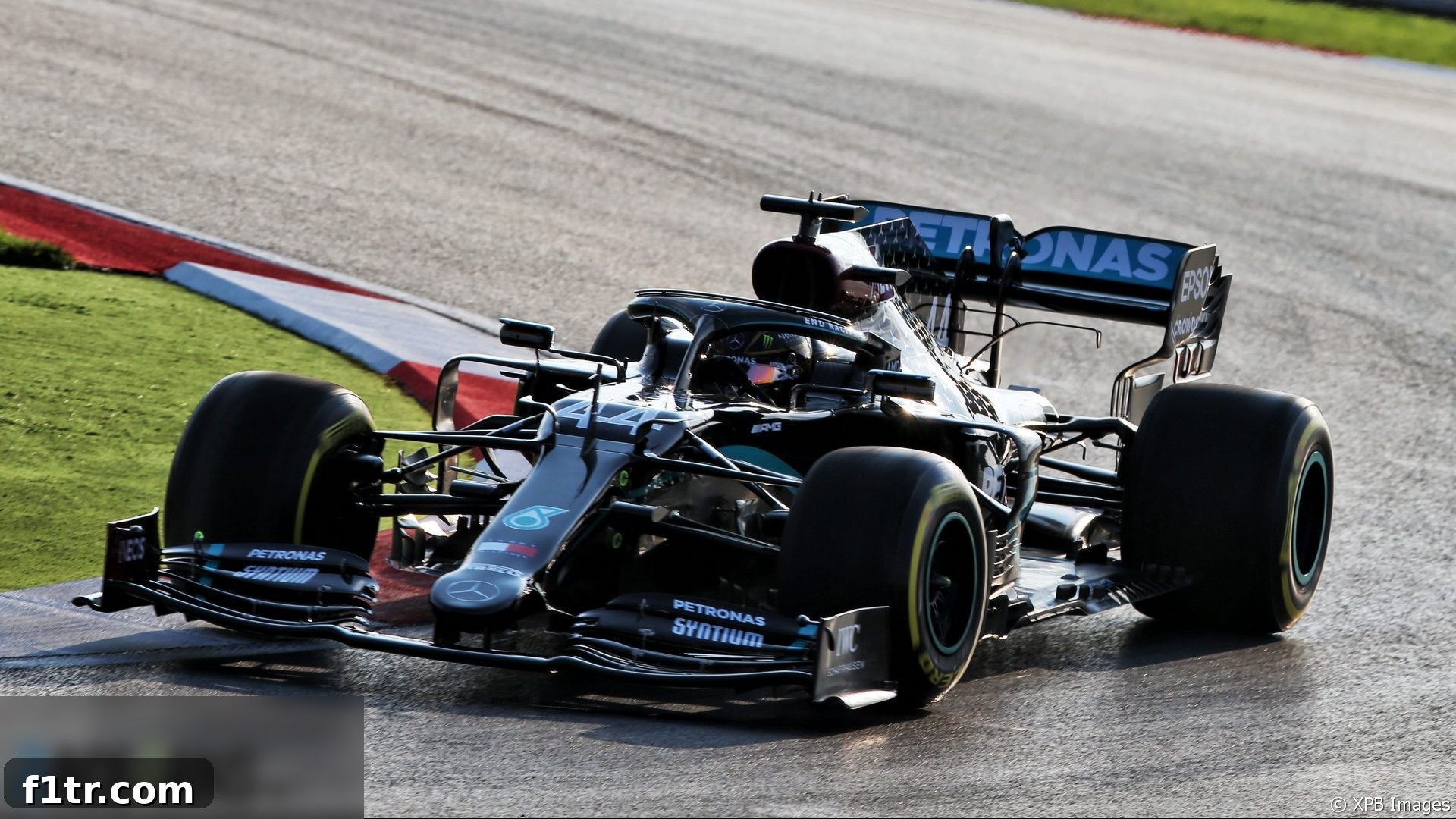
Lewis Hamilton Blasts Istanbul Park’s New Surface: A “Terrifying” Lack of Grip Spoils Iconic Circuit
Seven-time Formula 1 world champion, Lewis Hamilton, did not mince words when expressing his strong disapproval of the recently laid surface at Istanbul Park. Preparing for the 2020 Turkish Grand Prix, Hamilton critically declared that the new tarmac has unfortunately “spoiled” what he regards as an otherwise “fantastic” circuit, leaving drivers grappling with treacherous conditions.
The Istanbul Park circuit, last featured on the F1 calendar in 2011, underwent a significant resurfacing operation ahead of the championship’s much-anticipated return. With minimal running on the new asphalt since its completion, and the track further doused with water for cleaning prior to the initial practice sessions, drivers were met with an exceptionally challenging and alien surface. This unforeseen variable immediately became the dominant talking point of the weekend, setting a perplexing tone for the entire paddock.
A “Disaster” on Four Wheels: Drivers Confront Unprecedented Grip Levels
For Hamilton, Friday’s practice sessions quickly devolved into what he candidly described as “a bit of a disaster.” The profound lack of grip rendered the powerful F1 machinery almost uncontrollable, transforming what should have been an exhilarating experience into a frustrating struggle for traction and stability.
“This track is such a fantastic circuit, and I really don’t fully understand why they spent millions to re-do a surface on the track,” Hamilton voiced his bewilderment. He acknowledged the circuit’s long hiatus, noting, “I know it’s been sitting around for a long time; they probably could have just cleaned it, maybe, instead of wasting all their money.” His comments underscored a broader sentiment among many who questioned the necessity and execution of the resurfacing, particularly given the detrimental impact it had on the racing conditions.
The veteran Mercedes driver elaborated on the extent of the problem, stating that the grip levels were even worse than those encountered at the Autódromo do Algarve in Portugal. That circuit, too, had been resurfaced shortly before hosting its inaugural F1 race just weeks prior, presenting a similar, albeit less extreme, challenge to the drivers.
“The track is worse than Portimao was when we had that brand new surface there,” Hamilton confirmed, drawing a direct and unflattering comparison. “So, for us, the tyres aren’t working, and you can see it’s like an ice rink out there. You don’t get quite the enjoyment of the lap that you would normally get in Istanbul, and I don’t see that changing.” This stark assessment painted a vivid picture of the difficulties faced, highlighting how the track’s iconic flow and character had been fundamentally altered by the slippery conditions.
The Technical Battle: Tyres Out of Window and the Peril of Smooth Tarmac
A critical aspect of Formula 1 performance hinges on maintaining tyres within their optimal operating temperature window. Hamilton explained that the severe lack of grip at Istanbul Park made this an almost impossible task, creating a dangerous and unpredictable driving environment.
“It’s terrifying the whole way around,” he confessed, describing the sensation of driving on the new surface. “It’s almost like there are wet patches all over. So, as you’re on slicks, you’re accelerating, and then it goes [into a skid] so fast.” This sudden loss of traction, akin to hitting a damp patch on dry tyres, is exceptionally perilous, particularly at the high speeds achieved by F1 cars.
Hamilton delved into the technical reasons behind this terrifying phenomenon. “That’s because, basically, you’re way below the temperature window. These tyres are so hard, and they work in a certain window. If you’re 10, 20 degrees below, they’re not working; if they’re 20 degrees over, they’re not working.” The struggle to generate and maintain heat in the tyres meant they were operating well outside their intended performance parameters, rendering them ineffective and making the car incredibly difficult to control.
The very nature of the new asphalt was identified as a primary culprit. “For some reason, this surface is so smooth,” Hamilton observed. He contrasted it with the more abrasive characteristics of older circuits: “The older circuits, unlike the surface here for example, it’s much more open between the tyres, so it works the tyre more. This one, it’s super-closed and flat and shiny, and the oil seeps from the Tarmac. It’s shit with a capital ‘S’.” This vivid description highlighted how the ultra-smooth, almost polished texture of the new surface, potentially exacerbated by residual oils, offered no mechanical grip for the tyres to bite into, further complicating the heating issue.
Pirelli’s Tyre Selection: A Hard Choice for a Hard Challenge
For the Turkish Grand Prix, Pirelli, F1’s sole tyre supplier, had opted to bring its hardest selection of compounds – the C1, C2, and C3. This decision is typically made for circuits known for their high energy demands, abrasive surfaces, or fast, sweeping corners that impose significant loads on the tyres.
However, given the unforeseen ultra-low grip conditions, Hamilton speculated that a softer range of rubber might have been more appropriate, or at least provided a more manageable experience. “It would help, definitely,” he affirmed regarding the hypothetical use of softer tyres. “As you go down the range, the hard tyre is useless, and the medium tyre is so-so; the soft tyre is starting to be better. I think if we had gone down to the softest, it may have been better.” Softer compounds are designed to generate heat more easily and offer greater mechanical grip, which would have been invaluable on the slick Istanbul Park surface.
Yet, Hamilton acknowledged the inherent complexity of tyre allocation, particularly at a circuit like Istanbul Park, renowned for its challenging corners, none more so than the infamous Turn 8. “But it’s a really difficult circuit: Turn eight can kill the right tyre. So, who knows,” he conceded. Turn 8, a quadruple-apex, high-speed left-hander, is notorious for its immense lateral G-forces and sustained load on the front-right tyre, making tyre integrity a crucial concern. This specific characteristic likely played a significant role in Pirelli’s decision to bring harder compounds, aiming to ensure durability even if it meant sacrificing initial grip.
“It would have worked a little bit better than it is, but it is what it is,” Hamilton concluded, expressing a sense of resignation towards the challenging circumstances. Drivers were left to make the best of a difficult situation, adapting their driving styles and car setups to navigate the unpredictable “ice rink” that had once been a beloved and highly-praised circuit.
Beyond the Criticism: Implications for the Grand Prix Weekend
The profound lack of grip had far-reaching implications for the entire Grand Prix weekend. It promised to reshape qualifying strategies, making it difficult for drivers to find the necessary rhythm and confidence for optimal lap times. Race strategy would also be impacted, with tyre management becoming an even more critical, yet unpredictable, factor. Higher rates of sliding would lead to increased thermal degradation, potentially forcing more pit stops or opening up diverse strategic approaches.
For spectators, these challenging conditions could either lead to a frustrating procession or, conversely, an enthralling spectacle of driver skill and daring overtakes amidst the chaos. Mistakes, spins, and even crashes were a distinct possibility, adding an element of unpredictability that F1 often thrives on. Ultimately, the Istanbul Park resurfacing controversy highlighted the delicate balance between track maintenance, circuit character, and the demands of modern Formula 1 racing, leaving a lasting impression on drivers and fans alike as the 2020 Turkish Grand Prix unfolded.
2020 Turkish Grand Prix
Browse all 2020 Turkish Grand Prix articles