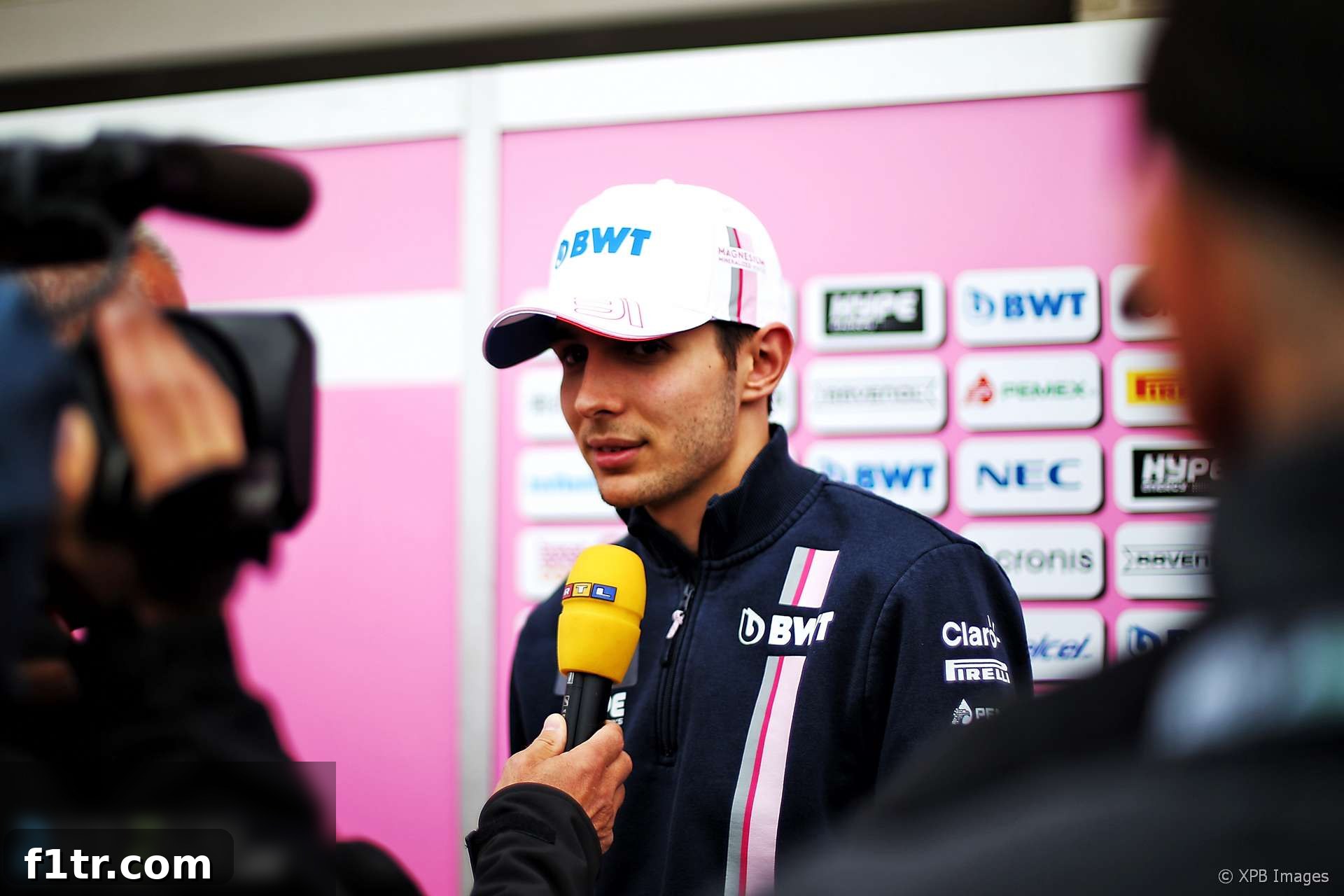
Esteban Ocon, a highly regarded talent in Formula 1, found himself at a pivotal career crossroads as he navigated the tumultuous driver market for the upcoming seasons. Facing the potential loss of his current seat, Ocon explicitly stated his unwillingness to commit to Williams for more than a single season, steadfast in his belief that “good opportunities” would materialize for him in 2020. This strategic approach highlights the intricate dance between securing an immediate F1 presence and positioning oneself for a top-tier drive in the near future.
Esteban Ocon’s F1 Future: Navigating a Critical Career Crossroads with Mercedes Ambitions
The highly competitive landscape of Formula 1 consistently challenges even the most gifted drivers, and Esteban Ocon’s journey exemplifies this reality. As a prominent figure within the Mercedes-Benz junior driver programme, Ocon has consistently demonstrated exceptional speed, racecraft, and maturity throughout his F1 tenure. His performances have cemented his reputation as a future front-runner, yet as the 2019 F1 season approached, Ocon faced an increasingly uncertain future, with the real prospect of being sidelined despite his evident talent. His candid discussions regarding a potential move to Williams revealed a strategic depth, balancing the immediate imperative of retaining an F1 seat with the aspirational goal of a long-term future with a championship-contending team.
Ocon’s immediate concern centered on securing a spot on the 2019 grid. It was widely understood that Williams, a long-standing Mercedes customer team, represented his most realistic, and perhaps final, opportunity to remain in the sport. This urgency stemmed from significant shifts within his then-current team, Force India. Following a period of financial instability, Force India was acquired by a consortium led by Lawrence Stroll. This development was expected to pave the way for Lawrence’s son, Lance Stroll, to take one of the team’s race seats, inevitably displacing Ocon. Furthermore, another potential avenue, the second seat at Toro Rosso, was closed off as Red Bull made it clear they would not offer a drive to a Mercedes-backed driver, thereby limiting Ocon’s options considerably.
The announcement that his Force India teammate, Sergio Perez, would continue with the team for another year, while confirming one piece of the puzzle, did little to alleviate Ocon’s immediate predicament. “At the moment we are still on the same level. Still discussions, there are still possibilities for me next year,” Ocon commented, reflecting the ongoing, high-stakes negotiations and the prevailing uncertainty surrounding his 2019 prospects. However, his focus remained acutely tuned to the future, as he articulated a clear vision: “But really if that’s not the case and if I don’t find a seat next year we see still good opportunities for 2020.” This forward-looking perspective strongly hinted at a meticulously planned strategy, with a potential move to the Mercedes factory team looming large in his long-term ambitions, a subject that had been a recurring theme within F1 paddock discussions for some time.
The Williams Dilemma: A Stepping Stone to Glory or a Temporary Detour?
Advert | Become a Supporter & go ad-free
The prospect of joining Williams, while offering a vital lifeline to remain in Formula 1, also presented a multifaceted strategic challenge for Ocon. The team’s pronounced struggles in recent seasons, which saw them drop to the back of the grid, naturally raised questions about their immediate competitiveness and long-term trajectory. Ocon’s explicit reluctance to commit to a multi-year deal with the Grove-based outfit was a clear indication of his desire to maintain flexibility for 2020, particularly with the highly coveted Mercedes seat in mind. Speculation had been widespread that if Mercedes opted not to extend Valtteri Bottas’s contract for a fourth season, Ocon would be the leading contender to partner Lewis Hamilton. This ultimate ambition undoubtedly shaped his cautious approach to any agreement with Williams, ensuring that a short-term solution would not inadvertently compromise a potentially career-defining opportunity with the sport’s most dominant team.
George Russell’s Arrival and Ocon’s Strategic Outlook
Adding another layer of intrigue to the driver market, Williams had, just a week prior to Ocon’s public statements, confirmed that fellow Mercedes junior driver, George Russell, would make his Formula 1 debut with the team in 2019. Russell had secured a multi-year contract, signaling a significant commitment from Williams towards a long-term development strategy. Ocon was swift to dispel any notions of rivalry or direct competition for the same spot, underscoring that Russell’s extended agreement did not conflict with his own, more short-term, aspirations. “It’s good to see that George is promoted,” Ocon remarked, highlighting the spirit of camaraderie and shared development within the Mercedes junior program. He further clarified the fundamental difference in their contractual objectives: “He’s also part of the Mercedes junior programme. He signed for multiple years, that was not our intention to sign for those many years.” This critical distinction underscored Ocon’s preference for a shorter-term arrangement, perfectly aligning with his overarching strategic vision for a potential move to Mercedes in 2020. Despite Russell’s confirmed seat, Ocon remained optimistic about his own chances, pointing out, “There’s still a second seat in the Williams, there’s still talks so we’ll see where that goes,” indicating that active negotiations for the remaining spot were very much underway.
George Russell’s ascent to Formula 1 was a powerful testament to the effectiveness and strength of the Mercedes young driver program, which is meticulously designed to cultivate talent for future top-tier drives. Russell, fresh from an impressive triumph in the 2018 Formula 2 Championship, had unequivocally proven his readiness for the pinnacle of motorsport. His multi-year deal with Williams unequivocally signaled the Grove-based team’s dedication to investing in promising young talent as part of their comprehensive rebuilding efforts. For Ocon, a similar trajectory was desirable, albeit with a crucial difference: his deeply ingrained ties to Mercedes implied a different, potentially higher, ultimate destination. The “second seat” at Williams, therefore, became a critical component in this complex strategic mosaic, representing a potential temporary platform rather than a definitive long-term home for Ocon.
Williams’s Resurgence Potential: A Glimmer of Hope Amidst Recent Struggles
Despite Williams’s challenging and ultimately disappointing performance in the 2018 constructors’ championship, which saw them languish at the very bottom of the standings, Ocon expressed a notable degree of optimism regarding their prospects for increased competitiveness in the future. His confidence was primarily rooted in the significant regulatory changes slated for the 2019 season, which included a new front wing design and a thoroughly revised aerodynamic package. Such sweeping rule overhauls frequently present a unique opportunity for teams to essentially reset their development paths and potentially make significant gains on their competitors, as the technical playing field is, to some extent, leveled. “Next year the rules are changing there’s new front wing, new aero package. It’s going to be different,” Ocon observed, suggesting that Williams possessed the potential to adeptly exploit these changes to their strategic advantage.
Ocon’s optimism was further bolstered by his historical perspective of the storied British team. He vividly recalled Williams’s tenacious fighting spirit and their demonstrated ability to challenge and often outperform mid-field teams in previous seasons, even when pitted against his own Force India squad. “I think the year Williams had it’s not the one they deserved and not the one they really shown in the past. Last year I remember them fighting hard with us. They were quicker than us the first half of the season then we went quicker at the end. But I remember them quick and competitive so I don’t think that will last for very long,” he elaborated. This specific reference to Williams’s 2017 performance, where the team exhibited notable flashes of pace, particularly in the early stages of the season, fueled his conviction that their 2018 struggles were an anomaly attributable to specific design flaws rather than an irreversible decline. The team’s illustrious history, adorned with multiple constructors’ and drivers’ championships, served as a powerful reminder of their inherent capability, even if recent years had been characterized by lean results.
The Transformative Impact of New Regulations on Team Dynamics
The 2019 aerodynamic rule changes were meticulously crafted with the specific objective of promoting closer racing and enhancing overtaking opportunities across the grid. Key alterations encompassed simpler, less aerodynamically complex front wings, revised brake duct designs, and a wider, higher rear wing. For a team like Williams, which had grappled with fundamental aerodynamic performance issues throughout the 2018 season, these widespread changes offered a critical and much-needed opportunity for a comprehensive fresh start. A complete redesign of the car’s aerodynamic philosophy could potentially enable them to rectify previous design deficiencies and discover a more competitive operating window. This “reset button” effect is frequently a source of immense anticipation for teams facing a significant performance deficit, as it provides a tangible chance to bridge the gap without necessarily requiring an exponentially greater financial outlay than their rivals. Ocon’s confident assessment that Williams would not remain at the back of the grid for an extended period was firmly underpinned by this fundamental shift in technical regulations, offering a pragmatic and well-founded hope for a team desperately seeking a decisive turnaround in fortunes.
The Broader F1 Driver Market and Mercedes’ Long Game Strategy
Esteban Ocon’s complex situation was a microcosm of the intense and often brutal competition within the Formula 1 driver market, commonly referred to as the “silly season” due to its unpredictable and dramatic twists. For a driver of Ocon’s undeniable caliber, being forced to the sidelines, even for a single season, carried the risk of significant and potentially long-lasting repercussions on his carefully planned career trajectory. However, Mercedes-Benz, Ocon’s primary patron and long-term backer, clearly had a well-defined and strategic plan in motion. Their substantial investment in his development strongly suggested an envisioned future role within their own formidable factory team or with a strong customer outfit. Placing him at Williams, even for a solitary year, would ensure his continued presence within the F1 ecosystem, allowing him to accumulate further invaluable race experience, and crucially, maintain his peak race fitness in preparation for a potential top-tier seat. This meticulous, long-term planning eloquently underscores the strategic importance of junior driver programs in modern Formula 1, where top teams identify, nurture, and cultivate talent years in advance of their ultimate deployment.
The prospect of Ocon ultimately joining Mercedes in 2020 was far from mere speculation; it was a deeply understood and integral component of the team’s meticulous succession planning. Valtteri Bottas, while a consistently solid and reliable performer, had navigated his tenure with Mercedes on a series of short-term, typically one-year, contracts. This contractual arrangement deliberately afforded the team maximum flexibility in their driver lineup decisions. Should Bottas’s performance metrics not meet the team’s lofty expectations, or if Mercedes strategically determined that a fresh impetus was required, Ocon stood poised as the logical and well-prepared successor. His extensive F1 experience, his robust and long-standing relationship with Mercedes, and his impressive track record, particularly when competing fiercely against experienced drivers like Sergio Perez at Force India, collectively rendered him an exceptionally compelling choice. The Williams offer, therefore, represented a meticulously considered stepping stone, a temporary home where Ocon could diligently continue to refine his skills and steadfastly maintain his crucial F1 presence while patiently awaiting the ultimate and potentially career-defining call from the illustrious Brackley-based team.
Advert | Become a RaceFans supporter andgo ad-free
Conclusion: Esteban Ocon’s Calculated Risk and Vision for F1 Stardom
Esteban Ocon’s strategic decision to pursue a one-year deal with Williams, while appearing to be a compromise given his talent, was, in reality, a finely calculated risk that underscored a clear and ambitious strategy for his Formula 1 future. It vividly demonstrated his pragmatic understanding of the immediate complexities of the driver market, coupled with an unwavering, laser-like focus on his ultimate objective: securing a coveted seat at a top-tier team, most ideally the dominant Mercedes-AMG Petronas Formula One Team. The intricate interplay of driver contracts, deeply entrenched team affiliations, and the perpetually unpredictable dynamics of the “silly season” collectively played a pivotal role in shaping his challenging, yet potentially rewarding, career path. While the immediate outlook for the 2019 season presented considerable uncertainty, Ocon’s unwavering self-confidence in his abilities, combined with the powerful and consistent backing of Mercedes, positioned him uniquely within the F1 paddock. His expressed optimism about Williams’s potential resurgence under the auspices of new technical regulations also added an intriguing layer to his considerations, suggesting that even a temporary stint with the team could offer invaluable experience within a potentially more competitive and challenging environment. As the fast-evolving landscape of Formula 1 continued to shift, all eyes remained firmly fixed on Esteban Ocon, a driver widely recognized as being on the very cusp of fulfilling his significant, long-held potential, as he skillfully navigated the complex and often treacherous currents of the sport with a resolute gaze fixed firmly on 2020 and the promising opportunities that lay beyond.
2018 F1 season
- F1 feared “death knell” for Drive to Survive after Ferrari and Mercedes snub
- McLaren staff told us we were “totally crazy” to take Honda engines in 2018 – Tost
- ‘It doesn’t matter if we start last’: How Red Bull’s junior team aided Honda’s leap forward
- Honda’s jet division helped F1 engineers solve power unit problem
- McLaren Racing losses rise after Honda split
Browse all 2018 F1 season articles