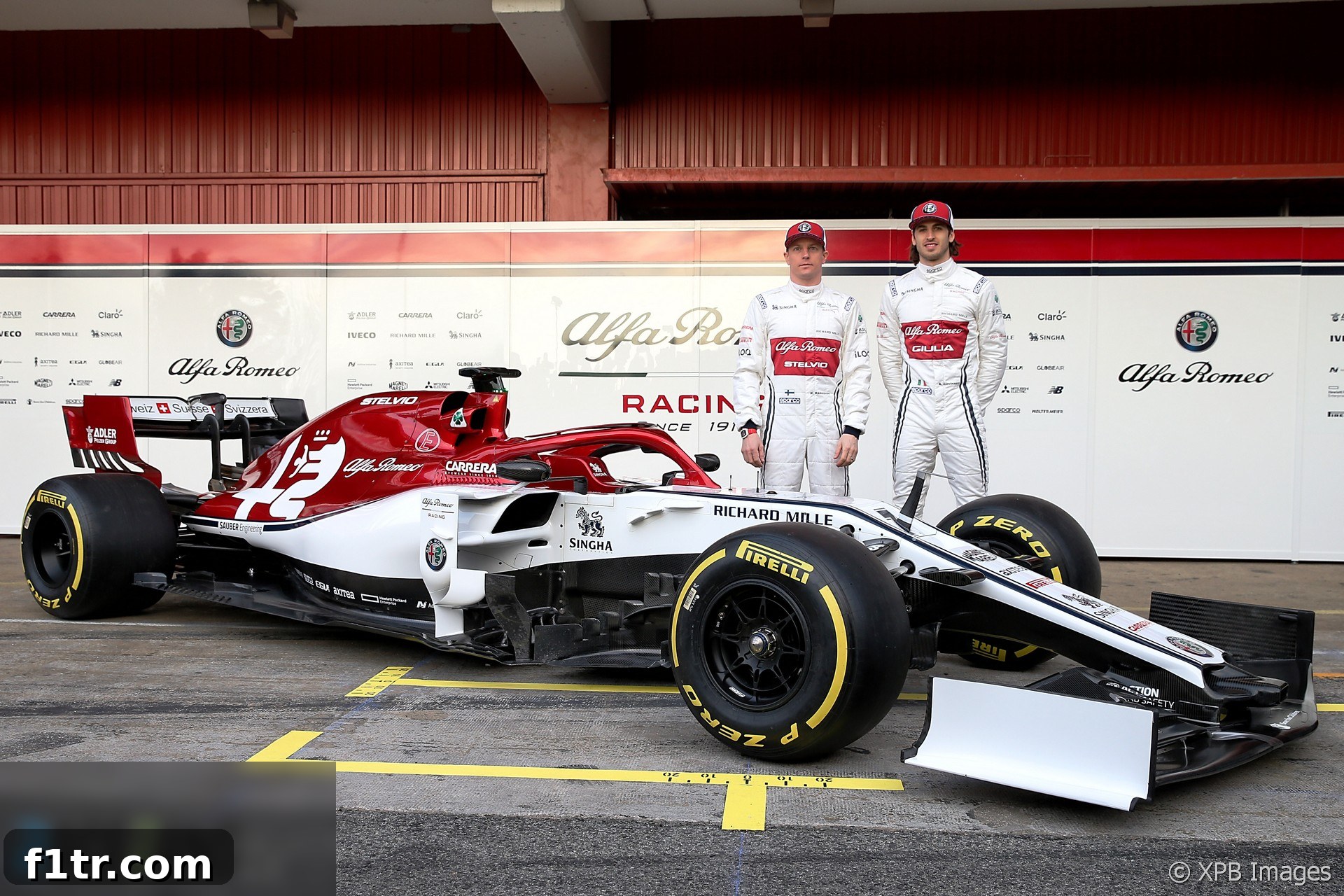
From the moment the first spy shots of the C38 emerged during testing, cloaked in its interim livery, it became undeniably clear that the engineering efforts undertaken by Sauber – before its eagerly anticipated rebranding to Alfa Romeo Racing – were on an altogether different scale compared to many of its Formula 1 rivals. The Hinwil-based squad, renowned for its ingenuity and often outperforming its budget, had once again delivered a design that hinted at a fresh, perhaps even radical, aerodynamic philosophy.
The Alfa Romeo C38 represented a bold departure from its predecessor, the C37, displaying a level of innovation and conceptual bravery that set it apart in a season characterized by significant regulation changes. This was not an incremental evolution but a calculated reinvention, indicative of a team unafraid to challenge conventional wisdom. Historically, Sauber has been a hotbed of novel ideas, many of which have eventually found their way onto the cars of larger, more established teams. The C38 was poised to continue this legacy, showcasing a suite of aerodynamic solutions that were both intriguing and potentially trend-setting for the highly competitive grid.
Unveiling the Aerodynamic Marvel: The Alfa Romeo C38
The 2019 Formula 1 season brought with it a series of sweeping aerodynamic regulation changes, primarily aimed at simplifying the cars’ front wings and promoting closer racing. These changes drastically limited the intricate devices teams could employ to manage airflow around the front wheels, particularly the crucial “outwash” effect that pushed turbulent air away from the car’s sensitive underbody. It was within this challenging new landscape that the Alfa Romeo C38 truly shone, demonstrating an astute understanding of the revised rulebook and pioneering solutions that would leave many in the paddock scrutinizing its every detail.
At its core, the C38 was a testament to sophisticated aerodynamic integration. Every surface, from its distinctive front wing to its compact sidepods and the curiously low engine cover, appeared to be meticulously crafted to optimize airflow and extract maximum performance. This article delves into the standout features of the Alfa Romeo C38, exploring the design choices that made it one of the most talked-about cars of its era and a prime example of clever engineering within Formula 1’s ever-evolving technical framework.
Front Wing: A Masterclass in Aerodynamic Specialization
Undoubtedly, the most visually striking and aerodynamically significant feature of the Alfa Romeo C38 was its revolutionary front wing. In a season where the front wing regulations had been significantly simplified, forcing teams to rethink their approach to generating both downforce and crucial outwash, Alfa Romeo presented a design concept that instantly caught the eye. Unlike many of its rivals, which attempted to maintain downforce across the full span of the wing, the C38’s design exhibited a clear functional division, a concept also explored by Ferrari and Toro Rosso but executed with unique flair by the Hinwil team.
The C38’s front wing did not utilize the full available span for all five of its aerofoil elements. Instead, it adopted a highly specialized approach, segmenting the wing into distinct zones, each optimized for a specific aerodynamic function: pure downforce generation, outwash effect, and the management of the Y250 vortex. This philosophy allowed Alfa Romeo to address the challenges posed by the 2019 regulations head-on, particularly the difficulty in engineering effective outwash into the simplified outer wing designs.
The inner tips of the wing, closest to the car’s centerline, retained a steeper angle and wider spacing, largely mirroring 2018 designs as this area was less affected by the new rules. This section played a critical role in directing airflow under the car. Moving outwards, the middle section of each wing was steeply angled, meticulously shaped to generate the majority of the front wing’s downforce. It’s an often counterintuitive fact that an F1 front wing doesn’t need to be overwhelmingly powerful; a relatively small, efficient span is sufficient to balance the downforce generated by the rear wing and diffuser, crucial for overall car stability and grip.
Where the Alfa Romeo design truly diverged from the norm was in its outer spans. While many teams extended all five elements across the full wingspan at a near-maximum angle of attack, aiming to generate a tip vortex that would mimic the outwash effect of the now-banned complex endplate areas, Alfa Romeo took a different path. Their design progressively flattened the wing’s angle of attack to almost zero by the endplate. This meant that the outwash effect was primarily generated not by the wing elements themselves, but by the specially designed endplate, which was shaped to guide airflow around the front tyre and away from the car’s critical aerodynamic surfaces.
This innovative flattening of the outer wing section also had another significant benefit: it strategically positioned the tip vortex from the near-flat outer wing tip lower down. This lower vortex was particularly effective in controlling and mitigating the detrimental effects of air spilling off the lower outer edge of the tyre, a phenomenon known as “tyre squirt.” By managing this turbulent airflow more efficiently, the C38’s front wing contributed to a cleaner, more stable airflow downstream to the rest of the car, enhancing the performance of the bargeboards, sidepods, and floor. The C38’s front wing was, therefore, not just a downforce generator but a sophisticated tool for managing the complex aerodynamic environment around the front wheels, setting a high bar for ingenious interpretation of the new regulations.
Sidepods: Compactness and Cooling Efficiency
The sidepod design on an F1 car is a critical area for aerodynamic performance, dictating how airflow is managed over the floor and around the rear of the car. The Alfa Romeo C38 showcased an evolution of its predecessor’s clever sidepod concept, pushing the boundaries of compactness and cooling efficiency. The 2018 Sauber had already featured a unique blend of “high-top” and conventional sidepod elements, initially with separate inlets above the side crash structure that later merged into a single, semi-circular opening.
For the C38, this concept was refined and repackaged into a true “high-top” sidepod configuration. This meant that the mandatory side crash structure was positioned lower, allowing for a single, very small, and tightly rounded inlet to be formed above it. This aggressive packaging was designed to minimize the frontal area and maximize the undercut beneath the sidepod, channeling a larger volume of clean airflow towards the rear diffuser and beam wing, thereby boosting rear downforce. The diminutive size of the inlet was a testament to the team’s confidence in their cooling package and internal airflow management.
Achieving such compact sidepods while ensuring adequate cooling for the demanding F1 power unit is a significant engineering challenge. The C38 tackled this by distributing cooling radiators more effectively, with a notable portion mounted above the engine. Furthermore, the 2019 Alfa Romeo retained and even enhanced the complex array of inlets integrated into the roll hoop. These multiple apertures were not merely for feeding the engine’s main airbox but served as crucial intakes for various other power unit systems, including coolers for the Energy Recovery System (ERS) and the oil system. This multi-functional approach to the roll hoop inlets allowed for the incredibly slender and aerodynamically optimized sidepod bodywork, a design choice that reduced drag and improved the efficiency of the airflow over the car’s posterior. The sidepods of the C38 were a prime example of meticulous packaging, where every cubic centimeter was optimized for either cooling or aerodynamic gain, contributing significantly to the car’s overall performance potential.
Shark Fin: A Puzzling Departure from the Norm
The “shark fin” engine cover has seen various iterations and regulatory interventions in Formula 1 over the years. Reintroduced in full height in 2017 to improve yaw stability and airflow to the rear wing, its dimensions were subsequently scaled back for the 2018 regulations. Despite these changes, most teams in 2019 continued to run top bodywork that extended as high as legally permissible, forming a vestigial shark fin that still contributed to aerodynamic stability. Given the unchanged rules from 2018, the expectation was that all teams would maximize this element.
However, during pre-season testing, the Alfa Romeo C38 presented a notably lower engine cover than its competitors. While this design still adhered to the stipulated height and volume restrictions, it was conspicuously less pronounced than the full-height fins adopted by the rest of the grid. This lower profile was cleverly integrated with the wider bodywork covering the airbox and the cooling ducts returning from the roll hoop, creating a seamless but significantly less prominent spine along the car’s engine cover.
The reasoning behind Alfa Romeo’s decision to run a reduced shark fin generated considerable intrigue and speculation. A full-height shark fin traditionally offers significant benefits, primarily by improving the car’s yaw stability, particularly in crosswinds or during high-speed cornering. It also helps to condition the airflow reaching the rear wing, making it more consistent and therefore enhancing its performance through corners. To seemingly discard these well-understood advantages was a curious choice.
Several hypotheses emerged regarding this design philosophy. Perhaps Alfa Romeo had developed a car with such inherent aerodynamic balance and stability that it did not require the additional yaw control offered by a larger fin. Alternatively, the team might have been pursuing a different handling characteristic, aiming for a car that was more sensitive on corner entry and potentially easier to turn at the expense of absolute stability. It’s also possible that the C38’s unique rear wing and diffuser combination gained less performance from the fin’s effect, or that the reduced drag from a lower engine cover offered a more significant performance benefit on straights, a critical factor on certain circuits. The trade-off between straight-line speed and cornering stability is a constant balancing act in F1 design. Ultimately, whether Alfa Romeo would continue to run this distinctive low engine cover at the initial races of the season, and how it would impact their performance, remained one of the C38’s most intriguing questions, showcasing a team willing to challenge established aerodynamic norms.
The Alfa Romeo C38: A Legacy of Innovation
The Alfa Romeo C38 stands as a remarkable example of engineering ingenuity and a testament to the persistent spirit of innovation that defines Formula 1. Emerging from the legacy of Sauber, a team celebrated for its ability to punch above its weight class, the C38 was not just a new car but a bold statement of intent for the newly rebranded Alfa Romeo Racing. Its design, from the radical front wing to the meticulously packaged sidepods and the intriguing low engine cover, demonstrated a profound understanding of the 2019 regulations and a willingness to interpret them in unconventional, yet potentially highly effective, ways.
The C38’s front wing, with its specialized zones for downforce, outwash, and vortex management, quickly became a point of intense discussion and analysis within the paddock. It offered a novel solution to the challenges of simplified front wing rules, strategically managing airflow to optimize performance and mitigate the turbulent effects of the front tires. Similarly, its ultra-compact, high-top sidepods, enabled by clever internal packaging and multi-functional roll hoop inlets, showcased an aggressive pursuit of aerodynamic efficiency, channeling crucial airflow to the rear of the car.
Even the C38’s most perplexing feature, the notably low shark fin, underscored the team’s willingness to deviate from conventional wisdom, hinting at a distinct aerodynamic philosophy or a specific handling characteristic they aimed to achieve. These design choices collectively highlighted Alfa Romeo’s ambition to not merely compete but to innovate, influencing the design trends of the season and potentially beyond.
In conclusion, the Alfa Romeo C38 was far more than just another Formula 1 car; it was a symbol of intelligent design, a fusion of historical engineering prowess with a forward-thinking aerodynamic vision. Its innovative features captured the imagination of fans and experts alike, solidifying Sauber’s (now Alfa Romeo’s) reputation as a true force of engineering creativity within the pinnacle of motorsport.
F1 technology
- McLaren, Red Bull and Ferrari bring rear corner updates to Imola
- Ferrari, McLaren and Red Bull bring upgrades again for Saudi Arabian Grand Prix
- McLaren introduce major floor upgrade for Norris’ car at Mexican Grand Prix
- McLaren, Mercedes and Red Bull detail upgrade packages for United States GP
- Red Bull remove engine cover ‘cannons’ in major RB20 update – but they may return
Browse all F1 technology articles