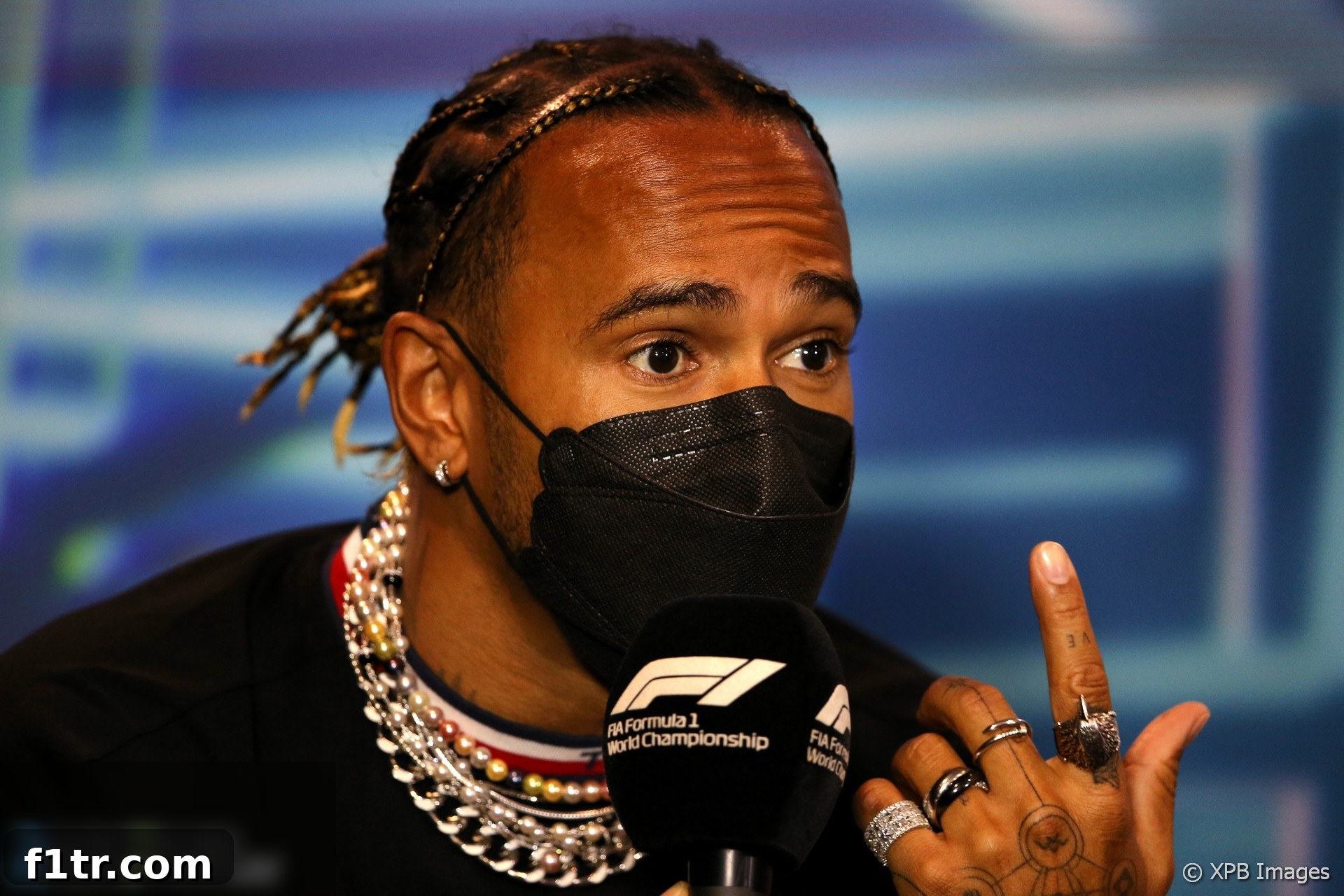
In the high-octane world of Formula 1, where split-second decisions and precision engineering define success, debates often extend beyond the asphalt. One such recent controversy flared up at the inaugural Miami Grand Prix, drawing global attention not for a daring overtake or a strategic pit stop, but for something far more personal: driver jewellery. At the heart of this discussion was seven-time world champion Lewis Hamilton, who, never shy about expressing his views, openly challenged the FIA’s renewed commitment to enforcing long-standing regulations regarding driver accessories.
Hamilton’s stance was clear and unequivocal: the sport’s governing body, the FIA, has “bigger fish to fry” than meticulously monitoring drivers’ adornments. This declaration came as the FIA, under its new leadership, signalled a stricter interpretation and enforcement of the International Sporting Code, specifically targeting jewellery and fireproof underwear. The directive, issued by F1 Race Director Niels Wittich ahead of the Miami weekend, mandated that teams officially confirm their drivers’ adherence to these safety regulations as part of the rigorous scrutineering process.
Advert | Become a Supporter & go ad-free
The timing and nature of this crackdown struck many, including Hamilton, as peculiar, especially in the vibrant, high-profile setting of the Miami International Autodrome. During the pre-first practice press conference, Hamilton, making a noticeable statement by wearing more jewellery than usual, voiced his profound disappointment. He described the FIA’s renewed focus on this particular aspect as a “step backwards” for a sport that he believes has been making significant strides in more critical areas.
“I couldn’t get any more jewellery on today,” Hamilton quipped, underscoring his defiance. He elaborated on his long-held perspective, stating, “I don’t really have a lot more to add than what I already said the last time I was in front of you guys and we spoke about it. I feel it’s almost like a step backwards.” Hamilton continued, questioning the priorities of the governing body: “If you think of the steps we’re taking as a sport and the more important issues and causes that we need to be focussed on and really pushing. I think we’ve made such great strides as a sport.”
He further contextualized his personal history with the sport and its rules. “Look, we’re here in Miami. This is such a small thing – I’ve been in the sport for 16 years, I’ve been wearing jewellery for 16 years. In the car only ever have my earrings on and my nose ring, of which I can’t even remove. So it seems unnecessary for us to get into this spat.” This personal anecdote highlights the tension between established driver habits and a sudden, stringent enforcement of a long-dormant rule. For Hamilton, whose identity is inextricably linked to his unique style and advocacy, this felt like an attack on personal expression rather than a genuine safety imperative.
The FIA’s Rationale: Safety First, Always
The FIA’s push for compliance with the International Sporting Code (ISC) regulations on jewellery and approved fireproof underwear is rooted in safety protocols that have been in place for decades. Article 5 of Appendix L to the FIA International Sporting Code explicitly states that “the wearing of jewellery in the form of body piercings or metal neck chains is prohibited during the competition.” The rationale is straightforward: metal objects can pose significant risks in the event of a crash. They can snag on clothing or car components, potentially causing injury. In a fire, metals heat up rapidly, leading to severe burns. Moreover, sharp edges or protrusions could puncture the skin during impact, complicating rescue efforts or medical treatment. Even seemingly innocuous items like rings or necklaces can become dangerous projectiles or cause complications if a driver needs immediate medical intervention.
This renewed enforcement coincides with the appointment of a new FIA race control team under the leadership of recently-elected president Mohammed Ben Sulayem, who assumed the role after the conclusion of the previous F1 season. The new leadership appears intent on reinforcing the authority and strict application of existing rules, aiming for greater consistency and adherence across the board. This move, while perhaps perceived as trivial by some, signals a commitment to upholding the integrity of safety regulations, no matter how minor they may seem in the grand scheme of a multi-billion-dollar sport.
Hamilton’s Call for Prioritization: “Bigger Fish to Fry”
Lewis Hamilton, a vocal advocate for various social and environmental causes, emphasized that the FIA should direct its energy towards issues he considers more substantial and impactful. He stated his intention to communicate directly with Mohammed Ben Sulayem, hoping to persuade the FIA to shift its focus towards matters of greater importance. “I’ll try to communicate and work with Mohammed,” Hamilton affirmed. “I’m here to be an ally of the sport of Mohammed and Formula 1 and, as I’ve said, I think we’ve got bigger fish to fry, bigger things to do, more impact to have. So I think that’s really where the focus should be.”
What exactly are these “bigger fish” to which Hamilton alludes? His consistent advocacy throughout his career provides strong clues. They likely encompass a range of pressing issues that extend beyond mere sporting governance:
- Track Safety and Design: Despite significant advancements, incidents like those at the Miami Grand Prix, where drivers like Carlos Sainz and Esteban Ocon crashed into unprotected concrete walls (as referenced in related articles), highlight ongoing concerns about barrier design and track surfaces. Ensuring optimal track safety, particularly for new circuits joining the calendar, might be seen as a more critical focus than jewellery.
- Sporting Fairness and Consistency in Race Control: The controversial ending to the 2021 season and subsequent restructuring of race control underscore the ongoing need for transparent, consistent, and equitable decision-making in the heat of competition. This affects the very essence of fair play in the sport.
- Diversity and Inclusion: Hamilton has been a pioneering voice for greater diversity within motorsport, campaigning for initiatives to make F1 more accessible to underrepresented groups. He has often spoken about the need to break down barriers and create a more inclusive environment, from the paddock to the stands.
- Environmental Sustainability: With climate change a global priority, F1’s commitment to reducing its carbon footprint, developing sustainable fuels, and promoting eco-friendly practices remains a significant challenge and an area where real impact can be made.
- Global Expansion and Accessibility: As F1 expands into new markets like the United States, ensuring that this growth is managed responsibly, benefiting local communities and engaging new fan bases meaningfully, could be seen as a more vital strategic objective.
- Driver Welfare Beyond Equipment: This could include mental health support, physical well-being, and ensuring that the intense pressures of the sport do not compromise drivers’ overall health.
Advert | Become a RaceFans supporter andgo ad-free
The Broader Implications: A Clash of Values
This seemingly minor dispute over jewellery encapsulates a larger tension within modern Formula 1: the balance between stringent safety protocols, personal expression, and the evolving identity of the sport. While the FIA is unequivocally responsible for driver safety, the enforcement of a rule that has been largely overlooked for years raises questions about priorities and proportionality. For many drivers, their personal style and accessories are part of their identity, a way to connect with fans and express themselves in a highly regulated environment.
The incident at Miami also served as a litmus test for the new FIA leadership under Mohammed Ben Sulayem. His presidency has already faced scrutiny, and a firm stance on existing regulations, even unpopular ones, could be seen as an attempt to reassert the FIA’s authority and ensure uniformity in rule application. However, alienating star drivers like Hamilton, who command immense influence and media attention, presents its own set of challenges for the governing body.
Ultimately, the discussion around jewellery regulations transcends a simple rulebook item. It sparks a debate about what truly constitutes a safety risk in a sport that is inherently dangerous, the extent of personal freedoms for high-profile athletes, and where the attention of motorsport’s governing body should primarily lie. As Formula 1 continues to grow in popularity and global reach, navigating these complexities with diplomacy and a clear sense of purpose will be crucial for maintaining harmony and steering the sport towards a future that is both safe and progressive.
2022 Miami Grand Prix Related Articles
- Why TecPro barriers weren’t used at Miami chicane where Sainz and Ocon crashed
- Miami’s track surface is ‘a safety issue and does not offer good racing’ – Russell
- Miami Grand Prix draws F1’s largest live US television audience
- Alpine complain they had no say over penalty which cost Alonso points
- Red Bull wary of Ferrari’s high-speed cornering strength in Barcelona
Browse all 2022 Miami Grand Prix articles