The global motorsport community faced significant concern following the announcement by Formula E that its Sanya E-Prix, originally scheduled for March 21, 2020, would be postponed due to the escalating novel coronavirus outbreak across mainland China. This decision, made on a Sunday, highlighted the series’ commitment to public health and safety above all else, stating that all involved parties would “take the appropriate amount of time to study the viability of potential alternative dates should the situation improve.” However, this closing remark subtly underscored the immense difficulty in slotting a major international event back into an already packed calendar, even for Formula E with its comparatively shorter, football-style season, which typically avoids racing between September and November.
Advert | Become a Supporter & go ad-free
The immediate question on everyone’s mind was clear: if Formula E, with its more flexible schedule, was compelled to cancel, what were the implications for Formula 1? The Chinese Grand Prix, a cornerstone event on the F1 calendar, was set to take place in Shanghai just a month later, from April 17th to 19th. The close proximity of these events, both geographically and chronologically, naturally raised alarms regarding the feasibility of the F1 race proceeding as planned.
The Growing Threat of COVID-19 and Its Impact on Global Sport
At the time of these discussions, health organizations worldwide were painting a stark picture: no proven vaccine for the virus, officially designated #2019-CoNV (later known as COVID-19), was anticipated to be available before mid-year at the absolute earliest. In such an environment of uncertainty and rapid viral spread, the prospect of Formula 1 sending thousands of personnel – including drivers, team staff, support crews, media, and event organizers – into a country grappling with a public health crisis would be not only logistically challenging but profoundly irresponsible. The paramount concern would be the health and safety of every individual involved, a responsibility that transcends the thrill of sport.
Adding another layer of complexity, numerous international airlines had already suspended or significantly reduced flights to and from China. This presented a formidable logistical hurdle for Formula 1, an organization heavily reliant on global travel for its intricate machinery, equipment, and human resources. The sheer scale of transporting an entire F1 circus across continents without reliable air travel routes would be an undertaking bordering on the impossible, raising the very real question of whether F1 could even reach China without extraordinary and perhaps untenable measures.
Liberty Media’s Stance and Broader Implications
Since acquiring the sport just over three years prior, Liberty Media, in collaboration with the FIA, had cultivated a reputation as a responsible and measured steward of Formula 1. The expectation was that they would prioritize the well-being of their personnel and the integrity of the championship over commercial interests in such a critical situation. Beyond the immediate risks to staff, there was a profound concern about potential knock-on effects. A single race in an affected region could lead to F1 personnel becoming infected, subsequently causing further cancellations of races down the line as the virus potentially spread through the paddock. Such a scenario would not only be a health disaster but also a financial and logistical nightmare for the sport.
The ripple effect of the coronavirus outbreak extended beyond China’s borders. With the virus gradually spreading across Asia, concerns mounted for other events in the region. The inaugural Vietnam Grand Prix, a highly anticipated new addition to the calendar, was scheduled just two weeks before the Shanghai race. This strategic placement was designed to streamline logistics and minimize travel, but it also placed Vietnam squarely on the endangered list if the situation deteriorated. Should both the Chinese and Vietnamese Grands Prix be cancelled, Formula 1 would face an unprecedented six-week hiatus between the second round in Bahrain and the Dutch Grand Prix in early May. Such a gap would not only disrupt the rhythm of the championship but also have significant financial implications for teams, promoters, and broadcasters.
Motorsport at the Mercy of Global Realities: Historical Context
The inherent fragility of human endeavors, even those as grand and global as Formula 1, in the face of natural disasters, disease, and geopolitical events, is a hard reality. Diseases and calamities recognize no borders, no commercial agreements, and no sporting ambitions. Formula 1, despite its sophisticated organization and vast resources, ultimately operates at the mercy of the same global forces as any other industry or activity.
History is replete with examples of motorsport events falling victim to real-world developments. Just the previous year, the Australia World Rally Championship round was abruptly called off due to devastating bushfires. Decades earlier, in 1967, the British Rally suffered cancellation because of a severe outbreak of foot-and-mouth disease. Beyond health and environmental crises, politics, both sporting and global, have also played their part. French worker strikes led to the cancellation of the iconic 1936 Le Mans 24 Hour race, while two Grands Prix in 1956 were dropped from the calendar due to the Suez Crisis, highlighting how geopolitical tensions can directly impact sporting schedules.
Advert | Become a RaceFans supporter andgo ad-free
Pinpointing the exact number of Formula 1 races cancelled throughout history is challenging, partly due to the informal nature of calendar arrangements in earlier decades. However, since the championship’s inception in 1950, approximately 50 Grands Prix have been called off. The vast majority of these cancellations were driven by fiscal challenges or the ineptitude of organizers. A smaller number were abandoned due to critical safety concerns, demonstrating a consistent commitment to driver and spectator well-being. Notably, global health emergencies like the coronavirus pandemic had not featured prominently on this list until recent times; for instance, the 2002-03 SARS outbreak in China pre-dated F1’s inaugural race in the country in 2004, thus avoiding a direct impact on the series at that time.
The Challenge of Rescheduling in a Packed Calendar
Beyond hypothetical events like the much-discussed, never-realized New Jersey Grand Prix, the most recent F1 race cancellation before the COVID-19 era was the 2011 Bahrain Grand Prix. That event was postponed and ultimately cancelled amidst the ‘Arab Spring’ uprisings, which were met with deadly force in Manama. Despite concerted attempts to reschedule the event after a period of martial law, and former F1 supremo Bernie Ecclestone’s efforts to strong-arm the then-new Indian Grand Prix into accepting an alternate date to accommodate Bahrain, it proved impossible to find a suitable slot that satisfied all logistical, political, and commercial requirements.
This historical precedent serves as a stark warning. Should the coronavirus outbreak indeed scupper China’s round in 2020, the chances of it being rescheduled were exceedingly slim. The 22-race 2020 F1 calendar, the longest in the sport’s history at the time, offered virtually no realistic wriggle room. The modern F1 calendar is a meticulously constructed jigsaw puzzle, where every piece (race) is tightly interlocked with global logistics, team travel, personnel rest periods, and commercial obligations to broadcasters and sponsors. Finding an open weekend, let alone two, to slot in a postponed race is a monumental task.
Various speculative permutations were suggested by some reports, including the audacious idea of swapping China’s April date with Russia’s September race. However, such a radical alteration would create a cascade of further problems. Where would that leave the Vietnamese Grand Prix, which was strategically placed for logistical flow? And where would such chopping and changing end? If Formula E, with its comparatively smaller footprint of just 11 race weekends, struggled to find “potential alternative dates,” the challenge for F1, with double that number of events and vastly more complex logistics, would be exponentially greater.
Advert | Become a RaceFans supporter andgo ad-free
The Fan’s Perspective: Costs and Disappointment
Beyond the logistical and sporting headaches, there’s the critical element of the fans. Would it be fair to penalize supporters who had meticulously planned, booked, and paid for expensive trips to events like the Sochi Autodrom in October, only to then expect them to switch dates at potentially enormous personal expense? F1 fans, unlike many corporate attendees, seldom have access to private jets or company expense accounts. They invest heavily, both financially and emotionally, in their passion for the sport. Forcing last-minute changes would not only lead to significant financial losses for individuals but also foster deep resentment and undermine trust in the championship’s planning.
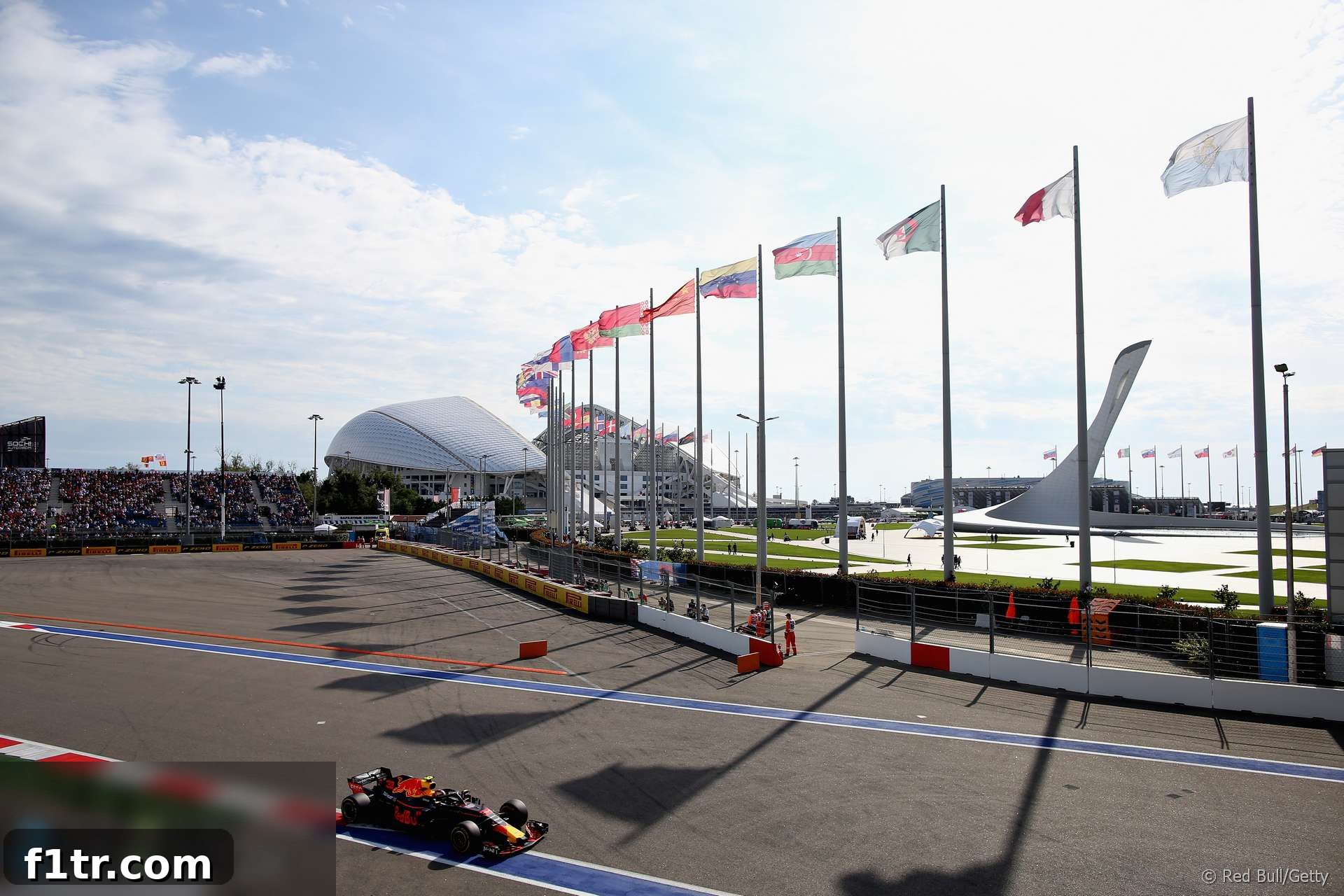
When RaceFans approached a spokesperson for Rosgonki, the organizer of the Russian Grand Prix, about a potential date switch, the response was unequivocal. They emphatically ruled out any change, stating: “The calendar was confirmed by the FIA and F1 in October, and there will be no change of date for the Russian Grand Prix.” When pressed on whether difficulties such as already sold tickets and booked hotels were a factor, the spokesperson’s response left no room for doubt: “I do not even want to answer that question as the question of a change of date does not arise. Full stop!” This firm stance underscored the rigidity of the F1 calendar and the immense practical and contractual challenges associated with any alterations.
While the decision regarding China’s round remained more than two months away at the time, the message was clear: if a race, or indeed two, were to be cancelled in a given year due to such unforeseen circumstances, the likelihood of finding a slot for reinstatement at a later date was exceedingly slim. This reality highlighted the crucial nature of these early decisions and the far-reaching impact of global health crises on the intricately planned world of Formula 1.
2020 F1 season
- Grosjean to make F1 test return tomorrow for first time since Bahrain horror crash
- Pictures: Wrecked chassis from Grosjean’s Bahrain fireball crash to go on display
- Bottas vs Rosberg: Hamilton’s Mercedes team mates compared after 78 races each
- F1 revenues fell by $877 million in Covid-struck 2020 season
- Hamilton and Mercedes finally announce new deal for 2021 season
Browse all 2020 F1 season articles