Racing Point to Challenge Sergio Perez Reprimands at High-Level F1 Commission Meeting
Racing Point, a prominent contender in the fiercely competitive Formula 1 Constructors’ Championship, has officially registered its profound displeasure following their lead driver, Sergio Perez, receiving his second reprimand in a rapid succession of just two days. This sudden accumulation of penalties has galvanized Team CEO Otmar Szafnauer, who has confirmed his intention to escalate the issue to the highest levels of the sport’s governance. He plans to formally address the matter at an upcoming F1 Commission meeting, signaling a deeper concern that these stewarding decisions underscore a troubling inconsistency in F1’s judicial process, potentially undermining the integrity and thrilling spectacle of competitive racing.
Advert | Become a Supporter & go ad-free – Enhance your F1 experience with uninterrupted content.
The Controversial Defensive Move: Perez vs. Gasly
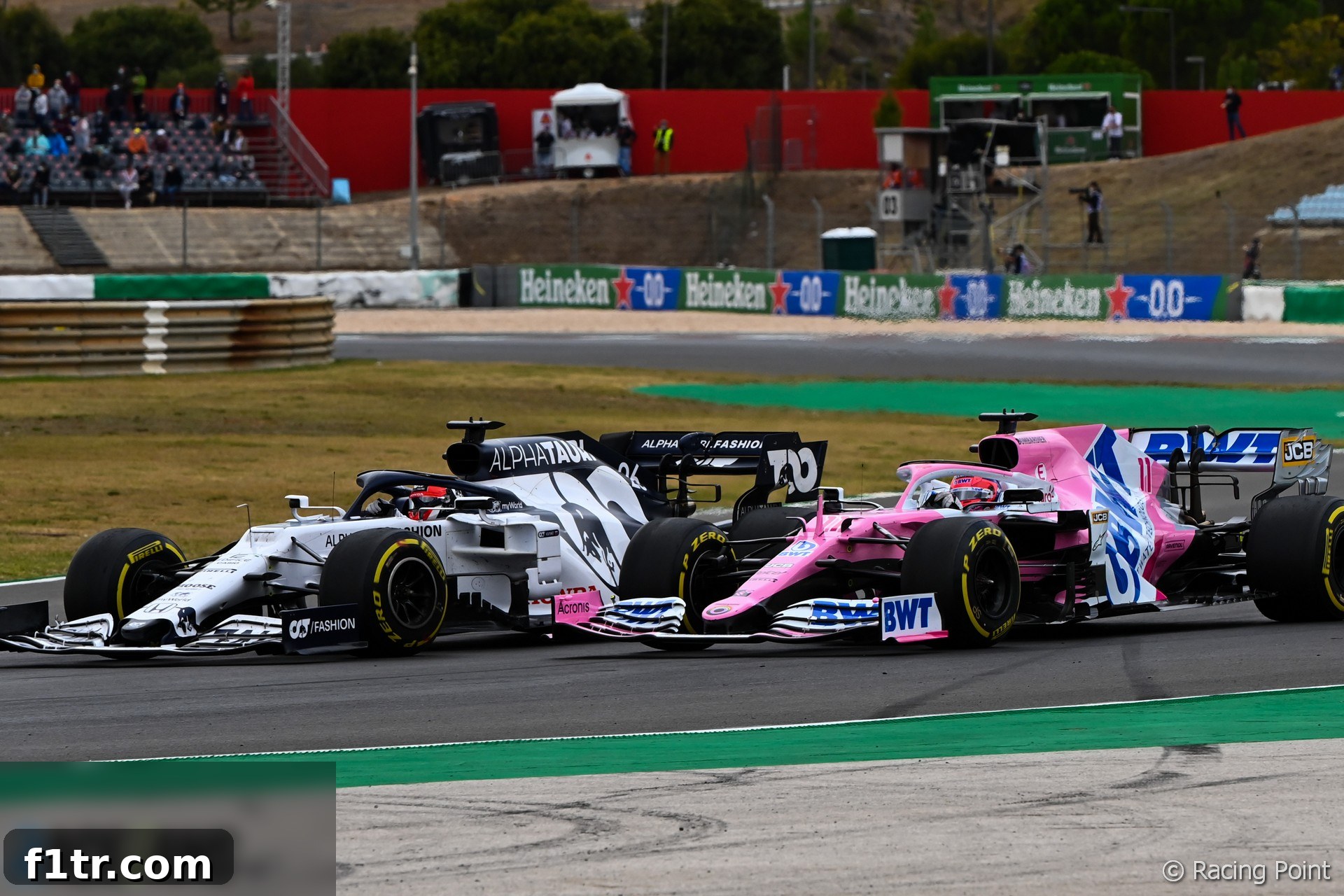
The catalyst for Racing Point’s ire was the latest reprimand issued to Sergio Perez, which originated from a defensive maneuver against Pierre Gasly during the tense latter stages of the recent Portuguese Grand Prix. Szafnauer articulated his team’s deep frustration, arguing that it was illogical for Perez to be penalized for what he considered a legitimate and contact-free defensive action, especially when contrasted with a separate, clear collision on lap one involving Perez and Max Verstappen – an incident that, despite tangible contact and potential consequences, was not even deemed worthy of investigation by the race stewards. This stark disparity in judgment lies at the very heart of Racing Point’s formal grievance.
“They didn’t touch,” Szafnauer asserted with conviction, referring specifically to the incident between Perez and Gasly. He elaborated on the permissibility of Perez’s actions under existing regulations: “Sergio moved first before Gasly did. Sergio is allowed to make that move in defence. You can’t move twice, but you’re allowed to move once. Gasly got out of the throttle, and there was no contact. So why the reprimand?” Szafnauer’s argument firmly rests on the widely understood ‘one move’ rule in Formula 1, which permits a driver to execute a single, decisive defensive move to block an opponent, provided it is executed safely and predictably, without weaving or creating an unsafe situation.
The Inconsistency of Stewarding: A Fundamental Challenge to Fair Play
The Racing Point CEO went on to meticulously detail the perceived double standard he believes permeates recent stewarding decisions. He painted a clear picture of the conflicting outcomes: “On lap one, Sergio is hit by Verstappen, who comes back onto the track after being off-track, comes back on acutely in order to get his car in a position so he can have grip again and runs into Sergio, and they do nothing.” This uninvestigated collision, which saw Verstappen rejoining the track aggressively and making contact, stands in stark contrast to the reprimand issued for a non-contact defensive move. Such discrepancies, Szafnauer contends, provide a potent example of the inconsistencies that Racing Point is resolute in challenging.
For Szafnauer and the entire Racing Point outfit, the Gasly-Perez scenario was not an infringement, but rather an exemplary instance of what Formula 1 fans globally crave: hard-fought, wheel-to-wheel racing. He passionately questioned the rationale behind the penalty: “Sergio and Gasly didn’t touch. Isn’t that what the fans want? Hard defending, good racing? If we start reprimanding drivers and punishing them for racing hard but safely, where is that going to take our sport?” This powerful sentiment resonates with a broader, ongoing debate within the F1 community concerning the delicate balance between rigid enforcement of rules and fostering an environment where drivers can push the boundaries of performance and competition within safe parameters.
When directly probed by media representatives if he intended to raise this critical issue with the highly influential F1 Commission, Szafnauer unequivocally confirmed his determination. “I am bringing this up tomorrow because it’s a big issue. To me, when I saw that, I thought, that’s good, hard racing.” His steadfast conviction underscores the team’s belief that these stewarding decisions are not isolated errors of judgment but rather indicative of a more pervasive systemic problem that threatens to impact the integrity, excitement, and overall appeal of Formula 1.
Advert | Become a RaceFans supporter andgo ad-free – Your support fuels independent F1 journalism and ensures an ad-free reading experience.
A Troubling Pattern of Uninvestigated Collisions?
Szafnauer didn’t stop at the Perez incidents; he also highlighted another deeply concerning event involving his team’s other driver, Lance Stroll. Just four weeks prior, during the Russian Grand Prix, Stroll was prematurely forced out of the race on the opening lap following a collision. Crucially, much like the Verstappen-Perez contact, this incident also went uninvestigated by the stewards. This unsettling pattern, where actual, race-ending collisions seemingly evade scrutiny while non-contact defensive driving incurs penalties, forms a substantial cornerstone of Racing Point’s overarching argument against the prevailing stewarding standards.
“You’ve got to look at a collision,” Szafnauer firmly stated, emphasizing the logical priority for stewards. “The Gasly-Sergio thing was not a collision, it was a good, hard defending. And you punish that but then when somebody does collide, you don’t do anything? That’s two times in a row – I don’t know if you saw [Charles] Leclerc and Lance, it was a very similar thing. You cause a collision and then nothing.” This consistent reluctance to act on contact incidents, juxtaposed with the swift penalization of perceived ‘driving offences’ that involve no physical contact, undeniably fosters an atmosphere of ambiguity and unpredictability for both drivers and their respective teams.
The Cumulative Impact of Reprimands on Driver Conduct and Strategy
Sergio Perez’s first reprimand of the year preceded the defensive move incident by merely 24 hours, coincidentally also involving Pierre Gasly. This earlier reprimand was for impeding Gasly during the qualifying session, despite the fact that Gasly ultimately progressed to Q3 and suffered no tangible disadvantage or impact on his qualifying performance. Under the current Formula 1 sporting regulations, accumulating three reprimands within a single season, with at least two of these being for driving offences, automatically triggers a severe 10-place grid penalty for the offending driver at a subsequent Grand Prix. This rule now places Perez in an exceptionally precarious position for the remainder of the racing calendar.
Szafnauer pointed out the dramatic and sudden shift in Perez’s otherwise remarkably clean disciplinary record. “Sergio in his whole career has never been reprimanded ever,” he claimed, a statement that powerfully underscores the extraordinary nature and gravity of receiving two reprimands within the confines of a single race weekend. He then offered further context on the qualifying incident: “One of which was in qualifying where he made a mistake in one of the sectors, didn’t realise Gasly was on a fast lap behind him, got out of the way but not quickly enough: Reprimand. Well, Gasly got through Q2 into Q3, it didn’t cause him any harm: Reprimand. You saw the other incident: Reprimand.”
The CEO’s concern extends far beyond the immediate threat of a penalty; it delves into the profound psychological and strategic impact on a driver. “Now for the rest of the season, he’s got to drive like a saint,” Szafnauer explained, painting a vivid picture of the restrictive driving style Perez may now be forced to adopt. “He’s not going to be able to fight hard because there is a risk of a reprimand and then you get a 10 grid place penalty. So I think that’s quite harsh. You may not think that reprimand was harsh, but it is.” This potential chilling effect on aggressive, yet fundamentally fair, racing could dramatically alter how Perez approaches future on-track battles, potentially costing both him and Racing Point invaluable championship points and strategic opportunities.
While Szafnauer’s immediate recollection suggested Perez had “never been reprimanded ever” before this season, historical records indicate that Perez has indeed accumulated six reprimands in previous seasons: Two in 2012, one in 2015, two in 2017 and one last year. However, this minor discrepancy in Szafnauer’s exact recall does not diminish the core validity of his argument concerning the sudden, highly concentrated nature of the recent penalties and their immediate, critical threat of a grid penalty that could derail Perez’s season.
Advert | Become a RaceFans supporter andgo ad-free – Unlock an uninterrupted, premium experience of all our F1 news, analysis, and exclusive content.
The F1 Commission: A Crucial Platform for Systemic Change
The strategic decision by Racing Point to present this contentious matter before the F1 Commission underscores the profound seriousness with which the team views the current situation. The F1 Commission stands as a pivotal body within Formula 1’s intricate governance framework, tasked with the critical responsibility of discussing, deliberating, and ultimately approving regulatory changes and strategic directions that steer the future course of the sport. Comprising key representatives from the FIA (the sport’s governing body), Formula 1’s commercial rights holder, and all ten competing teams, it functions as an exceptionally powerful and influential forum where significant issues can be robustly debated, potentially culminating in fundamental policy adjustments. Szafnauer’s explicit intention to raise the pressing issue of stewarding inconsistencies at this elevated level clearly signifies a desire for systemic, lasting change rather than merely contesting individual penalties in isolation.
The potential ramifications of this upcoming meeting are far-reaching and could significantly impact the sport. A successful appeal or a compelling, persuasive argument from Racing Point might lead to the issuance of clearer directives for race stewards, a comprehensive review of existing penalty guidelines, or, at the very least, a public acknowledgment from the sport’s authorities regarding the pressing need for greater consistency and transparency in decision-making. Conversely, should the appeal be dismissed or the arguments fail to sway the Commission, it could inadvertently solidify the current interpretation of racing rules, potentially leading to a more cautious and less aggressive driving style across the grid, thereby fueling further passionate debates about the very ‘spirit’ of Formula 1 racing.
Preserving the Spirit of Formula 1: A Spectacle of Skill and Bravery
At its fundamental core, this entire controversy transcends specific penalties; it delves into the very essence and nature of Formula 1 as a global sporting spectacle. Millions of fans worldwide tune in to witness daring overtakes, masterful defensive driving, and intense, adrenaline-fueled wheel-to-wheel battles that define the pinnacle of motorsport. If drivers are subjected to undue penalization for pushing the limits within what is generally considered fair, safe, and exciting racing, it carries the substantial risk of sanitizing the sport, diminishing its inherent excitement, and alienating its passionate fanbase. Racing Point, through the outspoken advocacy of Otmar Szafnauer, is championing the crucial cause for allowing drivers to fully express their extraordinary skill, bravery, and competitive instincts without the constant specter of arbitrary or inconsistent penalties.
The fervent debate surrounding Sergio Perez’s recent reprimands and Racing Point’s subsequent, determined challenge to the F1 Commission is undeniably more than just an argument over a few championship points or the threat of a grid penalty. It represents a critical, pivotal discussion about the future trajectory of stewarding in Formula 1, the nuanced interpretation of racing rules, and ultimately, the kind of thrilling, uncompromising racing experience the sport intends to offer its vast global audience. The eventual resolution of this significant issue will undoubtedly transmit a powerful and definitive message to drivers, teams, and fans alike regarding the acceptable boundaries of competition and the cherished spirit of motorsport’s ultimate challenge.
2020 Portuguese Grand Prix: A Context of Intense Competition
These contentious incidents unfolded during the 2020 Portuguese Grand Prix, a race weekend that proved to be rich in drama, unexpected twists, and incredibly intense competition. The unique and challenging track conditions at Portimão, characterized by its undulating layout and high-speed corners, combined with fiercely contested midfield battles, significantly amplified the perceived importance and impact of every on-track decision and defensive maneuver. The specific and demanding context of such a challenging race weekend further highlights and strengthens Racing Point’s fundamental concerns about the profound influence of inconsistent stewarding on competitive outcomes and overall championship aspirations.
Browse all 2020 Portuguese Grand Prix articles to delve deeper into the full spectrum of events, detailed analysis, and controversies that emerged from that thrilling and memorable race weekend.