The Engineering Marvel of F1’s Halo: From Concept to Cockpit Protection
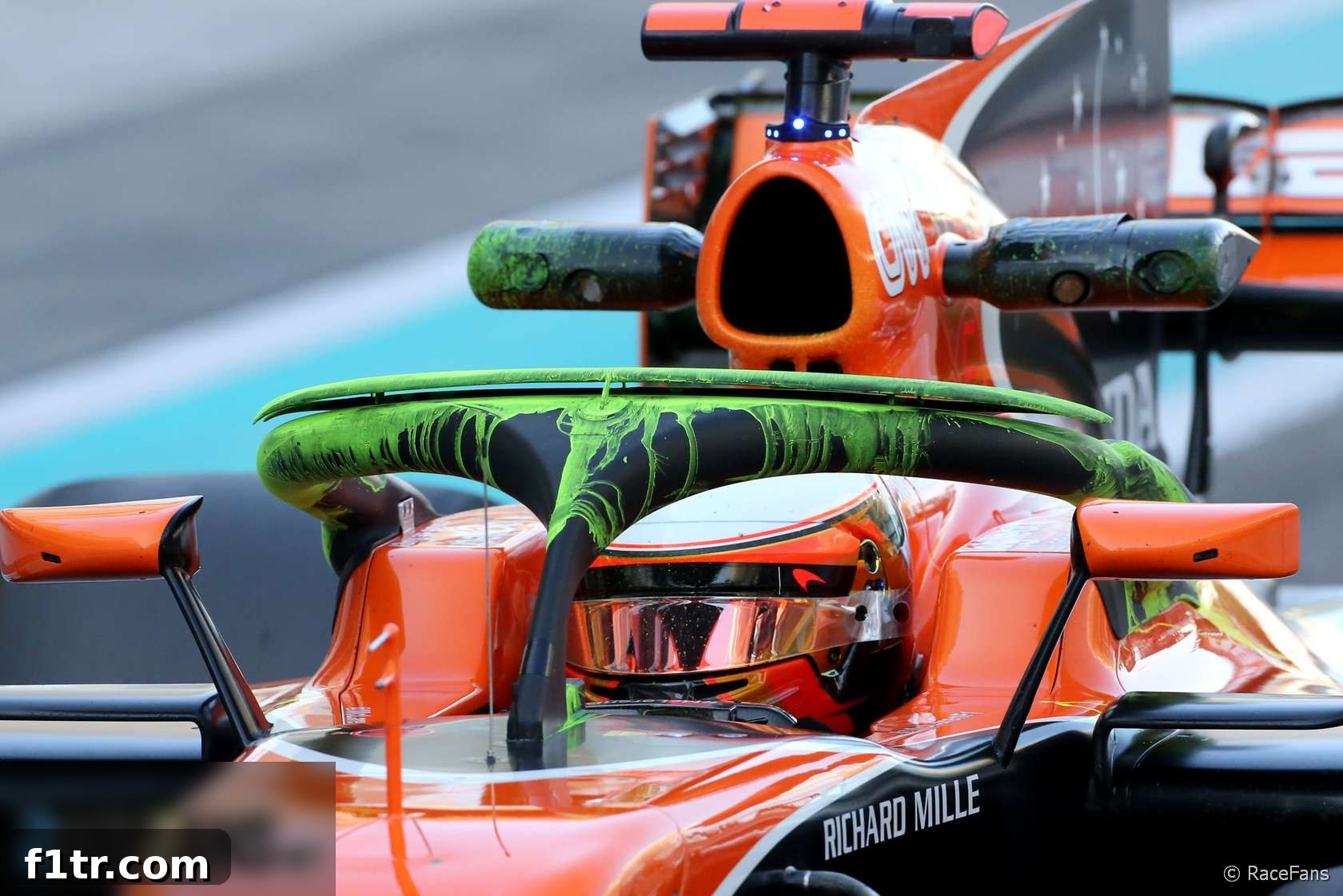
When the Halo device made its mandatory debut on Formula One cars for the 2018 season, its appearance seemed deceptively simple, bearing a striking resemblance to the dummy versions that had been trialed on cars in the preceding two seasons. However, beneath this seemingly straightforward addition lay an immense engineering and design challenge that pushed the boundaries of F1 innovation and safety.
The Unseen Strength: Withstanding Monumental Forces
The primary purpose of the Halo is uncompromising driver safety, and to achieve this, it was engineered to withstand truly monumental forces. The FIA mandated that the Halo structure must endure a static load of 150 kilonewtons (kN) from various angles – a force comparable to an African elephant sitting on the device. This incredible requirement meant that merely attaching the Halo was insufficient; the points where it integrates with the car’s chassis had to be substantially reinforced. This presented a formidable hurdle for every F1 constructor, demanding extensive structural redesign and material expertise to meet the FIA’s stringent crash test regulations.
McLaren’s “Heart-Stopping” Journey to Compliance
For teams like McLaren, the process of integrating the Halo and passing these rigorous tests was fraught with tension. Matt Morris, McLaren’s chief engineering officer at the time, vividly described watching their MCL33 chassis undergo the crash tests as “heart-stopping.” Despite eventually passing, Morris admitted it was “close,” emphasizing that they certainly didn’t “breeze through it.” The extreme forces involved, particularly during oblique static tests that simulate the weight of a London bus, were a stark reminder of the sheer resilience required from the structure.
Morris recounted the intensity: “There were quite a few heart-stopping moments in particular when we were doing the sort of static tests that comes in from an oblique angle. It takes the weight of a London bus, basically. And when you see that test going on it’s pretty scary. The amount of load that’s going in there and everything sort of moving around, which it’s designed to do, it’s a bit scary.” This candid insight highlights the fine line between structural integrity and potential failure, a constant challenge for F1 engineers working at the pinnacle of motorsport.
Mandatory Safety: The FIA’s Stance and Design Approach
The FIA’s decision to make the Halo mandatory from 2018, confirmed in July of the previous year, marked a significant paradigm shift in Formula One’s approach to driver head protection. This wasn’t a last-minute addition but the culmination of years of rigorous research and testing into various cockpit protection concepts. Morris elaborated on McLaren’s proactive strategy for integrating this critical safety feature, revealing the extensive preparatory work involved.
“It’s been a big challenge,” he stated, acknowledging the high loads and inherent difficulties from the outset. “We invested some time and money up front to do a lot of test pieces. Obviously you don’t build a complete chassis but we built various test pieces where we had dummy Halos, parts of Halos, full Halos, testing how the interfaces would behave. And we found some issues. But we sort of planned it early enough such that we could react to those issues, catch them in-chassis, which we did.” This iterative process of designing, testing components, identifying weaknesses, and refining the design is standard practice in F1, but the Halo’s unprecedented load requirements amplified its complexity, demanding exceptional foresight and rapid problem-solving.
Advert | Become a RaceFans supporter andgo ad-free
The Weighty Consequence: Performance vs. Protection
The introduction of the Halo inevitably led to an increase in the minimum weight limit for 2018. This wasn’t just to accommodate the weight of the Halo structure itself – estimated to be around 7kg of carbon fibre and titanium – but crucially, to account for the substantial strengthening required throughout the chassis. Integrating a structure designed to withstand an elephant’s weight meant reinforcing the chassis at every attachment point, adding significant mass beyond the Halo component itself. This presented a new balancing act for engineers, who are constantly striving to reduce weight for performance gains.
Despite this, Morris explained the difficulty in precisely quantifying the Halo’s exact weight penalty: “As we do every year we make weight savings so it’s quite difficult to say ‘we’ve added X amount of kilos’. Clearly there is material there, it’s just difficult to know what’s just required for the Halo and what’s normal chassis construction.” This highlights the continuous quest for marginal gains in F1, where every gram counts. Teams meticulously strip weight from other areas of the car to offset such additions, underscoring the constant engineering trade-offs between safety, performance, and regulatory compliance.
The Engineer’s Opportunity: Innovation Within Constraints
Beyond the immediate challenge of passing tests, the Halo also represented a new canvas for engineers. Morris articulated this perspective: “The guys have done a good job and obviously it’s passed the test so that’s the main thing. It’ll be interesting to see if anybody does have any problems. Like I say it’s a pretty tough test, it wouldn’t surprise me if some people do have issues. I hope they don’t because obviously we want everybody in winter testing.” This sentiment underscores the competitive spirit inherent in F1; while safety is paramount, every new regulation is an opportunity to out-innovate rivals.
He continued: “But it’s been an interesting challenge. We’re all engineers and we love things to be a little bit different. Chassis design over the years has been more and more restricted just through regulation and safety. Actually if you look at everybody’s bare chassis before it’s got any bodywork they’re all very similar. So when you get something new thrown in there the engineers love it because they see it as an opportunity to do a better job than somebody else.” This desire to find unique solutions and gain a competitive edge, even within rigid safety frameworks, is a defining characteristic of Formula One engineering, where limitations often spark the most ingenious solutions.
One key area where teams could subtly differentiate their designs, despite the standardized Halo structure, was at the rear mounting points. “I think it’ll be interesting to see in particular the rear mounts, how they integrate into the chassis because that is an area that’s down to you how you integrate it, it’ll be interesting to see what versions people have come up with.” While the core Halo itself is a standard component supplied by an external manufacturer, the surrounding fairings and the specific chassis integration methods provided limited yet crucial avenues for aerodynamic and structural optimization. “Obviously the Halo itself is the same for everybody. You’ve got the allowance of having fairings on it so it might look a little bit different cosmetically.”
Advert | Become a RaceFans supporter andgo ad-free
Aerodynamic Acrobatics: Mitigating Drag, Finding Opportunity
While the structural integration was a primary concern, the aerodynamic impact of introducing a substantial structure directly in front of the driver’s head was another significant challenge. Peter Prodromou, McLaren’s head of aerodynamics, acknowledged the inevitable performance hit: “Aero-wise it’s certainly not penalty-free. There is a challenge there to either cope with it in the first instance, damage limitation, and thereafter think about opportunity and exploitation. It does open up some avenues that possibly are interesting to look at.” The Halo, being an additional element, inherently adds drag and disrupts the carefully managed airflow.
The Halo, by its very nature, disrupts the smooth airflow over the car’s cockpit, creating turbulent air that can negatively affect components further downstream, particularly the engine’s air intake and the crucial rear wing. Teams had to invest countless hours in computational fluid dynamics (CFD) simulations and wind tunnel testing to understand and mitigate this disruption. The allowance for aerodynamic fairings around the basic Halo shape became a critical battleground for performance gains, allowing teams to sculpt and refine the air’s passage.
Prodromou confirmed: “I’m sure there’s going to be a variety of solutions out there. The scope’s quite limited. As you know we’ve got this allowance around the basic shape. It’s quite limited but there is opportunity there.” This “opportunity” involves sculpting the fairings to manage the airflow generated by the Halo, attempting to channel it beneficially, perhaps even generating localized downforce or cleaning up the air for components like the airbox and rear wing. The precise design around the main vertical pillar and the two rear spars became a micro-aerodynamic war zone, with subtle differences yielding vital milliseconds.
Managing Airflow: Engine Intakes and Rear Wing Dynamics
A specific concern for all teams was the Halo’s influence on vital airflow paths. “I think everyone’s going to be faced with those type of challenges,” says Prodromou, “how it affects flow into the engine, into certain cooling ducts people had in that area, including ourselves. How it affects the flow to the rear wing.” The engine’s airbox, typically positioned above the driver’s head, relies on clean, high-pressure air for combustion. The Halo’s presence could disturb this, potentially impacting engine performance and cooling efficiency.
Similarly, the rear wing, a primary generator of downforce, depends on a consistent, laminar flow of air over its surfaces. Any turbulence from the Halo could reduce its effectiveness, leading to a loss of grip and lap time. However, F1 engineers are renowned for turning constraints into advantages. Prodromou optimistically noted: “But also on the flip side there’s opportunities there to tap into you couldn’t before.” These unforeseen opportunities could involve using the Halo’s structure or fairings to create novel aerodynamic features, perhaps generating beneficial vortices, influencing the pressure distribution, or even acting as a new reference point for aero structures in ways previously impossible in an open-cockpit design.
Aesthetic Debates and Undeniable Safety Legacy
When initially introduced, the Halo was met with mixed reactions, particularly regarding its aesthetics. Many purists felt it detracted significantly from the traditional open-cockpit look of Formula One cars, deeming it an ungainly addition. The sentiment of “Halo is hideous” (as one linked article suggests) was not uncommon among fans and even some drivers. However, over time, and particularly after several high-profile incidents where the Halo undeniably played a critical role in protecting drivers from serious injury or worse – Romain Grosjean’s fiery crash in Bahrain 2020 and Zhou Guanyu’s terrifying Silverstone 2022 flip being prime examples – its place in F1’s safety arsenal has become universally accepted and appreciated.
The initial aesthetic objections have largely faded into the background in the face of its proven life-saving capabilities, solidifying its legacy as one of Formula One’s most impactful and essential safety innovations. The Halo stands as a testament to the sport’s unwavering commitment to driver well-being, demonstrating that even the most challenging engineering hurdles can be overcome for the greater good of safety.
Go ad-free for just £1 per month>> Find out more and sign up
F1 technology
- McLaren, Red Bull and Ferrari bring rear corner updates to Imola
- Ferrari, McLaren and Red Bull bring upgrades again for Saudi Arabian Grand Prix
- McLaren introduce major floor upgrade for Norris’ car at Mexican Grand Prix
- McLaren, Mercedes and Red Bull detail upgrade packages for United States GP
- Red Bull remove engine cover ‘cannons’ in major RB20 update – but they may return
Browse all F1 technology articles