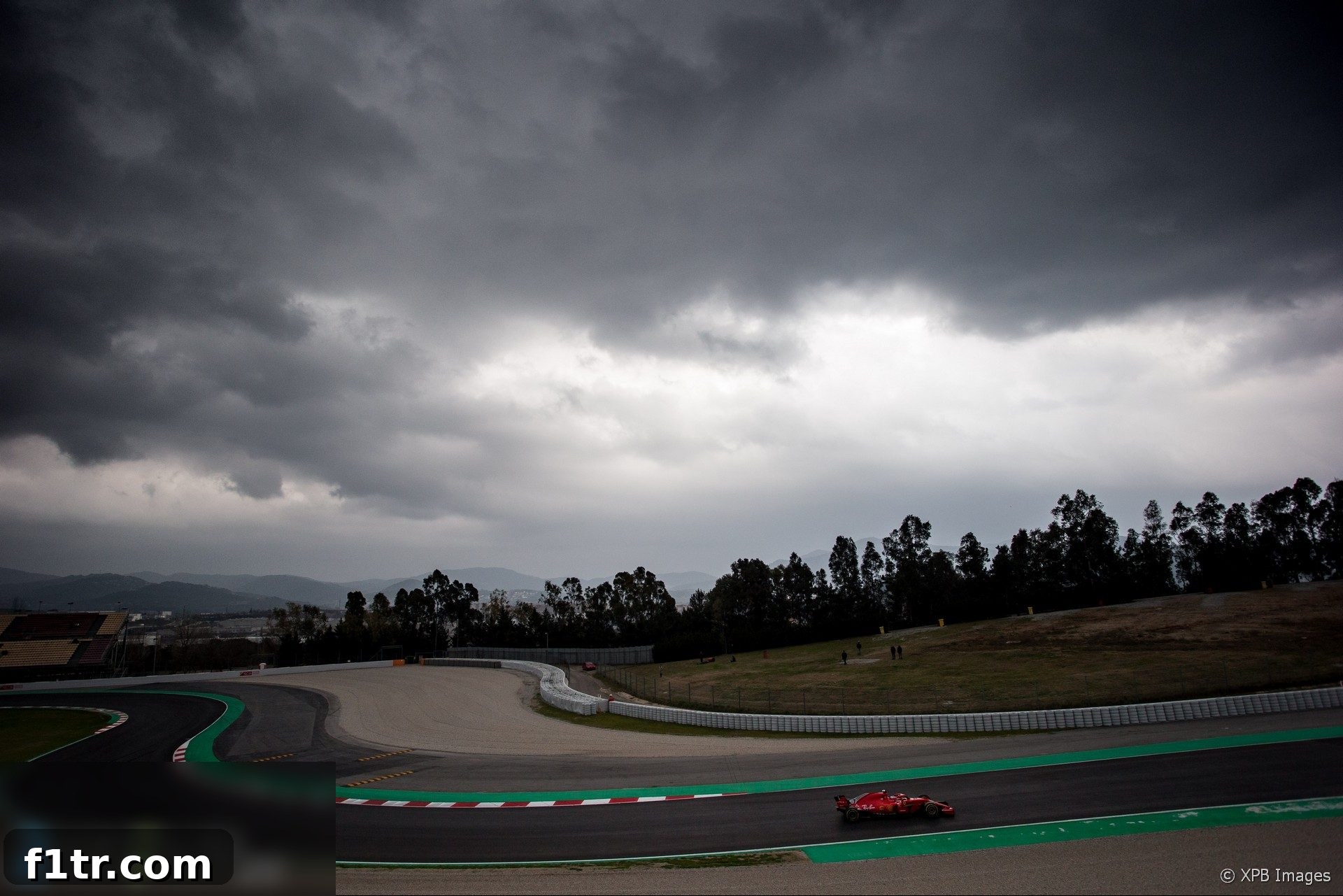
The dawn of a new Formula 1 season always brings with it a palpable sense of anticipation, none more so than during the pre-season testing phase. This critical period allows teams to unleash their latest machinery, validate countless hours of design and simulation, and gather vital data ahead of the championship opener. However, the initial four-day test session for the 2018 Formula 1 season at Spain’s iconic Circuit de Catalunya was dramatically overshadowed by a formidable and unexpected adversary: exceptionally harsh winter weather conditions.
Unusually low temperatures blanketed the track, creating an environment far colder than the mild, predictable conditions typically associated with Barcelona’s Mediterranean climate and the demands of high-performance motorsport. This stark deviation from the norm turned the crucial first test into a genuine struggle for teams and drivers alike, as they grappled with a track surface that was not only cold but verged on being treacherous.
Unprecedented Cold Cripples Critical Test Session
The severity of the weather was immediately apparent and had a profound impact on every aspect of testing. Drivers, normally pushing the limits of their machines, found themselves battling not just the car but also the elements. Brendon Hartley, then driving for Toro Rosso, succinctly captured the predicament, stating that his team “stopped early because of the weather – it was almost icy conditions.” This wasn’t an isolated incident; many teams faced similar challenges, often cutting short their running or struggling to extract meaningful performance from their cars.
The forecasts for the subsequent days offered little respite, with predictions indicating a further drop in temperatures and even a chance of sleet. For Formula 1, where tire performance is paramount and grip levels are meticulously managed, such conditions are nothing short of a nightmare. Tires struggled to reach optimal operating temperatures, severely limiting grip and making it exceedingly difficult to conduct relevant aerodynamic evaluations or gather representative data on new components. Chassis engineers and power unit specialists found themselves in a quandary, as the data collected in these anomalous conditions would be difficult to correlate with race weekend scenarios.
Intense Discussions Emerge for Test Extension
With the crucial first test session scheduled to conclude on Thursday, and a forecast for rising temperatures towards the end of the week, the idea of extending the test quickly gained traction among several frustrated teams. The lost track time was simply too significant to ignore, jeopardizing their meticulous pre-season preparation schedules. A potential extension offered a glimmer of hope to reclaim some of the invaluable running lost to the frigid conditions, allowing teams to complete their planned programs and ensure their new cars were race-ready.
Renault’s technical director for chassis, Nick Chester, confirmed that discussions were indeed underway among various teams regarding a potential extension. The urgency was understandable; every lap counts in modern F1, and the financial and strategic investment in each car is immense. However, the path to extending testing is rarely straightforward, primarily due to the complex logistical and regulatory framework governing Formula 1 operations. Chester cautiously noted, “There’s been some discussions going on but one team’s got a filming day booked so it probably won’t move.” He further elaborated on the collective challenge, adding, “It would need the team that’s having the filming day to agree to cancel, so if they don’t cancel it’s moot.”
The Filming Day Hurdle: Williams’ Critical Schedule
The pivotal obstacle identified in the proposed test extension was a pre-scheduled filming day. RaceFans.net understood that Williams Racing had a filming day penciled in for Friday, immediately following the official end of the first test. A filming day, while seemingly innocuous, is a vital component of a modern F1 team’s calendar. It serves multiple purposes: fulfilling sponsor commitments, gathering marketing content, and providing a brief shakedown opportunity for the car, albeit under strict mileage and tire limitations.
Canceling or rescheduling such an event is a complex undertaking, involving not just the team but also various external stakeholders, including sponsors, media production crews, and potentially the circuit itself. It would incur significant financial penalties and logistical headaches for Williams, who had not, at that point, been formally approached about altering their plans. The optics of one team’s prior commitments potentially derailing the collective need for more testing highlighted the intricate and sometimes conflicting interests within the Formula 1 paddock.
Financial Implications and Regulatory Hurdles
Beyond the specific issue of the filming day, several teams voiced opposition to extending the test on grounds of additional costs. Running a Formula 1 team is an incredibly expensive endeavor, and even a single extra day of testing requires significant resources: personnel travel and accommodation, car components, fuel, tires, catering, and track rental fees. Smaller, privately funded teams, in particular, operate on tight budgets where unforeseen expenditures can have a disproportionate impact. While the desire for more track time was high, the financial implications served as a significant deterrent for some.
Furthermore, the sporting regulations of Formula 1 are very clear on such matters: any alteration to the established testing arrangements requires the unanimous agreement of all competing teams. This “unanimity rule” is a common feature in F1 governance and is notoriously difficult to achieve. Even if the majority of teams were in favor, a single dissenting voice – whether due to cost concerns, logistical impossibilities, or simply strategic advantage – could effectively veto the proposal. The principle of fair competition, while paramount, often creates a gridlock when collective action is required, especially in a sport where every team is a direct rival.
Impact on Pre-Season Preparation and The Road Ahead
The truncated first test meant that many teams left Circuit de Catalunya with incomplete data sets and lingering questions about the performance and reliability of their new cars. This put immense pressure on the second and final four-day pre-season test, which was scheduled to commence at the same circuit on Tuesday, March 6th. This subsequent test would become an even more critical period for all teams to finalize their preparations, understand tire degradation, fine-tune car setups, and ensure drivers were fully acclimatized to their new machines ahead of the season opener.
For teams introducing significant architectural changes or working with new power unit suppliers, such as Toro Rosso with Honda in 2018, the lost track time was particularly damaging. Every lap was an opportunity to learn, to iron out reliability kinks, and to optimize the integration of complex systems. The weather-induced disruptions at Barcelona served as a harsh reminder of Formula 1’s vulnerability to external factors, even in an era of advanced technology and meticulous planning. It underscored the importance of resilience and adaptability within the paddock, forcing teams to make the most of every precious minute available.
As the F1 circus moved towards the second test, the shadow of the first test’s disruptions lingered, emphasizing the high stakes involved in pre-season running. Teams would arrive with revised schedules, an increased sense of urgency, and the hope that better weather would allow them to finally extract the performance and data needed to launch their 2018 campaigns with confidence.
Go ad-free for just £1 per month>> Find out more and sign up
More from the 2018 F1 season:
- F1 feared “death knell” for Drive to Survive after Ferrari and Mercedes snub
- McLaren staff told us we were “totally crazy” to take Honda engines in 2018 – Tost
- ‘It doesn’t matter if we start last’: How Red Bull’s junior team aided Honda’s leap forward
- Honda’s jet division helped F1 engineers solve power unit problem
- McLaren Racing losses rise after Honda split
Browse all 2018 F1 season articles