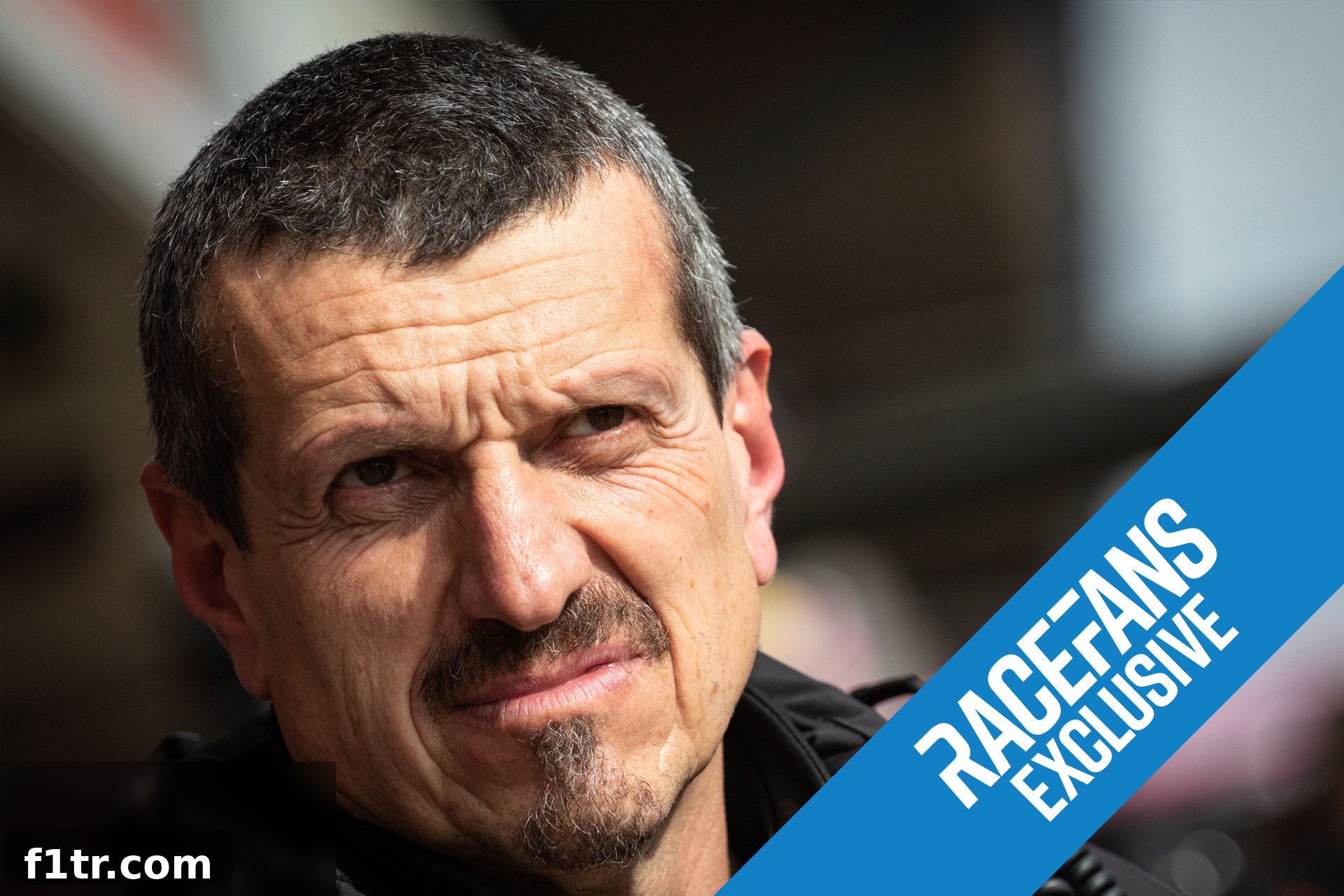
Guenther Steiner: The Unconventional Architect Behind Haas F1 Team’s Success
In the high-octane world of Formula 1, where precision and strategic calculation often overshadow individual personalities, Guenther Steiner has emerged as a truly unique and refreshingly candid figure. His unfiltered observations, delivered with a distinctive staccato cadence, have become a hallmark of F1 press conferences and an undeniable highlight for fans worldwide. Anyone who has closely followed the sport, particularly through the lens of the immensely popular Netflix docuseries “Drive to Survive,” would attest to his captivating presence. Steiner’s blunt honesty and unwavering passion for racing not only provide significant entertainment value but also offer an unparalleled insight into the relentless pressures and intricate inner workings of an F1 team. Beyond the media spotlight, those fortunate enough to engage with the Italian in an off-record setting invariably describe it as an illuminating and insightful experience, revealing a depth and conviction that underpins his often-humorous public persona.
However, in a sport where entertainment value ultimately yields to tangible results, Steiner’s track record as Team Principal of Haas F1 Team has been nothing short of impressive. Over his tenure of just over three years, he has steered the US-based outfit from a fledgling newcomer in 2016 to a formidable contender, remarkably achieving a fifth-place finish in the constructors’ championship in a recent season. This ascent is particularly noteworthy given the intensely competitive landscape of Formula 1, typically dominated by long-established giants operating with significantly larger budgets and more extensive resources. Steiner’s leadership has not only brought Haas F1 Team onto the global stage but has propelled them to a position of genuine respect and competitiveness, challenging the established order with an innovative and pragmatic approach that many thought impossible for a new entrant.
A Strategic Mastermind: Leveraging F1 Regulations for Rapid Ascent
Steiner’s genius extends beyond his charismatic leadership; it encompasses his acute foresight and strategic prowess in navigating Formula 1’s intricate “listed parts” regulations. These regulations, which permit teams to purchase certain non-listed components from other constructors, had been in place for well over a decade. Yet, it took an astute outsider – a man whose most recent competitive experience was in the very different realm of NASCAR – to fully grasp and leverage this provision to Haas’s unprecedented strategic advantage. This innovative approach allowed Haas F1 Team to significantly reduce its initial development costs and dramatically accelerate its competitive timeline, effectively constructing a formidable F1 challenger without the need for a multi-billion-dollar infrastructure from its inception.
The pivotal decision to enter Formula 1 via this unconventional model, rather than embarking on the far more resource-intensive path of building a traditional constructor program from the ground up, was a game-changer. It remains a matter of conjecture whether Steiner could have persuaded machine tool magnate Gene Haas, who primarily sought a global marketing platform to complement his highly successful Stewart Haas Racing NASCAR program, to commit to the vastly more costly traditional route. What is, however, beyond dispute is Steiner’s unwavering ambition and relentless drive. His journey to the pinnacle of motorsport seemed predestined to culminate with him leading an F1 team from the pit wall. Hailing from modest beginnings as the son of a South Tyrolean town butcher, Steiner’s family fortunes certainly didn’t pave his way. Instead, his path was forged through sheer determination and hands-on grit, beginning with an arduous apprenticeship often spent crawling under damaged rally cars in the most challenging muddy or icy conditions, a true testament to his practical experience and unwavering dedication to the sport.
Cultivating a Winning Culture: Leadership, Cohesion, and Morale
While Guenther Steiner’s personal ascent to Formula 1 leadership is undoubtedly impressive, his adept navigation of the sport’s notoriously turbulent waters is arguably even more remarkable. Yet, perhaps the most commendable aspect of the Haas F1 Team under his guidance is its profound sense of cohesion and exceptionally high morale. This is a team that, despite its relative youth and occasional periods of inexperience, exhibits a palpable unity and resilience, notably devoid of the pervasive “blame culture” that can cripple other high-pressure, competitive environments.
A prime example of this unique team dynamic occurred during the 2018 Australian Grand Prix, when a critical wheel nut issue during a pit stop unfortunately forced Romain Grosjean to retire from the race. Instead of witnessing moments of frustration or finger-pointing, the enduring image from that challenging moment was Grosjean consoling the mechanic responsible for the error. This powerful gesture serves as a profound testament to the supportive and empathetic environment that Steiner has meticulously cultivated within the team. Such instances underscore a deep-seated philosophy where collective responsibility and mutual support supersede individual error, fostering a stronger, more resilient team capable of learning and growing constructively from setbacks, thereby reinforcing loyalty and performance.
Strategic Outlook: Balancing Ambition with Pragmatic Realities
Over a strong coffee, on the eve of a new Formula 1 season, Steiner and I quickly moved past pleasantries to delve into the strategic core of the team’s ambitions. The conversation naturally turned to Haas’s competitive position for the upcoming year. Given the established hierarchy and the formidable resources of Formula 1’s entrenched top teams, aiming for a podium finish in the constructors’ championship seemed, for a team of Haas’s stature, an almost insurmountable task. Steiner’s response was, as ever, characteristically pragmatic and deeply realistic.
“Correct,” he affirmed, his distinct blend of Italian, German, and increasingly American-accented English clear and concise. “I think if we continue to work as diligently as we do, we can fit in where we are now, somewhere between fourth and sixth.” He candidly acknowledged the impracticality of aiming higher, stating, “[Higher up] is not realistic, but we don’t like to fall back, which can happen as well. I think we are strong enough to sit in between fourth and sixth.” This measured ambition reflects a deep understanding of the sport’s competitive pecking order and a strategic commitment to sustainable performance rather than chasing unrealistic, fleeting aspirations.
For a team like Haas, which as a newcomer initially went without F1’s critical “column one” prize money for its first two years of existence, maintaining a strong position like sixth in the championship carries significant commercial implications. The question of how such a standing works commercially for a team needing to recoup its substantial start-up costs is highly pertinent. Steiner’s perspective on financial motivation, however, transcends mere monetary gain, emphasizing the broader impact of sporting success.
“Absolutely, money is always good to have and it helps,” he conceded. “I think you think ‘money’, but the motivation is not the more money you get; the motivation is more sporting-wise, that you want to achieve this result. The money, the difference [between sixth and fourth, which could be around $6 million], is not big enough to make that big a difference. But it’s the difference to getting good people to work for you to achieve this and to get ready for the next step. That is more important than the short-term money you get, the boost. You create a better atmosphere to work and you just work better. The best motivator for a team is the sporting result.” This statement encapsulates his core management philosophy: consistent sporting success breeds deep motivation, which in turn attracts top talent and fosters an exceptional work environment, ultimately leading to greater long-term stability and enhanced commercial viability for the entire operation.
Building a Team from Scratch: The Power of Promises Kept
Steiner’s remarkable ability to rapidly assemble a competitive Formula 1 team in such a short period is a profound testament to his foundational leadership principles. When asked about his secret to effective team building, his answer was disarmingly simple, yet profoundly effective: “There’s no secret. You give people what you promise them.” He openly acknowledges that some personnel might eventually depart, perhaps lured by the perceived greener pastures elsewhere in the paddock. “I respect that,” he stated. “I’m not getting upset because I think there has not been a false loyalty. If you don’t want to stay, if you have done a good job for us, I cannot be upset because you leave.”
This philosophy fosters an environment of mutual respect, transparency, and professionalism within the team. Crucially, it ensures that the core group – the foundational pillars upon which the team is built – remains committed and unified. “I think the core people we’ve kept together because we gave them a job, gave them responsibility, we kept our promises, we did whatever we said, ‘We are here to compete, we are not here to try to make a business out of it’,” Steiner elaborated. “We did everything we said [on] the first day [that] we’re going to do.” This unwavering commitment to integrity and transparency from the outset has been absolutely crucial in establishing a stable and loyal workforce, a truly rare and invaluable commodity in the often-transient and cut-throat world of Formula 1.
Despite being a relatively young team on the Formula 1 grid, the stability and profound loyalty observed within the Haas F1 Team are visibly impressive. Was this a deliberate, calculated outcome of an overarching strategic plan, or did it emerge more organically? After a moment of thoughtful pause, perhaps born of modesty regarding his own influence, Steiner mused, “I think they came naturally. I think we straight out went for good people, we put more effort in. The other thing is our growth rate isn’t massive. We are growing but we are not growing by 100 people a year, so it’s easier to manage because the people you take on, it’s decided who we take on. We try to get the best people we can for the positions. We cannot get maybe not always the best, but you can see we’ve got good people. So I think that most of them feel happy here.” This measured, quality-focused approach to growth, prioritizing the right fit and talent over sheer numbers, has allowed Haas to integrate new talent effectively while meticulously preserving its unique and effective team culture.
The Haas F1 Team Culture: Empowering Responsibility with Freedom
The term “culture” is often overused as a corporate buzzword, but in the intensely competitive and high-stakes sphere of Formula 1, it is absolutely paramount to sustained success. Team members must not only understand the team’s overarching objectives but also feel deeply connected to its ethos and strategic direction. Steiner’s description of the prevailing culture at Haas F1 Team is refreshingly direct, actionable, and deeply rooted in empowerment.
“I give a lot of people responsibility with freedom,” he explained, outlining his management philosophy. “I know what’s going on, but I try not to micro-manage because then you take away the enjoyment for them because they want to manage themselves. That’s why they came here, and I stick to that. They come and ask me [when needed], and I’m always there for them, but I try not to interfere with everything. The less I do, the better I feel, because then I know that our people [are doing well]… and we have got the results, for sure if we haven’t got the results I need to interfere, that’s my job.” This philosophy fundamentally empowers individuals, fostering a profound sense of ownership and personal investment in the team’s collective success. It underscores a deep trust in his team’s capabilities, allowing them to excel autonomously while knowing that experienced guidance and support are readily available whenever required.
Steiner further elaborated on the crucial and intrinsic link between responsibility and accountability, a cornerstone of high-performance environments: “In fact, I think a lot of people joined us because we said ‘We are a small team, we need a lot of responsibility, which comes with accountability as well.’ Responsibility comes with accountability and I’m pretty happy with that.” This transparent and direct approach effectively attracts individuals who thrive on challenges, are self-motivated, and are willing to take full ownership of their work, significantly contributing to a robust and high-performing team culture.
The Unique ‘Global American’ Identity of Haas F1
The unique, multinational composition of the Haas F1 Team inevitably prompts intriguing questions about its national identity. With American ownership spearheaded by Gene Haas, an Italian team principal hailing from a historically disputed Austrian region, cars meticulously designed and produced in Italy by Dallara, and the crucial racing base strategically situated in Banbury, England, the team presents itself as a true melting pot of cultures and expertise. Steiner’s immediate and profoundly succinct answer to this complex question is simply: “‘Global American’.”
He elaborated on this intriguing designation: “because the team and the entry is American, Gene Haas is the owner and he makes the big decisions, because it’s his, that is his right. But the people which work here, I wouldn’t say there is any culture; it’s a global culture. It’s a racing culture, nothing else. We don’t look at nationalities.” This perspective highlights a progressive and inclusive ethos at the heart of Haas F1, where the shared, overriding passion for motorsport unequivocally transcends traditional national boundaries. It fosters a singular, performance-driven identity that is particularly compelling in a sport that increasingly embraces globalization and draws talent from every corner of the world.
The ‘B-Team’ Debate and the Future of F1 Regulations
The remarkable success of the Haas F1 Team’s unique business model has inevitably led to extensive discussions and, in some quarters, concerted lobbying efforts to potentially curb what are sometimes unkindly referred to as ‘B Teams’ or customer teams. These ongoing discussions revolve around potential regulatory changes for the post-2020 era that could significantly restrict Haas’s ability to source the majority of its permissible components from a ‘mothership’ supplier like Ferrari. The crucial question then arises, carrying profound implications for the team’s future: would Gene Haas and his team remain committed to Formula 1 if such dramatic regulatory shifts were to fundamentally alter their operational model?
Steiner’s response is both candid and pragmatically strategic, underscoring the team’s inherent flexibility and independence. “We can take decisions either way. I think we put ourselves in a position that we can do most of it. If the regulations change dramatically, that you cannot buy anything anymore, maybe we change our plan. Maybe we don’t want to do that, maybe we don’t want to adapt to that one. And that is not my decision in the end. Mr Haas will have a big say in that one as well. If he wants to do that or not. But we don’t have to be here [in F1], to be honest. If the new regulations don’t work how we want to do business… I’m not saying, I’m not threatening anything, but I haven’t seen enough to say which direction, because nothing has been put to the vote, nothing has been decided.” This powerful statement highlights the strategic autonomy of Haas and their willingness to adapt their involvement, or indeed, reconsider their participation entirely, should the sport’s foundational principles shift unfavorably for their proven and successful operational model.
It was suggested to Steiner that a traditional vote on post-2020 regulations was unlikely, given that the FIA was operating under its International Sporting Code, complete with a firm June 30th cut-off and a process that often feels like a ‘fait accompli’. Nonetheless, Steiner maintains a notably optimistic outlook, anticipating a “consensus-driven process” that will ultimately shape the final rules package. “No, they will not be put to a vote, but I think people will be… given input and consultation,” he clarified. He further qualified his thoughts, expressing a notable degree of relaxation regarding the eventual outcome: “I’m pretty relaxed about it. I don’t think that there will be anything strange or something. What Liberty Media is trying to do, it’s in the interest of Formula 1, not in the interest of one team or something like this. I’m pretty confident the right decision will be taken.” This confidence stems from a deeply held belief that Liberty Media, as the sport’s commercial rights holder, will ultimately prioritize the overall health, competitiveness, and sustainability of Formula 1, which inherently includes supporting viable and successful models like Haas.
The retention of the “listed parts model” is undoubtedly a cornerstone of Haas’s successful operational strategy. Steiner’s confidence in its continuation is significantly bolstered by recent developments within the sport. He notes, “There is somebody who adopted the same business model now,” clearly referencing Toro Rosso, which has begun to source critical suspension components from Red Bull, in addition to largely sharing Honda engines, electronics, and hydraulics. This emerging trend suggests a broader acceptance, or at the very least, serious consideration, of the substantial benefits offered by shared resources and strategic partnerships within the Formula 1 ecosystem.
Steiner anticipates gaining significant support for this model from several key players within Formula 1. He envisions backing from Ferrari, “plus two Red Bull teams, us, Ferrari, Sauber, and I think Mercedes want to do something with Racing Point.” This potential coalition, if it fully materializes, would represent a substantial and influential bloc advocating for the continuation of the current regulations, thereby ensuring the viability of models like Haas. Ultimately, however, Steiner acknowledges that the final decision rests squarely with the sport’s overarching custodians: “But, again, I think it’s more not what the teams want, it’s more if Liberty thinks this is a model which will put F1 in a better place, they decide for us.” This perspective emphasizes the paramount role of Liberty Media in shaping the sport’s future, prioritizing the collective good over individual team preferences.
Operational Structure and Future Potential for Haas F1
The discussion also touched upon Haas F1 Team’s unique multi-base operational structure, which includes distinct hubs in Kannapolis, North Carolina (for administration and marketing); Varano, Italy (housing Dallara, responsible for car design and production); and Banbury, UK (serving as the crucial race base). The pertinent question of whether it makes long-term sense to consolidate everything under one roof, eventually, as the “endgame” for the team’s infrastructure, was posed. Steiner’s answer once again underscored the prevailing uncertainty surrounding future regulations, a common challenge across the F1 paddock.
“Short to mid-term we stay like we are,” he stated firmly. “Long-term we don’t know because we don’t have regulations for ’21. We are back to the same old story, you know? Because you cannot make any plan if you don’t know what is going to happen.” This candid response highlights a significant challenge for all teams in Formula 1 – the inherent inability to make definitive long-term strategic plans and capital investments without a clear and finalized regulatory framework. Such uncertainty necessitates a flexible and adaptive approach to operations and development.
Regarding the team’s internal capabilities, Steiner believes Haas is approximately 75 percent of the way towards being able to construct the majority of a state-of-the-art Formula 1 car, excluding, of course, the powertrain and other proprietary components. For the remaining aspects, he confidently asserts, “we could find ways to do it, yes.” However, he pragmatically added that for the current operational environment, “It works good with Dallara, it works good with Ferrari, so why should we change it?” This highly practical approach prioritizes efficiency, cost-effectiveness, and proven partnerships over a potentially costly, disruptive, and unnecessary full in-house transition, especially without clear future mandates from the sport’s governing bodies.
A hypothetical scenario was then explored: if Formula 1 were to significantly alter its money distribution structure, potentially providing independent teams with, say, an additional $30 million per year, but in return mandated that all teams become full constructors, would Haas switch its business model? “Yeah,” was Steiner’s immediate, unhesitant response. After a brief pause, he added, “Nothing wrong with that. OK, if you have to… but it’s more do we really want to do that?” This insightful response indicates a clear willingness to adapt if the financial incentives and regulatory framework make a full constructor model not only viable but also genuinely desirable, while also revealing a lingering preference for their current, efficient, and well-established structure that has brought them considerable success.
Liberty Media’s Vision and the Imperative of the Cost Cap
While Guenther Steiner generally expresses positive sentiments about Liberty Media’s performance and stewardship under CEO Chase Carey, Sporting Director Ross Brawn, and Commercial Director Sean Bratches, he consistently emphasizes a critical and often urgent point: time is rapidly running short for the finalization of the highly anticipated 2021 regulations.
“Chase, Ross and Sean – I respect what they are doing because I know how difficult a job it is,” Steiner stated, openly acknowledging the immense complexity and multifaceted nature of their task. “Some people say ‘Oh, they didn’t get where they [promised]…’ They are working hard and I think they’re on a good way now. But it’s just that soon we run out of time and then they get some frustration. I think they are trying to do the right thing for the sport.” This balanced perspective highlights his recognition of their diligent efforts while simultaneously underscoring the critical urgency required to bring definitive clarity to the sport’s future regulatory framework, which impacts every team’s long-term planning.
One of Liberty Media’s pivotal and most ambitious goals for the 2021 season and beyond is the introduction of comprehensive cost controls, most notably a strict budget cap. As Haas F1 Team operates on one of Formula 1’s most modest budgets, reportedly hovering around $130 million, and maintains one of the leanest headcounts in the paddock, approximately 250 personnel, Steiner is, unsurprisingly, a fervent and vocal advocate for such a cap. He views it as an absolutely essential step towards creating a more equitable, sustainable, and ultimately more competitive environment across the entire grid.
A perennial concern surrounding any proposed cost cap in Formula 1 is the formidable feasibility of effectively policing and enforcing teams’ spending. Steiner, however, dismisses these doubts with characteristic assertiveness and practical insight. “Absolutely,” he declared when asked if F1 could truly enforce such a cap. He drew a compelling and relatable analogy: “Look at [it as] a tax audit. It is possible to do. But it’s even easier, because you have somebody sitting there which audits you every year. So after a year they know the tricks you can play. After two years they know more tricks and they get better at the job. So I think having somebody there, basically a permanent auditor, an impartial one obviously, it’s a good thing and you cannot get out of it.” This practical vision for robust enforcement, involving a continuous and dedicated auditing process by an impartial body, directly addresses many of the long-standing skepticisms surrounding the viability of a budget cap.
When pressed on whether he would personally be comfortable with a permanent, impartial auditor situated full-time on the team’s premises, Steiner’s response was immediate, unwavering, and delivered with his signature staccato intensity: “I have nothing to hide. I’m transparent.” This unequivocal declaration perfectly encapsulates his forthright management style and his profound belief in an open, honest approach to the sport’s financial regulations, further reinforcing his commitment to fostering a fair, balanced, and fiercely competitive Formula 1 for all participants.
RacingLines
- The year of sprints, ‘the show’ – and rising stock: A political review of the 2021 F1 season
- The problems of perception the FIA must address after the Abu Dhabi row
- Why the budget cap could be F1’s next battleground between Mercedes and Red Bull
- Todt defied expectations as president – now he plans to “disappear” from FIA
- Sir Frank Williams: A personal appreciation of a true racer
Browse all RacingLines columns