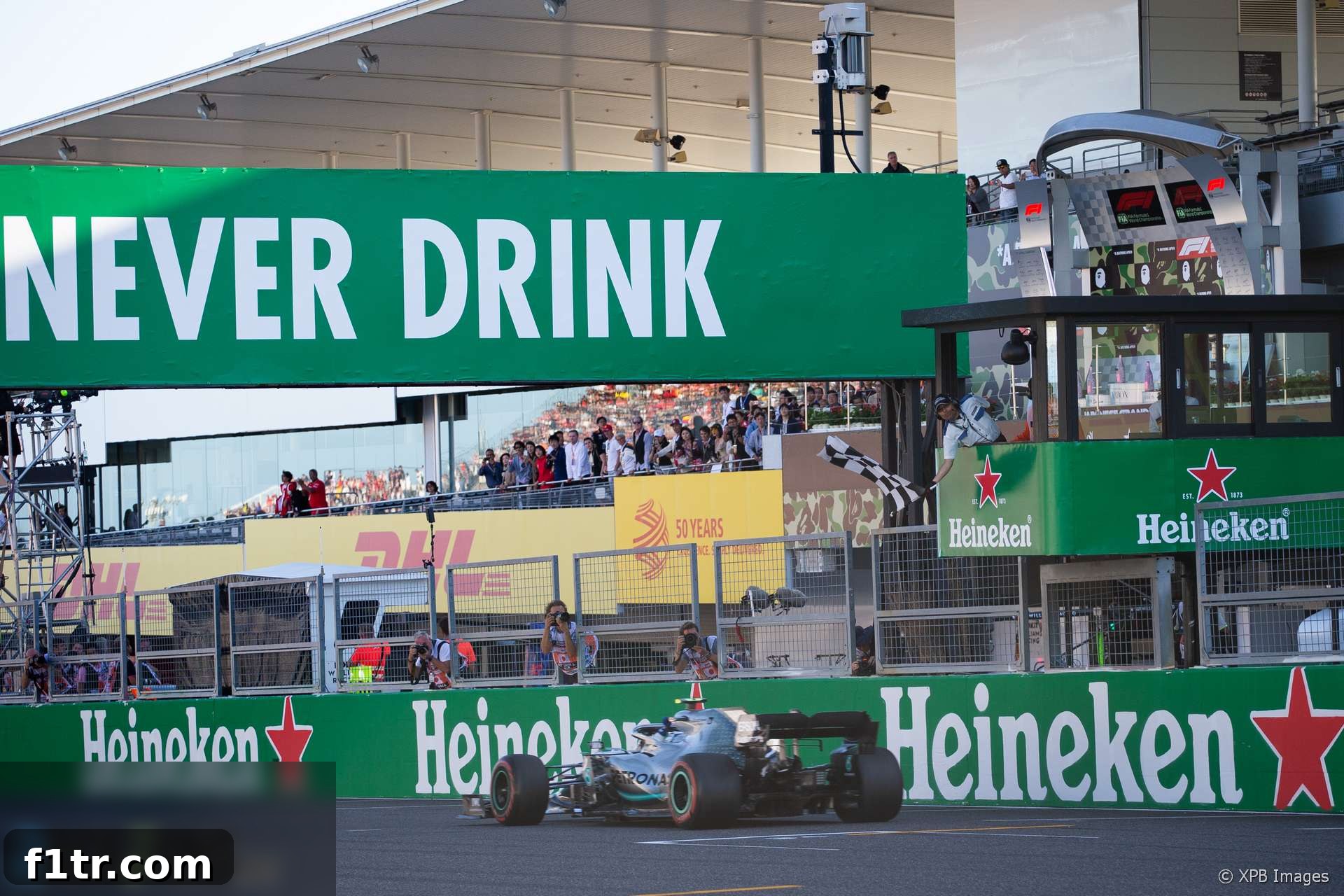
The exhilarating climax of the 2019 Japanese Grand Prix at Suzuka Circuit was marred by an unfortunate and untimely display of the chequered flag, prematurely signalling the end of the race. This critical error, attributed to a “system error,” led to the event officially being cut short by one lap, casting a momentary shadow over an otherwise thrilling contest. While the leading drivers meticulously completed the full scheduled 53-lap distance, the official final classification was based on 52 laps, a direct consequence of race leader Valtteri Bottas being shown the chequered flag one lap too soon as he crossed the start/finish line.
This incident sparked immediate discussion and concern within the Formula 1 paddock, as the chequered flag serves as the undisputed signal for a race’s conclusion. Since the beginning of the 2019 season, Formula 1 had implemented a significant rule change to enhance clarity and prevent such occurrences. The electronic light signal displaying the chequered flag at the start/finish line was officially designated as the definitive indication that a race had completed, superseding the traditional waved flag. This crucial amendment was a direct response to a similar, though manually induced, error during the 2018 Canadian Grand Prix, where the physical chequered flag was waved a lap too early.
FIA Race Director Michael Masi promptly confirmed the nature of the issue at Suzuka. “From what we’ve seen, it’s a system error, it’s something that we’ve got to investigate,” Masi stated, acknowledging the severity of the malfunction. He refrained from prematurely speculating on the precise cause, emphasizing the need for a thorough inquiry. “I’m not going to pre-empt what it was; it wasn’t something that was a system error that came up,” he clarified, indicating that the problem originated within the electronic system itself rather than human intervention.
The confusion on track was palpable, with some teams immediately questioning the early signal. Masi explained the immediate response from race control: “Until we could confirm that Valtteri had actually received [the signal], a couple of teams came on the radio and they were advised to continue racing to the scheduled distance.” This directive ensured that despite the erroneous signal, the integrity of the racing continued for the full distance for those on track, mitigating potential competitive disadvantages. Masi reiterated the FIA’s commitment to addressing the root cause: “So it was a system error. What the exact part of it [was], I can’t tell you here and now; it’s something that we’ll look at and obviously rectify.” This statement underscored the FIA’s dedication to maintaining the highest standards of accuracy and fairness in race management.
The significance of the chequered flag in motorsport cannot be overstated. It is not merely a symbolic gesture; it is the official, safety-critical signal marking the cessation of competition. Its premature deployment, regardless of whether it’s an electronic glitch or a human error, carries serious implications for driver safety, team strategy, and the ultimate classification of a Grand Prix. Drivers push their cars to the absolute limit until the chequered flag, and any ambiguity regarding the race distance can lead to confusion, compromised safety, or unintended changes in performance and strategy.
The incident at the 2019 Japanese Grand Prix served as a stark reminder of the delicate balance between human oversight and technological reliance in modern Formula 1. While the introduction of the electronic chequered flag system was intended to eliminate human error, the Suzuka incident demonstrated that technology, too, is susceptible to malfunctions. This highlights the continuous challenge faced by the FIA and race organizers to develop and implement fail-safe systems that can withstand the high-pressure environment of top-tier motorsport. Ensuring the absolute reliability of these critical systems is paramount to upholding the integrity and safety of the sport.
Lessons learned from the 2018 Canadian Grand Prix were instrumental in prompting the rule change. In that infamous event, model Winnie Harlow mistakenly waved the chequered flag one lap early, leading to the official race results being backdated to lap 69 instead of the scheduled 70. This manual error, while ultimately not affecting the podium positions, underscored the potential for competitive distortion. The transition to an electronic system was therefore a logical step, aiming to remove the human element from such a crucial timing decision. The irony of an electronic system failing just over a year later, albeit in a different manner, was not lost on observers, emphasizing the complexities involved in perfect race management.
While the immediate competitive impact at Suzuka was minimal – Valtteri Bottas comfortably won the race, and no crucial positions changed hands in the final lap due to the early flag – the potential for disruption was significant. Had there been a fierce battle for position, or a car running low on fuel, or a safety car deployed during that prematurely omitted final lap, the consequences could have been far-reaching, potentially altering championship points or even the outcome of the race for certain drivers. This hypothetical scenario underscores why such errors, even when seemingly innocuous, demand meticulous investigation and rectification by the governing body.
The FIA’s commitment to investigating and rectifying the “system error” is crucial for maintaining trust among teams, drivers, and fans. In a sport where fractions of a second and precise regulations dictate success, the integrity of race control decisions and signals must be unquestionable. Any doubt cast on the official termination of a race can erode confidence in the sport’s officiating. Therefore, the subsequent actions taken by the FIA, including software reviews, hardware diagnostics, and procedural adjustments, are essential to prevent future recurrences and reinforce the reliability of Formula 1’s sophisticated race management systems.
The pursuit of perfection in Formula 1 is an ongoing journey, encompassing everything from car design to race management. The 2019 Japanese Grand Prix chequered flag incident serves as a pertinent case study in the challenges of integrating advanced technology into high-stakes sports. It demonstrates that even with robust rule changes and technological upgrades, unforeseen system vulnerabilities can emerge. The continuous evolution of motorsport demands that governing bodies remain vigilant, constantly reviewing and refining their protocols and technologies to ensure that the spectacle on track is always governed by impeccable accuracy and unquestionable fairness.
Ultimately, the incident at Suzuka, while momentarily disruptive, reinforced the critical importance of a flawless chequered flag signal. It highlighted the FIA’s responsiveness to incidents, their commitment to investigation, and their ongoing efforts to leverage technology responsibly to enhance the safety and integrity of Formula 1 racing, striving for a future where such anomalies are entirely eliminated.
2019 F1 season
- Crying in the Melbourne car park at 2019 grand prix was my career low – Ocon
- McLaren Racing reports reduced £71 million loss in 2019
- Kvyat: Hockenheim podium last year was “my biggest achievement” so far
- How the FIA’s new encrypted fuel flow meter targets Ferrari’s suspected ‘aliasing’ trick
- “He smashed my office door”: 23 must-see moments from ‘Drive to Survive’ season two
Browse all 2019 F1 season articles