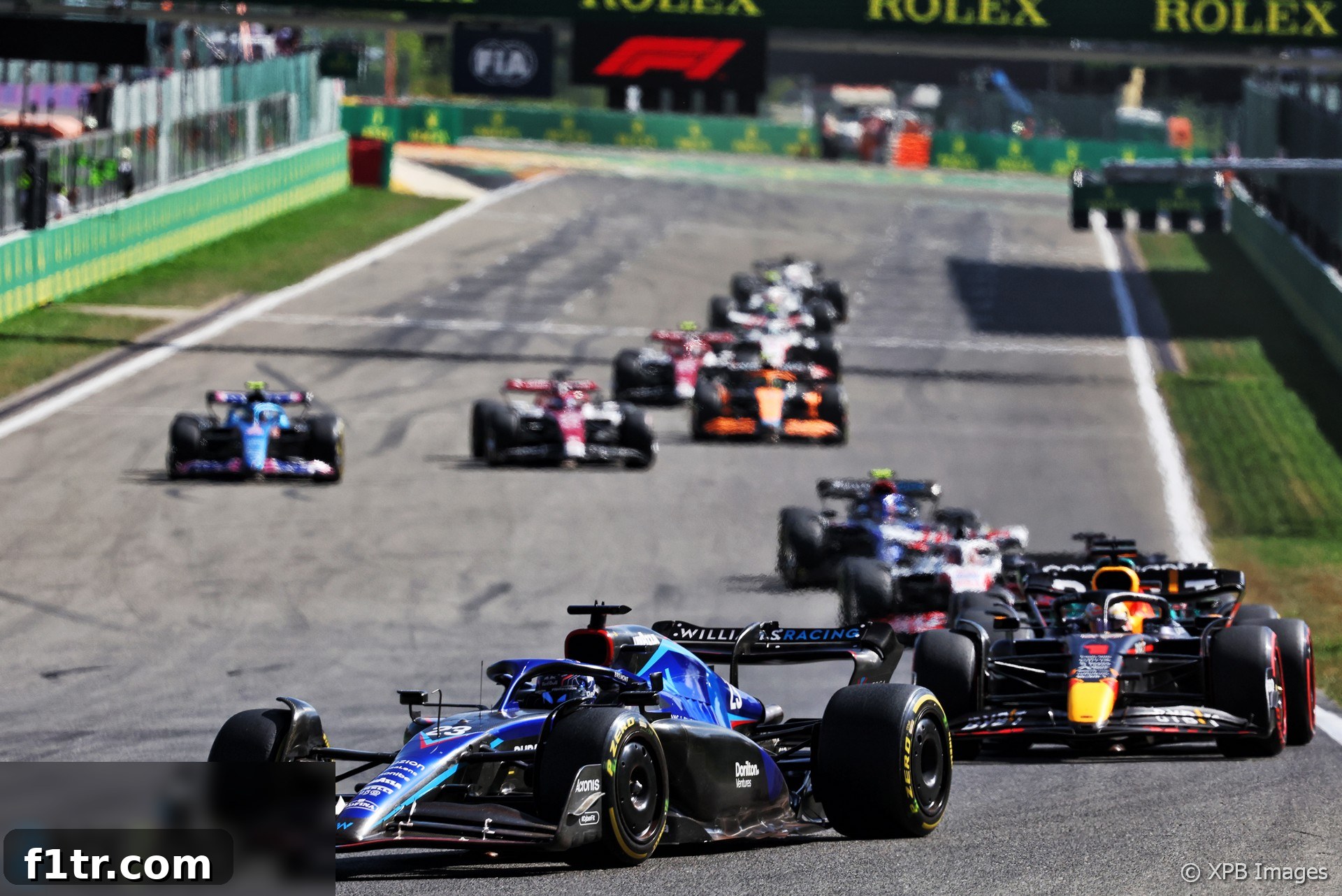
Williams’ Surprising Belgian GP Performance: Beyond Straight-Line Speed
The Williams Racing team celebrated their most competitive showing of the 2022 Formula 1 season at the iconic Belgian Grand Prix, securing a valuable points finish – their third of the year. While the Spa-Francorchamps circuit is renowned for its long straights, often leading to assumptions that Williams’ performance was solely due to their car’s inherent straight-line speed, the team firmly believes their success was far more nuanced, rooted in a strategic blend of setup, aerodynamics, and driver execution.
The Unique Demands of Spa-Francorchamps and Williams’ Advantage
Spa-Francorchamps, with its sweeping corners, dramatic elevation changes, and exhilarating full-throttle sections like the run from La Source to Les Combes, presents a unique challenge for Formula 1 teams. The circuit’s characteristics necessitate a low-downforce setup to maximize speed on the straights, a configuration that inherently suited Williams’ FW44 more than many of its rivals. This particular setup requirement allowed Alex Albon to showcase his exceptional talent, propelling him into the final segment of qualifying (Q3) and securing an impressive sixth place on the grid. He then masterfully converted this strong starting position into a crucial tenth-place finish in the race, adding valuable points to the team’s tally.
Williams’ Head of Vehicle Performance, Dave Robson, acknowledged the unexpected strength displayed at Spa. While the team anticipated being more competitive than at the preceding Hungarian Grand Prix, the extent of their performance surpassed initial expectations. Robson highlighted that the strong qualifying and race results for Albon belied a truly complex and demanding weekend from an engineering perspective, a testament to the continuous effort behind the scenes.
A Complex Engineering Challenge: Unpacking the Weekend’s Performance
The Rollercoaster of Practice Sessions: Finding the FW44’s Sweet Spot
Robson candidly described the weekend as “a bit more up-and-down than I think maybe it appears.” The journey to optimal performance was far from linear. Initial impressions from Practice One were promising, with the FW44 looking strong on the timesheets. However, the team was keenly aware that a red flag during the session meant not all drivers had managed a truly representative lap, tempering their optimism. Anticipating a potentially “more depressing” Practice Two, Williams was pleasantly surprised to see the car still performing well. This led to a series of overnight adjustments, a common iterative process in F1 engineering where data gathered from track sessions informs strategic changes to the car’s setup.
Practice Three, however, didn’t yield the hoped-for improvements. This prompted the engineering team to reconsider some of their overnight changes, leading to further refinements for qualifying. “Then obviously then it really picked up,” Robson noted, emphasizing the breakthrough achieved just when it mattered most. This constant “see-sawing” of genuine pace and team emotion highlighted the delicate balance involved in finding the ideal car setup. It underscores the high-pressure environment of Formula 1, where split-second decisions and accurate data interpretation are paramount to unlocking a car’s full potential.
Finding the Sweet Spot: Setup Refinements for Qualifying
Throughout the weekend, Robson explained that the team was “never too far off” the car’s potential, engaging in constant experimentation. He praised the engineering team for their methodical approach: “We were able to pick our way through it with reasonably good engineering and reasonable confidence. We knew what we were doing.” This confidence allowed them to push the boundaries with their setup, sometimes “probably too far,” requiring them to dial back slightly. This fine-tuning process, although more “up and down” than desired, ultimately led to a competitive package. Robson stressed that their performance level at Spa was “not as simple as just the speed in the first sector,” which includes the legendary flat-out blast of Eau Rouge and Radillon. Instead, he attributed it to a combination of factors, including “other people coming down to a downforce level that we’re maybe a bit more used to, and the interaction of that downforce level with the tyres.” This highlights the crucial interplay between aerodynamic configuration, track characteristics, and tire performance, a complex equation F1 teams constantly strive to solve.
Alex Albon’s Masterclass: Maximizing the FW44’s Potential
Alex Albon’s performance at the Belgian Grand Prix was a standout moment for Williams. His ability to guide the FW44 into Q3 and qualify in an astonishing sixth position demonstrated not only his raw speed but also his exceptional car control and understanding. Converting this into a points finish in the race, despite the inevitable challenges from faster cars, further solidified his reputation as a driver capable of extracting every ounce of performance from his machinery. Albon’s precision driving, particularly in managing the tires and navigating the competitive midfield, was instrumental in securing the team’s valuable championship points. His feedback to the engineers was undoubtedly crucial in helping the team “pick their way through” the complex setup challenges.
Contrasting Fortunes: Nicholas Latifi’s Struggle with Car Unpredictability
While Albon enjoyed a stellar weekend, his teammate Nicholas Latifi faced a more challenging time, being eliminated in Q1. Latifi’s experience underscored the fine margins and inherent unpredictability that can sometimes plague Formula 1 cars, especially when pushed to their limits. Despite Robson’s assessment that Williams was “probably a bit better under braking relative to the field” and “quite good in turn one relative to the field,” Latifi’s feedback painted a different picture. He admitted he struggled to extract the car’s full potential, stating, “I think there was way, way more potential. It was just unfortunately the last lap was the worst lap for me the whole weekend.”
Latifi’s description of a “handbrake feeling” and consistent “locking up and understeering through there” in Turn 1, La Source, reveals the stark reality of driver experience within the same team. The car’s inconsistent behavior caught him out, preventing him from stringing together a clean, fast lap. “You expect one thing, and then it just did the complete opposite,” he lamented, highlighting the mental and technical battle against an unpredictable machine. He estimated that a clean lap could have easily yielded “five tenths without really pushing crazy over the limit,” emphasizing the frustration of not being able to capitalize on the FW44’s underlying pace due to its tricky handling characteristics.
Strategic Aerodynamic Development: Tailoring the FW44 for Spa
In line with most other teams seeking maximum performance at Spa, Williams implemented an upgrade package focused on aerodynamic efficiency, specifically for low-downforce conditions. As Robson concisely put it, they “just cut the back end off the rear wing.” This modification, a common strategy for circuits like Spa and Monza, involves reducing the size and angle of the rear wing elements to minimize drag and maximize top speed on the straights. This proved highly effective for the FW44. Furthermore, the low wind speeds observed at Spa-Francorchamps throughout the weekend contributed to a more consistently behaving car for the drivers, allowing them to push closer to the limits without being overly concerned by crosswinds or turbulent air affecting the car’s stability.
Navigating the Porpoising Directive: An Early Test for Williams
The 2022 season saw the introduction of a technical directive (TD39) by the FIA aimed at addressing the phenomenon of porpoising – the severe high-frequency vertical oscillation of cars at high speeds, which raised significant safety concerns. Robson revealed that, following the implementation of this directive, the team initially encountered porpoising issues on Albon’s car during Friday practice. “There were a couple of laps that exceeded the FIA’s limit,” he confirmed. However, the Williams engineering team demonstrated remarkable agility and technical prowess, swiftly resolving the issue by Saturday. This quick turnaround instilled confidence within the team regarding the efficacy of the changes they had made both for and during the Belgian Grand Prix weekend, proving their ability to adapt to new regulations and unforeseen challenges.
Looking Ahead: Fine-Tuning and Future Focus for Williams
Despite the positive momentum generated at Spa, Alex Albon shared an important update regarding the FW44’s development trajectory. He indicated that there would be no further major upgrade packages introduced for the car in 2022. Instead, the team’s focus for the remainder of the season will be on “fine-tuning” its existing package. This strategic decision is common among teams operating with more constrained budgets, allowing them to shift resources and engineering focus towards the development of the following year’s challenger, the FW45. The invaluable data and lessons learned from a strong performance at Spa will undoubtedly feed into the design and philosophy of their 2023 car, aiming to build upon the glimpses of potential shown in Belgium and continue their journey back up the grid.
Conclusion: A Glimmer of Hope for Williams’ Future
The Belgian Grand Prix was a significant weekend for Williams Racing, offering a vital boost in confidence and valuable championship points. The performance clearly demonstrated that their competitiveness at Spa was not merely a consequence of straight-line speed, but rather a sophisticated combination of an optimized low-downforce setup, aerodynamic efficiency, adept engineering adjustments throughout a challenging weekend, and a masterful driving performance from Alex Albon. While the journey for Williams to consistently compete at the front remains a long one, their strategic approach and the ability to extract such potential from the FW44 at a demanding circuit like Spa-Francorchamps provide a hopeful indication of the team’s ongoing progress and a promising outlook for their future in Formula 1.
2022 Belgian Grand Prix
- How many victory chances did Hamilton have in his first winless F1 season?
- Sainz doesn’t believe Red Bull’s huge Spa advantage is here to stay
- Alonso: Hamilton’s nationality explains “huge” media reaction to radio comment
- “Big question marks” remain over policing of Formula 1’s budget cap – Ferrari
- Williams: Points-scoring Belgian GP pace not just due to straight line speed
Browse all 2022 Belgian Grand Prix articles