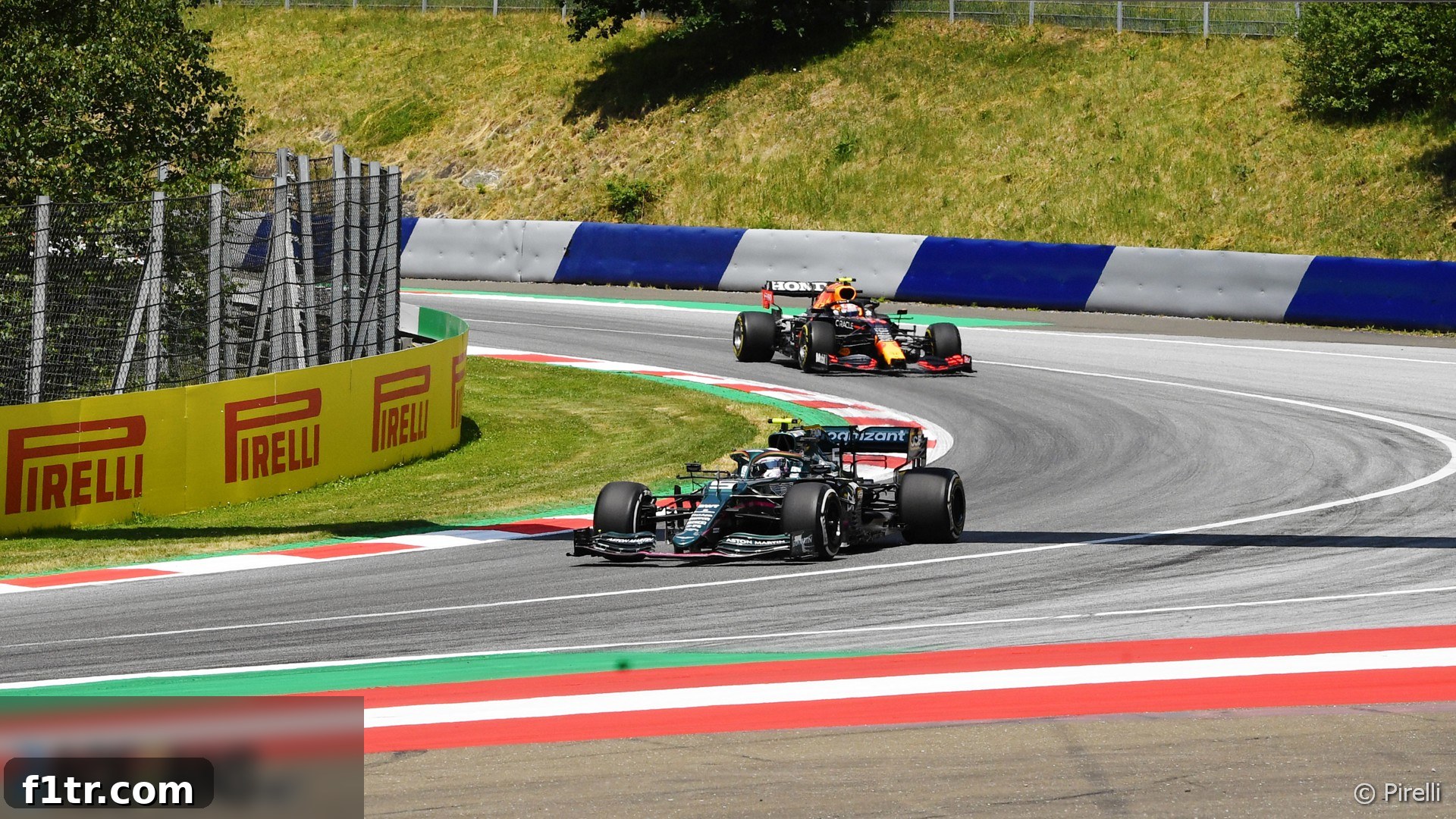
The stage is set for an electrifying qualifying session at the Styrian Grand Prix, where securing pole position promises to be a battle of milliseconds. Nestled in the picturesque Austrian hills, the Red Bull Ring, known for its rapid, flowing layout and one of the shortest lap times on the Formula 1 calendar, guarantees a tight contest. Every fraction of a second, every strategic decision, and every ounce of driver skill will be amplified on this compact circuit, making the fight for the front row particularly fierce.
While Max Verstappen and Red Bull Racing have showcased formidable pace and appear to be the team to beat on their home turf, the gap to their rivals is undeniably slim. A multitude of variables, ranging from the unpredictable Austrian weather to intricate strategic plays and the ever-present threat of track limits, could dramatically influence the outcome of this all-important session. The battle for pole position here is rarely straightforward, and this weekend looks to be no exception.
The Weather Factor: A Cloud of Uncertainty
Formula 1 may have narrowly escaped the deluge predicted for Friday’s practice sessions, but the possibility of rain remains a significant talking point heading into Saturday. Other racing series sharing the Red Bull Ring did not fare as well, contending with heavy downpours that demonstrated just how quickly conditions can change. The official meteorological forecast for Saturday afternoon indicates a 60% chance of rain throughout the crucial final practice and qualifying sessions, as well as for the subsequent W Series race. This elevated probability injects a substantial element of unpredictability into the proceedings.
Wet weather qualifying is a true test of driver skill and team strategy. The choice of intermediate or full wet tires, the timing of tire changes on a drying track, and the sheer bravery required to push the limits in treacherous conditions can all contribute to a shuffled grid. Some drivers excel in the rain, while others struggle to find the necessary grip and confidence. Furthermore, a sudden downpour during a session can catch teams off guard, leading to red flags, disrupted flying laps, and unexpected eliminations. Even if the skies do not fully open, a damp track or intermittent showers could create a chaotic and thrilling qualifying spectacle, making precision and adaptability paramount.
Mercedes vs. Red Bull: The Battle of the Titans Continues
The intensifying rivalry between Mercedes and Red Bull is perhaps the most captivating narrative of the 2021 Formula 1 season. While Max Verstappen and Red Bull confidently topped both practice sessions in Austria, it would be premature and foolish to write off the Mercedes-AMG Petronas F1 Team and its formidable drivers, Lewis Hamilton and Valtteri Bottas.
A recurring theme throughout Friday’s practice sessions, and one that could significantly impact qualifying, was the strict enforcement of track limits. Both Hamilton and Verstappen, along with several other competitors, had lap times deleted for exceeding these boundaries. Notably, Hamilton lost some of his most competitive times. In Free Practice Two, his invalidated lap of 1’05.335 was fractionally quicker than Verstappen’s best, suggesting that Mercedes’ raw pace is much closer to Red Bull’s than the final timesheets indicated. This underscores the fine margins at play and the critical importance of precision, especially in the high-speed Turn 9/10 complex.
Hamilton himself acknowledged Mercedes’ recent trend of stronger race pace compared to their qualifying performance. “I don’t know if we definitely have better race pace,” he stated. “I think we’re very close, we’re probably stronger [in the race] than we are compared to qualifying.” He elaborated on the challenges faced by Mercedes, highlighting a deficit of “three and a half tenths just in the straights, with engine power or drag, probably a combination of the two,” and the impact of reduced downforce under the new regulations. This internal assessment suggests Mercedes might be sandbagging slightly or genuinely struggling to unlock peak one-lap performance, a dynamic that could add another layer of intrigue to qualifying.
Strategic Risks: Slipstreams, Gravel Traps, and Penalties
The Red Bull Ring, with its three distinct long straights, offers a significant advantage to drivers who can successfully utilize a slipstream, or “tow,” from a rival. In the current era of high-drag Formula 1 cars, a perfectly timed tow in Q3 could be the difference between a good lap and a pole position-worthy effort, potentially delivering a surprise front-runner. However, this strategic maneuver is a double-edged sword. Getting too close to another car through the high-speed corners in the final sector of the lap can be disastrous, leading to a loss of downforce and control.
Lando Norris experienced this firsthand during Free Practice Two. As a car ahead of him entered the pit lane after Turn 9, Norris was caught in its turbulent air, causing his McLaren to understeer wide and exceed track limits. Norris was one of the most frequent violators on Friday, highlighting a critical area he must address in qualifying to avoid having crucial lap times deleted, a fate he suffered at Imola earlier in the season. Despite this, his proven talent around the circuit, demonstrated by his last-lap heroics that secured a podium finish at this venue last year, makes him a dark horse for a strong qualifying performance.
Beyond track limits, the vast expanses of gravel traps flanking the circuit pose another significant threat. We’ve witnessed red and yellow flags disrupt qualifying sessions on multiple recent occasions, and the Styrian Grand Prix is ripe for similar incidents. A car beached in the gravel could trigger a yellow flag, forcing drivers to abort flying laps, or a red flag, which can completely reset the rhythm and strategy of a session. Such disruptions have tangible consequences: Lewis Hamilton notably lost a front-row start at this circuit last year due to a three-place grid penalty stemming from a yellow flag infringement. His teammate, Valtteri Bottas, has already collected a similar three-place penalty for a bizarre pit lane spin during practice this weekend, demonstrating just how easily penalties can shake up the grid before the race even begins. These elements mean drivers must not only be fast but also impeccably disciplined.
The Midfield Mayhem: Unveiling Disguised Pace
While the focus often remains on the front-runners, the battle in the midfield is equally captivating, with several teams appearing to disguise their true pace during practice. AlphaTauri, in particular, showed exceptional speed in Free Practice One, with Pierre Gasly consistently among the top five and finishing the session second-fastest. This performance, as AlphaTauri’s chief race engineer Jonathan Eddolls confirmed, was a result of the team bringing their FP2 program forward in anticipation of rain. However, Gasly was unable to complete any running in FP2 due to concerns over his Honda power unit, leaving his true one-lap potential somewhat veiled. His teammate, Yuki Tsunoda’s qualifying simulation run was also compromised, meaning AlphaTauri’s full capabilities have yet to be revealed.
Conversely, McLaren made a significant stride forward between the morning and afternoon sessions, with Daniel Ricciardo impressing by finishing second-fastest in FP2. This upward trajectory suggests McLaren could be a strong contender for the top of the midfield, if not challenging the lead pack. Ferrari, on the other hand, presented a puzzling picture. Following a “very big investigation” into their dire performance at Paul Ricard, both factory cars had surprisingly poor pace in FP2, finishing outside the top 10 and even behind Antonio Giovinazzi’s Alfa Romeo. Given their efforts to understand and rectify their previous issues, it’s highly probable that Ferrari’s true pace remains deliberately concealed, suggesting they have more to offer in qualifying.
Similarly, Alpine looked remarkably fast in FP2, positioning themselves as the clear “best-of-the-rest.” However, this mirrors their Friday performance at Paul Ricard, where they subsequently struggled in qualifying, failing to get both cars into Q3, and faced difficulties with race pace. This inconsistency makes their potential performance difficult to gauge. For the fiercely competitive midfield, Free Practice Three is unlikely to feature many more qualifying simulations, as, unlike at Paul Ricard, many teams might not risk attempting to make Q3 on medium tyres, opting instead for the softer compounds to maximize their chances. This further contributes to the mystery surrounding true performance until the lights go green for qualifying itself.
The Red Bull Ring: A Unique Challenge
The Red Bull Ring, while short, is a demanding circuit that punishes even the slightest error. Its high-speed nature, coupled with few challenging corners, means that minor differences in car performance or driver execution are magnified. This layout favors cars with strong engine power and efficient aerodynamics, allowing drivers to carry speed through its sweeping turns and long straights. The unique blend of speed and precision required here is why qualifying is almost always incredibly close, demanding perfection from both driver and machine. The smallest mistake can cost multiple grid positions, adding immense pressure to every flying lap.
Combined Practice Times: A Snapshot of Performance
Here’s a look at the combined practice times, offering an initial glimpse into the pecking order, though as discussed, these times are not always fully indicative of true qualifying potential:
| Pos | Driver | Car | FP1 | FP2 | Total laps |
|---|---|---|---|---|---|
| 1 | Max Verstappen | Red Bull-Honda | 1’05.910 | 1’05.412 | 70 |
| 2 | Daniel Ricciardo | McLaren-Mercedes | 1’06.669 | 1’05.748 | 71 |
| 3 | Esteban Ocon | Alpine-Renault | 1’06.551 | 1’05.790 | 68 |
| 4 | Lewis Hamilton | Mercedes | 1’06.332 | 1’05.796 | 65 |
| 5 | Fernando Alonso | Alpine-Renault | 1’06.519 | 1’05.827 | 73 |
| 6 | Sebastian Vettel | Aston Martin-Mercedes | 1’06.708 | 1’05.934 | 68 |
| 7 | Lando Norris | McLaren-Mercedes | 1’06.861 | 1’05.994 | 73 |
| 8 | Lance Stroll | Aston Martin-Mercedes | 1’06.584 | 1’06.079 | 68 |
| 9 | Sergio Perez | Red Bull-Honda | 1’06.696 | 1’06.089 | 68 |
| 10 | Antonio Giovinazzi | Alfa Romeo-Ferrari | 1’06.614 | 1’06.145 | 64 |
| 11 | Carlos Sainz Jnr | Ferrari | 1’06.630 | 1’06.147 | 70 |
| 12 | Pierre Gasly | AlphaTauri-Honda | 1’06.166 | 32 | |
| 13 | Valtteri Bottas | Mercedes | 1’06.386 | 1’06.251 | 64 |
| 14 | Charles Leclerc | Ferrari | 1’06.629 | 1’06.270 | 74 |
| 15 | Kimi Raikkonen | Alfa Romeo-Ferrari | 1’06.297 | 40 | |
| 16 | Yuki Tsunoda | AlphaTauri-Honda | 1’06.397 | 1’06.451 | 74 |
| 17 | George Russell | Williams-Mercedes | 1’06.848 | 1’06.628 | 70 |
| 18 | Mick Schumacher | Haas-Ferrari | 1’07.473 | 1’06.886 | 58 |
| 19 | Nicholas Latifi | Williams-Mercedes | 1’07.180 | 1’07.669 | 62 |
| 20 | Nikita Mazepin | Haas-Ferrari | 1’08.081 | 1’07.404 | 60 |
| 21 | Robert Kubica | Alfa Romeo-Ferrari | 1’07.823 | 29 |
NB. The 2020 Austrian Grand Prix has been used as the point of comparison for the teams’ progress due to the same tyre selection being used for that race.
Anticipation Builds for a Thrilling Qualifying
As the Styrian Grand Prix qualifying session approaches, the air is thick with anticipation. The interplay of raw pace, strategic gambles, weather uncertainties, and the ever-present threat of penalties promises a captivating spectacle. Will Max Verstappen solidify Red Bull’s home advantage, or can Lewis Hamilton and Mercedes unlock their true one-lap potential? Will the midfield surprise us with an unexpected contender for Q3, or will a sudden downpour throw the entire session into disarray? Every team and driver faces unique challenges and opportunities, and the outcome remains far from certain. One thing is guaranteed: the fight for pole position at the Red Bull Ring will be nothing short of exhilarating, setting the stage for a dramatic Sunday race.