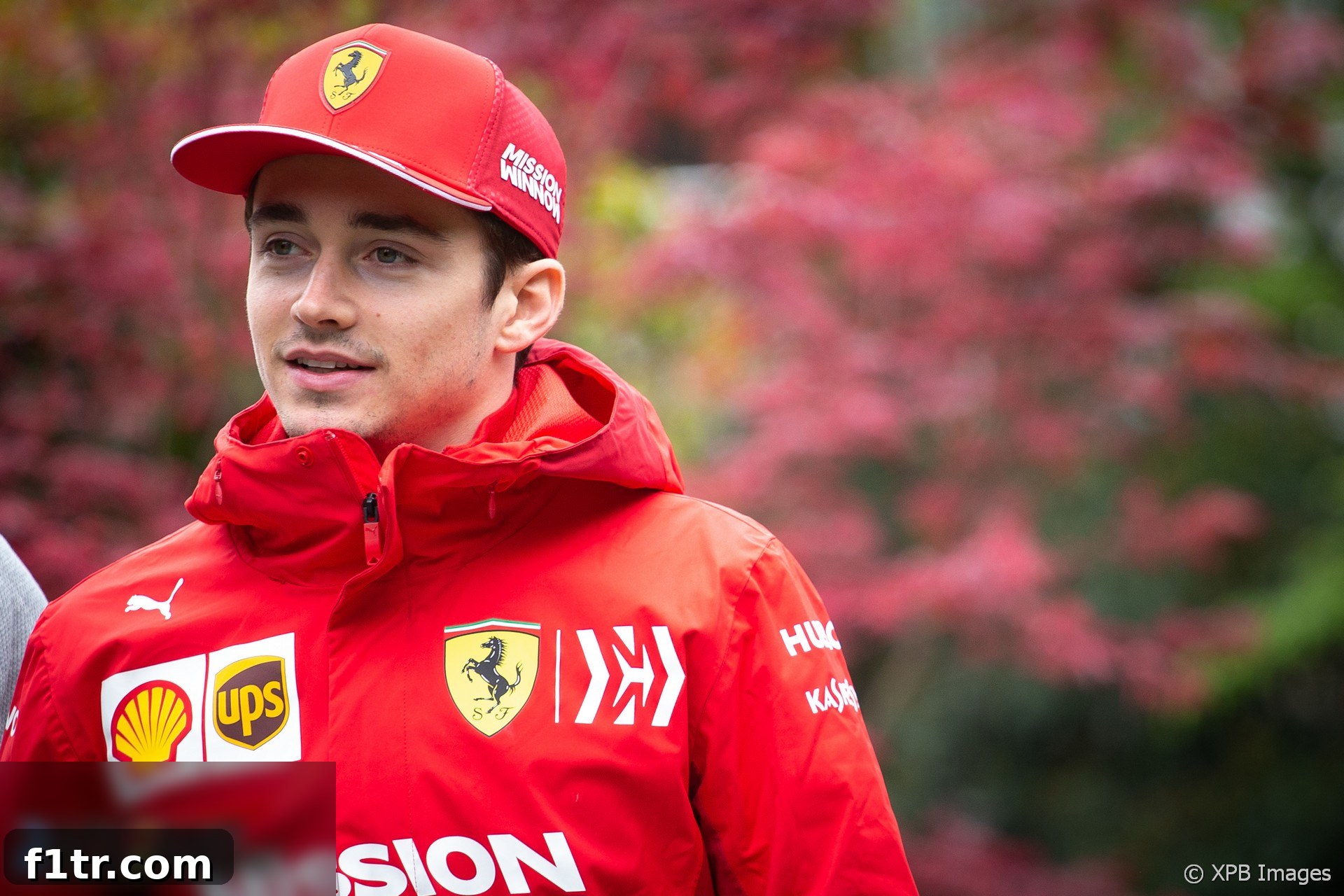
The 2019 Formula 1 season opener in Australia had offered a glimpse into Charles Leclerc’s promising future at Ferrari, where he dutifully adhered to team directives. However, just two weeks later at the Bahrain Grand Prix, the narrative shifted dramatically. The young Monegasque driver, brimming with confidence and exhibiting a clear performance edge, made a bold statement by choosing to overtake his illustrious teammate, Sebastian Vettel, despite explicit instructions from the Ferrari pit wall to maintain position. Leclerc’s justification was simple yet profound: he held a “significant pace advantage” that he felt compelled to capitalize on.
The incident unfolded early in the Bahrain race, a critical moment that would define Leclerc’s assertive approach within the Scuderia. Ferrari’s strategy initially called for Leclerc to hold his line behind Vettel for two full laps, a common tactic often employed to manage tires, fuel, or to allow a lead driver to settle into a rhythm. Yet, Leclerc, acutely aware of his car’s superior performance and his own rhythm, made his move less than a lap after receiving the order. It was a decisive and calculated maneuver that sent a clear message: Leclerc was not content to play a supporting role when he believed he had the pace to lead.
For Leclerc, this act of defiance wasn’t born out of disrespect for team orders, but rather an acute understanding of the unfolding race dynamics. He later articulated his perspective, stating, “As I’ve shown in Australia, the interest of the team is extremely important. But in this particular situation, I think I had quite a big pace advantage at this moment of the race, and I had the opportunity in the straight and I just didn’t see myself lifting and staying behind.” This statement underscored a profound shift in his approach from the Australian Grand Prix, where he had indeed stayed behind Vettel as instructed, demonstrating his initial deference to team hierarchy.
The contrast between the two races was stark. In Australia, his debut race with the Prancing Horse, Leclerc played the team game, content to bring the car home in a respectable position and gather experience. Bahrain, however, presented a different scenario. Leclerc felt he was undeniably quicker, a fact that was evident throughout the race weekend. His confidence in the SF90 was palpable, allowing him to push the limits and extract maximum performance from the car. The overtake on Vettel was not a reckless gamble but a “safe pass,” executed cleanly and without incident, further validating his decision to seize the moment.
Leclerc’s performance in Bahrain was compelling from the outset. He consistently outpaced Vettel, displaying a remarkable ease and comfort with the Ferrari SF90. This inherent pace advantage became a central theme of his explanation for the overtake. “I think we had good pace all weekend long,” he reflected. “I was very confident with the car, very at ease with the car during all the weekend. Seb was a little bit less. So I just focused on my race. I had the opportunity on lap six, and I went for it.” This candid assessment highlighted not only his own strength but also the subtle performance disparity between the two teammates at that specific event, which played a crucial role in Leclerc’s decision-making process.
The psychological aspect of such an overtake, especially by a younger driver challenging a four-time world champion, cannot be overstated. It signalled Leclerc’s arrival not just as a Ferrari driver, but as a genuine contender within the team. The move was a bold declaration of his ambition and a testament to his belief in his own abilities. For Ferrari, it presented an early-season dilemma, forcing them to navigate the delicate balance between supporting their established champion and nurturing a prodigious new talent. Team orders, particularly early in a season, are always contentious, but Leclerc’s immediate pace and the nature of his overtake complicated the traditional power dynamics within the team.
Despite his commanding performance and the early lead he established, victory ultimately eluded Leclerc in Bahrain due to an unfortunate power unit failure in the final quarter of the race. This mechanical issue, while heartbreaking, did little to diminish the impact of his drive. In fact, it arguably amplified the narrative of his potential, as he had so clearly demonstrated race-winning pace before being sidelined by reliability issues. The bittersweet outcome of Bahrain, where he started from pole position, dominated much of the race, and then fell back to third, only solidified his reputation as a formidable force on the grid, capable of challenging the sport’s elite.
Following such a performance, speculation naturally mounted about Leclerc’s prospects for the championship in only his second Formula 1 season. Yet, the young driver adopted a remarkably level-headed approach, acknowledging the volatile nature of perceptions within the sport. “After the first race nobody sees me as a title contender,” he observed. “After the second race everyone sees me as a title contender. So things can go very quick in Formula 1.” This insight reflected a maturity beyond his years, understanding that the highs and lows of a Formula 1 season can rapidly alter public opinion and media narratives.
Leclerc’s focus remained firmly on his own performance and development, rather than getting caught up in the early championship hype. He stressed the importance of continuous effort and self-improvement: “I need to focus on what I’m doing in the car, try to work as hard as possible and trying to do the best job in the car and outside the car and then I’m pretty sure the results will come.” This commitment to process over outcome is a hallmark of truly great drivers, suggesting a long-term vision rather than an immediate chase for silverware.
The 2019 season was still in its infancy, and Leclerc wisely recognized the long road ahead. “Then we’ll see. We are only at the third race in the season, it’s very early on,” he cautioned. “We’ll see how we get on in the next few races. But hopefully, we keep the momentum from Bahrain going.” His desire to maintain the momentum from Bahrain was a clear indicator of his competitive spirit, aiming to transform a singular dominant performance into a consistent string of strong results. The Bahrain Grand Prix of 2019 ultimately served as a coming-out party for Charles Leclerc, showcasing not only his immense talent but also his readiness to challenge the established order, both within his team and across the wider Formula 1 grid.
2019 F1 Season Insights
- Crying in the Melbourne car park at 2019 grand prix was my career low – Ocon
- McLaren Racing reports reduced £71 million loss in 2019
- Kvyat: Hockenheim podium last year was “my biggest achievement” so far
- How the FIA’s new encrypted fuel flow meter targets Ferrari’s suspected ‘aliasing’ trick
- “He smashed my office door”: 23 must-see moments from ‘Drive to Survive’ season two
Browse all 2019 F1 season articles