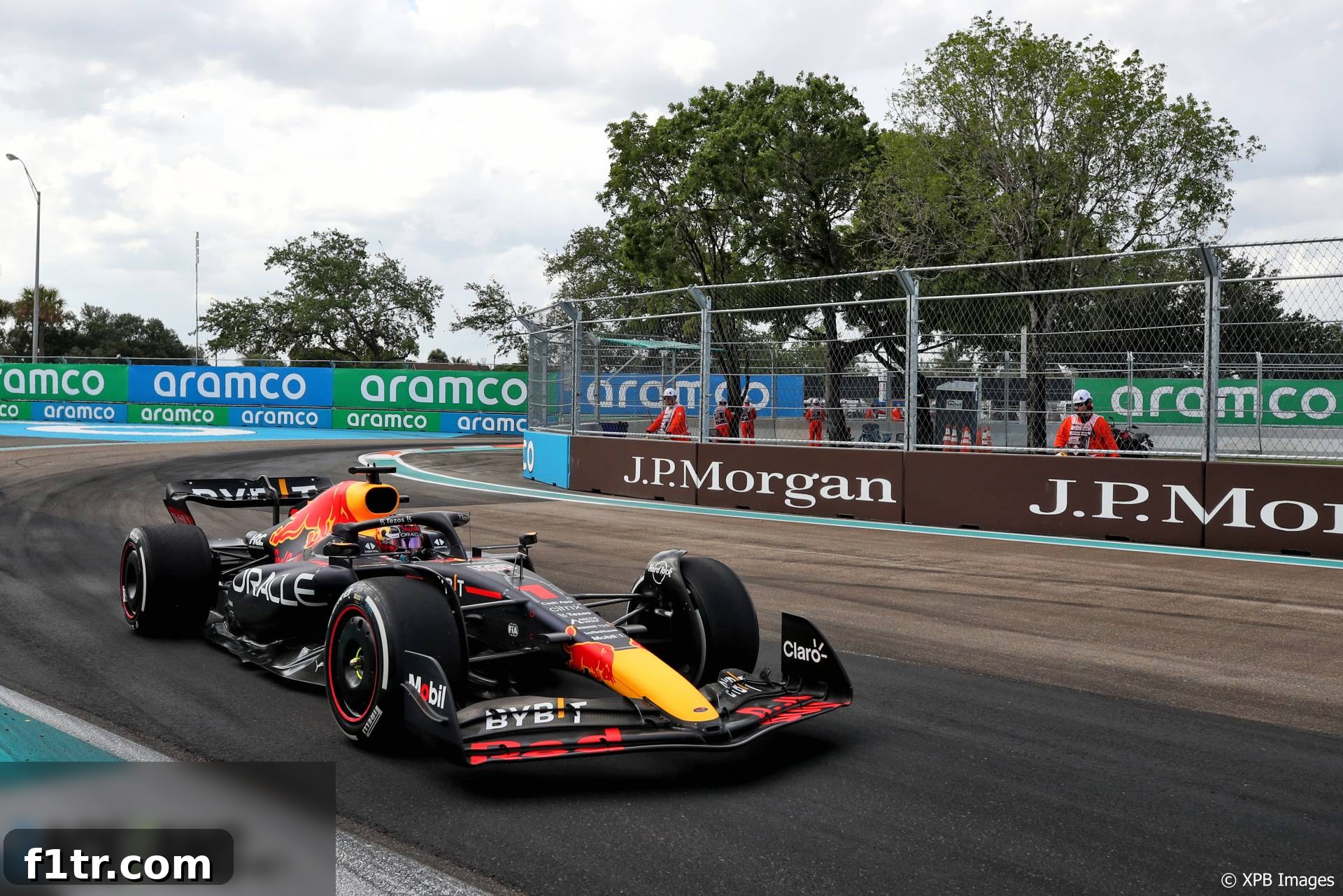
The inaugural Miami Grand Prix, held at the vibrant Miami International Autodrome, quickly established itself as a spectacle of speed and glamour. Yet, beneath the dazzling lights and celebrity fanfare, the race presented an exceptionally gruelling challenge for the elite drivers of Formula 1. The top three finishers – Max Verstappen, Charles Leclerc, and Carlos Sainz Jnr – were unanimous in their assessment: it was “a very difficult race, physically.” This candid declaration highlighted the extreme conditions and relentless demands that transformed the much-anticipated event into a profound test of human endurance and machine reliability.
Miami’s Gruelling Challenge: Heat, Humidity, and a Relentless Street Circuit
The primary architects of the Miami Grand Prix’s physical toll were the scorching air temperatures, which consistently soared above 30 degrees Celsius throughout the entire 57-lap race. Coupled with high humidity, these conditions created an oppressive, sauna-like environment within the cockpits. Formula 1 cars are designed for peak performance, and the heat generated by their powerful engines and braking systems, combined with such high ambient temperatures, can push internal cockpit temperatures well beyond 50 degrees Celsius. This intense heat stress leads to rapid dehydration, significant loss of concentration, and profound fatigue, all of which directly impact a driver’s ability to perform at the absolute limit.
Adding another layer of complexity was the very nature of the Miami International Autodrome itself. As a street circuit, it featured tight corners, unforgiving concrete barriers, and limited run-off areas. Such layouts demand pinpoint accuracy, unwavering focus, and constant vigilance from the drivers. There is virtually no margin for error, and the immense G-forces exerted on the drivers’ bodies through rapid acceleration, brutal braking, and high-speed cornering are not only extreme but sustained over long periods. Unlike more traditional race tracks that often incorporate long straights providing brief moments of physical respite, the Miami circuit offered little to no reprieve. With only a single Safety Car intervention during the entire race, drivers were denied any substantial opportunity to gather their breath, rehydrate, or mentally reset. This relentless pace and unforgiving environment collectively transformed the Miami Grand Prix into a severe and memorable test of both physical stamina and mental fortitude for every competitor on the grid.
Leclerc’s Tyre Battle and Ferrari’s Strategic Dilemma
For Charles Leclerc, who had secured pole position for Ferrari, the race unfolded into a challenging strategic and physical battle that ultimately saw him finish second. Leclerc candidly admitted the race’s physical demands, stating, “It was a very difficult race, physically.” His struggles were notably compounded by the performance characteristics of the medium compound tyres, particularly during the crucial opening stint of the race. “We struggled quite a bit with the medium tyres, especially in the first stint and got overtaken and it made our race a bit more difficult from that moment onwards,” Leclerc recounted.
This early setback was pivotal. Losing track position to his championship rival, Max Verstappen, put Leclerc immediately on the defensive. The medium compound, typically a versatile and balanced tyre choice, appeared to degrade faster than anticipated or simply didn’t provide the optimal grip and stability required for Ferrari’s car setup under the prevailing, hot track conditions. Such early tyre wear often forces teams to adapt their strategy, sometimes compromising on their optimal race plan.
However, a strategic shift to the hard compound tyres in the later stages of the race brought a noticeable improvement in Leclerc’s pace and overall car balance. “On the hard we were very competitive – towards the end I thought I could get Max at one point but today they had the advantage in terms of pace,” he explained. This clear dichotomy in tyre performance highlights the delicate balance teams must strike with tyre selection, pressure management, and overall strategy, especially on a brand-new, evolving track surface like Miami’s. Despite his mid-race resurgence and the improved performance on the hard tyres, the Red Bull of Max Verstappen ultimately proved to have the superior pace on the day, enabling Verstappen to maintain his lead.
Leclerc’s reflections on the race extended beyond the technical and strategic intricacies. He also acknowledged the overwhelming and fervent support from the grandstands, appreciating the enthusiastic atmosphere. “It was fun, it was amazing to see so many people again. I keep saying it but it’s great to have so many Ferrari fans too in the grandstands.” This emotional connection with the passionate F1 fanbase, particularly the “Tifosi” who travel globally to support Ferrari, underscored the sport’s immense global appeal and the enduring magnetic pull of the Scuderia Ferrari brand.
Looking ahead, Leclerc expressed a determined optimism for the remainder of the season. He stated, “I hope now that we can do a step up from the next race onwards but it’s been tight since the start of the season and that’s what we like to see.” His comments reflect the intense, closely contested nature of the 2022 Formula 1 World Championship, a battle he and his team were fully committed to continuing, pushing for improvements in every subsequent race.
Sainz’s Heroic Drive Through Pain and Resilience
Carlos Sainz Jnr, Leclerc’s Ferrari teammate, faced an even more formidable personal challenge heading into Sunday’s race. His entire weekend had been severely impacted by a heavy crash during Friday’s second practice session, where his car made significant and jarring contact with the unforgiving concrete barriers. The incident left him visibly shaken and, more importantly, with lingering physical discomfort. He candidly revealed the extent of his struggles: “I’ve been better, obviously after the crash from Friday I still had a neck pain going into the race but I had to manage it and I fought through it.”
Racing a Formula 1 car, particularly on an intensely demanding street circuit like Miami’s, with an injured neck, is an extraordinary feat of endurance, physical tolerance, and mental resilience. The extreme G-forces experienced in high-speed cornering and under heavy braking can exert hundreds of kilograms of strain on a driver’s neck muscles and spine. For a driver carrying a pre-existing injury, this strain can become immensely painful and potentially debilitating, severely hindering their ability to control the car at its limit.
Despite the persistent pain, Sainz showcased remarkable tenacity and an unyielding fighting spirit throughout the race. His fierce battle with Red Bull’s Sergio Perez for the final podium spot was a testament to his sheer willpower and determination. “Especially with Checo [Sergio Perez] at the end on the medium tyre it was very difficult to keep him behind but we managed to keep the podium which is a decent result,” he said, having skillfully defended his third-place position with precision and aggression. This direct confrontation for a coveted podium spot required absolute focus, precise car control, and immense physical exertion, pushing Sainz to dig deep into his physical and mental reserves. His ability to fend off Perez, a formidable and aggressive competitor, while simultaneously nursing a significant injury, profoundly highlighted the elite athleticism, mental fortitude, and unwavering commitment required at the pinnacle of motorsport.
Sainz further elaborated on the challenging track conditions, echoing his teammate’s sentiments about the difficulties. “It wasn’t easy at all. It’s been a tough race with the tyres, with the heat. The car was moving and sliding a lot but in the end we got what we deserved, which was a decent P3 and we can build on that from here.” His vivid description of the car “moving and sliding a lot” paints a clear picture of the difficulties in controlling these high-powered machines on a hot, potentially greasy, and evolving track surface. For Sainz, securing a podium finish under such arduous and painful circumstances was not merely a “decent result” but a significant personal triumph. It demonstrated his profound capacity to overcome adversity, manage extreme discomfort, and contribute vital championship points to Ferrari’s ongoing campaign, solidifying his reputation as a tenacious and resilient competitor.
Verstappen’s Dominant, Yet Physical, Victory
While Charles Leclerc and Carlos Sainz Jnr battled the circuit, the oppressive heat, and their own respective challenges, Max Verstappen delivered a masterclass performance to secure victory at the inaugural Miami Grand Prix. The reigning world champion, starting from third on the grid, executed a brilliant start, quickly dispatching Sainz before setting his sights on Leclerc. His strategic tyre management, relentless pace, and clinical overtaking allowed him to pass Leclerc and subsequently maintain a commanding lead for the remainder of the race. This victory was a powerful display of the potent combination of exceptional driver skill and the raw performance capabilities of his Red Bull Racing RB18.
Despite his seemingly effortless win from the outside, Verstappen himself acknowledged the race’s demanding nature. He described it as “an incredible grand prix” but immediately added a crucial qualifier: “very physical as well.” This brief, yet telling, comment from the race victor underscored a universal experience among the drivers, irrespective of their finishing position. Even a driver at the peak of his physical conditioning, and seemingly in effortless control of a dominant car, felt the profound and exhausting effects of the Miami heat and the circuit’s relentless demands. Verstappen’s victory was not merely a display of blistering speed and strategic acumen but also a testament to his enduring stamina and exceptional ability to maintain peak performance under extreme physiological stress. This performance further cemented his reputation as one of the sport’s most formidable and complete talents. His controlled aggression, meticulously executed race management, and unwavering focus were unequivocally key to navigating the unique physical challenges of Miami and ultimately emerging victorious.
The Wider Picture: Miami’s Impact on the F1 Season
The Miami Grand Prix, beyond its immediate race results, served as a fascinating and crucial barometer for the ongoing 2022 Formula 1 season. The intensifying championship battle between Ferrari and Red Bull continued to unfold, with both teams demonstrating periods of formidable strength and simultaneously highlighting areas requiring further development. Miami’s unique characteristics – including its status as a new street circuit, the extreme heat and humidity, and an evolving, challenging track surface – brought to the fore various critical aspects of car performance. These included everything from effective tyre degradation management and optimal aerodynamic efficiency in varying conditions to the crucial interplay between car setup and driver feedback.
The contrasting performances of Ferrari’s medium and hard tyres, combined with Red Bull’s consistently strong pace throughout the race, provided invaluable data for engineers and strategists alike. This information would undoubtedly influence future developments for both teams, informing strategic adjustments and car upgrades for subsequent races on the demanding F1 calendar. Moreover, the profound physical demands experienced by the drivers in Miami underscored the increasing and paramount importance of elite driver fitness in modern Formula 1. With an ever-growing number of challenging street circuits and new venues joining the calendar, the athletes behind the wheel are consistently pushed to their absolute physical and mental limits.
Events like the Miami Grand Prix serve as powerful reminders to fans and teams alike that Formula 1 drivers are far more than just skilled operators of sophisticated machinery; they are highly conditioned, world-class athletes whose physical and mental resilience is as critical to success as their car’s horsepower or aerodynamic efficiency. The spectacle of Formula 1 expanding into vibrant new markets such as Miami also brings with it a fresh wave of enthusiastic fans. The dramatic narratives of driver struggles, heroic triumphs, and the sheer human element of pushing beyond perceived limits only serve to amplify the sport’s global appeal and its profound connection with audiences worldwide. The profound challenges faced by Leclerc and Sainz, coupled with Verstappen’s candid acknowledgment of the physical exertion, painted a vivid and compelling picture of the true, multifaceted test that Formula 1 unequivocally presents, moving far beyond mere speed to encompass endurance, strategic acumen, and sheer willpower.
Conclusion: Miami – A Test of Grit and Glory
The inaugural Miami Grand Prix was undeniably a resounding success in terms of spectacle, fan engagement, and its vibrant atmosphere. However, it will also be profoundly remembered as a true physical crucible for the drivers. The scorching temperatures, combined with the unforgiving and relentless nature of the street circuit, created an environment where every single lap was an intense battle against escalating fatigue, severe heat stress, and the unwavering demands of piloting a Formula 1 car at its absolute limit. From Charles Leclerc’s strategic fight against tyre degradation and his team’s pace puzzles, to Carlos Sainz Jnr’s truly heroic drive through significant pain and adversity, and Max Verstappen’s physically demanding yet dominant victory, the top three finishers provided an exceptionally candid and revealing insight into the extraordinary athleticism and mental toughness required at the pinnacle of motorsport.
As the 2022 Formula 1 season progressed, the invaluable lessons learned from the Miami Grand Prix, particularly those concerning driver welfare, car performance in extreme environmental conditions, and the intricacies of tyre management on a new surface, would undoubtedly influence future preparations, strategic approaches, and technical developments across the paddock. The Miami Grand Prix, with its unique blend of glamour and grit, has firmly solidified its place as a memorable, profoundly challenging, and ultimately captivating addition to the ever-evolving Formula 1 calendar.
2022 Miami Grand Prix Insights
- Why TecPro barriers weren’t used at Miami chicane where Sainz and Ocon crashed
- Miami’s track surface is ‘a safety issue and does not offer good racing’ – Russell
- Miami Grand Prix draws F1’s largest live US television audience
- Alpine complain they had no say over penalty which cost Alonso points
- Red Bull wary of Ferrari’s high-speed cornering strength in Barcelona
Browse all 2022 Miami Grand Prix articles