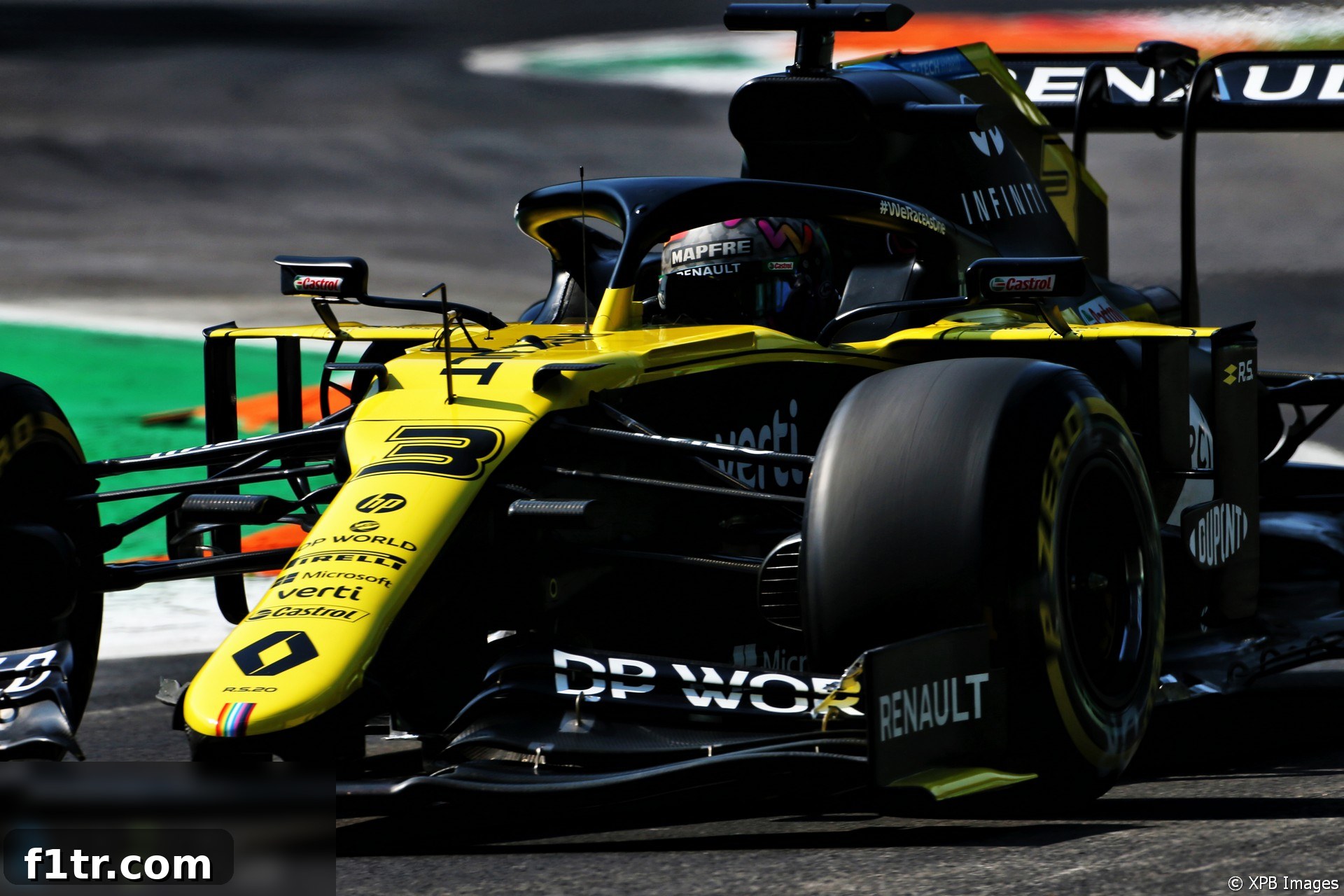
The world of Formula 1 is abuzz with anticipation and a touch of trepidation as teams head into the Italian Grand Prix at Monza, facing a significant new technical directive. Renault managing director Cyril Abiteboul has voiced “deep concern” regarding the potential ramifications of the ban on ‘quali modes,’ a new restriction designed to prevent teams from utilizing high-performance engine settings for short bursts during qualifying sessions. This directive, effective from this weekend’s event, marks a notable shift in how power units will be managed, and its impact on the competitive order remains a topic of intense speculation.
Renault, a team that has shown promising strides in recent seasons, particularly with a strong performance at Spa last week where they secured impressive fourth and fifth-place finishes, now finds itself at a crucial juncture. Abiteboul’s apprehension stems from the uncertainty surrounding how this new regulation will alter the dynamic, especially after setting high expectations following their success in Belgium. He openly questions whether they will be able to replicate such form at the legendary Monza circuit, often dubbed the “Temple of Speed.”
Understanding the ‘Quali Mode’ Ban and Its Intent
The technical directive issued by the FIA mandates that teams must run their engines in the same mode for both qualifying and the race. This move, often colloquially referred to as the ‘quali mode’ or ‘party mode’ ban, aims to level the playing field, reduce the complexity and cost associated with developing diverse engine maps, and potentially make it easier for the FIA to monitor power unit compliance. For years, teams have optimized specific engine settings to extract maximum power for a very limited duration during qualifying laps, giving them a critical edge in securing grid positions. The ban seeks to eliminate this practice, forcing a more conservative and consistent approach to engine management throughout the race weekend.
While the stated intentions are to foster greater parity and simplify regulations, the practical implications are far-reaching. Many believe the directive primarily targets Mercedes, widely acknowledged to possess the strongest power unit in Formula 1 and a reputation for excelling in these high-performance qualifying modes. However, Abiteboul suggests that the outcome might not be as straightforward as some anticipate, hinting at potential unintended consequences that could reshuffle the competitive hierarchy in unexpected ways.
Cyril Abiteboul’s Concerns: A Ripple Effect from Spa to Monza
Abiteboul articulated his anxieties candidly, stating, “My biggest concern of everything is, given the expectation that we set after Spa, to see what we are able to achieve in Monza. In particular with the qualifying modes that will go away. I’m very concerned that it could have actually the opposite effect of what people are expecting.” This sentiment reflects a deep-seated worry within the Renault camp that the regulation might not only fail to close the performance gap to the front-runners but could inadvertently create new challenges or expose different weaknesses. The transition from the high-speed demands of Spa to the even more power-sensitive layout of Monza, coupled with the new engine restrictions, presents a unique test for all teams.
For Renault, consistency has been a key area of focus. While Spa highlighted their package’s strengths, Monza, with its long straights and fast corners, places an even greater emphasis on raw engine power and aerodynamic efficiency for low-drag setups. The inability to deploy dedicated qualifying modes means teams must now find a single engine setting that balances outright speed with reliability and fuel efficiency across an entire Grand Prix distance. This shift in strategy could reward different design philosophies and operational strengths, making pre-race predictions even more complex.
The Relentless Pursuit of Engine Supremacy: Renault’s Ambition
Despite the prevailing belief that Mercedes holds the benchmark for power unit performance, Abiteboul remains resolute in his ambition for Renault. When asked about potentially having the second-best engine, he firmly stated, “I would be satisfied if I have the strongest engine full stop. Second out of four is not a sufficient achievement.” This declaration underscores Renault’s commitment to returning to the pinnacle of Formula 1, not just as a competitive midfield contender, but as a true championship threat. Their journey in F1 has been marked by significant investment and a continuous push for technological advancement, aiming to challenge the established order.
Abiteboul also provided a fascinating insight into the intricate world of modern F1 power units, describing them as “monsters of technology.” He elaborated on the ceaseless innovation and the astronomical costs involved in their development. “The more we push the more also we see new opportunities and that’s very exciting to see. At the same time it’s insane, the cost of the technology is absolutely insane.” This highlights the paradoxical nature of F1 engineering: the thrill of groundbreaking innovation coupled with the immense financial and intellectual capital required to stay at the cutting edge. The ‘quali mode’ ban, while partly aimed at cost reduction, might also inadvertently redirect development efforts into other, equally complex, areas of engine optimization.
Monza’s Unique Challenge and Renault’s Prospects Post-Ban
Looking specifically at the Italian Grand Prix, Abiteboul tempered expectations following their Spa success. “I think that Spa was probably one of the best tracks from a characteristics perspective,” he noted, suggesting that the Belgian circuit’s layout might have played more into Renault’s specific strengths. Regarding Monza, he offered a more cautious outlook: “Monza should be OK-ish. I’m not particularly excited of what have seen this morning. So let’s remain extremely focussed and continue the work and more importantly, let’s try to have a car that is a bit more consistent across different tracks. It’s only through that condition that we’ll be able to progress in the championship.”
Monza, with its iconic long straights and minimal downforce configuration, is historically a circuit where outright engine power is paramount. Teams often run specialized aerodynamic packages to minimize drag and maximize top speed. The inability to unleash a ‘party mode’ for qualifying adds another layer of complexity, demanding a holistic approach to car setup that balances peak performance with endurance. Abiteboul’s emphasis on achieving “a car that is a bit more consistent across different tracks” is a strategic imperative for Renault. True championship contention hinges not just on sporadic strong performances, but on a robust and adaptable package that can deliver results consistently across the diverse challenges of the F1 calendar.
Broader Implications for Formula 1’s Competitive Landscape
The introduction of the ‘quali mode’ ban is more than just a minor technical tweak; it represents a significant regulatory intervention with the potential to reshape the competitive fabric of Formula 1. While the FIA hopes for a closer field and reduced development costs, the actual outcome could be multifaceted. Some argue it might benefit teams with naturally stronger race engines or those who have historically relied less on extreme qualifying modes. Conversely, others believe it could inadvertently suppress innovation or make it harder for midfield teams to challenge the dominance of the powerhouses in qualifying.
The debate surrounding such technical directives often centers on fairness, the spirit of competition, and the desire to maintain Formula 1 as the pinnacle of motorsport engineering. Abiteboul’s concerns highlight that even well-intentioned regulations can have unpredictable consequences, especially in a sport as finely tuned and technologically advanced as F1. The Italian Grand Prix will serve as the first real-world test of this new era, offering crucial insights into how teams adapt and how the competitive order truly shifts.
Conclusion: A New Chapter at the Temple of Speed
As Formula 1 arrives at Monza, Cyril Abiteboul’s concerns resonate deeply within the paddock. The ‘quali mode’ ban represents a pivotal moment, forcing teams to rethink their engine strategies and potentially altering the competitive balance. For Renault, the challenge is clear: build on the momentum from Spa while adapting to these new constraints, all in pursuit of their ambitious goal of having the strongest engine in Formula 1. The Italian Grand Prix promises to be an enthralling spectacle, not only for the thrill of racing at Monza but also for the unveiling of this new chapter in F1’s technical regulations and its profound impact on the pursuit of ultimate speed.
2020 Italian Grand Prix Related Articles
- Grosjean “obviously jealous” but pleased for Gasly after win
- 2020 Italian Grand Prix Star Performers
- Gasly: I’m ready for Red Bull return
- Ban on ‘quali mode’ reduced overtaking at Monza – Hamilton
- Gasly beats Sainz in closest F1 finish for 10 years
Browse all 2020 Italian Grand Prix articles