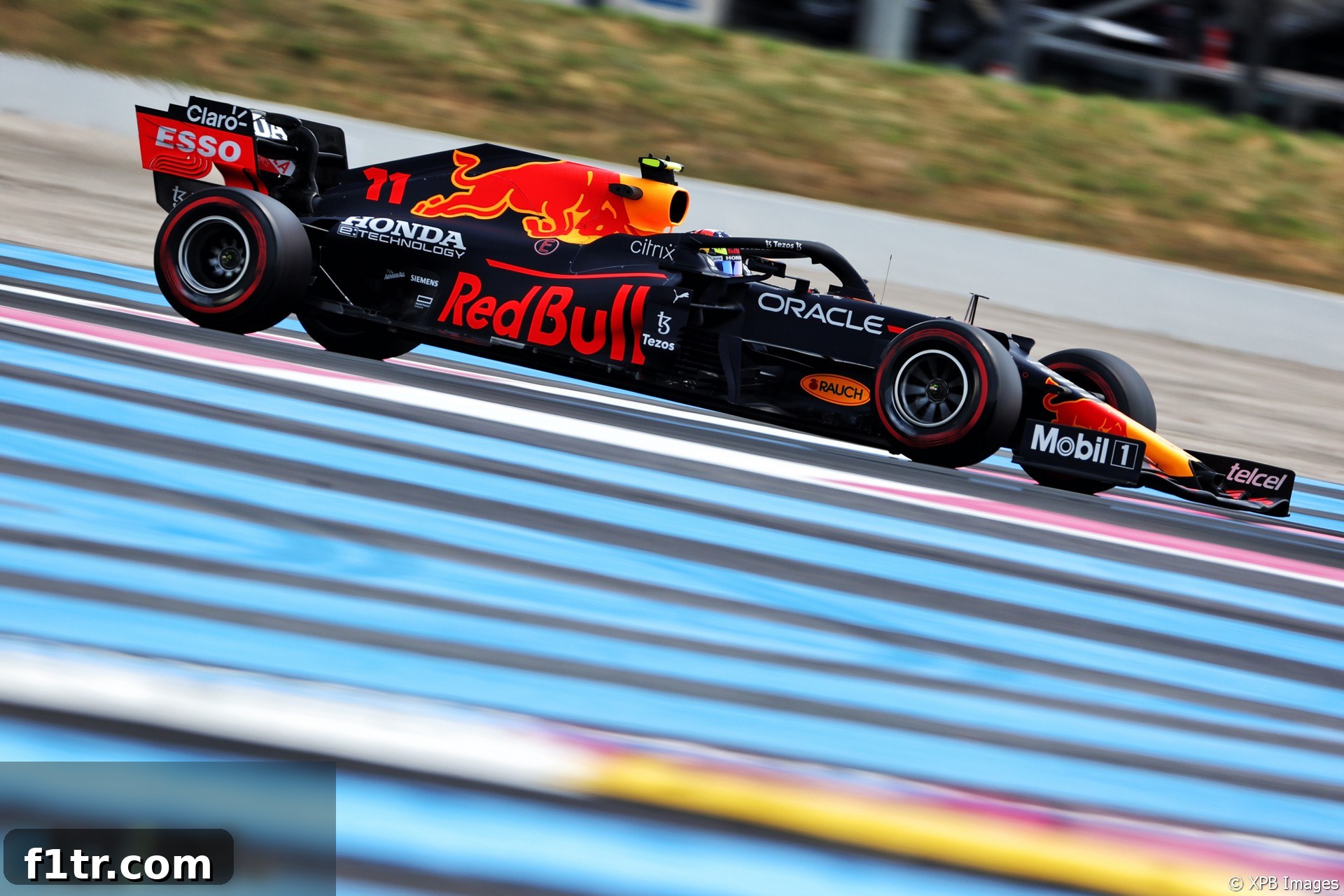
As the much-anticipated French Grand Prix weekend unfolds, Formula 1 teams and drivers have been issued a crucial update regarding track limits enforcement. The FIA has declared that strict monitoring will be in place at the exit of Turn 6 for the remainder of the event at the Paul Ricard circuit, promising immediate consequences for any infringements. This directive, aimed at upholding fairness and preventing drivers from gaining an unfair advantage, is set to significantly influence strategies from final practice through to the race.
FIA Enforces Strict Track Limits at Paul Ricard’s Turn 6 Exit
In a significant pre-session briefing, FIA Formula 1 Race Director Michael Masi formally informed all participating teams that any driver exceeding the defined circuit boundaries at the exit of Turn 6 will face an immediate penalty: their lap time will be invalidated. This clear and concise ruling, detailed within an updated version of the event notes published earlier on Saturday morning, removes any ambiguity regarding permissible driving lines and reinforces the FIA’s commitment to consistent officiating across all sessions.
The decision to specifically target Turn 6 marks a notable shift from previous visits to the Le Castellet circuit. During Formula 1’s last outing here in the 2019 season, track limits at this particular right-hander were not subject to the same rigorous enforcement. This change underscores an evolving approach to circuit management, especially on tracks like Paul Ricard, which are notorious for their extensive asphalt run-off areas that can tempt drivers to push beyond the conventional kerb lines.
The Strategic Importance of Turn 6 and the Mistral Straight
Turn 6 is far more than just another corner on the challenging Paul Ricard layout; it is a pivotal point that significantly influences a driver’s subsequent speed and trajectory. This sweeping right-hander transitions directly into the flat-out left kink of Turn 7, which then propels cars onto the legendary Mistral Straight. The Mistral Straight is widely recognized as the primary overtaking opportunity on the circuit, making a strong exit from Turn 6 absolutely critical for both setting a fast lap time in qualifying and gaining or defending positions during the race.
Drivers who previously exploited the generous run-off at Turn 6 to carry more speed or take a wider, more advantageous line would gain precious tenths of a second. This advantage would not only improve their overall lap time but also allow them to build crucial momentum for the long blast down the Mistral Straight, potentially setting up an overtake or pulling away from a rival. By enforcing strict track limits here, the FIA aims to eliminate any unfair gains, ensuring that all competitors adhere to the same boundaries and rely purely on their skill within the defined track parameters.
Paul Ricard’s Unique Challenges and Comprehensive Track Limits
The Paul Ricard circuit, with its distinctive blue and red asphalt run-off areas bordering its entire 15-turn lap, presents a unique set of challenges for track limits enforcement. Unlike circuits bordered by grass or gravel, the smooth asphalt run-offs at Paul Ricard offer a forgiving surface that can sometimes encourage drivers to exceed the white lines without immediate consequence, blurring the distinction between the track and the run-off area. This design necessitates a clear and consistent application of track limits to maintain the integrity of competition.
Beyond Turn 6, the FIA has implemented track limits enforcement at several other key sections of the circuit. These monitored zones include Turns 1 and 2, a sequence of corners from Turns 3 to 5, and the complex of Turns 8 and 9. This extensive network of monitored corners highlights the FIA’s proactive approach to ensuring fair play across the entire lap, preventing drivers from consistently gaining time by straying wide. The omnipresent digital monitoring systems and human oversight work in tandem to detect and penalize even the slightest infringements, ensuring that every lap time is legitimately earned within the defined boundaries of the track.
Driver Adaptation and the Race Director’s Role
The immediate impact of these updated regulations will require rapid adaptation from drivers and their engineering teams. During Friday’s opening day of free practice, no drivers had their lap times deleted for exceeding track limits, suggesting that either the limits were less strictly enforced then, or drivers were still exploring the boundaries without crossing them definitively. However, with the explicit notification from Michael Masi, the stakes are now significantly higher for Saturday’s final practice and crucial qualifying sessions, and especially for Sunday’s Grand Prix.
Michael Masi’s role as Race Director is critical in interpreting and applying the sporting regulations. His communication to the teams ensures that all participants are fully aware of the rules and their consequences. These event notes serve as a living document, allowing the FIA to fine-tune regulations based on practice observations, driver feedback, and the evolving nature of circuit design. Such clear directives are essential for maintaining driver confidence in the fairness of the competition and ensuring that all on-track action adheres to a uniform standard.
Beyond Track Limits: Other Circuit Concerns at Paul Ricard
While track limits at Turn 6 are the immediate focus, other circuit-specific issues have also garnered attention during the French Grand Prix weekend. Notably, the high kerbs positioned at the exit of Turn 2 have been a point of contention. Several teams voiced complaints about these aggressive kerbs on Friday, citing concerns over potential car damage and the unsettling effect they have on vehicle dynamics, particularly for the low-slung Formula 1 cars. Despite these concerns, the kerbs remained in place for Saturday morning’s Formula 3 race, indicating a deliberate decision by the circuit management and the FIA regarding their purpose.
High kerbs are often implemented as a physical deterrent against track limits abuse, providing a tangible consequence beyond a lap time deletion. While effective in their purpose, they can also introduce an element of risk, especially if a driver misjudges their line or is pushed wide in a racing incident. The ongoing presence of these kerbs at Turn 2 suggests a balance struck between preventing illegal gains and managing potential risks. It also highlights the constant dialogue between circuit designers, governing bodies, and competing teams to optimize safety and fair play without compromising the thrill of racing.
Implications for Qualifying and Race Strategy
The stringent enforcement of track limits, particularly at a critical corner like Turn 6, is expected to have a profound impact on both qualifying and race strategy. In qualifying, drivers will have to find the absolute limit of their car and the track without overstepping the white lines, a task that demands immense precision and discipline. A deleted lap time during the crucial Q1, Q2, or Q3 sessions could be devastating for a driver’s grid position, forcing them to re-evaluate their approach or risk losing a potential pole position or a strong starting slot.
During the French Grand Prix itself, the enforcement of track limits will add another layer of complexity to wheel-to-wheel racing. Drivers will need to be acutely aware of their car’s position, especially when defending or attacking into or out of Turn 6. Any minor excursion could lead to a time penalty or a warning, influencing team radio communications and overall race management. Teams will need to factor these rules into their tire strategy, fuel management, and overtakimg plans, making for a potentially more cautious yet equally thrilling tactical battle on the Paul Ricard circuit. The FIA’s clear stance on track limits ensures that the spectacle of Formula 1 remains fair, exciting, and consistently judged by the highest standards.
2021 French Grand Prix Insights
- The potentially crucial differences in how Bottas and Perez help their team mates
- How much-maligned Paul Ricard produced “one of the most exciting races for five years”
- Todt would “prefer less controversy” in Formula 1
- Wolff encouraged by ‘real progress’ from Bottas in French GP
- Red Bull’s French GP win disproves accusations over tyres and wings – Horner
Browse all 2021 French Grand Prix articles