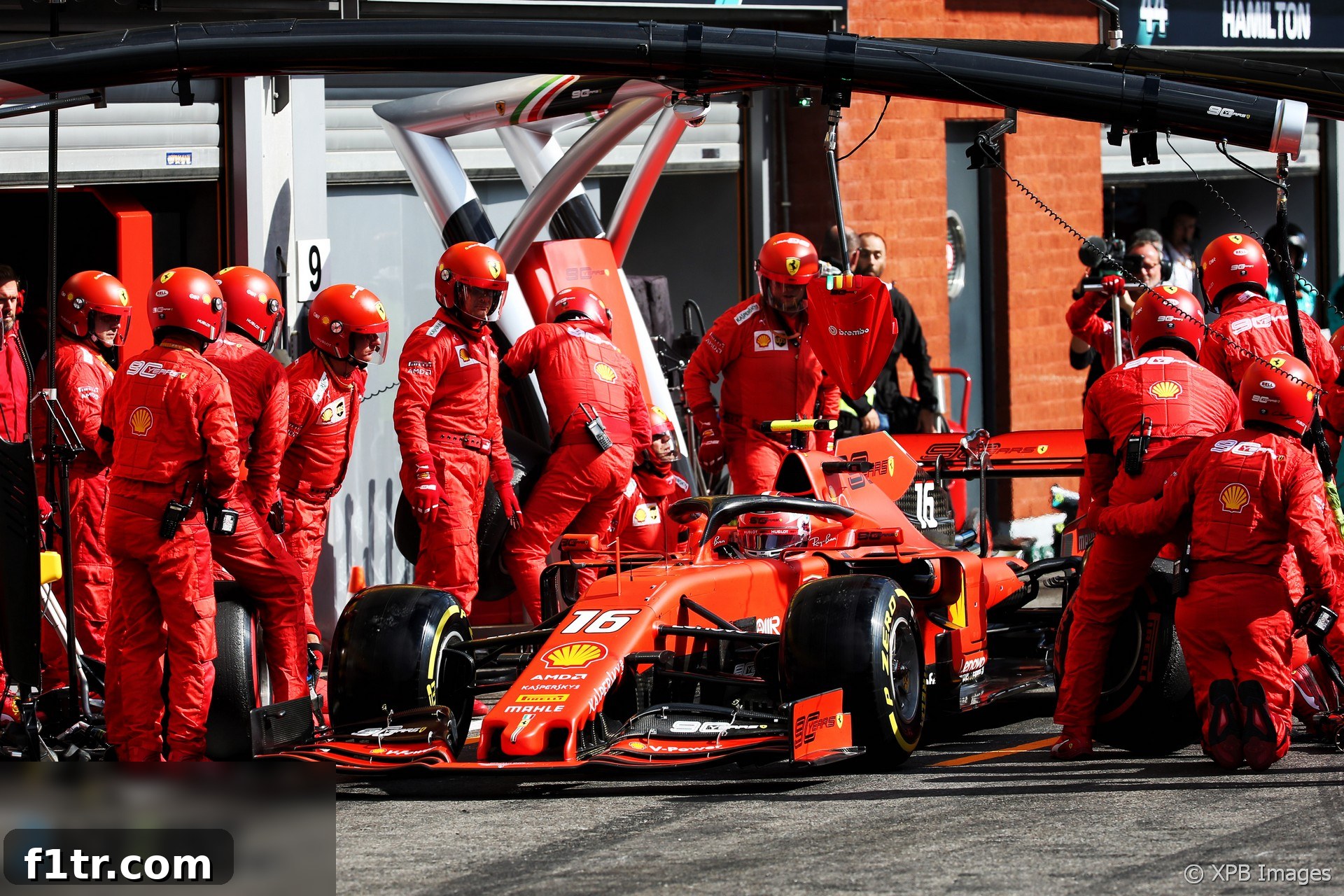
Charles Leclerc’s Silent Triumph: A Poignant Victory at the 2019 Belgian Grand Prix
In a sport often defined by rapid-fire communication and strategic shouts over the radio, Charles Leclerc delivered an extraordinary performance at the 2019 Belgian Grand Prix. The Ferrari driver revealed a remarkable feat of concentration and self-sufficiency: he stayed virtually silent throughout his entire drive to victory at Spa-Francorchamps, making only a single, concise remark to his race engineer after the initial Safety Car period.
This unprecedented quietude from Leclerc underscored a profound focus, allowing his driving prowess to speak volumes. His debut Formula 1 victory was not just a personal milestone for the young Monegasque driver, but an emotionally resonant moment for the entire motorsport community, overshadowed by the tragic passing of his friend Anthoine Hubert the day before. Leclerc’s composure amidst immense pressure and personal grief cemented this race as one of the most memorable of the 2019 season.
A Race Defined by Focus: Leclerc’s Unprecedented Radio Silence
The 2019 Belgian Grand Prix at the legendary Spa-Francorchamps circuit was always going to be a challenging event. Ferrari, under pressure to deliver a win, had pinned their hopes on their talented young line-up. While the race started under bright skies, the tragic events of Saturday’s Formula 2 race loomed large, creating a somber atmosphere throughout the paddock.
Leclerc’s radio silence during the 44-lap race was nothing short of remarkable. After the early Safety Car period, prompted by Max Verstappen’s crash, the Ferrari driver engaged in virtually no communication with his pit wall. “I don’t think I’ve spoken on the radio from the first lap to the last lap,” Leclerc confirmed in the post-race press conference, highlighting the extraordinary level of concentration he maintained. This absence of chatter stands in stark contrast to the typical F1 race, where drivers are in constant dialogue with their engineers, discussing everything from tire degradation and fuel management to strategic calls and competitor positions.
This self-imposed radio ban was so complete that Leclerc didn’t even intervene when he found himself behind his teammate, Sebastian Vettel, after his pit stop. Despite Vettel being on older tires and holding him up, Leclerc chose not to ask the team to instruct Vettel to let him past – a common practice in modern F1 team strategy. This decision speaks volumes about his trust in the team’s overarching strategy and his belief in his own ability to manage the situation on track without direct intervention.
The Sole Utterance: “Minus One” and Its Significance
Amidst the profound silence, there was one singular, crucial exchange that broke the calm. When asked by his race engineer if he would like his front wing flap adjusted at his first pit stop, Leclerc’s response was a succinct, precise directive: “Minus one.” This brief command, referring to a single click of reduction in front wing angle, was the only comment he made to his engineer during the entire green-flag running of the race.
The “minus one” instruction, while simple, reveals a deep understanding of race car dynamics and the circuit’s demands. Adjusting the front wing flap influences the car’s aerodynamic balance, impacting grip and handling. A reduction in front wing angle typically decreases downforce, which can reduce drag for higher top speed on straights, or mitigate oversteer, especially as tires wear or fuel levels change. That Leclerc could identify such a specific, nuanced adjustment and communicate it so concisely, without further discussion, highlights his innate feel for the car and his confidence in his own judgment, even at the highest levels of competition. It was a clear demonstration of a driver who was fully in tune with his machine and the evolving race conditions.
A Victory Forged in Sorrow: Remembering Anthoine Hubert
Leclerc’s first Formula 1 victory was destined to be a watershed moment in his promising career. Yet, its celebration was muted, imbued with a profound sense of sadness. The day before the race, the motorsport world was rocked by the tragic death of Formula 2 driver Anthoine Hubert in a horrific multi-car crash during the support race at Spa-Francorchamps. Hubert, a highly respected and talented young driver, was a close friend of Leclerc, having grown up racing alongside him and many others in the junior categories.
The emotional toll of Hubert’s passing on the entire paddock, and especially on Leclerc, was immense. The atmosphere on Sunday was heavy, a stark reminder of the inherent dangers of motorsport. For Leclerc, stepping into his Ferrari on race day, the burden of grief was undoubtedly palpable. His triumph, therefore, was not merely a conquest of the track and his competitors; it was a deeply personal tribute, a victory driven by a desire to honor his lost friend. This emotional backdrop added an almost spiritual dimension to his achievement, making the win at Spa not just a career highlight but a poignant dedication.
The conflicting emotions were clear as Leclerc crossed the finish line. His usual exuberance for such a monumental achievement was tempered by sorrow. When he finally broke his silence on the radio, after securing his first Grand Prix victory, his words were raw and heartfelt. “Congratulations, yes,” he stated, his voice tinged with emotion. “First victory in F1. This is a hard one. It feels good but difficult to enjoy on a weekend like this. But thanks for everything guys. You’re the best. A dream come true, anyway.” He added, “Thanks guys. Thank you so much.” These words perfectly encapsulated the bittersweet nature of the moment – the realization of a lifelong dream intertwined with the pain of personal loss, turning a joyous occasion into a solemn dedication.
Team Radio: A Glimpse into the Pit Wall’s Perspective During the Safety Car
Even though Charles Leclerc maintained an almost complete radio silence after the Safety Car period, the team radio transcript reveals that communication from the pit wall to the driver was constant and critical. During such periods, engineers play a vital role in providing essential information, managing car settings, and keeping the driver informed about track conditions, strategic options, and the status of competitors. This demonstrates the unwavering support and information flow from the team, allowing Leclerc to focus purely on driving without needing to ask for updates.
The following transcript covers the period from the initial Safety Car deployment following Max Verstappen’s incident until the Safety Car finally pulled into the pits, illustrating the detailed guidance provided by his engineer even without much driver feedback:
| To Leclerc: | You can fire up the engine. |
| To Leclerc: | Last car is on the grid. |
| To Leclerc: | K2 off, K2 off. |
| To Leclerc: | Safety Car deployed. Slow button on. Stay out. |
| To Leclerc: | SOC 6. |
| To Leclerc: | Verstappen crashed at Eau Rouge but everything is fine, he got out of the car. |
| Leclerc: | Good. I mean, good to hear that he is out of the car. |
| To Leclerc: | Understood. Stay out, stay out. |
| To Leclerc: | Try to work all four tyres. |
| Leclerc: | Let me know about the brakes because I’ve got no information. |
| To Leclerc: | Brake temperatures are OK. |
| Leclerc: | Let me know if we are over what we want. |
| To Leclerc: | All good for the moment, brake and tyres. |
| To Leclerc: | Work especially front tyres, brake temperatures are OK. Everything is fine. |
| To Leclerc: | Tyre pressures and brake temperatures are OK, you are doing a good job. |
| To Leclerc: | Safety Car in this lap. K2 on. Tyres and brakes are OK. |
| Leclerc: | Yes. Remind me later in the lap for the K2 on. |
| To Leclerc: | Will do. |
| To Leclerc: | K2 on, reminder. |
| To Leclerc: | Safety Car deployed, so Safety Car is staying out. Stay positive. One car is stuck at pit entry. |
| To Leclerc: | Secondary WG position nine. Safety Car staying out. |
| To Leclerc: | Tyre pressures, brake temperatures are OK, you are doing a good job. |
| To Leclerc: | Safety Car in this lap. K2 reminder, K2 on. |
| To Leclerc: | Safety Car in the pit lane. |
| To Leclerc: | K2 off. |
This transcript highlights the intensive information exchange from the team, even when the driver is largely silent. Leclerc’s brief responses show he was fully engaged and processing the information, but his remarkable ability to extract maximum performance from the car without constant dialogue with his engineer was truly exceptional. His focus was unbroken, his determination palpable, making this victory a testament to his mental fortitude as much as his driving skill.
The Enduring Legacy of a Silent Victory
Charles Leclerc’s victory at the 2019 Belgian Grand Prix will forever be etched in Formula 1 history not just as his first win, but as a deeply emotional and uniquely executed triumph. His extraordinary radio silence demonstrated a rare combination of self-reliance, intense focus, and trust in his team, solidifying his reputation as a formidable talent. More profoundly, this victory, dedicated to his friend Anthoine Hubert, transcended sport, becoming a poignant reminder of both the fragility of life and the indomitable spirit of those who chase their dreams on the world’s most challenging circuits. It was a silent victory, yet its message resonated louder than any radio call.
2019 F1 Season Insights
- Crying in the Melbourne car park at 2019 grand prix was my career low – Ocon
- McLaren Racing reports reduced £71 million loss in 2019
- Kvyat: Hockenheim podium last year was “my biggest achievement” so far
- How the FIA’s new encrypted fuel flow meter targets Ferrari’s suspected ‘aliasing’ trick
- “He smashed my office door”: 23 must-see moments from ‘Drive to Survive’ season two
Browse all 2019 F1 season articles