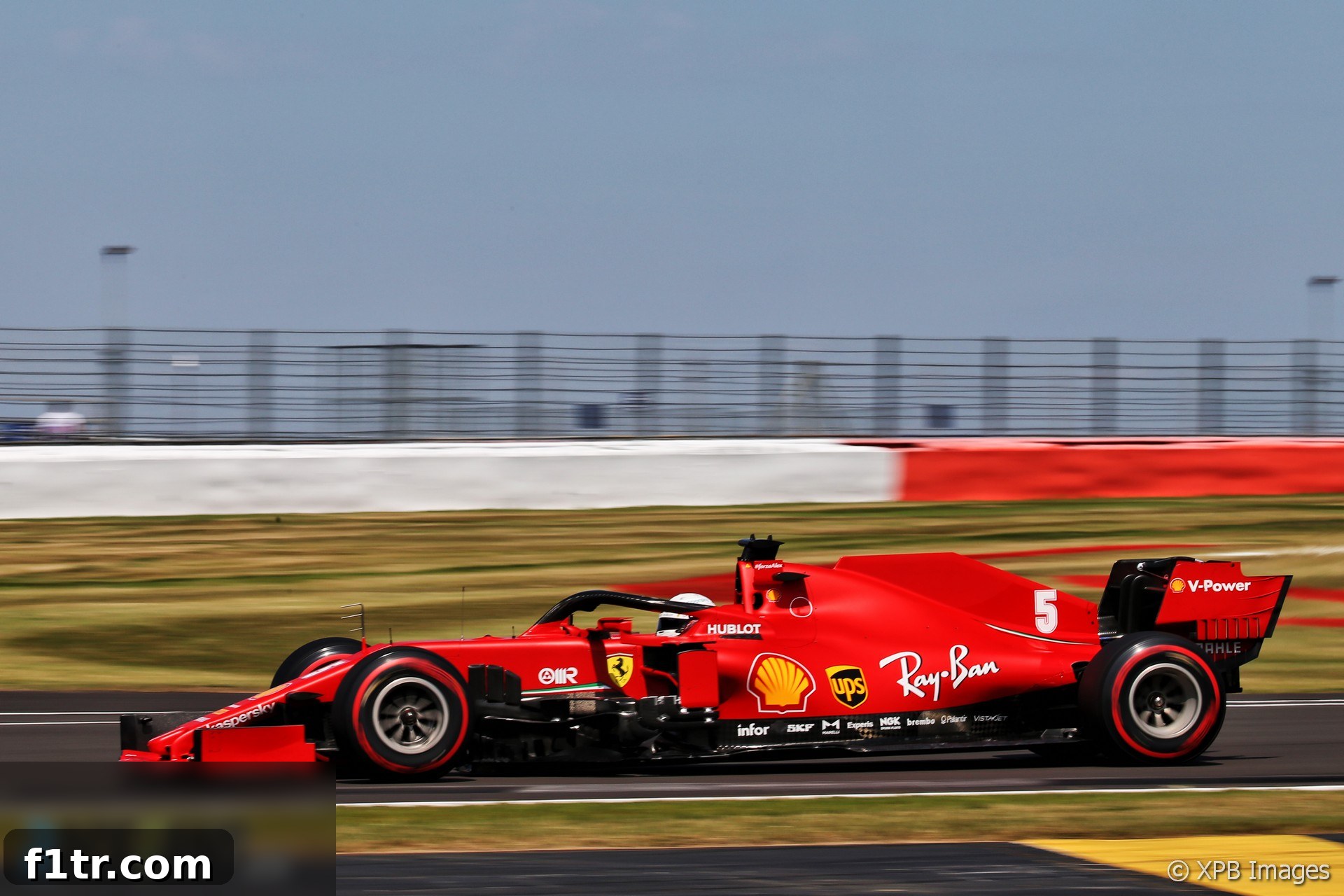
Sebastian Vettel, the esteemed Ferrari driver, offered a candid assessment of his team’s efforts following a challenging qualifying session that saw him fail to advance to Q3. Despite the disappointing outcome, Vettel made a point to commend his engineering team for their relentless work in trying to resolve persistent grip problems that have plagued his car. His remarks highlight a growing frustration, not with his team’s commitment, but with the elusive nature of performance gains on the track.
Advert | Become a Supporter & go ad-free
Returning to the pits after his Q2 exit, Vettel conveyed a succinct but telling message over the team radio: “There was nothing left in the car.” This statement, uttered by a four-time world champion, speaks volumes about the limits he felt he was pushing and the sheer inability to extract further pace from his machine. It painted a vivid picture of a driver reaching his absolute maximum, only to find it insufficient for the demands of competitive Formula 1.
During his post-qualifying media debrief, Vettel elaborated on his struggles. “To go faster I need more grip,” he stated plainly, identifying the core issue that has hampered his performance. He acknowledged the extensive efforts behind the scenes: “I have to say compliments to my engineering group: We tried lots of things, I felt a bit better in the car this weekend but if you look at the stopwatch it seems to make no difference.” This candid admission underscores a particularly frustrating scenario in motorsport: feeling improvements subjectively, yet seeing no objective gain in lap times. It suggests a fundamental characteristic of the car or its setup that remains stubbornly resistant to incremental changes.
The Elusive Search for Grip: A Champion’s Conundrum
The pursuit of optimal grip is a cornerstone of Formula 1 performance, directly influencing a car’s cornering speed, acceleration, and braking efficiency. For a driver like Sebastian Vettel, whose driving style historically thrived on a stable and responsive rear end, a lack of grip can dismantle confidence and make pushing the limits an unpredictable exercise. His remark, “So it feels like we are hitting a wall,” encapsulates the profound frustration of encountering an insurmountable barrier to progress. It’s a metaphor for a technical deadlock, where conventional adjustments and engineering solutions fail to yield the desired breakthrough. This feeling of stagnation, especially when contrasted with the continuous development seen elsewhere on the grid, can be incredibly demoralizing for both driver and team.
The engineering team’s diligence, as praised by Vettel, illustrates the depths to which Scuderia Ferrari’s technical staff went in an attempt to rectify the issues. From subtle aerodynamic tweaks to suspension adjustments and differential settings, every parameter is meticulously analyzed and altered. Yet, for Vettel, these efforts, while appreciated, did not translate into a competitive advantage. This suggests a deeper, more inherent problem with the car’s fundamental characteristics or its interaction with the tyres, rather than simple setup inaccuracies. In the cutthroat world of F1, where hundredths of a second dictate success or failure, a perceived improvement that doesn’t register on the stopwatch is effectively no improvement at all.
Vettel’s satisfaction with his own laps – “I was happy with my laps and I don’t think there was more in my car” – further emphasizes the severity of the challenge. It indicates that he believes he extracted every ounce of available performance, leaving no margin for error or untapped potential. For a driver of his caliber, such a statement is less an excuse and more an objective assessment of the car’s current limitations. It implies that the ceiling of performance for his particular chassis, in that specific qualifying session, had been reached, making any further progression impossible regardless of driver input.
The Performance Gap: Vettel Versus Leclerc
The stark reality of Vettel’s predicament was further highlighted by the direct comparison with his teammate, Charles Leclerc. Vettel ended Q2 three-tenths of a second slower than Leclerc, a significant margin in Formula 1 qualifying that often equates to several grid positions. This consistent performance delta has been a recurring theme, raising questions about the car’s adaptability to different driving styles or, more critically, an evolving hierarchy within the team. The fact that Vettel experimented with both medium and soft tyres in a desperate bid to improve his time, yet still fell short of his teammate, underscores the depth of his struggle.
For a multi-world champion, being consistently outpaced by a younger teammate can be a particularly tough pill to swallow. It not only affects individual morale but also impacts team dynamics and future contractual negotiations. The gap to Leclerc suggests that either Leclerc has found a way to extract more performance from the challenging Ferrari package, or that the car’s characteristics are inherently better suited to his driving style. This internal benchmark is often the most brutal and unforgiving, as it removes external variables and directly compares driver performance within the same machinery and team environment.
“It’s obviously disappointing to be in 12th, disappointing to have a gap between the cars but as I said I’m doing everything I can,” Vettel reiterated. This statement captures the emotional toll of his situation. Disappointment, frustration, and a clear sense of having exhausted all personal avenues for improvement are evident. The acknowledgment of the gap to Leclerc isn’t an excuse, but rather a frank recognition of the current competitive landscape within the team, which has undoubtedly shifted in recent seasons.
Ferrari’s Broader Challenges: A Team Under Pressure
Sebastian Vettel’s individual struggles are inextricably linked to the broader performance challenges faced by Scuderia Ferrari as a whole. His admission, “We are where we are for a reason,” cuts to the heart of the matter. It’s a straightforward acknowledgment that the team’s current position in the midfield is not a result of bad luck or isolated incidents, but rather a consequence of fundamental deficiencies in their car’s design and development. The team has been grappling with a lack of overall pace, often finding itself adrift of front-running competitors like Mercedes and Red Bull.
“We are not fast enough,” Vettel continued, articulating a truth that has become increasingly apparent to observers and fans alike. This statement isn’t just about his own car, but about the collective performance of the entire Scuderia. It points to issues that transcend individual driver performance, implicating the car’s aerodynamic efficiency, power unit performance, and chassis balance. In Formula 1, the car is a complex symphony of components, and if any section is out of tune, the entire performance suffers. The feeling of being “beaten fair and square by the people in front” means there are no mitigating circumstances, no contentious decisions or unforeseen events to blame—just a clear, undeniable lack of pace compared to their rivals.
This period represented a significant downturn for a team accustomed to fighting for championships. The pressure on Ferrari, as one of motorsport’s most iconic and storied marques, is immense. Every sub-par performance is scrutinized, every missed Q3 slot amplified. Vettel, as the experienced lead driver at the time, bore a significant portion of this burden. His comments were not merely personal reflections but symptomatic of a wider organizational challenge in unlocking competitive performance in a highly technical and constantly evolving sport.
The Road Ahead: A Difficult Race Day
With a starting position outside the top ten, Sebastian Vettel harbored no illusions about the difficulties awaiting him in the upcoming race. He realistically predicted that “it will be very difficult tomorrow to fight for points.” Securing points from 12th on the grid requires a combination of astute strategy, faultless driving, and a significant dose of fortune, such as retirements or safety car periods to mix up the running order. The midfield in Formula 1 is often a tightly packed and highly competitive arena, making overtakes challenging and progress arduous.
Despite the bleak outlook, Vettel affirmed his commitment: “but I will do my best and see where we are.” This steadfast declaration, characteristic of a true competitor, underscores his unwavering determination even in adverse circumstances. “Doing his best” would involve managing tyres meticulously, capitalizing on any opportunities that arise, and executing a flawless race strategy devised by his team. In a sport where every position matters, even fighting for a single point from such a grid slot can be a monumental task, demanding peak concentration and skill throughout the race distance.
The race itself would serve as another litmus test for both Vettel and Ferrari. It would reveal whether their race pace could offer any glimmer of hope compared to their qualifying performance, or if the underlying issues with grip and overall speed would persist over longer stints. Regardless of the outcome, Vettel’s candid and honest reflections provide a valuable insight into the mind of a top-tier athlete facing significant professional challenges, and the continuous battle against both the stopwatch and the competition.
Advert | Become a RaceFans supporter andgo ad-free
Related F1 Content
- Grosjean to make F1 test return tomorrow for first time since Bahrain horror crash
- Pictures: Wrecked chassis from Grosjean’s Bahrain fireball crash to go on display
- Bottas vs Rosberg: Hamilton’s Mercedes team mates compared after 78 races each
- F1 revenues fell by $877 million in Covid-struck 2020 season
- Hamilton and Mercedes finally announce new deal for 2021 season
Browse all 2020 F1 season articles