Advert | Become a Supporter & go ad-free
F1 Reassesses Global Event Safety After Jeddah Missile Attack: Drivers Speak Out
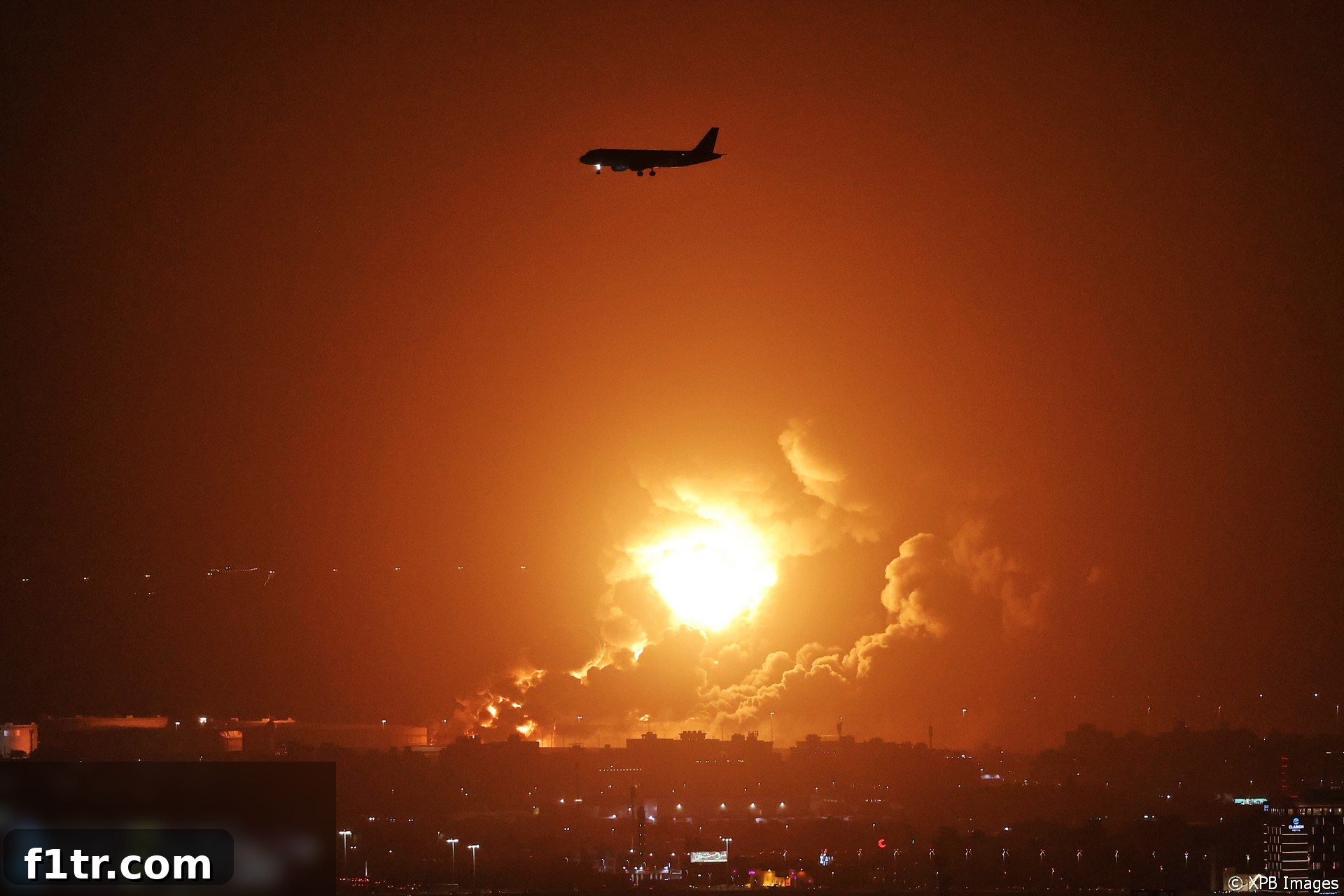
Formula 1 has committed to a comprehensive review of the safety and security protocols for all its international events, a direct consequence of the recent missile attack that struck an oil facility merely 10 kilometres from the Jeddah Corniche Circuit, the venue for this weekend’s Saudi Arabian Grand Prix.
The Jeddah Incident: A Shadow Over the Grand Prix
The incident, occurring just hours before practice sessions were set to resume, cast a long shadow over what was meant to be a thrilling weekend of motorsport. A visible plume of smoke from the targeted Aramco oil depot served as a stark, unsettling reminder of the geopolitical tensions simmering in the region, directly impacting the Formula 1 paddock.
Following the attack, an urgent, late-night meeting was convened, bringing together the Grand Prix Drivers’ Association (GPDA) and key figures from Formula 1 management, including CEO Stefano Domenicali. The discussions were intense, reflecting the gravity of the situation and the immediate concerns for the safety and well-being of everyone involved in the event – from drivers and team personnel to media and spectators.
Drivers’ United Front: Addressing Profound Safety Concerns
Valtteri Bottas, among other prominent drivers, later shared details of this pivotal meeting. He confirmed that the primary concern raised by the drivers was the overarching safety of continuing to race in such circumstances, especially after witnessing the smoke from the nearby fire.
Valtteri Bottas: The Difficult Decision and F1’s Commitment
Bottas articulated the drivers’ shared apprehension, stating, “We drivers, we were all concerned if it’s safe for all of us to be here, to race here.” He explained that the F1 management provided “decent explanations” and transparently walked the drivers through various options, including the possibility of not racing at all. However, the logistical complexities of an immediate departure became apparent. “What if we don’t race? For example, that will still mean the teams would have to stay here for a couple of days packing stuff. And it’s not like you can create suddenly new flights to get home.”
Ultimately, the decision to proceed with the race was influenced by a pragmatic assessment. Having already committed to being in Jeddah, and with assurances of significantly heightened security measures and robust defence systems, the consensus leaned towards racing. “We’re already here, so our best option was to race here. They’ve increased all the safety facilities and all this defence. So I think everyone agreed that we might as well do the race and hope for the best.”
This incident also prompted a critical re-evaluation of F1’s long-term commitments. Bottas revealed that Formula 1 has pledged to scrutinise all future events, including the multi-year deal with Saudi Arabia, to ensure ironclad safety guarantees. “At least Formula 1 promised us to reconsider all the events for the future, including this one, to make sure that we go to the right places, that they can guarantee our safety 100% always when we go there.” This commitment signifies a potentially profound shift in how Formula 1 approaches host nation selections, placing safety at the absolute forefront.
George Russell: Trust, Unity, and the Pursuit of Future Clarity
GPDA director George Russell echoed the sentiment of collective decision-making and the necessity for open dialogue. He praised the candour of the discussions, stating, “I think clarity was needed, the conversation was certainly needed and I think it was good.” Russell emphasised the strong unity among the drivers, and their collective trust in Stefano Domenicali and the broader Formula 1 organisation to make the correct judgment. “We’re all standing united, firstly between all the drivers and then together with Formula 1 and ultimately we trust in Stefano and Formula 1 as a whole.”
He further elaborated on the rationale for proceeding, indicating a belief that the situation within the immediate vicinity of the circuit was under control. However, he also acknowledged the inherent limitations of such assurances, noting, “what happens outside of this region you cannot control.” This nuanced perspective highlights the challenging balance between ensuring localised security and the broader, unpredictable geopolitical landscape. Russell confirmed that while the immediate decision was to race, further detailed discussions are anticipated after the Grand Prix weekend to address the longer-term implications and strategies.
Fernando Alonso: Beyond Drivers – A Broader Mandate for Event Safety
Fernando Alonso underscored the drivers’ collective demand for transparency following the visible attack. “The drivers were very united in asking for some transparency,” he explained, driven by the discomfort of witnessing the incident without full information. “We were not happy just seeing the smoke clouds while driving and maybe not knowing the truth and the facts and everything.” Alonso expressed satisfaction with the level of clarity and reassurances provided by the organisers and authorities regarding the security of the event.
Crucially, Alonso expanded the scope of concern beyond just the drivers themselves. He articulated a broader responsibility, stating, “We [the drivers] look like we were there talking about our safety. But honestly, we are concerned about your safety: Media, mechanics, fans, everyone.” This emphasis on the collective safety of the entire Formula 1 community – an extensive ecosystem of thousands of individuals – elevates the discussion from an athlete-centric issue to a fundamental question of event viability and moral responsibility. He conveyed the drivers’ belief that all stakeholders, including F1, FOM (Formula One Management), and local authorities, were confident in the current safety measures, allowing the sport to “move ahead.” Yet, he concluded with a poignant hope: “But we will hopefully not see any more of this kind of thing.”
Lewis Hamilton: Collective Decision, Pragmatic Acceptance
Lewis Hamilton, while offering a more concise perspective, reinforced the message of unity and collective decision-making. He stated that the drivers “worked together as a group, we all discussed and made a decision as a sport.” His comment, “I don’t feel a particular way about it. I’m looking forward to get out,” could be interpreted as a pragmatic acceptance of the collective decision, perhaps reflecting the weight of the situation and the desire to simply complete the event safely.
Advert | Become a RaceFans supporter andgo ad-free
F1’s Long-Term Challenge: Balancing Growth with Unwavering Security
The Jeddah incident comes at a critical juncture for Formula 1, which is in the second year of a lucrative 15-year agreement to race in Saudi Arabia. This long-term commitment, part of F1’s broader strategy to expand its global footprint and tap into new markets, now faces intense scrutiny. The promise from F1 to “reconsider all events for the future” signifies a potential turning point, where the economic allure of new venues may be increasingly weighed against the ability to provide an unimpeachable security environment.
This commitment means F1 will need to establish clearer, more stringent criteria for venue selection, moving forward. It will necessitate robust risk assessments that account not only for local security but also regional geopolitical stability. The challenge lies in delivering on a “100% safety guarantee” in a world where such assurances are increasingly difficult to provide. The discussions initiated in Jeddah are expected to evolve into a comprehensive framework that could reshape F1’s calendar and its relationship with host nations for years to come.
The incident also puts Formula 1 under the global spotlight regarding its ethical responsibilities. As a major international sport, F1 must navigate the complex intersection of entertainment, commerce, and human safety. The unified stance of the drivers, expressing concerns for all personnel, underscores that this is not merely a logistical problem but a fundamental question of the sport’s values and its commitment to those who make it possible.
Advert | Become a RaceFans supporter andgo ad-free
The Path Forward: Post-Jeddah Discussions and Enhanced Protocols
While the immediate focus was on safely concluding the Saudi Arabian Grand Prix, the long-term implications are profound. The promised post-race discussions are expected to delve deeply into actionable strategies for enhanced security measures, intelligence sharing, and crisis management protocols. Formula 1 will need to demonstrate concrete steps to uphold its pledge, not just for the drivers, but for the thousands of individuals who travel the world with the sport, and for the millions of fans who follow it.
The Jeddah missile attack served as an unwelcome, yet undeniable, wake-up call. It has forced Formula 1 to confront the harsh realities of global instability and has initiated a crucial dialogue that will hopefully lead to a safer, more secure future for all its stakeholders, ensuring that the spectacle of racing never overshadows the paramount importance of human well-being.
Become a RaceFans Supporter
RaceFans is run thanks in part to the generous support of its readers. By contributing £1 per month or £12 per year (or the same in whichever currency you use) you can help cover the costs of creating, hosting and developing RaceFans today and in the future.
Become an RaceFans Supporter today and browse the site ad-free. Sign up or find out more via the links below:
- Become a RaceFans Supporter
- RaceFans Supporter FAQ
2022 Saudi Arabian Grand Prix
- Vettel will return to race for Aston Martin at Australian Grand Prix
- Mercedes “a second per lap” off Red Bull’s pace – Russell
- Transcript: How Verstappen fought Leclerc on his radio and on the track in Jeddah
- F1 intends to keep racing in Saudi Arabia despite missile attack
- Paddock Diary: 2022 Saudi Arabian Grand Prix
Browse all 2022 Saudi Arabian Grand Prix articles