Advert | Become a Supporter & go ad-free
In a sport where fractions of a second and millimeter-precise engineering define victory, the Canadian Grand Prix delivered an unforeseen challenge for Lewis Hamilton: a collision with a marmot. Unbeknownst to the seven-time world champion for a crucial dozen laps, this unusual encounter inflicted significant damage to his car, profoundly affecting his performance and turning an already challenging race into a relentless battle against unseen forces. This incident, initially obscured by the chaos of high-speed racing, ultimately became a defining narrative of his Montreal weekend, costing him vital downforce and frustrating his attempts to find pace.
Hamilton’s race engineer, Ricardo Adami, could only relay that damage had occurred, without immediate knowledge of its bizarre origin. It was only after the chequered flag, with the car safely back in the garage, that the full, peculiar story emerged: Hamilton had, in fact, run over an animal. This revelation painted a clearer picture of the difficulties Hamilton endured, including a persistent braking problem that led him to question whether his car could even complete the distance. Despite these formidable obstacles, a late-race incident involving Lando Norris saw Hamilton promoted from seventh to a hard-fought sixth position.
This article delves into the captivating radio exchanges between Lewis Hamilton and Ricardo Adami, offering an intimate glimpse into the unfolding drama of a Formula 1 race compromised by an unexpected, wild encounter. We’ll explore Hamilton’s struggle for pace, the moment the damage was understood, his fight with fading brakes, and the ultimate realization of the impact of his furry adversary.
Selected Hamilton radio messages from the Canadian Grand Prix
Jump to:
“Where am I losing the time?”
“I just can’t turn the car”
“We do see a loss of downforce”
“I said how far am I off pace-wise?”
“Brake pedal’s getting long”
“How much damage did I have?”
“Where am I losing the time?” – The Early Search for Pace
The initial laps of the Canadian Grand Prix saw Lewis Hamilton attempting to settle into a rhythm on the medium compound tyres. His lap times, though consistent, weren’t quite where he or the team wanted them to be. Early radio communications revealed a driver already pushing for answers, trying to pinpoint any performance deficit even before the marmot incident would further complicate matters. Adami provided feedback, highlighting specific corners where improvements could be made and urging brake cooling. Hamilton’s frustration was palpable as he observed competitors picking up pace around him, leading to his direct query about his own performance.
(Chart depicting lap times for Charles Leclerc and Lewis Hamilton would appear here, illustrating their comparative pace during the early stages of the race.)
Advert | Become a RaceFans supporter andgo ad-free
| Lap: 2/70 HAM: 1’16.867 | |||||||||||||||||||||||||||||||||||||||||||||||||||
| Adami | Car behind 0.7, Alonso. | ||||||||||||||||||||||||||||||||||||||||||||||||||
| Lap: 4/70 HAM: 1’16.507 | |||||||||||||||||||||||||||||||||||||||||||||||||||
| Adami | Try to improve exit 10. And try to cool the brakes. Alonso 0.8 behind. | ||||||||||||||||||||||||||||||||||||||||||||||||||
| Lap: 5/70 HAM: 1’16.506 | |||||||||||||||||||||||||||||||||||||||||||||||||||
| Adami | Russell in P1, 16.0, his lap time. | ||||||||||||||||||||||||||||||||||||||||||||||||||
| Hamilton | Yeah, they’re all picking up the pace. [Unclear] | ||||||||||||||||||||||||||||||||||||||||||||||||||
| Lap: 6/70 HAM: 1’16.498 | |||||||||||||||||||||||||||||||||||||||||||||||||||
| Adami | Antonelli and Piastri 16.4. | ||||||||||||||||||||||||||||||||||||||||||||||||||
| Hamilton | Where am I losing the time? | ||||||||||||||||||||||||||||||||||||||||||||||||||
| Lap: 7/70 HAM: 1’16.498 | |||||||||||||||||||||||||||||||||||||||||||||||||||
| Adami | Turn 10, and turn eight. Push less the entry. Minimum speed in turn 10, one-tenth. | ||||||||||||||||||||||||||||||||||||||||||||||||||
| Adami | We believe Russell has just finished his slow intro. Russell lap time still 16.0 last. | ||||||||||||||||||||||||||||||||||||||||||||||||||
The dialogue reveals Hamilton’s meticulous approach, even in the early stages, as he sought to optimize every tenth of a second. This determination would soon be tested by an entirely unexpected adversary. The advice from Adami focused on standard racing line optimization and thermal management, unaware of the impending, structural challenge.
“I just can’t turn the car” – The Marmot Incident and Immediate Impact
The pivotal moment arrived between turns nine and ten, an unassuming section of the track that would forever be etched into the memory of this Grand Prix. As Hamilton followed Oscar Piastri, a marmot scurried across the track. Piastri, with quicker reflexes or perhaps a better line of sight, managed to swerve and avoid the animal. However, as the marmot moved into the deceptive shadows cast by a bridge, Hamilton, with little to no time to react, tragically ran over it. This seemingly minor incident had major ramifications for the rest of his race, unbeknownst to him at that exact moment.
The physical damage to the car’s underside wasn’t immediately visible to Hamilton or the pit wall, but the consequences were almost instantaneous. His lap times, which had been fairly stable, began to climb sharply from the very next lap. This degradation in performance was initially attributed to tyre wear, or a sub-optimal car setup. The team was already preparing for a pit stop, a routine procedure that would soon become complicated by the newly sustained, hidden damage. The moment of realization for Hamilton came with his stark declaration, “I just can’t turn the car,” signaling a fundamental shift in the car’s handling characteristics.
Advert | Become a RaceFans supporter andgo ad-free
| Lap: 11/70 HAM: 1’16.726 | |||||||||||||||||||||||||||||||||||||||||||||||||||
| Adami | This is lap 10. Tyre phase update. | ||||||||||||||||||||||||||||||||||||||||||||||||||
| Hamilton | Yeah, starting to grain. | ||||||||||||||||||||||||||||||||||||||||||||||||||
| Lap: 13/70 HAM: 1’17.208 | |||||||||||||||||||||||||||||||||||||||||||||||||||
| Adami | And tyre phase update, Verstappen in the pits. | ||||||||||||||||||||||||||||||||||||||||||||||||||
| Hamilton | It’s okay, I can hold on for a bit. | ||||||||||||||||||||||||||||||||||||||||||||||||||
| Adami | Gap behind 2.5, Norris, his lap time 16.7. | ||||||||||||||||||||||||||||||||||||||||||||||||||
| Hamilton | Yeah, ultimately, I feel like I’m a couple of holes too shallow. | ||||||||||||||||||||||||||||||||||||||||||||||||||
| Lap: 14/70 HAM: 1’17.486 | |||||||||||||||||||||||||||||||||||||||||||||||||||
| Adami | Copy that. Norris 1.5 behind. | ||||||||||||||||||||||||||||||||||||||||||||||||||
| Lap: 15/70 HAM: 1’34.965 | |||||||||||||||||||||||||||||||||||||||||||||||||||
| Hamilton | Yeah, I just can’t turn the car. | ||||||||||||||||||||||||||||||||||||||||||||||||||
| Adami | Bow, Lewis box. Pit confirm and box. Norris passes Hamilton before he pits |
||||||||||||||||||||||||||||||||||||||||||||||||||
| Adami | Racing Albon out of pit exit. K2 on. | ||||||||||||||||||||||||||||||||||||||||||||||||||
| Lap: 16/70 HAM: 1’20.186 | |||||||||||||||||||||||||||||||||||||||||||||||||||
| Hamilton | How bad was that first stint? How much should I save? | ||||||||||||||||||||||||||||||||||||||||||||||||||
| Lap: 17/70 HAM: 1’17.560 | |||||||||||||||||||||||||||||||||||||||||||||||||||
| Adami | Was a good stint, overall. | ||||||||||||||||||||||||||||||||||||||||||||||||||
| Hamilton | Do I need to be getting past these guys soon? | ||||||||||||||||||||||||||||||||||||||||||||||||||
| Adami | Reset your switches, coming back to you. The priority is tyres, still a long way. | ||||||||||||||||||||||||||||||||||||||||||||||||||
| Lap: 18/70 HAM: 1’16.858 | |||||||||||||||||||||||||||||||||||||||||||||||||||
| Adami | B-bal 59 suggested, target lap time of 16.0 if we can pass these guys. | ||||||||||||||||||||||||||||||||||||||||||||||||||
| Lap: 20/70 HAM: 1’17.105 | |||||||||||||||||||||||||||||||||||||||||||||||||||
| Adami | Hamilton passes a Williams Good job, try to cool the brakes a bit, then we go for it. |
||||||||||||||||||||||||||||||||||||||||||||||||||
| Lap: 21/70 HAM: 1’16.648 | |||||||||||||||||||||||||||||||||||||||||||||||||||
| Adami | Hamilton passes a Haas Target lap time 16.0, good job there. |
||||||||||||||||||||||||||||||||||||||||||||||||||
| Hamilton | And where am I losing? So far today? Who’s up ahead? | ||||||||||||||||||||||||||||||||||||||||||||||||||
| Adami | Gap ahead 10 seconds, Piastri, he is in P6, you are P7. | ||||||||||||||||||||||||||||||||||||||||||||||||||
| Lap: 22/70 HAM: 1’16.598 | |||||||||||||||||||||||||||||||||||||||||||||||||||
| Adami | [We lost] six to seven seconds on traffic. Apex speed turn one to improve, one tenth to Piastri. | ||||||||||||||||||||||||||||||||||||||||||||||||||
The significant drop in performance on lap 15, reflected in a drastically slower lap time, made it clear something was fundamentally wrong. Norris’s overtake before Hamilton’s pit stop further underscored the car’s compromised state. Despite Adami’s initial reassurances about the stint, Hamilton’s mounting queries about his pace and position in the race highlighted his struggle against an invisible adversary.
“We do see a loss of downforce” – The Technical Diagnosis
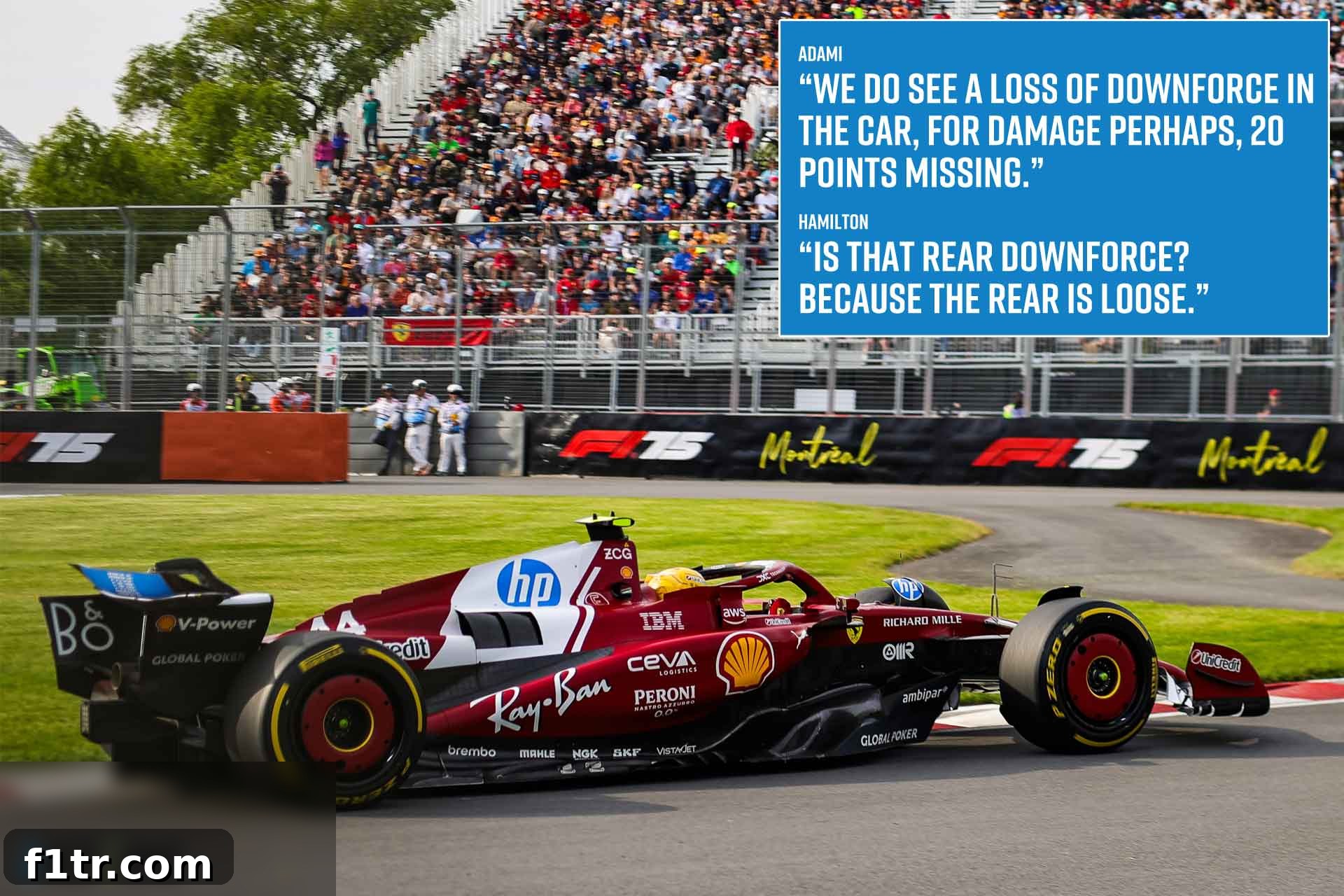
It wasn’t until lap 23 that the Ferrari strategists and engineers, poring over telemetry data, finally identified the root cause of Hamilton’s performance woes. Adami relayed the critical information: a “loss of downforce,” estimated to be around “20 points missing.” This revelation was a turning point. Downforce is paramount in Formula 1; it’s the aerodynamic force that presses the car into the track, providing grip and allowing for higher cornering speeds. Losing 20 points is a substantial amount, equivalent to a significant portion of the car’s overall aerodynamic efficiency, especially at high speeds. It explained Hamilton’s struggle to turn the car and his feeling of a “loose rear.”
Advert | Become a RaceFans supporter andgo ad-free
| Lap: 23/70 HAM: 1’16.429 | |||||||||||||||||||||||||||||||||||||||||||||||||||
| Adami | And for info from lap 13, we do see a loss of downforce in the car, for damage perhaps, 20 points missing. | ||||||||||||||||||||||||||||||||||||||||||||||||||
| Hamilton | Yeah, okay. | ||||||||||||||||||||||||||||||||||||||||||||||||||
| Lap: 24/70 HAM: 1’16.215 | |||||||||||||||||||||||||||||||||||||||||||||||||||
| Adami | Piastri lap time 16.0 | ||||||||||||||||||||||||||||||||||||||||||||||||||
| Hamilton | Is that rear downforce? Because the rear is loose. | ||||||||||||||||||||||||||||||||||||||||||||||||||
| Adami | It’s quite balanced. And close the diff to help the rear. Diff mid. | ||||||||||||||||||||||||||||||||||||||||||||||||||
| Lap: 28/70 HAM: 1’16.129 | |||||||||||||||||||||||||||||||||||||||||||||||||||
| Hamilton | I’ve lost so much time behind those guys. | ||||||||||||||||||||||||||||||||||||||||||||||||||
| Lap: 29/70 HAM: 1’16.217 | |||||||||||||||||||||||||||||||||||||||||||||||||||
| Adami | Understood. Charles pitted ahead. Five seconds ahead. | ||||||||||||||||||||||||||||||||||||||||||||||||||
| Hamilton | Am I just massively slow? Or just lost too much? I don’t know where I am in the race. | ||||||||||||||||||||||||||||||||||||||||||||||||||
| Adami | You are P7, P6 for Charles and we lost six, seven seconds of the traffic. Charles is four seconds ahead on new hard. | ||||||||||||||||||||||||||||||||||||||||||||||||||
| Lap: 30/70 HAM: 1’16.263 | |||||||||||||||||||||||||||||||||||||||||||||||||||
| Hamilton | Car won’t turn in the low-speed. | ||||||||||||||||||||||||||||||||||||||||||||||||||
| Adami | Understood. | ||||||||||||||||||||||||||||||||||||||||||||||||||
| Lap: 31/70 HAM: 1’16.185 | |||||||||||||||||||||||||||||||||||||||||||||||||||
| Hamilton | Really struggling with the rear of the car. | ||||||||||||||||||||||||||||||||||||||||||||||||||
| Adami | Understood. Charles ahead 15.7. Turn one and turn ten, main losses there. | ||||||||||||||||||||||||||||||||||||||||||||||||||
| Lap: 32/70 HAM: 1’15.803 | |||||||||||||||||||||||||||||||||||||||||||||||||||
| Adami | B-bal 62, suggested. Considering the damage, the pace is good, keep pushing like that. | ||||||||||||||||||||||||||||||||||||||||||||||||||
Hamilton’s immediate response, questioning if it was “rear downforce” due to the “loose rear,” showed his intimate understanding of the car’s dynamics. The team tried to compensate by suggesting differential adjustments, but the core issue of compromised aerodynamics persisted. He lamented the time lost to traffic, a common complaint but amplified by a car that was no longer performing optimally. Despite the handicap, Adami’s encouragement highlighted Hamilton’s commendable effort to maintain pace under challenging circumstances.
“I said how far am I off pace-wise?” – Demanding Clear Answers
The mid-point of the race saw Hamilton continuing to grapple with his ailing car, his frustration evident in the radio exchanges. He was not just battling his competitors and the track, but also the uncertainty of his own performance. He needed precise information to understand his position and the true extent of his handicap. His repeated questions about his pace deficit, sometimes needing to rephrase his request, underscored his drive for clarity amidst the confusion.
(Chart displaying the race progression for Lando Norris, Oscar Piastri, Charles Leclerc, Lewis Hamilton, and Andrea Kimi Antonelli would appear here, illustrating their relative positions and gaps.)
Advert | Become a RaceFans supporter andgo ad-free
| Lap: 33/70 HAM: 1’15.877 | |||||||||||||||||||||||||||||||||||||||||||||||||||
| Hamilton | I’m nowhere in this race, mate. Don’t know what’s happened. | ||||||||||||||||||||||||||||||||||||||||||||||||||
| Lap: 34/70 HAM: 1’15.872 | |||||||||||||||||||||||||||||||||||||||||||||||||||
| Adami | Understood, Charles six ahead, pace is good, considering the damage. | ||||||||||||||||||||||||||||||||||||||||||||||||||
| Lap: 36/70 HAM: 1’15.951 | |||||||||||||||||||||||||||||||||||||||||||||||||||
| Hamilton | How far am I off pace-wise? | ||||||||||||||||||||||||||||||||||||||||||||||||||
| Adami | Seven seconds to Charles. | ||||||||||||||||||||||||||||||||||||||||||||||||||
| Hamilton | I said how far am I off pace-wise? [Unclear] say what the gap is. | ||||||||||||||||||||||||||||||||||||||||||||||||||
| Adami | Understood. 15.3 for him, Russell P1 15.6, right now. | ||||||||||||||||||||||||||||||||||||||||||||||||||
| Lap: 37/70 HAM: 1’16.027 | |||||||||||||||||||||||||||||||||||||||||||||||||||
| Adami | Focus on a better exit out of four. Anything for front wing for the next stop? | ||||||||||||||||||||||||||||||||||||||||||||||||||
| Lap: 38/70 HAM: 1’15.748 | |||||||||||||||||||||||||||||||||||||||||||||||||||
| Adami | And for info, Verstappen ahead of you pitted to go to the end on hard. | ||||||||||||||||||||||||||||||||||||||||||||||||||
| Lap: 40/70 HAM: 1’16.080 | |||||||||||||||||||||||||||||||||||||||||||||||||||
| Hamilton | Yeah, I’ve got no rear. | ||||||||||||||||||||||||||||||||||||||||||||||||||
| Lap: 41/70 HAM: 1’16.223 | |||||||||||||||||||||||||||||||||||||||||||||||||||
| Adami | Tighter exit out of one for a better turn two suggested. | ||||||||||||||||||||||||||||||||||||||||||||||||||
This exchange highlights the psychological battle Hamilton was fighting. Despite Adami’s attempts to provide context, Hamilton, accustomed to competing at the very front, struggled to reconcile his current performance with his expectations. The feedback on track optimization, like “tighter exit out of one,” became harder to implement effectively with a compromised car. His reiteration of “I’ve got no rear” was a testament to the persistent handling issues caused by the downforce loss.
“Brake pedal’s getting long” – The Onset of New Problems
As if the downforce loss wasn’t enough, Hamilton’s race took another turn for the worse with the onset of brake problems. Fading brakes are a driver’s nightmare, eroding confidence and making it incredibly difficult to attack corners or even defend effectively. His repeated pleas about the brake pedal getting “long” and “running out of brakes” painted a vivid picture of a driver fighting a losing battle against his machinery. This compounded the challenges, pushing him further down the order and widening the gap to the leaders. The frustration of “I can’t stop the car” perfectly encapsulated his escalating plight.
Advert | Become a RaceFans supporter andgo ad-free
| Lap: 42/70 HAM: 1’16.591 | |||||||||||||||||||||||||||||||||||||||||||||||||||
| Hamilton | Brake pedal’s getting long. | ||||||||||||||||||||||||||||||||||||||||||||||||||
| Adami | Understood. Driver default delta zero on. | ||||||||||||||||||||||||||||||||||||||||||||||||||
| Hamilton | Where am I losing a second? | ||||||||||||||||||||||||||||||||||||||||||||||||||
| Hamilton | Yeah, I’m running out of brakes. | ||||||||||||||||||||||||||||||||||||||||||||||||||
| Adami | Main loss is exit 10 and exit two. | ||||||||||||||||||||||||||||||||||||||||||||||||||
| Hamilton | Yeah, I can’t stop the car. | ||||||||||||||||||||||||||||||||||||||||||||||||||
| Lap: 43/70 HAM: 1’16.582 | |||||||||||||||||||||||||||||||||||||||||||||||||||
| Adami | We do see the brake pedal getting longer as you say, try to live with it. | ||||||||||||||||||||||||||||||||||||||||||||||||||
| Lap: 44/70 HAM: 1’16.789 | |||||||||||||||||||||||||||||||||||||||||||||||||||
| Hamilton | Do you think we’ll be able to make it to the end with these brakes? | ||||||||||||||||||||||||||||||||||||||||||||||||||
| Adami | Yeah, we believe so. Brake balance 56 suggested, and keep the lift-and-coast. | ||||||||||||||||||||||||||||||||||||||||||||||||||
| Lap: 45/70 HAM: 1’32.121 | |||||||||||||||||||||||||||||||||||||||||||||||||||
| Hamilton | I’m two seconds off right now. | ||||||||||||||||||||||||||||||||||||||||||||||||||
| Adami | And box Lewis, box. Let me know for front wing. | ||||||||||||||||||||||||||||||||||||||||||||||||||
| Hamilton | Why boxing now? | ||||||||||||||||||||||||||||||||||||||||||||||||||
| Adami | Just optimal [for] race. | ||||||||||||||||||||||||||||||||||||||||||||||||||
| Hamilton | Plus two. Plus two. | ||||||||||||||||||||||||||||||||||||||||||||||||||
| Adami | Plus two? | ||||||||||||||||||||||||||||||||||||||||||||||||||
| Hamilton | Plus two. | ||||||||||||||||||||||||||||||||||||||||||||||||||
| Adami | Okay, understood. | ||||||||||||||||||||||||||||||||||||||||||||||||||
| Hamilton | Boxing now. | ||||||||||||||||||||||||||||||||||||||||||||||||||
| Lap: 47/70 HAM: 1’15.728 | |||||||||||||||||||||||||||||||||||||||||||||||||||
| Hamilton | Could you see the damage? | ||||||||||||||||||||||||||||||||||||||||||||||||||
| Lap: 48/70 HAM: 1’16.825 | |||||||||||||||||||||||||||||||||||||||||||||||||||
| Hamilton | Gap ahead? | ||||||||||||||||||||||||||||||||||||||||||||||||||
| Adami | It’s Norris, 23 seconds. | ||||||||||||||||||||||||||||||||||||||||||||||||||
| Lap: 49/70 HAM: 1’15.688 | |||||||||||||||||||||||||||||||||||||||||||||||||||
| Hamilton | How far am I off pace-wise, mate? | ||||||||||||||||||||||||||||||||||||||||||||||||||
| Lap: 50/70 HAM: 1’15.536 | |||||||||||||||||||||||||||||||||||||||||||||||||||
| Adami | We are about half a second off, mostly due to the damage. | ||||||||||||||||||||||||||||||||||||||||||||||||||
| Lap: 51/70 HAM: 1’15.707 | |||||||||||||||||||||||||||||||||||||||||||||||||||
| Adami | 25 seconds. That is to Norris, that is a P6, and Charles yet to stop. | ||||||||||||||||||||||||||||||||||||||||||||||||||
The team’s advice to “try to live with it” and suggestions for “lift-and-coast” were practical responses to a deteriorating situation, but they offered little solace to a driver battling for every position. His persistent questions about the gaps and pace indicated a driver trying to make sense of a truly perplexing and difficult Grand Prix. The second pit stop, though “optimal” for strategy, couldn’t fully mitigate the underlying issues, leaving Hamilton to continue his valiant effort with a compromised machine.
“How much damage did I have?” – The Final Assessment
The race conclusion, brought under Safety Car conditions following a collision between the McLaren drivers, offered a moment of relative calm for Hamilton to seek definitive answers. The Safety Car period, which saw Lando Norris’s unfortunate crash, inadvertently propelled Hamilton into a higher finishing position. It was then, as the chequered flag waved and the immediate pressure subsided, that Hamilton could finally press his engineer for the full story of his car’s damage and its persistent impact throughout the race.
Advert | Become a RaceFans supporter andgo ad-free
| Lap: 54/70 HAM: 1’15.417 | |||||||||||||||||||||||||||||||||||||||||||||||||||
| Adami | Charles pitted for a medium, 19 seconds ahead. | ||||||||||||||||||||||||||||||||||||||||||||||||||
| Hamilton | Where have I lost 25 seconds? | ||||||||||||||||||||||||||||||||||||||||||||||||||
| Adami | Just a second. Main loss is exit 10 and one, due to the damage perhaps. | ||||||||||||||||||||||||||||||||||||||||||||||||||
| Lap: 56/70 HAM: 1’15.068 | |||||||||||||||||||||||||||||||||||||||||||||||||||
| Adami | Pace is good right now, Russell in the lead at 15.0. | ||||||||||||||||||||||||||||||||||||||||||||||||||
| Lap: 60/70 HAM: 1’15.227 | |||||||||||||||||||||||||||||||||||||||||||||||||||
| Hamilton | What position am I? | ||||||||||||||||||||||||||||||||||||||||||||||||||
| Adami | A solid P7 ’til the end. And Charles is 20 seconds ahead, Alonso 20 behind. | ||||||||||||||||||||||||||||||||||||||||||||||||||
| Lap: 66/70 HAM: 1’22.408 | |||||||||||||||||||||||||||||||||||||||||||||||||||
| Adami | Double yellow, turn one and two. McLaren touched each other, Norris parked at turn one. | ||||||||||||||||||||||||||||||||||||||||||||||||||
| Adami | The Safety Car is deployed Staying out. |
||||||||||||||||||||||||||||||||||||||||||||||||||
| Lap: 67/70 HAM: 1’55.724 | |||||||||||||||||||||||||||||||||||||||||||||||||||
| Hamilton | I’ve got the Safety Car. | ||||||||||||||||||||||||||||||||||||||||||||||||||
| Adami | Understood. | ||||||||||||||||||||||||||||||||||||||||||||||||||
| Hamilton | Can I pass the Safety Car? | ||||||||||||||||||||||||||||||||||||||||||||||||||
| Adami | Stand by. | ||||||||||||||||||||||||||||||||||||||||||||||||||
| Hamilton | He passes the Safety Car He’s waving me by. |
||||||||||||||||||||||||||||||||||||||||||||||||||
| Chequered flag | |||||||||||||||||||||||||||||||||||||||||||||||||||
| Hamilton | How much damage did I have towards the end? Did it get worse? | ||||||||||||||||||||||||||||||||||||||||||||||||||
| Adami | It was stable on those 20 points I was mentioning, so considering all in all it was a solid race. I need to see what happened there damage-wise between nine and 10. I believe that [could] be a beaver. | ||||||||||||||||||||||||||||||||||||||||||||||||||
Adami confirmed that the damage, specifically the 20 points of downforce loss, remained stable throughout the race, never worsening. This confirmed Hamilton’s impressive drive to maintain performance despite such a significant handicap. The engineer’s final comment, speculating about the animal being a “beaver” rather than a marmot, added a touch of humor and surrealism to an already unique incident. It was a testament to Hamilton’s resilience and skill that he could push a compromised car to a respectable finish, securing valuable points for the team even with an unexpected adversary lurking beneath the chassis.
The Canadian Grand Prix of 2025 will be remembered not just for the on-track battles, but for the extraordinary challenge posed by a small, furry creature. Lewis Hamilton’s performance, navigating unseen damage and battling persistent car issues, stands as a remarkable example of a driver’s tenacity in the face of adversity. This event highlights the unpredictable nature of Formula 1, where even the smallest details—or indeed, the smallest animals—can have a monumental impact on a driver’s race and the championship narrative.
Team radio transcripts
- “Two balls of steel!” How Leclerc won his battery battle with Hamilton and Russell
- ‘Easy to say when you’re on the pit wall’: How Gasly fight left Verstappen frustrated
- “Leclerc just backed Lewis up”: How Russell saw the fight between the Ferraris
- ‘Just an easy pass with Overtake’: Every radio message from Antonelli’s first F1 win
- Hadjar told Red Bull his car’s performance was “embarrassing” and “just c***”
Browse all team radio transcript articles
2025 Canadian Grand Prix
- Canada was my most obvious missed opportunity to score more points – Norris
- Norris names China and Canada as biggest missed opportunities this year
- Don’t boo Piastri, Norris tells British Grand Prix fans
- Fine teams for “long shot” protests like Red Bull’s in Canada, says Wolff
- Verstappen refuses to say whether he supported Red Bull’s latest Russell protests
Browse all 2025 Canadian Grand Prix articles