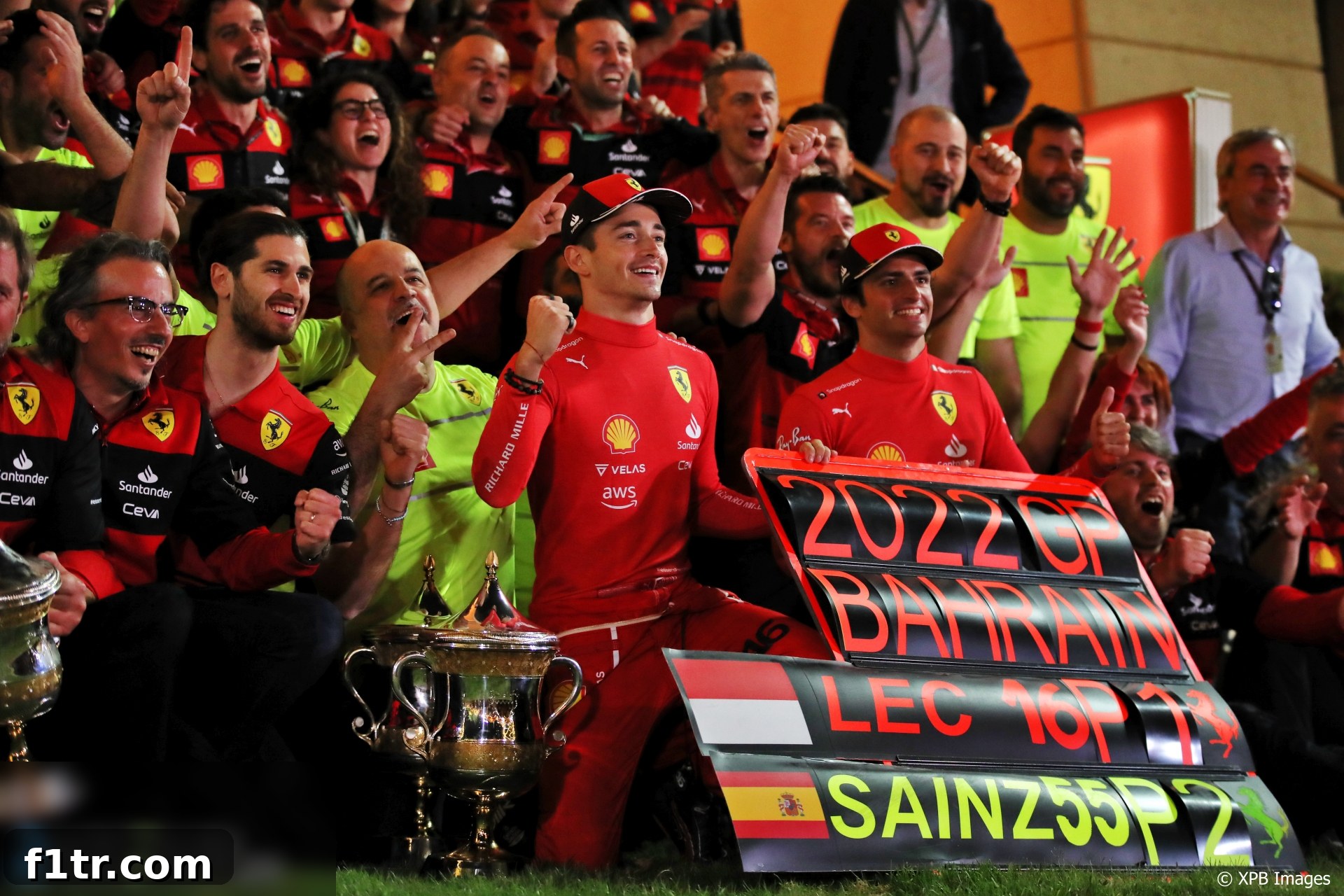
The thrilling start to the Formula 1 season has captivated fans worldwide, with Ferrari’s dominant one-two finish at the Bahrain Grand Prix signaling a potential shift in the championship landscape. This spectacular return to form for the iconic Italian team has been met with widespread enthusiasm, setting a vibrant tone for the races to come. From celebratory comments by F1 CEO Stefano Domenicali to the struggles faced by emerging talents in feeder series, the motorsport world is buzzing with anticipation and analysis after an action-packed opening weekend.
Formula 1 and Motorsport Insights: Post-Bahrain Grand Prix Round-Up
Ferrari’s Resurgence Ignites F1 Excitement, Domenicali Lauds Impact
The recent performance by Scuderia Ferrari at the Bahrain Grand Prix, culminating in a spectacular one-two finish, has sent waves of excitement through the Formula 1 community. Stefano Domenicali, the current CEO of Formula 1 and a former Ferrari team principal from 2008 to 2014, was quick to acknowledge the profound positive impact of Ferrari’s return to competitiveness. Their dominant display, which saw Charles Leclerc and Carlos Sainz claim the top two spots, not only electrified the season opener but also significantly boosted the morale of the sport.
Domenicali, a native of Imola, expressed his certainty that Ferrari’s strong start would translate into exceptional crowd numbers for the upcoming Grand Prix at his home circuit. “There’s no doubt that to see Ferrari back again competitive is very good for everyone,” he affirmed. He further elaborated on the anticipated commercial benefits, stating, “I’m sure that this will have an impact on the number of ticket sales that we, the promoter, will sell. And I’m expecting in Imola, a big crowd, as in the old days.” This sentiment underscores the enduring appeal and commercial pulling power of a successful Ferrari team within Formula 1.
The Imola circuit, officially known as Autodromo Internazionale Enzo e Dino Ferrari, holds a cherished place in Formula 1 history. It hosted the San Marino Grand Prix intermittently from 1980 to 2006 before its much-welcomed return in 2020. The track is renowned for its challenging layout and rich heritage, often producing memorable races. A competitive Ferrari adds an extra layer of allure to any event, but especially so at a historic Italian venue, promising an atmosphere reminiscent of the sport’s golden eras and drawing legions of Tifosi eager to witness their beloved team’s renewed triumph.
Latifi Faces Uphill Battle with Williams After Challenging Season Opener
Nicholas Latifi of Williams Racing experienced a demanding start to his 2022 Formula 1 campaign, finishing 16th in the Bahrain Grand Prix. The Canadian driver openly expressed his disappointment and the team’s struggles, highlighting the significant challenges they encountered with the new generation of cars introduced under fresh technical regulations. His post-race comments painted a picture of a team grappling to unlock performance from their current package.
“It was a tricky day and it’s clear we’re not starting off as strong as we would have liked,” Latifi admitted. He pinpointed several critical areas of concern that hampered his performance throughout the race: “We’ve been lacking pace, struggling with overall grip, balance and tyre degradation.” These issues collectively contributed to a difficult race, making it challenging for Latifi to compete effectively.
Latifi emphasized the urgent need for Williams to analyze their data and initiate a rapid development phase. “We need to work out how we extract more out of the package we have now and have a real push to react as soon as possible to bring some more speed to the car,” he stated. In the highly competitive world of Formula 1, early season development is paramount, particularly for teams aiming to climb the constructor standings. Williams, a team with a storied past, faces the perennial challenge of maximizing their resources to improve performance and move up the grid, and Latifi’s feedback will be crucial in guiding their technical direction.
F2 and F3 Penalties Enforced, But Points Standings Remain Unaffected
The feeder series, Formula 2 and Formula 3, also kicked off their seasons with intense racing action, which included several post-race penalties. Despite these sanctions, the points standings for both categories remained unchanged, indicating that the penalized drivers either finished outside the points-scoring positions or their penalties were not severe enough to alter their final placement relative to other competitors. This highlights the fine margins in junior single-seater racing, where every second and every position counts.
In Formula 2, Enzo Fittipaldi received a five-second time penalty for his involvement in a collision with Richard Verschoor, a common infraction in wheel-to-wheel racing. Oliver Caldwell was also handed a five-second penalty for exceeding track limits four times at turn four, a strict enforcement of racing regulations designed to ensure fair play and prevent drivers from gaining an unfair advantage. A more significant sanction was applied to Amaury Cordeel, who incurred two separate ten-second time penalties for twice breaking the pit lane speed limit. Pit lane infringements are taken seriously due to safety implications for both drivers and pit crew members.
Similarly, in Formula 3, Hunter Yeany was penalized five seconds. Race stewards deemed him wholly responsible for a collision with Niko Kari. Such penalties are critical in junior categories, not only for maintaining sporting integrity but also for educating young drivers on responsible racing conduct and adherence to the rules. While these penalties did not reshape the championship fight immediately, they serve as important lessons for the aspiring F1 stars.
Equipment Failures Challenge Formula 2 Drivers in High-Stakes Races
The demanding nature of Formula 2 racing was underscored by reports of equipment failures affecting drivers during the Bahrain feature race. These incidents highlight the immense pressures and unexpected challenges that can arise even with meticulously prepared machinery, pushing drivers to their limits and beyond.
Théo Pourchaire, who ultimately secured a victory, recounted a frightening moment during the final 12 laps of his feature race. A tyre marble, a small piece of rubber debris shed from the tyres, struck and cracked his visor. “During the race, my visor broke because of rubber, the tyres,” Pourchaire explained. “Behind Drugovich, I received something and my visor was broken, it was like a crack on the left-hand side.” This incident significantly impacted his concentration and visibility, making the task of maintaining his lead and managing tyre wear incredibly difficult in the closing stages.
Pourchaire confessed the severity of the situation, stating it affected him “a lot” over the crucial final laps. “It was so difficult to concentrate because you have that happening and then you need to push, need to be really careful with the tyres. It was so difficult.” This experience showcased his resilience and focus under adversity.
Third-placed finisher Jüri Vips also shared a similar tale of woe, revealing his own equipment setback during Saturday’s sprint race. Vips explained that his HANS device, a critical head and neck support system, became dislodged. “My left belt completely off the HANS so every time I braked since lap five or something it just [flew around].” A malfunctioning HANS device can be incredibly distracting and potentially compromise safety, especially during heavy braking zones where drivers experience significant G-forces.
Reflecting on these challenges, Pourchaire succinctly summarized the unforgiving environment of the junior category: “This is F2.” His comment encapsulates the raw, unpredictable, and often brutal reality of racing in a series where drivers are pushed to their absolute maximum, not only by their competitors but also by the demanding nature of their equipment. These incidents serve as a testament to the mental fortitude and adaptability required to succeed on the path to Formula 1.
Social Media Pulse: Voices from the Motorsport World
Social media platforms continue to serve as a vibrant hub for immediate reactions, behind-the-scenes glimpses, and diverse opinions from across the motorsport spectrum. Here are some notable posts that captured the attention of fans and insiders alike, offering unique perspectives on recent events and ongoing discussions within the racing community:
Our crew member accidentally struck by the No. 5 car has been evaluated by INDYCAR Medical. He has no serious injuries and has been released from the infield care center.
We appreciate your kind words.
— Arrow McLaren IndyCar Team (@ArrowMcLaren) March 20, 2022
Not sure Flavio Briatore deserves to be given the time of day, let alone a paddock pass.
— Stuart Codling (@CoddersF1) March 20, 2022
First “too slow” safety car moan of the year #BahrainGP #F1
— Claire Cottingham (@Cla_Cottingham) March 20, 2022
14/57 | Nico Hulkenberg: “We’re too hot to be able to pit so we need to do more cooling, even if it costs us a position,” he is currently P15.#F1 #BahrainGP
— RaceFans Live (@racefanslive) March 20, 2022
I resisted the temptation to ask @LewisHamilton if his new helmet was a tribute to @NicoRosberg…https://t.co/mMpgT2majl#F1 #BahrainGP
— Keith Collantine (@keithcollantine) March 20, 2022
- For more comprehensive coverage and to follow official F1 accounts, explore the F1 Twitter Directory.
Further Reading: Essential Motorsport Links
Stay informed with these interesting links from across the motor racing world, offering diverse perspectives on Formula 1 news, analysis, and broader motorsport topics:
Introducing the New Overtake King Award (Formula1.com)
Formula 1 aims to enhance fan engagement by launching the new ‘Overtake King Award’. At each Grand Prix, starting with the Bahrain season-opener, fans can cast their votes via social media for what they deem the boldest and bravest overtaking manoeuvre of the day. The driver who executes such a move will earn this prestigious accolade, celebrating the art of aggressive and skillful racing that epitomizes F1 excitement.
Saudi Arabia Grand Prix Under Watch: F1 Bosses ‘Monitoring Situation’ After Missile Attacks Near Jeddah (The Sun)
Concerns have been raised regarding the security situation ahead of the Saudi Arabian Grand Prix. Formula 1 chiefs are reportedly monitoring developments closely after a petroleum depot in Jeddah was targeted in a missile attack just a week before the scheduled race. This incident has sparked discussions about the safety implications for the event and its participants, prompting increased vigilance from F1 organizers and local authorities.
Red Bull’s Race To The Top: How an Energy Drink Company Conquered the Sports World (Front Office Sports)
This insightful article delves into the remarkable journey of Red Bull, tracing its evolution from an energy drink manufacturer to a dominant and iconic force in the global sports landscape. Beyond its formidable presence in Formula 1 with two highly successful teams, Red Bull has strategically diversified its reach into an impressive array of other sports properties, including Bundesliga soccer, a wide spectrum of extreme sports, various motorsport disciplines, competitive esports, and ice hockey. The piece explores the unique marketing strategies and substantial investments that have enabled Red Bull to carve out such a distinctive and influential niche in the world of professional athletics.
Williams’ Head of Vehicle Performance Dave Robson on Guiding the Team (Formula1.com)
Dave Robson, Williams’ Head of Vehicle Performance, offers a fascinating glimpse into the intricacies of his role and the unique pressures of overseeing team operations from the pit wall. He discusses the significant transition from working on an individual car within a focused zone to monitoring both cars simultaneously during a race. This expanded responsibility involves processing considerably more than twice the amount of information, requiring a heightened level of concentration and strategic thinking to keep both cars on track and performing optimally under intense race conditions.
We always endeavour to credit original sources. If you have a tip for a link relating to single-seater motorsport to feature in the next RaceFans round-up, please send it in via the contact form.
The Great Debate: Broadcasting Race Direction Communications
The recent decision to broadcast real-time discussions between race direction and team personnel has sparked considerable debate among fans and industry insiders. Sumedh offers a compelling argument, suggesting that this move has followed a predictable trajectory, mirroring past experiences with televised drivers’ briefings in 2017/2018.
This has predictably gone the same way as the televised drivers’ briefings with Charlie Whiting done in 2017/2018.
I think not broadcasting makes sense. The intent, honesty, transparency of the participants – team personnel, drivers – is inevitably compromised knowing that the exchange is getting televised. Instead of seeking genuine clarifications, the participants are catering to their fans and trying to sway the public opinion.
May be they should make it public after the race, that way we have transparency but not direct pressure on race director.
Sumedh
Sumedh’s perspective highlights a critical issue: the potential for compromised integrity when conversations are made public. When participants are aware their words are broadcast live, there’s an inherent risk that genuine inquiry and honest communication may be replaced by strategic rhetoric, designed more to influence public perception or gain a competitive edge than to seek clarity or resolve issues efficiently. This shift can undermine the very transparency that live broadcasting aims to achieve. The core concern revolves around whether the added entertainment value of these live exchanges outweighs the potential for a less authentic and more politically charged dialogue between crucial race participants.
The proposed alternative – making these communications public after the race – offers a potential middle ground. This approach could provide fans with the desired transparency and insight into the decision-making process, allowing for post-race analysis and accountability, without subjecting race officials and team representatives to direct, real-time pressure or encouraging performative communication during the heat of the moment. Such a system could ensure that the discussions remain focused on sporting matters during the event, while still satisfying the demand for openness once the competitive implications have passed.
Celebrating Motorsport Personalities: Happy Birthday!
Joining us in celebrating birthdays today are several notable individuals from the motorsport community and beyond. We extend our warmest wishes to Gary Richardson, Gaz, Thomahawk_93, Thomas Martin, and Alec Glen. May their day be filled with joy and celebration!
On This Day in Motorsport History: The Infamous 1982 Brazilian Grand Prix
- Exactly 40 years ago today, motorsport witnessed one of Formula 1’s most controversial races: the 1982 Brazilian Grand Prix. Initially, Nelson Piquet was declared the winner, with Keke Rosberg securing second place. However, the jubilant celebrations were short-lived, as both drivers were later disqualified for technical infringements. The controversy centered around the use of “water-cooled brakes,” a loophole exploited by several teams to run their cars significantly underweight during the race, then topping up with water to meet the minimum weight requirement post-race. This tactical maneuver, aimed at gaining a performance advantage, led to widespread outrage and a major technical dispute within the paddock.
- Following their disqualification, victory was posthumously handed to Alain Prost, marking a significant moment in his burgeoning career. The incident underscored the intense technological arms race and the sometimes-ambiguous nature of the regulations in Formula 1 during that era. It prompted tighter scrutiny of technical rules and significantly influenced the interpretation and enforcement of car weights in subsequent seasons, leaving a lasting mark on the sport’s history and its efforts to maintain fair competition.