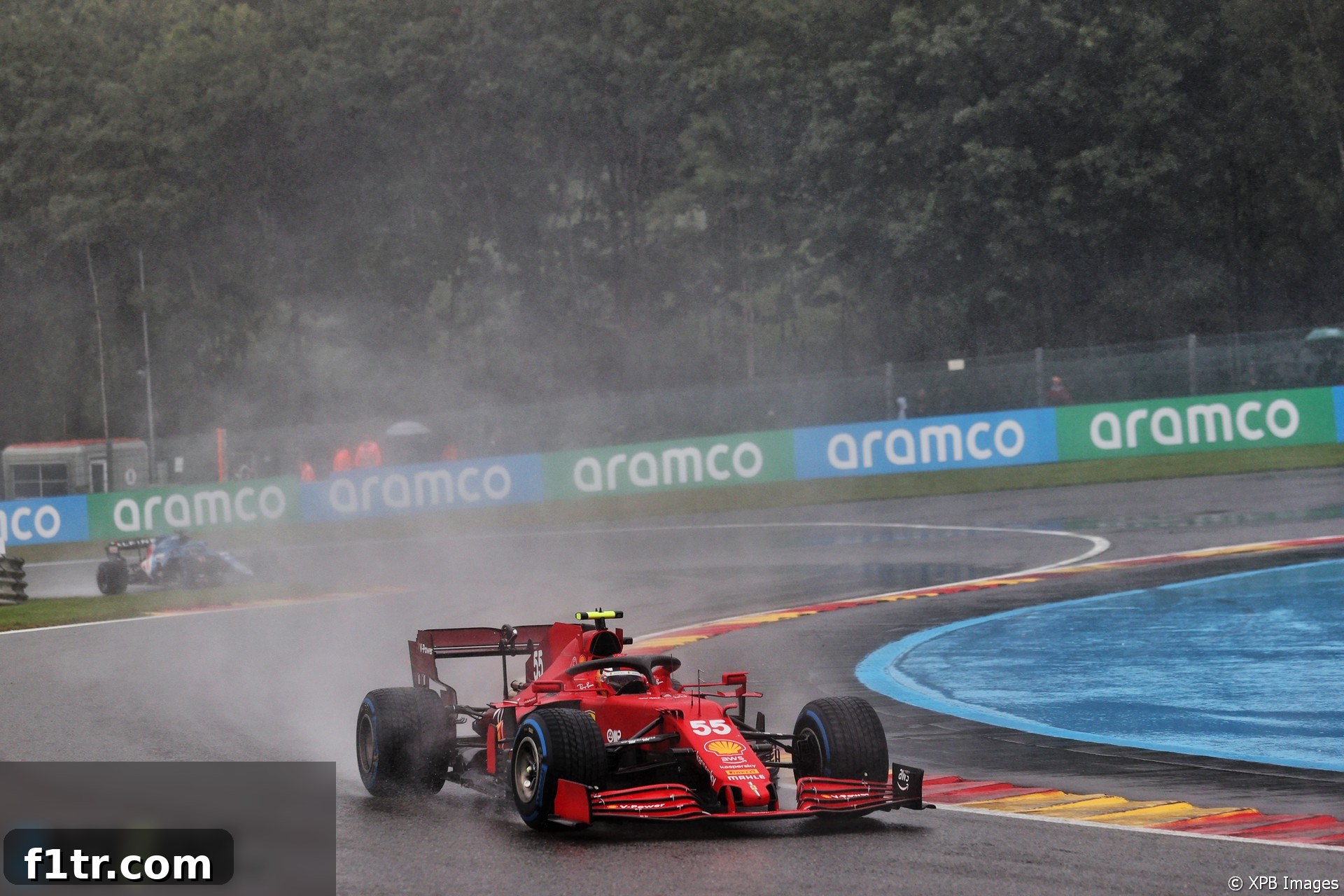
The 2021 Formula 1 Belgian Grand Prix at Spa-Francorchamps will forever be etched into the annals of motorsport history, though not for reasons of breathtaking racing or dramatic overtakes. Instead, it became infamous for being the shortest ‘race’ in Formula 1 history to award championship points, sparking widespread debate and controversy. Despite barely any competitive running, the FIA ultimately confirmed that championship points would be distributed to the top ten finishers, albeit on a half-points scale, triggering a cascade of reactions from drivers, teams, and fans alike.
The Unprecedented 2021 Belgian Grand Prix: A Race That Never Was
The Spa-Francorchamps circuit, renowned for its challenging corners and unpredictable Ardennes weather, lived up to its reputation in 2021, but in the most unfortunate way. Race day was marred by persistent, torrential rain, creating treacherous conditions that severely hampered visibility and grip. The atmosphere was thick with anticipation, yet also laced with growing anxiety as the start time was repeatedly delayed.
A Day of Delays and Disappointment
What unfolded on Sunday, August 29th, 2021, was an unprecedented display of frustration and uncertainty. Drivers initially lined up on the grid, only for the race to be postponed after several formation laps behind the safety car, deemed too dangerous for a proper start. The rain intensified, leading to a prolonged red flag period during which teams, drivers, and race officials grappled with the deteriorating conditions. Spectators, soaked but hopeful, waited for hours, clutching umbrellas and ponchos, desperate for any sign of racing action.
Eventually, after more than three hours of delay, a decision was made to restart the race behind the safety car, primarily to fulfill the procedural requirements for awarding points. The cars completed two laps under the safety car, with spray still heavy and visibility minimal, before the race was red-flagged once more and ultimately abandoned. This brief, non-competitive running was all that transpired, yet it was enough, according to the FIA’s interpretation of the regulations, to constitute a ‘race’ worthy of championship points.
FIA’s Controversial Points Decision Explained
The decision to award points for what was effectively a single-lap event behind a safety car immediately drew criticism. At the heart of the controversy lay Formula 1’s intricate sporting regulations concerning race distance and points allocation. A long-standing rule stipulates that “no points will be awarded if the leader has completed two laps or less.” However, the manner in which the 2021 Belgian Grand Prix was officiated allowed the FIA to navigate this rule in a way that permitted points to be distributed.
Deciphering the Sporting Regulations
According to Article 51.14 of the FIA Sporting Regulations, the official race result is taken from the lap prior to the signal to suspend the race being given. In the case of the 2021 Belgian Grand Prix, although cars completed two laps behind the safety car, the race was officially deemed to have run to a distance of just one lap before its final suspension. This seemingly contradictory statement requires careful understanding. The critical factor for points allocation often revolves around the leader crossing the start/finish line a certain number of times.
The FIA justified its decision by explaining that Max Verstappen, as the race leader, had crossed the start/finish line three times during the entire sequence of events (initial formation laps, the brief restart, and final laps before suspension). This crucial detail was interpreted to comply with the requirement for the leader to have completed “more than two laps” in order for half points to be awarded. This distinction meant that while the official race distance was minimal, the procedural act of the leader crossing the line multiple times triggered the conditions for point distribution.
The Half-Points System and its Rarity
With the conditions met for points, but not a full race distance (typically 75% of the scheduled distance), the half-points system was invoked. This meant that each driver received half of the points they would typically earn for their finishing position in a full-length Grand Prix. This was a significant moment in Formula 1 history, marking the first time half points had been awarded since the current points system, where a win is valued at 25 points, was introduced in 2010. The last instance of half points prior to this was the 2009 Malaysian Grand Prix, which was also rain-affected and stopped early.
This decision meant that Max Verstappen, who was on pole position and effectively won the ‘race’ from the grid based on qualifying results, received 12.5 points instead of the usual 25. For the championship battle, these 12.5 points were crucial, narrowing the gap to his rival, Lewis Hamilton, and adding another layer of controversy to an already tense season.
Impact on the Championship and Driver Standings
Despite the brevity and non-competitive nature of the event, the points awarded had tangible implications for the drivers’ championship and the constructors’ standings. Every point in Formula 1 is precious, and even half points can make a significant difference over the course of a season.
Verstappen’s Controversial Victory
Max Verstappen’s ‘win’ brought him 12.5 points, a valuable haul in his fierce championship fight with Lewis Hamilton. While undoubtedly happy to secure points, the manner of the victory left many with a bittersweet taste, including Verstappen himself, who expressed a preference for winning under proper racing conditions. Nevertheless, the points boosted his campaign and underscored the unpredictable nature of Formula 1.
Russell’s Maiden Podium for Williams
Perhaps one of the most remarkable outcomes was George Russell securing his first-ever Formula 1 podium finish, and Williams’s first since 2017. Starting second after a sensational qualifying performance in the challenging conditions, Russell held onto the position behind the safety car, earning a remarkable 9 points. This result was immensely significant for both Russell, a future Mercedes star, and the struggling Williams team, providing a much-needed morale boost and crucial championship points that proved pivotal in their battle for ninth place in the constructors’ standings.
Hamilton’s Perspective and Title Race
Lewis Hamilton finished in third place, receiving 7.5 points. While these points were important, Hamilton was vocally critical of the decision to award points, calling the event a “farce” and suggesting that “money talks” over racing integrity. His comments highlighted the frustration felt by many, particularly given the lack of genuine racing action. For Hamilton, these points were a minor gain in the context of the overall championship, but the controversy surrounding them resonated deeply.
The Full List of Half-Point Scorers
Beyond the top three, other drivers also benefited from the half-points system, with each point having considerable value, especially for midfield teams:
- Daniel Ricciardo (McLaren): 6 points
- Sebastian Vettel (Aston Martin): 5 points
- Pierre Gasly (AlphaTauri): 4 points
- Esteban Ocon (Alpine): 3 points
- Charles Leclerc (Ferrari): 2 points
- Nicholas Latifi (Williams): 1 point
- Carlos Sainz Jnr (Ferrari): 0.5 points
For teams like Williams and AlphaTauri, these unexpected points were incredibly valuable in their constructors’ championship battles, underscoring how even an abbreviated race can impact the competitive landscape.
The Fastest Lap Rule and Mazepin
In a normal race, the driver who sets the fastest lap and finishes in the top ten is awarded an additional point. However, in the FIA’s official race classification for the 2021 Belgian Grand Prix, no driver was credited with the fastest lap. While Nikita Mazepin did record the quickest lap during the limited running, he finished outside the top ten and would not have been eligible for the additional point anyway, even if the rule had been applied. This detail further highlighted the anomaly of the event, where even standard supplementary rules became irrelevant.
Widespread Reactions: Drivers, Teams, and Fans
The aftermath of the 2021 Belgian Grand Prix was dominated by a storm of reactions, ranging from disappointment and anger to calls for fundamental changes in Formula 1’s sporting regulations. The incident became a lightning rod for broader discussions about the sport’s priorities.
Driver Dissatisfaction and Concerns
Many drivers echoed Hamilton’s sentiments. While accepting their points, there was a general feeling that awarding points for a non-race diluted the integrity of the sport. They emphasized the danger of racing in such conditions and the anti-climax for everyone involved. Max Verstappen, despite his win, admitted it wasn’t the way he wanted to achieve victory, reflecting a widespread desire among competitors for genuine racing.
Team Principals Call for Rule Review
Team principals also weighed in, with Christian Horner of Red Bull Racing stating it was “wrong to award points for a couple of laps behind the Safety Car.” Andreas Seidl of McLaren suggested that rules should be changed to give points for qualifying if a race cannot happen, acknowledging the efforts made by teams and drivers earlier in the weekend. Toto Wolff of Mercedes also expressed dissatisfaction, advocating for a review of the regulations to prevent similar occurrences in the future. There was a clear consensus among team leaders that the rules needed updating to better handle such extreme weather scenarios.
Fan Outcry and Calls for Redress
Perhaps the most significant and vocal reaction came from the fans. Thousands had braved the elements for hours, only to witness a handful of laps behind a safety car. The feeling of being short-changed was palpable, leading to widespread outrage and calls for ticket refunds. The event tarnished F1’s image for many, raising questions about whether the sport prioritised commercial interests (like broadcast obligations) over the experience of its loyal supporters. This public backlash served as a stark reminder of the importance of fan engagement and satisfaction.
The Future of F1 Regulations: Lessons Learned
The 2021 Belgian Grand Prix acted as a critical wake-up call for Formula 1 and the FIA, highlighting glaring deficiencies in the existing sporting regulations. It underscored the urgent need for robust rules that can effectively address extreme weather conditions while maintaining the integrity and spectacle of racing.
Proposals for Rule Amendments
Following the controversy, numerous proposals for rule amendments emerged. Key suggestions included introducing a minimum competitive race distance (e.g., a certain percentage of green-flag laps) before points can be awarded. Another idea was to link points directly to qualifying results in cases where a race cannot proceed, acknowledging the effort and skill demonstrated in qualifying. The ultimate goal is to strike a better balance between ensuring driver safety, upholding the sporting integrity of Formula 1, and delivering genuine entertainment to fans and broadcasters. The discussions around these amendments are crucial for the sport’s credibility and its ability to adapt to unforeseen circumstances.
Conclusion: A Controversial Chapter in F1 History
The 2021 Belgian Grand Prix will forever be remembered as one of Formula 1’s most contentious events. It was a day where the unpredictable nature of motorsport collided with rigid sporting regulations, resulting in a half-points ‘race’ that left almost everyone feeling dissatisfied. Max Verstappen’s controversial win, George Russell’s unexpected podium, and the widespread anger from fans and teams alike created an indelible mark on the season.
While the FIA’s decision was technically within the bounds of the existing rules, the spirit of racing was undoubtedly compromised. The event served as a stark lesson and a catalyst for change, prompting a serious re-evaluation of how Formula 1 handles races severely impacted by weather. Moving forward, the hope is that future regulations will prevent a repeat of such a spectacle, ensuring that championship points are only awarded for genuine, competitive racing, and that the integrity of the sport remains paramount for all involved.
2021 Belgian Grand Prix Related Articles
- Spa spectators who saw no racing offered prize draw for 2022 tickets
- ‘Wrong to award points for a couple of laps behind the Safety Car’ – Horner
- Hamilton offers “exclusive gift” to fans who attended Belgian GP wash-out
- Change rules to give points for qualifying if race can’t happen – Seidl
- “I apologised to the entire team for my mistake” – Perez
Browse all 2021 Belgian Grand Prix articles