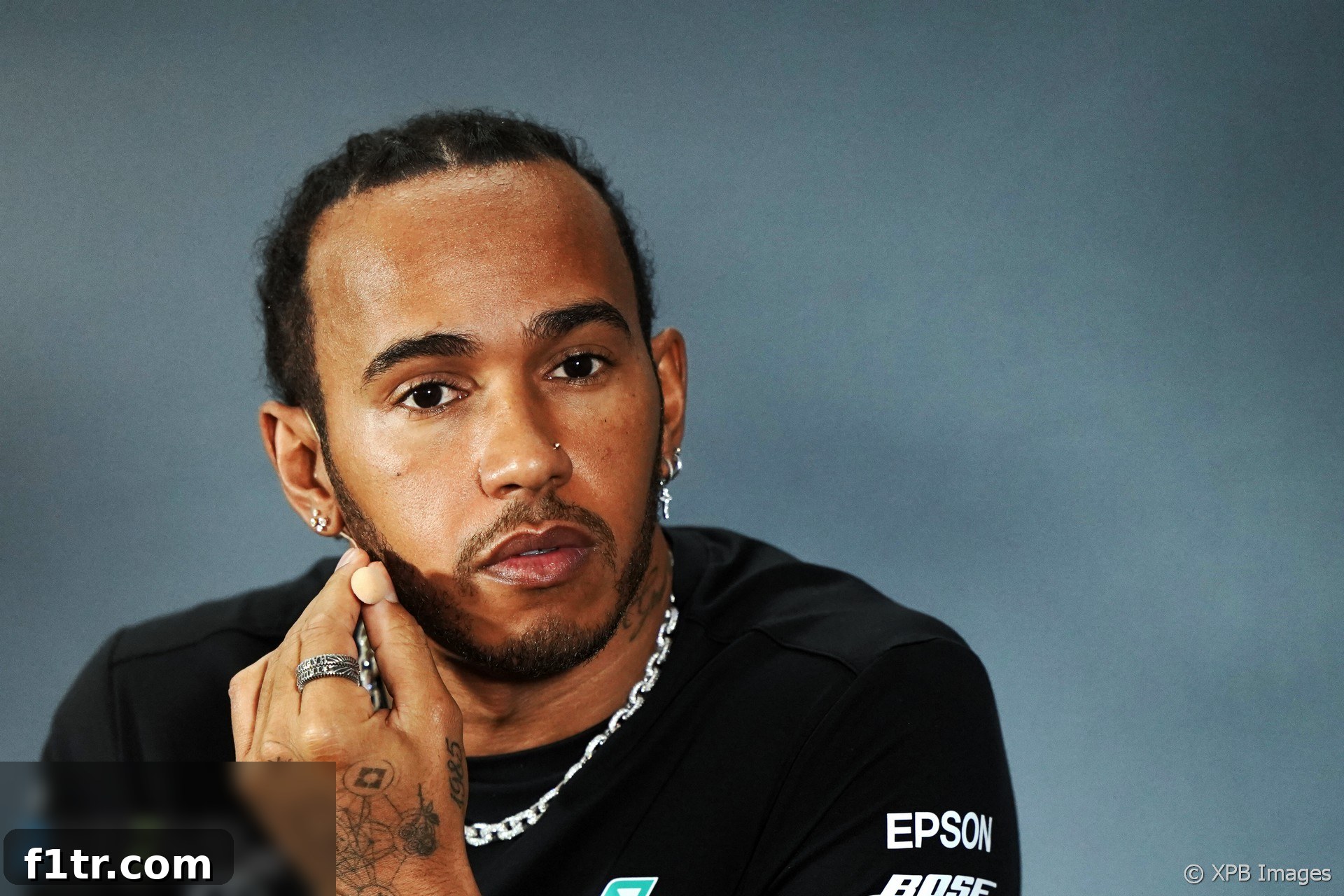
The Steep Climb: Lewis Hamilton on Formula 1’s Diminishing Accessibility for Working-Class Talent
In a world where talent should ideally pave the way to success, seven-time Formula 1 world champion Lewis Hamilton has cast a stark light on a troubling trend within elite motorsport. Hamilton, whose own remarkable journey from a humble background to global superstardom is well-documented, argues that the path he once traversed has become significantly more challenging, if not entirely impassable, for young drivers from working-class families.
Speaking candidly on the Graham Norton Show, Hamilton articulated his profound concerns, stating unequivocally that the prospects for aspiring drivers who lack substantial financial backing have “got a lot worse” since his formative years in the sport. This sobering assessment from one of Formula 1’s most influential figures serves as a critical wake-up call, highlighting an issue that threatens the very diversity and future talent pool of the sport.
A Personal Testament to Sacrifice and Struggle
Hamilton’s rise to the pinnacle of motorsport is often celebrated as a fairy tale, but behind the glamour lies a narrative of immense sacrifice, grit, and unwavering belief from his family. He recounted the extraordinary lengths his father, Anthony Hamilton, went to fund his nascent racing career. “My dad spent something like £20,000 and remortgaged the house several times in the first years,” Hamilton revealed. This staggering investment, made against considerable odds, underscores the financial burden even at the earliest stages of karting, a burden that has only intensified with time.
The champion’s early years were punctuated by moments of uncertainty, where passion clashed with economic reality. Hamilton vividly recalled instances of returning home from school, eager to race, only for his father to deliver the disheartening news: “sorry, we don’t have the money this weekend but hopefully by next race we’ll have the money to keep us going.” These struggles were not mere footnotes; they were integral chapters in his development, forging a resilience that would define his career. He unequivocally credits his father as “the real hero,” humbly considering himself merely “the one that’s in the spotlight.”
Hamilton’s trajectory altered dramatically at the age of 13 when he secured the life-changing backing of former McLaren boss Ron Dennis. This pivotal moment provided the necessary financial and structural support that lifted the monumental burden from his family’s shoulders. “If my dad hadn’t done the work he did and if I didn’t get signed when I was 13 by Ron Dennis then I wouldn’t be sitting in front of you today, I’d be doing something different,” he reflected, acknowledging the almost serendipitous alignment of talent and opportunity that is increasingly rare today.
The Escalating Financial Fortress of Motorsport
The core of Hamilton’s argument lies in the prohibitive cost of entry and progression within motorsport. From the rudimentary stages of karting to the advanced junior formulae like Formula 4, Formula 3, and Formula 2, the financial outlay required is astronomical. Equipping a young driver, maintaining karting equipment, travel to races, hiring mechanics, and entry fees can quickly amount to tens of thousands of pounds annually, escalating into millions for higher junior categories. This reality has created a de facto barrier to entry, transforming motorsport into an increasingly exclusive domain.
“But today it’s just got so expensive,” Hamilton lamented, pointing to a system where raw talent is often overshadowed by financial muscle. He noted the stark demographic shift: “There are very few, if [any] working-class families on their way up. It’s all wealthy families.” This observation is not merely anecdotal; it reflects a systemic issue where families with significant inherited wealth or corporate sponsorship are the primary players in the junior ranks, effectively sidelining promising individuals who lack such resources.
Hamilton shared a poignant example of this injustice: “I’ve got a friend of mine who was nearly in Formula 1 and then he got leapfrogged by a wealthy kid and then his opportunity was gone.” This narrative, tragically common in the feeder series, underscores the critical flaw in the current system. Opportunities that should be earned through merit and skill are instead bought, robbing the sport of diverse talent and perpetuating an elitist image.
A Call for Grassroots Reform and Inclusivity
Beyond merely highlighting the problem, Hamilton passionately advocates for fundamental changes, urging Formula 1 and its governing body, the FIA (International Automobile Federation), to take proactive steps towards fostering greater accessibility. He believes that the sport has a responsibility to “give back” and create pathways for talent from all socioeconomic backgrounds. “It doesn’t need to be as expensive as that,” he asserted, challenging the notion that high costs are an unavoidable facet of motorsport.
Hamilton envisions a future where Formula 1 actively cultivates a “grassroots” system, mirroring the highly successful development structures seen in other globally popular sports like football and tennis. These sports thrive on broad participation, identifying and nurturing talent from an early age through accessible local clubs, academies, and scholarship programs. The contrast with motorsport, where costs can price out even the most gifted youngsters, is stark.
“I do want to get involved in working with the FIA, which is the governing body, and Formula 1, because they can do more to give back,” Hamilton explained. His desire to collaborate with these influential bodies suggests a proactive approach to initiating change, potentially through initiatives such as:
- Reduced Costs in Junior Categories: Implementing cost caps or standardized, more affordable equipment for feeder series.
- Talent Identification Programs: Creating robust, merit-based scouting networks that seek out talent irrespective of financial background.
- Scholarship and Sponsorship Funds: Establishing funds dedicated to supporting promising drivers from low-income families.
- Community Karting Initiatives: Developing accessible karting tracks and programs in diverse communities to introduce the sport to a wider audience.
- Increased Diversity Initiatives: Beyond financial barriers, addressing other forms of exclusivity to ensure a truly representative talent pool.
The Long-Term Impact on Formula 1’s Future
The implications of F1’s current financial structure extend far beyond individual dreams. A sport that relies predominantly on wealth risks stagnating, losing its connection with a broader audience, and failing to discover its next generation of true champions. If only the affluent can afford to compete, the talent pool inevitably shrinks, potentially diminishing the overall quality and competitiveness of the sport. Hamilton’s own journey stands as a powerful testament to the fact that exceptional talent can emerge from unexpected places, enriching the sport with diverse perspectives and a compelling narrative.
By making the sport more accessible, Formula 1 stands to gain immensely. It can re-establish itself as a true meritocracy, where the most skilled and dedicated drivers rise to the top, regardless of their family’s bank balance. This not only strengthens the sport’s integrity but also broadens its appeal, drawing in new fans who can relate to the aspirational stories of drivers overcoming adversity, rather than merely witnessing a procession of privileged individuals.
Conclusion: A Champion’s Enduring Legacy Beyond the Track
Lewis Hamilton’s outspoken advocacy for greater accessibility in Formula 1 is more than just a passing comment; it is a critical challenge to the sport’s foundational structures. His vision for a more inclusive motorsport, one that truly reflects the global talent pool, speaks to a desire for a legacy that extends far beyond his unparalleled achievements on the track. By pushing for a return to “basics,” Hamilton hopes to ensure that future generations of young, gifted drivers, regardless of their economic standing, have a genuine opportunity to chase their dreams and potentially become the next legends of Formula 1.
His words serve as a powerful reminder that while speed and technology define the sport, its heart lies in the human stories of ambition, struggle, and triumph. For Formula 1 to truly thrive in the long term, it must heed the call of its most decorated champion and actively dismantle the financial barriers that currently obscure the path for countless potential stars.
Related Formula 1 Articles
- Crying in the Melbourne car park at 2019 grand prix was my career low – Ocon
- McLaren Racing reports reduced £71 million loss in 2019
- Kvyat: Hockenheim podium last year was “my biggest achievement” so far
- How the FIA’s new encrypted fuel flow meter targets Ferrari’s suspected ‘aliasing’ trick
- “He smashed my office door”: 23 must-see moments from ‘Drive to Survive’ season two
Browse all 2019 F1 season articles