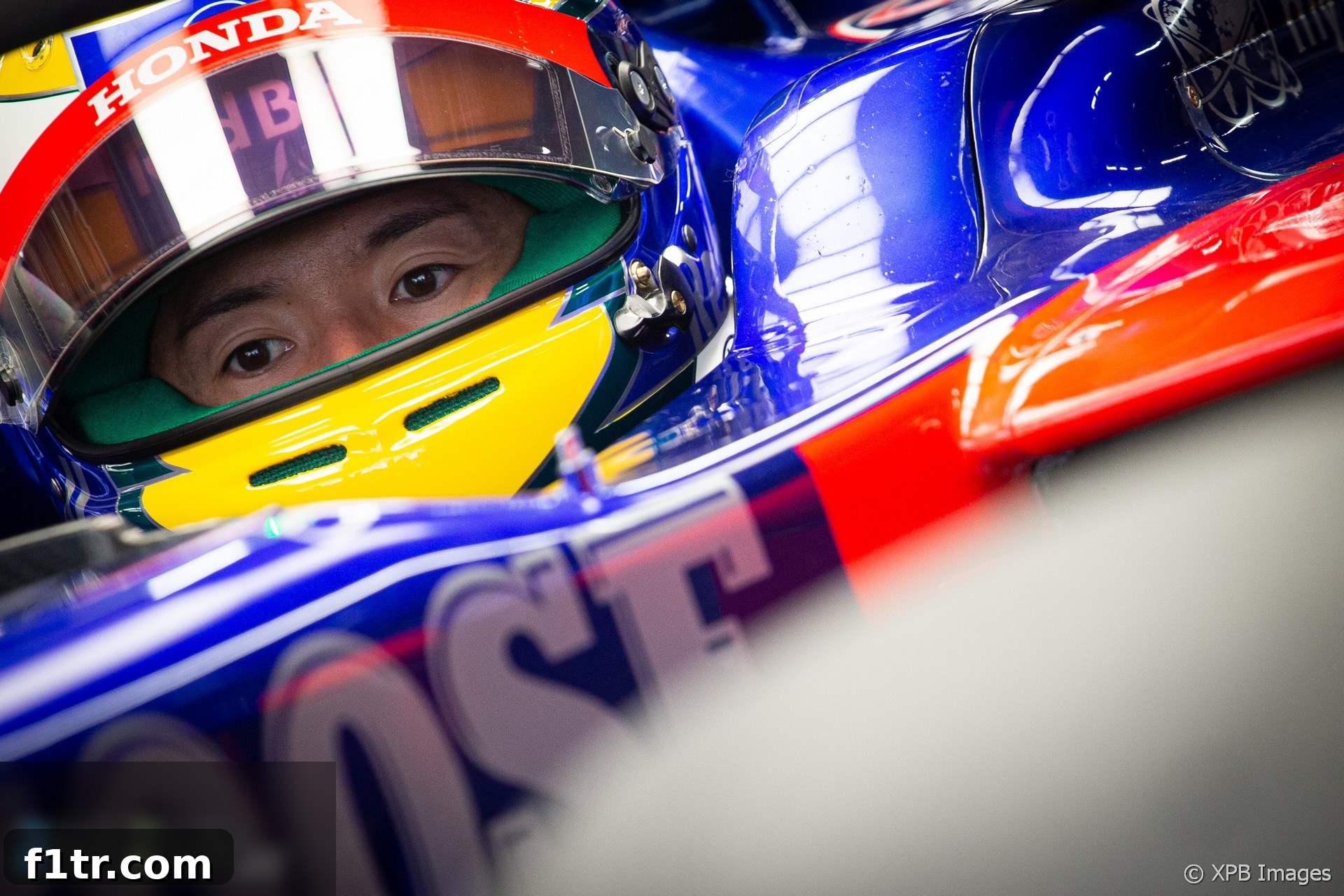
Naoki Yamamoto’s Historic F1 Practice Debut at Suzuka: A Superlicence Exception
In a rare and significant move, the FIA granted a special exception that allowed Japanese racing sensation Naoki Yamamoto to participate in a crucial practice session for the Japanese Grand Prix. This momentous occasion saw Yamamoto take the wheel of a Formula 1 car in front of his home crowd, marking a pivotal moment not just for his career but also for Japanese motorsport.
The Unprecedented FIA Superlicence Exemption
The standard procedure for any driver wishing to compete in a Formula 1 session, including free practice, mandates possession of an FIA Superlicence. This licence is awarded based on an accumulation of points gained through performance in various FIA-sanctioned championships. Naoki Yamamoto, a highly accomplished driver in his native Japan, did not technically possess the requisite number of Superlicence points at the exact time of the Japanese Grand Prix practice session.
However, understanding the unique circumstances and Yamamoto’s undeniable talent, the FIA’s highest decision-making body, the World Motor Sport Council (WMSC), stepped in. According to FIA race director Michael Masi, the WMSC meticulously reviewed Yamamoto’s situation and concluded that he would “inevitably qualify” for the necessary Superlicence points before the conclusion of the racing season. This foresight and acknowledgment of his impending qualification led to the extraordinary decision to grant an exemption.
“It was a decision of the World Motor Sport Council, the only body that can effectively make that decision,” Masi explained regarding the ruling made the preceding week. He further elaborated on the specific timing challenge Yamamoto faced: “The final round of Super Formula is in two weeks’ time, and even if he didn’t compete in that event, he still would have had enough Super Licence points to give him a superlicence. So it is effectively the two-week timing that worked against him. As a result, the World Motor Sport Council made a decision that he would be issued a super licence because of that fact.” This detailed explanation underscored the temporary nature of his Superlicence deficit and the WMSC’s commitment to facilitating talent under exceptional conditions.
This decision not only highlights the FIA’s flexibility but also acknowledges Yamamoto’s standing in the motorsport world. It prevented a bureaucratic hurdle from denying a deserving driver a unique opportunity, particularly one with such significant ties to the sport’s host nation and a major engine manufacturer like Honda.
Yamamoto’s Pedigree: A Champion on Home Soil
Naoki Yamamoto is far from a newcomer to high-level motorsport. He arrived at Suzuka not as a rookie, but as a seasoned champion, revered within Japanese racing circles. Holding multiple titles in both Super Formula and Super GT – Japan’s premier single-seater and sportscar championships, respectively – Yamamoto has consistently demonstrated his prowess, adaptability, and speed over many years. His career has been deeply intertwined with Honda, which has supported his journey through various racing categories.
For Honda, which supplies power units to the Toro Rosso (now AlphaTauri) team and had a strong partnership with Red Bull Racing at the time, seeing a Japanese driver in an F1 car at their home race was a moment of immense pride and strategic importance. Yamamoto had prior experience in F1 simulators, providing him with a foundational understanding of the complex machinery. However, translating simulator knowledge to real-world track conditions, especially at a demanding circuit like Suzuka, requires exceptional talent and composure.
His impressive resume, combined with his dedicated work behind the scenes with Honda and Toro Rosso, built a strong case for his F1 practice debut. The Superlicence exemption was, therefore, not merely a goodwill gesture but a recognition of a driver who had consistently proven his capabilities and was on the cusp of formal F1 eligibility.
Shining on Home Soil: The Suzuka Practice Session
The atmosphere at Suzuka Circuit for the Japanese Grand Prix is always electric, but Naoki Yamamoto’s presence in the Toro Rosso STR14 added another layer of excitement, particularly for the passionate home crowd. As he emerged from the garage for Free Practice 1, the cheers from the grandstands were deafening, a testament to his popularity and the significance of the moment. Yamamoto was entrusted with Daniil Kvyat’s car for the session, a challenging task given the limited track time and the need to provide valuable feedback to the engineers.
Despite the immense pressure and the unfamiliarity of the F1 machinery, Yamamoto rose to the occasion with remarkable composure. Throughout the session, he systematically built up his pace, familiarizing himself with the car’s intricate controls, its immense power, and the unique demands of Suzuka’s iconic corners. His lap times steadily improved, culminating in a performance that turned heads across the paddock.
In a truly astounding display of natural talent, Yamamoto lapped within a mere tenth of a second of his experienced teammate, Daniil Kvyat. Kvyat, a proven F1 race winner and a regular competitor, served as an excellent benchmark, making Yamamoto’s performance all the more impressive. This wasn’t just a respectable showing; it was a demonstration of genuine F1 potential. To be so close to a seasoned F1 driver on a track as technical and demanding as Suzuka, with minimal preparation, is an achievement that speaks volumes about Yamamoto’s skill and adaptability.
His performance was clean, precise, and devoid of errors, which is paramount in F1 practice where avoiding damage and gathering data are key objectives. He successfully completed his assigned program, gathering critical data and providing insightful feedback to the Toro Rosso engineers, proving his worth beyond just raw speed.
Praises from the Paddock and Future Implications
Naoki Yamamoto’s impressive debut did not go unnoticed. Honda technical director Toyoharu Tanabe was among the first to offer effusive praise for the Japanese driver’s efforts. “He was able to do a good job and provide useful feedback for the engineers,” Tanabe remarked, highlighting Yamamoto’s technical understanding and communication skills, which are crucial for driver development within an F1 team. Beyond the technical aspects, Tanabe also shared a personal sentiment, adding, “From a personal point of view, it was enjoyable to work with a Japanese driver in F1, speaking in Japanese!” This emotional connection underscores the significance of local talent reaching the pinnacle of motorsport for a manufacturer like Honda.
The positive feedback extended beyond Honda. Sources within the Toro Rosso team also expressed satisfaction with Yamamoto’s professional approach and quick adaptation. His ability to jump into a complex F1 car and immediately extract competitive performance, while also contributing valuable engineering insights, cemented his reputation as a top-tier talent. This kind of performance in a practice session can often serve as a crucial audition, opening doors for future opportunities, whether it be further test drives, a reserve driver role, or even a full-time race seat in Formula 1.
For Honda, nurturing Japanese talent in Formula 1 has always been a long-term aspiration. Yamamoto’s successful outing at Suzuka reinforced their belief in their talent development pathways and provided a tangible example of a Japanese driver excelling at the highest level. It ignited discussions about whether Yamamoto could follow in the footsteps of other Japanese F1 drivers like Kamui Kobayashi or Takuma Sato, and potentially secure a permanent place on the grid. While the immediate path to an F1 race seat is fraught with complexities and competition, this practice debut undoubtedly elevated Yamamoto’s profile and strengthened his case for future consideration.
The entire episode at the Japanese Grand Prix was a triumph for Naoki Yamamoto, Honda, and Japanese motorsport as a whole. It showcased the talent present in regional championships and demonstrated the FIA’s capacity to act with discretion when circumstances warrant. For fans, it was a memorable moment watching a national hero prove his mettle on the biggest stage, fueling dreams and aspirations for the next generation of Japanese racers.
Pictures: Naoki Yamamoto’s F1 Practice Debut at Suzuka
Relive the unforgettable moments of Naoki Yamamoto’s first official Formula 1 session with this captivating gallery of images from the Suzuka Circuit. Witness his focus, the power of the Toro Rosso STR14, and the historic atmosphere surrounding his impressive debut.
Related Articles: 2019 F1 Season Insights
Delve deeper into the events and storylines of the 2019 Formula 1 season with these additional articles, offering further context and intriguing details from a memorable year in motorsport.
- Crying in the Melbourne car park at 2019 grand prix was my career low – Ocon
- McLaren Racing reports reduced £71 million loss in 2019
- Kvyat: Hockenheim podium last year was “my biggest achievement” so far
- How the FIA’s new encrypted fuel flow meter targets Ferrari’s suspected ‘aliasing’ trick
- “He smashed my office door”: 23 must-see moments from ‘Drive to Survive’ season two
Browse all 2019 F1 season articles