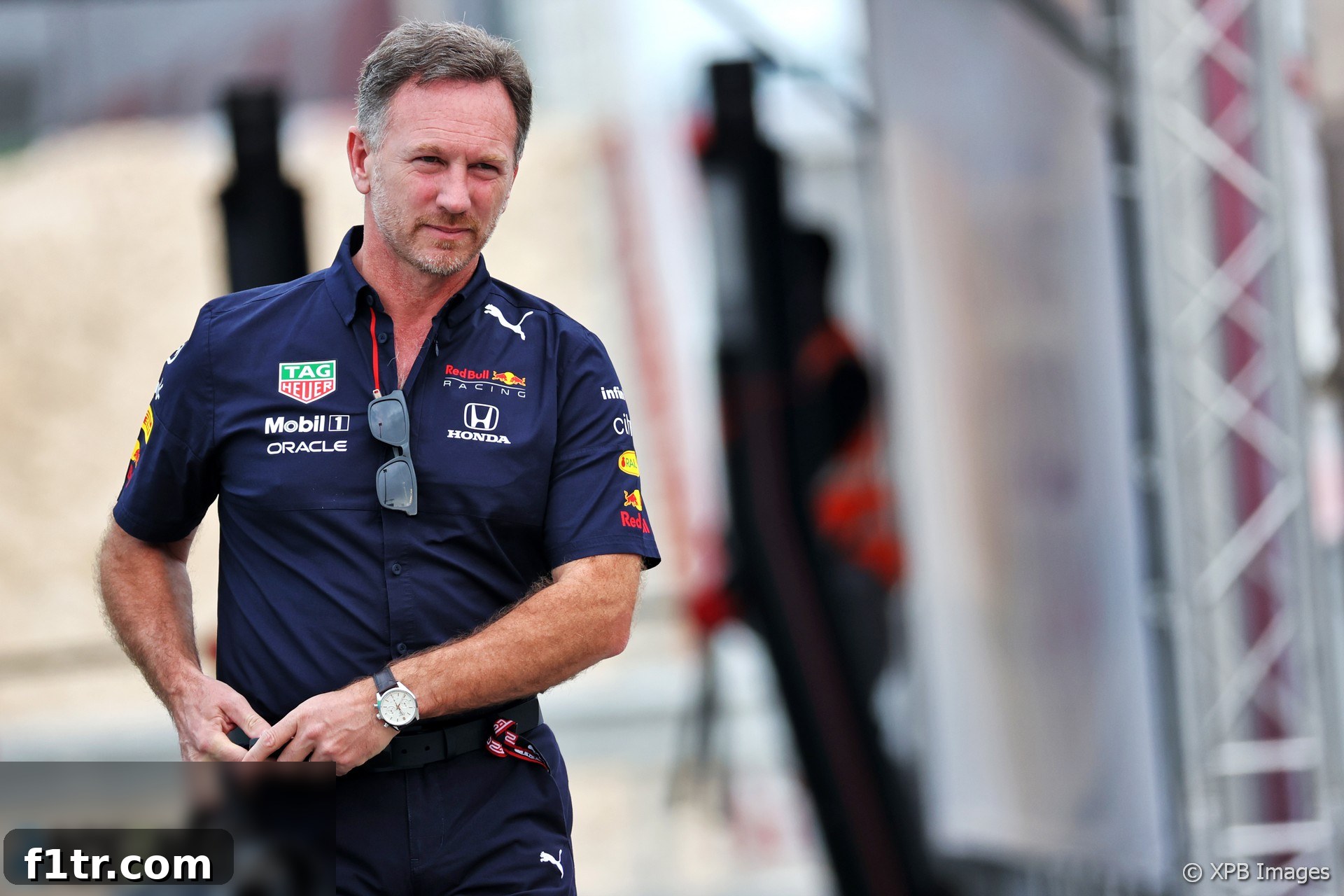
Christian Horner Receives Formal Warning Over Marshal Comments at Qatar Grand Prix
The intense 2021 Formula 1 season, marked by a fierce championship battle between Max Verstappen and Lewis Hamilton, brought not only thrilling on-track action but also significant off-track drama. A notable incident unfolded during the Qatar Grand Prix weekend when Red Bull Racing team principal Christian Horner found himself under scrutiny for comments made about a marshal. Following an investigation, Horner was issued a formal warning by the sport’s governing body, the FIA, for his critical remarks, which had accused a marshal of being “rogue” after Verstappen received a grid penalty.
This episode underscored the immense pressure within Formula 1, especially during a championship decider, and the delicate balance between competitive passion and adherence to sporting regulations. The formal warning, accompanied by a set of conciliatory measures offered by Horner, aimed to address the breach of conduct and reiterate the respect due to all officials involved in motorsport, particularly the dedicated volunteer marshals who are integral to safety and race management.
The Incident: Max Verstappen’s Grid Penalty at Qatar
The controversy began during the qualifying session for the 2021 Qatar Grand Prix. Towards the end of Q3, a critical moment in the session, Pierre Gasly’s AlphaTauri suffered a puncture and came to a stop just off the track at the start/finish line. This incident necessitated the deployment of yellow flags, a standard procedure to warn drivers of danger ahead and instruct them to slow down.
However, the situation quickly became complex due to a discrepancy in the warning signals. While electronic warning panels around the circuit, which automatically display yellow flags, were cancelled, a physical double-waved yellow flag was still being shown by a marshal at post 16.6. This mixed signal created confusion, but according to FIA regulations, the physical flag takes precedence. Max Verstappen, on a flying lap and pushing for pole position, passed through this section without sufficiently reducing his speed, resulting in a grid penalty.
The stewards subsequently reviewed the telemetry and video evidence, concluding that Verstappen had failed to slow down adequately under the double-waved yellow flag conditions. This infraction led to a five-place grid penalty for the Dutchman, a significant blow to Red Bull’s hopes in a championship battle where every point and grid position was vital. The penalty demoted Verstappen from second to seventh on the starting grid, sparking immediate frustration within the Red Bull camp and setting the stage for Horner’s contentious remarks.
Horner’s “Rogue Marshal” Comment and Initial Reaction
In the immediate aftermath of the grid penalty announcement, Christian Horner, visibly frustrated by the decision and its impact on Verstappen’s championship aspirations, made highly controversial comments during media interviews. He attributed the penalty, at least in part, to a “rogue marshal” whom he claimed was waving a flag unnecessarily or incorrectly, thereby misleading drivers. Horner’s exact words accused the flag marshal at Point 16.6 of being a “Rogue Marshal,” suggesting a deliberate or incompetent action on the part of the official.
This accusation quickly drew criticism from various corners of the motorsport world. Volunteers marshals are the backbone of racing events globally, dedicating their time and effort to ensure the safety of drivers and spectators. To publicly accuse an individual marshal of being “rogue” was seen by many as highly disrespectful and potentially damaging to the morale of these essential personnel. Such comments can undermine the authority and credibility of officials, which is detrimental to the safe and orderly conduct of races.
The gravity of Horner’s statement was not lost on the FIA. The governing body holds the integrity of the sport and respect for its officials in the highest regard. Any public comments that disparage or accuse officials without proper basis are considered a serious breach of conduct and can lead to formal investigations and penalties, as was the case in Qatar.
FIA Intervention and Stewards’ Investigation
Recognizing the seriousness of Horner’s public remarks, FIA Formula 1 Race Director Michael Masi promptly referred the comments to the stewards. This initiated a formal investigation into a potential breach of the International Sporting Code (ISC). The ISC is the foundational document outlining the rules and regulations for all FIA-sanctioned motorsport events, including expected conduct from participants, teams, and their representatives.
Horner was summoned to appear before the stewards to explain his comments. The stewards’ findings confirmed that his statements constituted a breach of two specific articles of the International Sporting Code. These articles prohibit comments that “cause moral injury or loss to the FIA” and “any misconduct towards officials.” The FIA’s stance is unequivocal: officials, whether professional or volunteer, must be treated with respect, and their integrity should not be publicly questioned in a derogatory manner. The stewards emphasized that such rules are in place to maintain the integrity and reputation of the sport and its governing body.
During his meeting with the stewards, Horner explained that his reaction was one made “under the pressure of competition” following the penalty imposed on Max Verstappen. While the stewards acknowledged the high-pressure environment of Formula 1, they firmly reiterated that the marshal concerned was performing their duty in precisely the manner prescribed by the International Sporting Code. This clarification was crucial in exonerating the marshal and reinforcing the correctness of their actions in waving the double yellow flags.
The Stewards’ Verdict and Horner’s Atonement
Following their review, the stewards issued a formal warning to Christian Horner, concluding that his comments were indeed a breach of the International Sporting Code. However, alongside the warning, a path for atonement was also established. The stewards accepted Horner’s offer to undertake several actions to rectify the situation and demonstrate his commitment to respecting officials and sporting regulations.
These actions included a personal apology to the marshal involved in the incident. This direct apology was considered essential to mitigate any personal distress or damage caused by Horner’s public remarks. Furthermore, Horner committed to clarifying his intentions to the media, emphasizing that he did not intend to cause any personal offense to the marshal. This public clarification was important to correct the narrative and restore respect for the official’s role.
Perhaps most significantly, Horner also offered to participate in the FIA International Stewards Programme in the following year. This program is designed to provide participants with a deeper understanding of the stewards’ role, the complexities of decision-making, and the application of sporting regulations. His involvement in this educational initiative was seen as a constructive way to turn a negative incident into a learning opportunity, both for Horner personally and as a public demonstration of Red Bull’s commitment to the FIA’s values.
Horner’s Public Apology and Clarification
Following his meeting with the stewards and in line with his commitment, Christian Horner publicly retracted his criticism of the marshal and offered a comprehensive apology. He stated, “I’ve spoken to the FIA, I have apologised if any offence in any way was created because it wasn’t the intention.” This marked a significant shift from his initial accusatory tone, acknowledging the impact of his words while seeking to clarify his underlying frustration.
Horner further elaborated on his perspective, explaining that his frustration was not directed at an individual but rather at what he perceived as inconsistency within the flagging system. He highlighted the scenario where one car might pass with no yellow, another with a single yellow, and then a third, like Max Verstappen’s, receiving a double yellow. He argued that “it’s the inconsistency across that. As a sport, we can learn from that.” This explanation reframed his criticism, shifting it from personal attack to a call for broader systemic improvement in how warnings are communicated and enforced.
Crucially, Horner also took the opportunity to praise the indispensable role of marshals in motorsport: “But all the marshals out there, we need you, we think you do a wonderful job and apologies if any offence was interpreted.” This public acknowledgment of the vital work performed by marshals, often volunteers who dedicate their time and passion to the sport, was a critical step in repairing any damage caused by his earlier remarks. It served to reassure the wider marshalling community of their valued contribution to Formula 1.
Broader Implications and Lessons Learned
The incident involving Christian Horner and the Qatar Grand Prix marshal highlighted several important considerations for Formula 1 and motorsport as a whole. Firstly, it underscored the critical importance of clear and consistent communication of safety signals, both electronic and manual. While human error can occur, the incident sparked discussions about how to minimize such discrepancies and ensure drivers receive unambiguous warnings in high-speed, high-stakes scenarios.
Secondly, it reaffirmed the non-negotiable principle of respect for officials. The FIA’s swift action demonstrated its commitment to protecting the integrity and authority of marshals, stewards, and all race officials. These individuals, many of whom are volunteers, operate under immense pressure to ensure safety and fair play, and their decisions are fundamental to the sport’s operation. Any actions or comments that undermine their role pose a threat to the fundamental principles of motorsport.
Finally, the episode offered a valuable lesson in professional conduct, even under the most intense competitive pressure. While the heat of the moment can provoke emotional reactions, team principals and high-profile figures in Formula 1 are expected to maintain a degree of decorum and respect in their public statements. Horner’s willingness to retract his comments and engage in conciliatory measures ultimately helped to de-escalate the situation and uphold the values of sportsmanship. This incident, while contentious, ultimately served as a reminder of the shared responsibility within the F1 community to maintain respect, clarity, and safety at all levels.
Related Articles: 2021 Qatar Grand Prix
- Pirelli’s investigation into Qatar tyre failures indicates kerbs caused punctures
- Horner rejects talk of title fight pressure after criticism over marshal comment
- “I don’t know how much slower I can go”: Inside Ricciardo’s unnecessary economy run
- ‘No regulator in the world will be popular’ with a title fight this intense – Masi
- Why drivers backed Hamilton’s call for clarity after meeting over Verstappen incident
Browse all 2021 Qatar Grand Prix articles