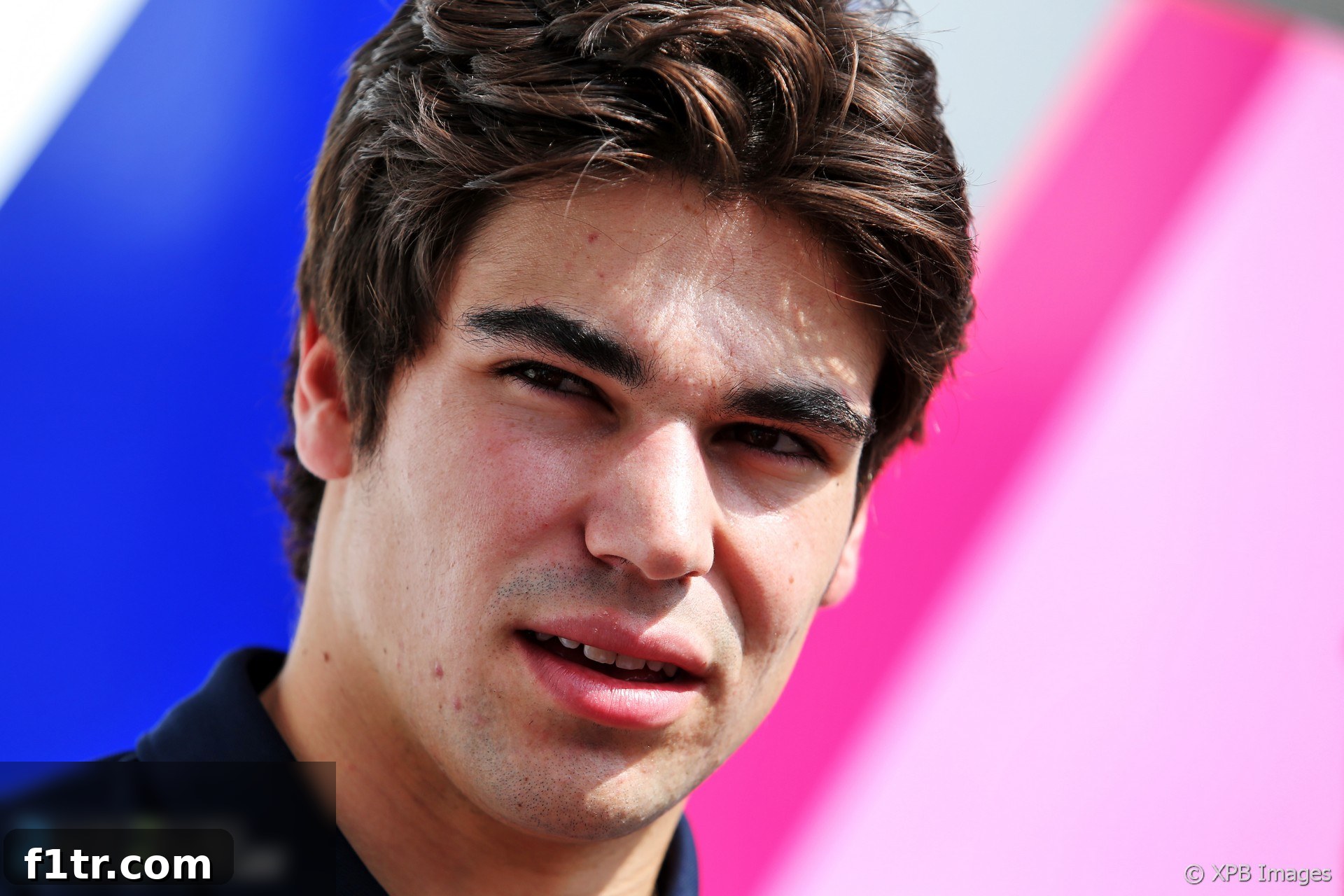
Canadian racing driver Lance Stroll has openly discussed the challenges he faced in demonstrating his true progression in Formula 1, particularly highlighting how a less competitive car during his second season at Williams obscured his significant development. Stroll’s journey in the pinnacle of motorsport has been a subject of much discussion, and his recent reflections shed light on the complex interplay between driver skill, team machinery, and the perception of performance. His perspective underscores a critical aspect of Formula 1: a driver’s inherent talent and year-on-year improvement aren’t always reflected transparently in the raw statistics, especially when the machinery at their disposal is not performing optimally.
Stroll made his highly anticipated Formula 1 debut with the historic Williams team in 2017. As a rookie, he quickly demonstrated flashes of potential, securing a commendable seven points-scoring finishes throughout the season. His breakthrough moment arrived spectacularly at the chaotic Azerbaijan Grand Prix in Baku, where he skillfully navigated the unpredictable conditions to clinch an impressive third-place podium finish. This achievement was not only a significant milestone for Stroll but also for the Williams team, marking their first podium in several seasons. Competing alongside the seasoned veteran Felipe Massa, Stroll initially managed to hold his own, laying down a foundation that suggested a promising career ahead. The 2017 Williams FW40, while not a front-runner, was a relatively capable package, allowing its drivers to contend for points on a more regular basis and offering a fair platform for a rookie to learn and grow.
However, the trajectory of his career took an unexpected turn in 2018. The Williams team experienced a dramatic decline in performance, producing a car, the FW41, that was widely regarded as one of the least competitive on the grid. This stark drop-off from the previous year created an incredibly difficult environment for any driver, let alone one still in the early stages of their Formula 1 career. Despite his internal feeling of improvement and growing understanding of Formula 1, Stroll’s external results suffered considerably. He managed only two points-scoring finishes throughout the entire season, securing an eighth and a ninth place. This was a stark contrast to his debut year and inevitably led to questions and criticisms that, from Stroll’s perspective, failed to account for the fundamental limitations imposed by the car.
“It wasn’t a good comparison first to second year,” Stroll stated, emphasizing the critical difference in machinery. “We had a much stronger package the first year compared to the second year.” This sentiment is crucial to understanding his personal evaluation of his progress. While on paper, his second season appeared to be a regression, Stroll insists that his internal development as a driver continued apace. The challenge of wrestling an uncompetitive car, extracting every ounce of performance, and providing detailed feedback to engineers, ironically, can accelerate a driver’s learning curve, even if it doesn’t translate into tangible points or podiums.
The 2018 season also brought a change in teammate, with Sergey Sirotkin replacing Felipe Massa. While a new teammate always presents a different benchmark, the overriding factor remained the car’s inherent lack of pace. Stroll firmly believes his performance did improve during that challenging year, despite the public perception. He gained a deeper understanding of car dynamics, tire management, and racecraft, skills that are invaluable in Formula 1 regardless of the car’s ultimate speed. “What I expected from the first to second year was an improvement on my end,” he explained. “That didn’t show on paper due to the package being poor in the second season. But I did feel like I was more on top of the car, understanding the strengths and weaknesses of the car and how I can fully unlock it.” This internal mastery, often invisible to onlookers, is a testament to the continuous effort required from a Formula 1 driver.
His move to Racing Point for the 2019 season represented a significant turning point and an opportunity for a fresh start. This transition also meant Stroll would be partnering with his third different teammate in as many years, this time alongside the highly experienced Mexican driver Sergio Perez. Perez, who was in his sixth season with the team (under its various guises), offered a proven and consistent benchmark. Stroll views this new environment, and crucially the prospect of stability within it, as a major advantage for his ongoing development. For any driver, continuity within a team and with a car is paramount for maximizing potential. It allows for a deeper understanding of the team’s operational philosophy, a more refined setup process, and a consistent platform to build upon.
The concept of returning for a second season in the same environment, armed with more experience, is something Stroll deeply values. “For myself, just coming back for a second season in the same environment with more experience, it’s a big, big benefit. That’s for sure, I believe,” he asserted. This stability offers a luxury he hasn’t consistently had since his F1 debut. It removes the variables of adapting to a new team’s culture, different engineering philosophies, and the unique handling characteristics of an entirely different chassis. Instead, the focus can shift entirely to optimizing his own performance and extracting the maximum from the known quantity of the car and team.
Stroll is confident that given the opportunity to revisit and re-evaluate his performances from the current year, he could achieve even better results. This speaks volumes about his self-awareness and his continuous quest for improvement. “I can only tell you next year, but I do believe that if I could do every weekend over again this year, I could do it a lot better, if you know what I mean, just unlocking the full potential of the car in many ways.” Unlocking a Formula 1 car’s full potential is an intricate process, involving not just raw speed, but also meticulous setup adjustments, strategic race management, precise tire conservation, and flawless execution under immense pressure. It’s a craft that evolves with every lap, every session, and every race, where experience is truly invaluable.
The inherent difficulty in Formula 1 lies in the constant pursuit of perfection and the marginal gains that separate the good from the great. Stroll acknowledges this complexity, stating, “It’s tricky in Formula 1 [but] I think experience will definitely help.” His sentiments resonate with many drivers in the paddock who understand that F1 is as much a mental game and a developmental journey as it is a display of raw talent. The accumulation of experience—understanding various track conditions, reacting to unforeseen circumstances, providing targeted feedback to engineers, and building rapport with the team—is a cornerstone of sustained success in this demanding sport. For Lance Stroll, the upcoming season alongside Sergio Perez and within the stable Racing Point environment presents a golden opportunity to fully demonstrate his evolution as a Formula 1 driver, free from the shadow of uncompetitive machinery and ready to convert his internal progress into undeniable on-track results. His future performance will be a testament to the value of consistent development and the ability to adapt and thrive even when the odds are stacked against you.
2019 F1 season
- Crying in the Melbourne car park at 2019 grand prix was my career low – Ocon
- McLaren Racing reports reduced £71 million loss in 2019
- Kvyat: Hockenheim podium last year was “my biggest achievement” so far
- How the FIA’s new encrypted fuel flow meter targets Ferrari’s suspected ‘aliasing’ trick
- “He smashed my office door”: 23 must-see moments from ‘Drive to Survive’ season two
Browse all 2019 F1 season articles