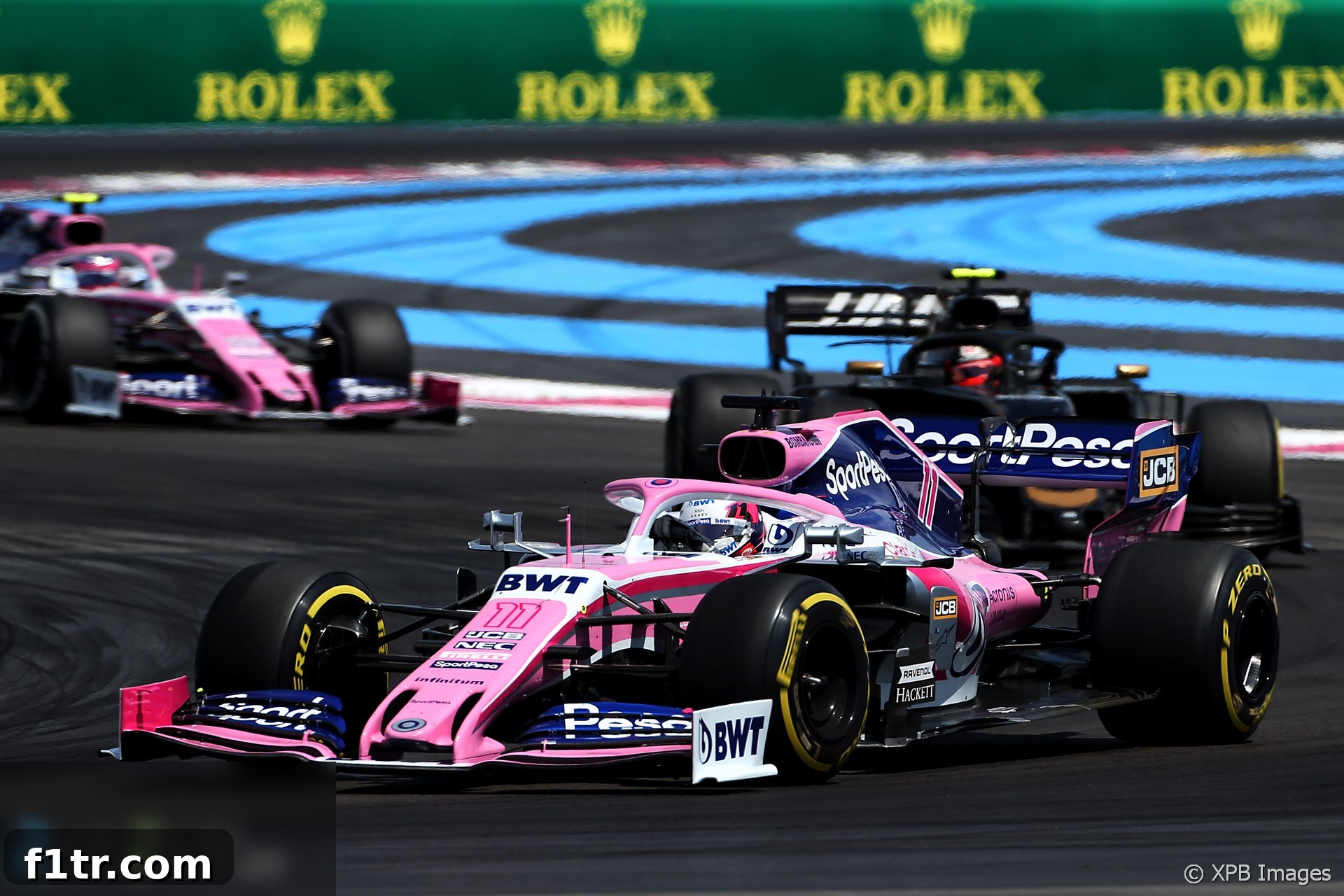
Sergio Perez Faces Penalty for Off-Track Advantage: Unpacking F1 Track Limit Regulations
In a decision that sparked discussions across the Formula 1 paddock, Sergio Perez was handed a five-second time penalty along with an additional penalty point on his Super Licence for an incident involving passing competitors by going off-track at Turn 3. This ruling underscores the FIA’s unwavering commitment to upholding the integrity of racing regulations, particularly concerning track limits and the principle of not gaining a lasting advantage.
Advert | Become a Supporter & go ad-free
The incident centered on Perez’s actions after exceeding track limits at a critical corner. While the stewards acknowledged that Perez had complied with the specific instructions outlined in the Race Director’s notes regarding the procedure for rejoining the track, a crucial element was overlooked: the fundamental requirement not to gain a position or a lasting advantage over other cars during such a maneuver.
The Incident Unpacked: Turn 3 and Gaining an Advantage
Formula 1 is a sport of precision, where drivers constantly push the boundaries of their machinery and the racetrack. However, these boundaries are strictly defined, and any deviation can lead to severe consequences. Turn 3, in this instance, became the focal point of the controversy. Perez, in an effort to overtake or maintain position, ventured beyond the white lines marking the official track edge.
The rules governing such excursions are clear. Drivers are often allowed to rejoin the track after running wide, provided they do so safely and, crucially, without benefiting from their off-track adventure. The Race Director’s notes, distributed to all teams and drivers before each event, detail the specific procedures for various corners and scenarios, ensuring a standardized approach to track limit infringements. Perez evidently followed the prescribed rejoining path, returning to the asphalt at Turn 5. However, the critical flaw in his execution, as identified by the stewards, was the clear gain of positions against other competitors during this sequence.
The stewards’ official statement highlighted this contradiction: “Although Perez followed the procedure in the race director’s notes, he clearly gained positions when he re-joined the track at turn five and retained this advantage.” This distinction is vital. Compliance with the rejoining *procedure* does not automatically absolve a driver if the *outcome* of that procedure results in an unfair advantage. F1 regulations are designed to ensure fair competition, and any action that allows a driver to progress through the field by bypassing the intended track layout is typically penalized.
Stewards’ Rationale: No Force, No Forgiveness
A key aspect of any racing incident investigation is determining whether a driver was forced off the track by another competitor or if the excursion was a driver error. In this specific case, the stewards meticulously reviewed all available evidence, including onboard camera footage, telemetry data, and various angles of the incident. Their conclusion was unequivocal: Perez was not forced off the track.
This finding is critical because being forced off by another car often serves as a mitigating circumstance, potentially leading to a warning or no penalty at all, especially if the driver immediately cedes any gained position. Without this mitigating factor, Perez’s actions were seen as a clear breach of the regulations. The stewards further elaborated, stating, “Gaining an advantage is a breach of the regulations and of the race director’s instructions (Point 10.6) which states that even if you follow the procedure you may only re-join the track without gaining a lasting advantage.”
Point 10.6 of the Race Director’s notes is a crucial component of F1’s regulatory framework, explicitly forbidding drivers from gaining an advantage by leaving the track. It reinforces the principle that while drivers are allowed to make mistakes and rejoin, these mistakes should not confer any competitive benefit. This rule is put in place to prevent drivers from deliberately cutting corners or exploiting run-off areas to shave time or overtake opponents, thereby ensuring that racing takes place strictly within the confines of the track.
The Cumulative Impact: Penalty Points on the Super Licence
Beyond the immediate time penalty, Sergio Perez also received a penalty point on his Super Licence. This system, implemented by the FIA, is designed to monitor and regulate driver conduct over a rolling 12-month period. Each penalty point acts as a mark against a driver, accumulating for various infringements ranging from unsafe driving to technical breaches.
Understanding the Penalty Points System:
- Purpose: To deter reckless driving and repeated infringements, promoting safer and fairer competition.
- Accumulation: Points are added for specific infractions as deemed by the race stewards.
- Threshold: If a driver accumulates 12 penalty points within a 12-month period, they face an automatic one-race ban. This is a severe consequence in the highly competitive world of Formula 1, potentially impacting championship standings and team morale significantly.
- Expiry: Penalty points expire 12 months after they were issued, ensuring that a driver’s record is not permanently marred but continuously assessed based on recent conduct.
With this latest point, Perez now has a total of four penalty points on his licence. While four points are still a significant distance from the 12-point threshold, it serves as a stark reminder for the driver to be extra cautious in future races. Any further infringements will bring him closer to a race ban, a scenario no driver or team wants to face. The pressure to drive clean and avoid further penalties becomes an additional layer of strategy for Perez for the remainder of the 12-month cycle.
Wider Implications: The Ongoing Track Limits Debate
Incidents like Perez’s penalty reignite the ongoing debate surrounding track limits in Formula 1. For years, the sport has grappled with finding a consistent and fair way to police drivers who exceed the white lines. Different circuits present different challenges, from traditional gravel traps that naturally punish mistakes to modern asphalt run-off areas that allow drivers to rejoin without significant time loss.
The FIA’s approach has evolved, utilizing technology such as electronic sensors, high-definition cameras, and remote monitoring from Race Control to ensure accurate and consistent enforcement. However, drivers often argue about the fine margins, the subjective nature of “gaining an advantage,” and the desire to push the absolute limits of their cars. This constant push-and-pull between drivers seeking maximum performance and regulators ensuring fair play is a fundamental dynamic of motorsport.
The clarity provided by rulings like Perez’s is crucial for setting precedents. It sends a strong message to all competitors that even procedural compliance does not override the core principle of fair competition. Drivers must not only follow the prescribed rejoining methods but also be acutely aware of whether their actions lead to any discernible benefit over their rivals. This particular penalty reinforces the idea that precision and discipline are paramount, not just in driving fast, but in adhering to every nuance of the regulations.
The Impact on Perez and His Team
For Sergio Perez, this penalty represents a setback, both in terms of potential race results (due to the time penalty) and his licence points. While a five-second penalty might not always drastically alter a race outcome, it can mean the difference between points and no points, or a higher finishing position versus a lower one. In a championship where every point counts for both the drivers’ and constructors’ standings, such penalties can have significant ramifications.
From the team’s perspective (Racing Point/Force India during the 2019 context), these penalties are a point of concern. They can lead to lost championship points, financial implications, and the added stress of managing a driver’s penalty point tally. Teams invest heavily in driver coaching and data analysis to avoid such infringements, making these incidents a frustration for all involved. It underscores the high-stakes environment of Formula 1, where split-second decisions and millimeter-perfect driving are under constant scrutiny.
Advert | Become a RaceFans supporter andgo ad-free
Conclusion: Fair Play at the Core of F1 Racing
Sergio Perez’s penalty for gaining an advantage off-track at Turn 3 serves as a potent reminder of the stringent rules governing Formula 1. It highlights the delicate balance between aggressive racing and adherence to regulations, emphasizing that while drivers are encouraged to push the limits, they must do so within the clearly defined boundaries of the sport. The stewards’ decision, backed by detailed analysis and specific rule references, reinforces the FIA’s commitment to ensuring fair competition and maintaining the integrity of every Grand Prix.
As the F1 season progresses, incidents like this will continue to shape the narrative around track limits, driver conduct, and the consistency of stewarding. For drivers like Perez, it’s a valuable lesson in balancing competitive instinct with regulatory compliance, knowing that every action on and just off the track is under intense scrutiny, with real consequences for their performance and their championship aspirations. The penalty points system, in particular, acts as a continuous check, ensuring that discipline and respect for the rules remain at the core of Formula 1 racing.
2019 F1 season
- Crying in the Melbourne car park at 2019 grand prix was my career low – Ocon
- McLaren Racing reports reduced £71 million loss in 2019
- Kvyat: Hockenheim podium last year was “my biggest achievement” so far
- How the FIA’s new encrypted fuel flow meter targets Ferrari’s suspected ‘aliasing’ trick
- “He smashed my office door”: 23 must-see moments from ‘Drive to Survive’ season two
Browse all 2019 F1 season articles