The exhilarating world of Formula 1 consistently delivers moments of high drama, breathtaking speed, and the relentless pursuit of perfection. The recent Belgian Grand Prix at the iconic Spa-Francorchamps circuit was no exception, providing a thrilling spectacle that saw records broken, championship narratives evolve, and a legendary driver further cement his place in the annals of motorsport history. This race was particularly significant for Sebastian Vettel, who not only claimed a dominant victory but also surpassed a revered legend in the all-time wins tally, showcasing his enduring prowess and Ferrari’s competitive spirit in a season marked by fierce rivalry.
Sebastian Vettel’s Historic Triumph: Surpassing a Legend at Spa
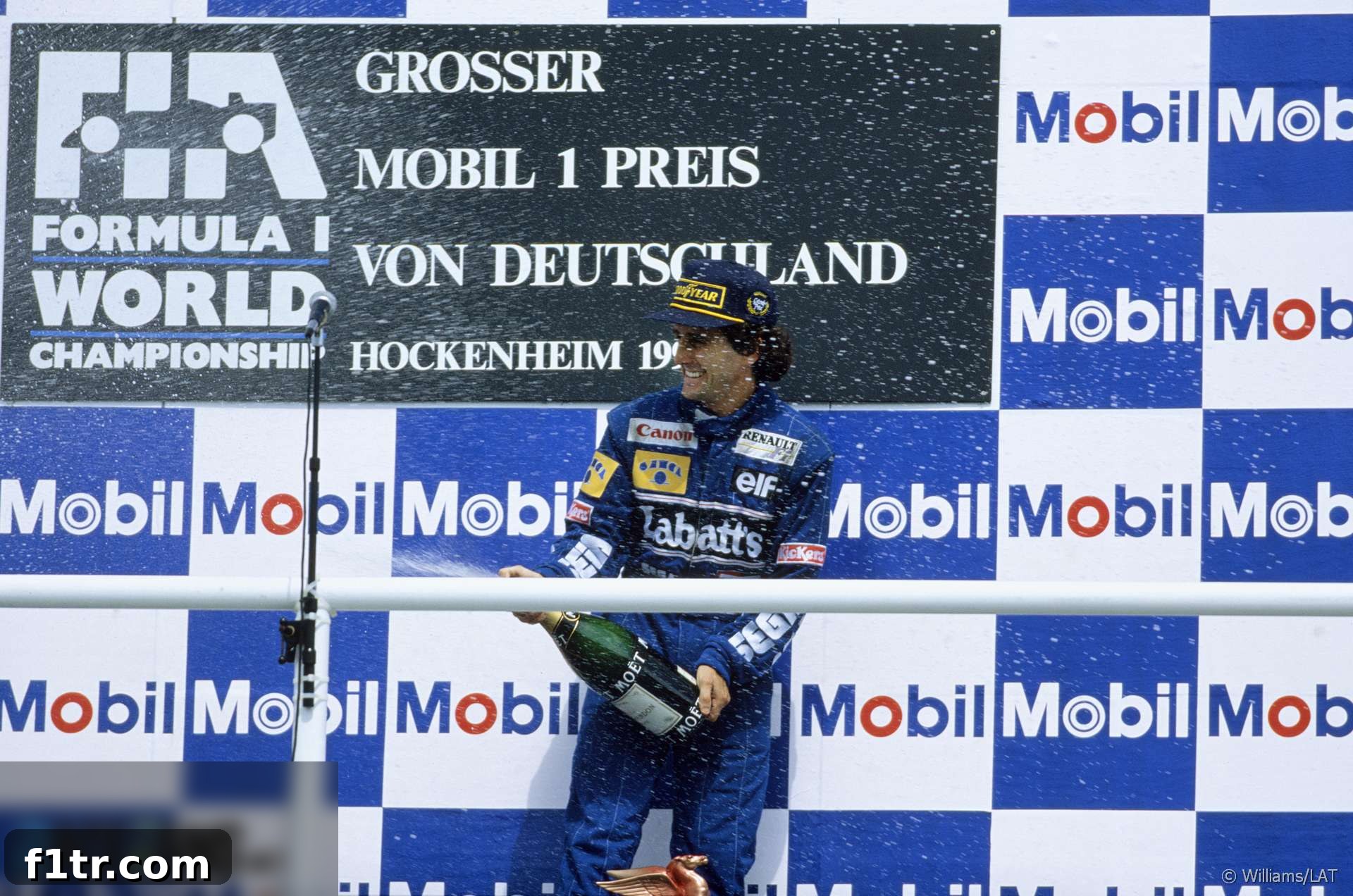
In a masterful display of skill and strategic brilliance, Sebastian Vettel clinched his 52nd career victory at the Belgian Grand Prix last weekend. This triumph was more than just another win; it propelled the four-time world champion past the illustrious Alain Prost, making Vettel the third-most successful driver of all time in terms of Grand Prix victories. Prost, a four-time F1 World Champion himself, concluded his remarkable career with 51 wins, securing his final triumph at the 1993 German Grand Prix. Vettel’s achievement places him in an exclusive club, with only two other titans of the sport ahead of him: the legendary Michael Schumacher, who holds an astonishing 91 wins, and the formidable Lewis Hamilton, currently with 67 victories and counting, steadily climbing towards Schumacher’s seemingly insurmountable record.
Vettel’s journey to this milestone has been defined by consistency, blistering speed, and an unwavering competitive drive. His 52nd victory underscores his status as one of Formula 1’s true greats, adding another glittering chapter to a career that includes four consecutive World Championships with Red Bull Racing. The Spa-Francorchamps circuit, known for its challenging elevation changes, high-speed straights, and technical corners like Eau Rouge and Radillon, is a true test of a driver’s mettle. To secure his third victory at this legendary venue speaks volumes about Vettel’s adaptability and sheer talent, further solidifying his legacy at one of motorsport’s most revered tracks, a track where only the very best can consistently excel.
Dominance Unleashed: Vettel’s Lights-to-Flag Masterclass at Spa
The Belgian Grand Prix was not just a win for Sebastian Vettel; it was a commanding demonstration of superiority from start to finish. For the second time in the current season, Vettel led every single lap of the race, a feat often referred to as a ‘lights-to-flag’ victory or a ‘Grand Slam’ (when combined with pole position and fastest lap). This is a rare accomplishment that highlights absolute control and flawless execution from both driver and team. Interestingly, Lewis Hamilton, despite his numerous victories and pole positions, has not managed to lead every lap in a race this year, underscoring the exceptional nature of Vettel’s performance at Spa. While Daniel Ricciardo also achieved this rare feat earlier in the season at the Monaco Grand Prix, Vettel’s lights-to-flag win at Spa showcased Ferrari’s raw pace and their ability to convert strong starting positions into dominant race performances when conditions favor them.
From the moment the lights went out, Vettel executed a perfect start, seizing the lead from Hamilton and never looking back. This clinical precision at the start, combined with Ferrari’s formidable car performance, allowed him to dictate the pace, manage his tires effectively, and maintain a comfortable gap to his rivals throughout the 44-lap race. Such a display of unyielding control not only earns maximum points but also sends a powerful psychological message to competitors, reinforcing the belief that when Ferrari and Vettel are on form, they are an incredibly difficult force to overcome. It showcased a perfect blend of driver skill, car balance, and strategic awareness, truly a masterclass performance.
The Ferrari vs. Mercedes Battle: Raw Pace Meets Qualifying Acumen
The 2018 Formula 1 season has been characterized by an enthralling championship battle between Mercedes and Ferrari, with both teams pushing the boundaries of performance and strategy. The Belgian Grand Prix weekend perfectly encapsulated this dynamic rivalry. For the third consecutive race weekend, Ferrari demonstrated superior outright fastest lap times, a testament to their car’s impressive speed in race trim. This consistent raw pace, which Ferrari had also exhibited earlier in the season from Bahrain to Azerbaijan, suggested they held an advantage in dry conditions. However, as seen in Hungary, the unpredictable Belgian weather played a pivotal role, allowing Mercedes to snatch pole position in a dramatic wet qualifying session.
Ferrari had appeared dominant through the practice sessions, topping the time sheets in all three free practice runs, and maintaining their strong form through the first two stages of qualifying. Their SF71H car seemed perfectly suited to the Spa circuit’s characteristics, excelling particularly in the high-speed sections and offering excellent traction. But as the rain began to fall in Q3, the dynamics shifted considerably. Mercedes, and particularly Lewis Hamilton, demonstrated exceptional adaptability and skill in the treacherous wet conditions, securing pole position despite Ferrari’s underlying dry-weather speed. This recurring pattern of Ferrari’s dry pace being countered by Mercedes’ mastery in mixed or wet conditions adds another layer of intrigue to an already captivating championship fight, highlighting how crucial every detail – from car setup to driver skill in varying conditions – becomes in the pursuit of championship glory.
Hamilton’s Record-Breaking Pole Positions and Mercedes’ Dominance at Spa
Despite Sebastian Vettel’s triumphant race, Lewis Hamilton also etched his name into the record books at Spa. His fifth Belgian Grand Prix pole position established a new benchmark, surpassing the previous record of four shared by a pantheon of Formula 1 legends: Ayrton Senna, Alain Prost, and Juan Manuel Fangio. To stand alone ahead of such revered figures at a circuit like Spa, renowned for its challenging nature and historical significance, underscores Hamilton’s exceptional qualifying talent and his remarkable consistency at this demanding track. This achievement is a testament to his innate ability to extract maximum performance from his car under pressure, especially when conditions are less than ideal and the stakes are highest.
Furthermore, Hamilton’s pole position marked Mercedes’ sixth consecutive pole at Spa-Francorchamps, an impressive streak that speaks volumes about their engineering prowess and their consistent understanding of this unique circuit. Such sustained dominance at a single venue is rare in Formula 1 history, indicating a period of significant technical advantage and driver synergy. Only two other constructors have achieved longer consecutive pole streaks at the same venue: Ferrari, with seven consecutive poles at Suzuka from 1998 to 2004, and Williams, who achieved the same feat at Silverstone from 1991 to 1997. Mercedes had the opportunity to extend their own impressive record, as they aimed for their fifth consecutive pole position at Monza, the home of Ferrari, immediately following Spa. These streaks highlight periods of absolute engineering and driver synergy, where a team and driver combination become virtually unbeatable at a specific track, showcasing their mastery over a specific set of characteristics.
Valtteri Bottas’s Resilient Drive and the Importance of the Fastest Lap
While the focus at the front of the pack was firmly on the captivating duel between Vettel and Hamilton, Valtteri Bottas delivered a standout performance from further down the grid that quietly underscored his determination and skill. Starting from a challenging 17th position due to engine penalties, Bottas embarked on a remarkable recovery drive, skillfully navigating the field to climb an impressive 13 places and finish fourth. This tenacious performance, executed on one of F1’s most demanding circuits, highlighted not only Bottas’s talent but also the underlying speed and overtaking capabilities of the Mercedes W09. Adding to his notable drive, Bottas set the fastest lap of the race in the closing stages, demonstrating his raw pace even as the leading pair were able to manage their pace and preserve their machinery.
This marked Bottas’s seventh career fastest lap, drawing him level with the experienced Jacques Laffite in the Formula 1 record books. Achieving the fastest lap is often a testament to a driver’s ability to push the car to its absolute limit, even when not directly fighting for a podium position. For Bottas, it was a crucial reminder of his speed and consistency, particularly in a season where he has often played a crucial supporting role to Hamilton in the championship battle. His ability to recover so strongly from a grid penalty also highlighted Mercedes’ strategic flexibility and their car’s inherent performance advantage, allowing for such significant overtakes on a circuit that permits aggressive driving and rewards bravery.
The Championship Dynamic: Team Orders Looming as the Stakes Rise?
With five victories apiece for Sebastian Vettel and Lewis Hamilton so far this season, the championship battle remains incredibly tight and highly contested, shaping up to be one of the most memorable in recent memory. However, a significant aspect of this rivalry is the performance gap to their respective teammates. Neither Kimi Räikkönen for Ferrari nor Valtteri Bottas for Mercedes has managed to secure a race win this year. This disparity has led to considerable point differences in the drivers’ standings, with Räikkönen trailing the championship leader by 85 points and Bottas even further back, 87 points behind the top spot. Their roles as clear second drivers are increasingly defined by these gaps.
As the season progresses and the championship stakes escalate, with a considerable 200 points still available, the discussion around team orders naturally intensifies. When the margin between the two championship contenders is so fine, and their teammates are mathematically out of contention for the title, teams often consider implementing strategies to maximize the points for their lead driver. This could involve teammates being asked to hold positions, or even concede places, to benefit the championship frontrunner, ensuring crucial points aren’t lost to direct rivals. Such considerations highlight the brutal, results-driven nature of Formula 1, where individual glory often takes a backseat to the team’s ultimate goal of securing both the Constructors’ and Drivers’ Championships. The question is no longer “if” but “when” these team orders might become explicitly necessary.
Force India’s Mid-Season Rebirth and Max Verstappen’s Home Podium
The Belgian Grand Prix also saw a unique situation unfold for Force India, a team that had navigated significant financial turbulence. Following a challenging period of administration during the summer break, the team re-emerged under new ownership and a new identity: Racing Point Force India. This mid-season restructuring meant that the team had to effectively ‘start from zero’ in the Constructors’ Championship standings. The FIA’s official points table now reflected this, with ‘Racing Point’ accumulating 18 points and positioned ninth, while its predecessor, ‘Sahara Force India’, had its 59 points from earlier in the season nullified, placing them in 11th. This extraordinary circumstance underscores the financial pressures and complexities inherent in Formula 1, even for established teams. Despite the point reset, the team showed immediate promise in Belgium, demonstrating strong performances that indicated their potential to climb back up the standings, fueled by new investment and renewed determination to fight for points.
Elsewhere on the grid, Max Verstappen delighted his legions of passionate Dutch fans at Spa with a superb drive to finish third. This podium finish held a special significance for Verstappen, as it mirrored his father Jos Verstappen’s achievement 24 years earlier, who also stood on the podium at the same circuit. Max’s strong performance, characterized by aggressive overtakes and consistent pace, allowed him to leapfrog his teammate Daniel Ricciardo in the championship standings for the first time this season. This shift in internal team dynamics came in the very first race since Ricciardo confirmed his impending departure from Red Bull Racing at the end of the year, adding an interesting layer to the team’s internal rivalry and future prospects, suggesting a changing of the guard within the team.
The Back of the Grid: Sirotkin’s Steady Progress Amidst Williams’ Struggles
As the Formula 1 season marched past the halfway point, the championship picture became clearer, particularly for those at the tail end of the standings. Following the Belgian Grand Prix, the bottom eight drivers in the championship were mathematically eliminated from title contention, highlighting the enormous challenge of scoring points in the fiercely competitive sport. Among these drivers was Sergey Sirotkin of Williams, who, despite still searching for his maiden F1 point, delivered the best performance of his rookie career at Spa, securing a commendable 12th place finish. This result, though outside the points, was a significant personal best for the young Russian driver and a morale booster for the struggling Williams team.
Sirotkin’s debut season has been overshadowed by Williams’ significant struggles with their car’s overall performance, placing them firmly at the back of the grid. However, his individual performance metrics against his more experienced teammate, Lance Stroll, painted a more encouraging picture. In qualifying, Sirotkin held a 7-5 advantage over Stroll, demonstrating his raw speed over a single lap. In race finishes, he was only slightly behind, with a 5-4 deficit, often battling mechanical issues or race incidents that were out of his control. These statistics suggest a fair and respectable start for the rookie driver, especially considering the difficult machinery at his disposal. Speculation also continued to swirl around Stroll’s future, with widespread expectations that he would eventually move to Force India, following his father Lawrence Stroll’s acquisition of the team. This potential move could significantly impact the driver market and the future lineups of both Williams and Racing Point Force India, adding another layer of intrigue to the paddock chatter and the overall driver merry-go-round.
Looking Ahead: The Unfolding Championship Narrative and the Road to the Finale
The Belgian Grand Prix delivered a rich tapestry of stories, from Sebastian Vettel’s historic triumph to Lewis Hamilton’s qualifying mastery, the strategic complexities of the Ferrari-Mercedes rivalry, and the resilient performances of drivers like Valtteri Bottas and Max Verstappen. The race underscored the thrilling unpredictability of Formula 1, where every session, every lap, and every strategic decision can dramatically alter the course of the championship. As the season hurtles towards its climax, the battle for supremacy between Vettel and Hamilton, supported by their respective teams, promises more nail-biting finishes, strategic plays, and intense on-track action. The records set and broken at Spa serve as a vivid reminder of the elite talent that graces the grid, each driver pushing the limits of human and mechanical performance in pursuit of ultimate glory. The remaining races are set to be a true test of nerve, skill, and endurance, defining the champions of the 2018 Formula 1 season.
Deep Dive into the 2018 F1 Season Statistics
For those eager to delve deeper into the numbers and trends of the current Formula 1 season, comprehensive statistics are available to review the year’s unfolding narrative:
- Current 2018 F1 Championship Points Standings
- Detailed 2018 F1 Season Records
- Comprehensive 2018 F1 Race Data
- In-depth 2018 F1 Qualifying Data
- Overview of 2018 F1 Retirements and Penalties
- Analysis of 2018 F1 Strategy and Pit Stops
Did you uncover any other intriguing statistics or noteworthy facts from the thrilling Belgian Grand Prix weekend? Share your observations and insights in the comments section below to join the discussion!
Further Insights into the 2018 Belgian Grand Prix
For more detailed coverage and different perspectives on the 2018 Belgian Grand Prix, explore these related articles:
- Top Ten Pictures from the 2018 Italian Grand Prix
- Vettel Passes Prost with 52nd F1 Victory
- 2018 Belgian Grand Prix Star Performers
- Vettel’s Irresistible Charge Puts Hamilton on Alert in Title Fight
- Paddock Diary: Belgian Grand Prix Day Four
Browse all 2018 Belgian Grand Prix articles