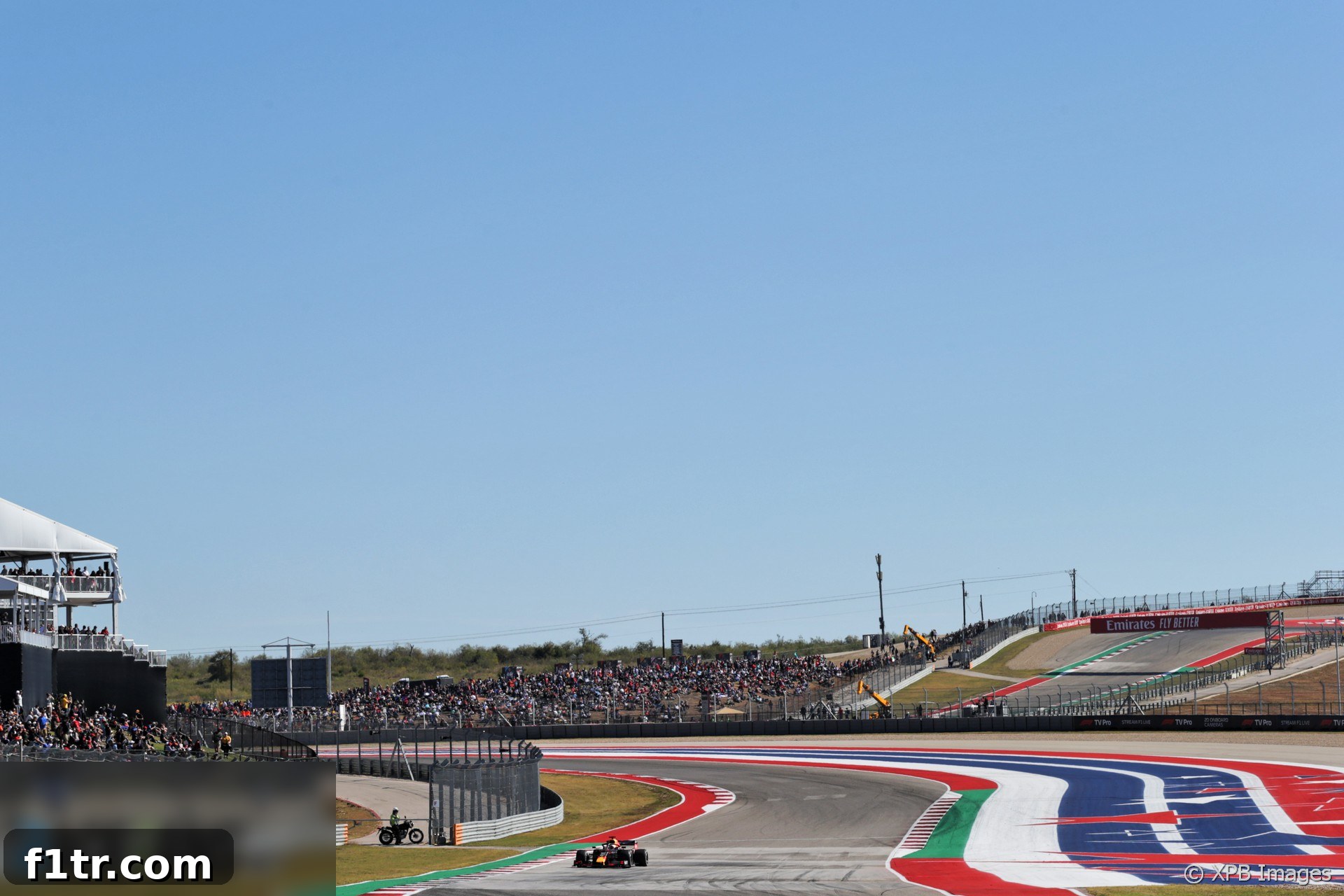
The highly anticipated United States Grand Prix at the iconic Circuit of the Americas (COTA) in Austin, Texas, is set to deliver an exhilarating Formula 1 spectacle under predominantly dry and warm weather conditions. Fans and teams alike can look forward to a weekend filled with high-speed action, strategic battles, and the characteristic challenges of this demanding track, with the weather playing its subtle yet significant role.
While the forecast promises clear skies for much of the event, particularly early in the weekend, a closer look reveals nuances that could influence car performance, tyre strategy, and overall race dynamics. From fluctuating wind directions to increasing track temperatures and a slight chance of late-race showers, every meteorological detail will be scrutinised by engineers and strategists aiming to gain a competitive edge.
Navigating the Weekend: A Day-by-Day Weather Overview at COTA
Understanding the minute-by-minute changes in weather at a circuit like COTA is crucial for Formula 1 teams. This weekend’s forecast presents a varying tapestry of conditions, each with its own set of implications for car setup and race strategy.
Friday: Setting the Stage with Sunny Skies and Stable Practice Conditions
The opening day of the United States Grand Prix, dedicated to free practice sessions (FP1 and FP2), is expected to be largely unblemished by adverse weather. Teams will welcome the predominantly sunny conditions, which are ideal for data gathering and car setup optimization. With only a slim 20% chance of rain predicted for Friday, drivers can focus on putting in extensive mileage without the interruption of wet conditions.
Throughout Friday, the ambient temperature is forecast to reach a comfortable high of 27°C, with overnight lows not dropping below 18°C. These stable temperatures are perfect for allowing the track to rubber in consistently, leading to predictable grip levels. Consequently, track temperatures are anticipated to comfortably exceed the 30°C mark, a critical factor for tyre performance. Teams will use this time to conduct long runs, evaluate different tyre compounds, and fine-tune their aerodynamic packages without the added variable of a damp track, ensuring they gather robust data ahead of qualifying.
Saturday: Qualifying Under a Cloudier Sky, but Still Dry
As the weekend progresses, Saturday brings with it the crucial Free Practice 3 (FP3) session followed by the all-important qualifying session. While the chance of rain remains low, holding steady at around 20%, the skies over COTA are expected to be significantly more overcast compared to Friday. Relative heavy cloud cover is forecast for Saturday afternoon, which, despite the lack of precipitation, could still influence track conditions.
The increased cloud cover might lead to slightly lower track temperatures than if the sun were beating down directly, even with ambient temperatures remaining similar to Friday, peaking at 27°C. This subtle difference can have a significant impact on tyre warm-up and peak grip, especially during qualifying laps where every millisecond counts. Teams will need to adjust their tyre management strategies, particularly regarding tyre blanket temperatures and out-lap procedures, to ensure the tyres are in their optimal operating window when it matters most. The consistent ambient temperatures, however, will ensure that the overall balance of the car remains largely predictable, allowing drivers to push to the limits of the circuit.
Sunday: Race Day Dynamics – Heat, Clouds, and the Threat of Occasional Showers
Race day is often when the weather introduces its most compelling narratives, and the United States Grand Prix Sunday is no exception. The forecast suggests a cloudier day than any other time during the weekend, accompanied by a marginally higher chance of rain. While heavy downpours are not anticipated, there is a possibility of unsettled weather and occasional showers developing from the afternoon onwards. This raises the intriguing prospect of rain arriving perhaps early enough to affect the race before the chequered flag falls.
Such “occasional showers” present a strategic minefield for teams. Unlike consistent heavy rain, which mandates a switch to wet or intermediate tyres, intermittent light rain can lead to difficult decisions regarding tyre compounds, pit stop timings, and driver strategy. Will teams gamble on staying out on slick tyres through a light drizzle, or opt for intermediates, risking slower lap times if the rain quickly subsides? The unpredictability can trigger Safety Car periods, further mixing up the order and creating opportunities for those who react best. Simultaneously, air temperatures on race day are expected to climb to a balmy 30°C, leading to a corresponding increase in track temperatures. This surge in heat will significantly increase the demand on the tyres, particularly through COTA’s fast and twisty first sector, which punishes rubber with continuous lateral and longitudinal loads.
The Unseen Force: How Wind Shapes the Challenge at COTA
While temperature and rain are often the most discussed weather factors, wind plays an equally, if not more, insidious role in Formula 1, particularly at a circuit as aerodynamically sensitive as COTA. The circuit’s unique design, featuring a mix of high-speed esses, long straights, and tight hairpins, means cars are highly susceptible to changes in wind speed and direction.
Even moderate wind speeds can significantly alter the aerodynamic balance of an F1 car, affecting downforce levels, braking stability, and cornering grip. Maximum wind speeds over the weekend are expected to hover around 10 kph, which may not sound particularly high. However, at F1 speeds, and with the constant, rapid changes of direction that define the beginning of the COTA lap (Turns 3 through 6), coupled with the rapid right-hander sequence of Turns 16 to 18, cars can become incredibly sensitive to even small gusts. A sudden crosswind or tailwind can destabilise the rear of the car, forcing drivers to make micro-corrections and potentially costing precious tenths of a second or, in extreme cases, leading to costly errors.
Wind Direction Shifts and Their Strategic Implications
Beyond speed, the direction of the wind is another critical factor at COTA, and it is expected to change quite significantly throughout the weekend, creating varying challenges for drivers and engineers. On Friday, during the initial practice sessions, the wind is forecast to come from a north-easterly angle. This will provide a beneficial tailwind at the end of the long back straight, aiding top speed into the crucial braking zone for Turn 12. While this might offer a boost in straight-line performance and potentially improve DRS effectiveness, it can also make braking more challenging, as the car loses some aerodynamic stability.
However, for Saturday’s qualifying and Sunday’s race, drivers can expect a shift to a more southerly breeze. This change will mean a headwind down the main start-finish straight. A headwind directly impacts acceleration and can reduce the effectiveness of DRS (Drag Reduction System), potentially making overtakes into Turn 1 more difficult. Conversely, it might offer more stability under braking into Turn 1 and through the high-speed sections that follow. Teams will have to constantly adjust their car’s aerodynamic setup, wing angles, and even engine mapping for energy deployment and recovery to best counter or exploit these changing wind conditions, seeking to optimise balance and performance across all sectors of the track. The notorious incident involving Nico Rosberg in 2015, where a sudden gust of wind contributed to his error, serves as a stark reminder of how impactful this unseen force can be.
Tyre Management Under Pressure: A Key to Victory
Given the warm ambient and high track temperatures, coupled with the demanding layout of COTA and the fluctuating wind conditions, tyre management will be paramount throughout the United States Grand Prix. The Circuit of the Americas is known for its high-energy demands on tyres due to its fast corners, heavy braking zones, and abrasive surface.
The combination of high temperatures and COTA’s aggressive corners significantly increases the risk of thermal degradation and blistering, especially on softer compounds. Teams will be meticulously evaluating the performance of the Soft, Medium, and Hard tyre compounds during practice to understand their wear characteristics and degradation rates. Strategic decisions regarding pit stop windows, the number of stops, and the sequence of tyre compounds used will be pivotal. Drivers will need to strike a delicate balance between pushing for lap time and conserving their tyres, particularly if the threat of occasional showers materialises, which could force unforeseen changes in strategy.
The Circuit of the Americas: A Unique Test
COTA itself is a circuit designed to challenge every aspect of an F1 car and driver. Its unique features, such as the steep uphill climb to Turn 1, the flowing esses reminiscent of Silverstone, and the tight, technical final sector, create a formidable test. The varying weather conditions forecast for the weekend, from the stable warmth of Friday to the cloudier, potentially damp conditions of Sunday, only add layers of complexity to this already demanding track. Every elevation change, every corner apex, and every straight will be influenced by the elements, making for a truly dynamic and unpredictable race weekend.
Stay Updated: Follow the Action Live
For the most immediate updates on track conditions, minute-by-minute weather changes, and all the unfolding drama during each session of the United States Grand Prix, fans are encouraged to keep a close eye on RaceFans Live and the official RaceFans Twitter account. These platforms provide real-time information, analysis, and commentary to ensure you don’t miss a single crucial moment.
2021 United States Grand Prix
- Mercedes encouraged despite ‘toughest race for a long time’ in Austin
- For the sake of the title fight, F1 must get a grip on its track limits problem
- Pit stop problems costing Ferrari “quite a lot of points” – Sainz
- Sold-out crowd of 380,000 at COTA shows F1 can add third US race – Brawn
- While the pressure’s off I can “push myself” more – Russell
Browse all 2021 United States Grand Prix articles