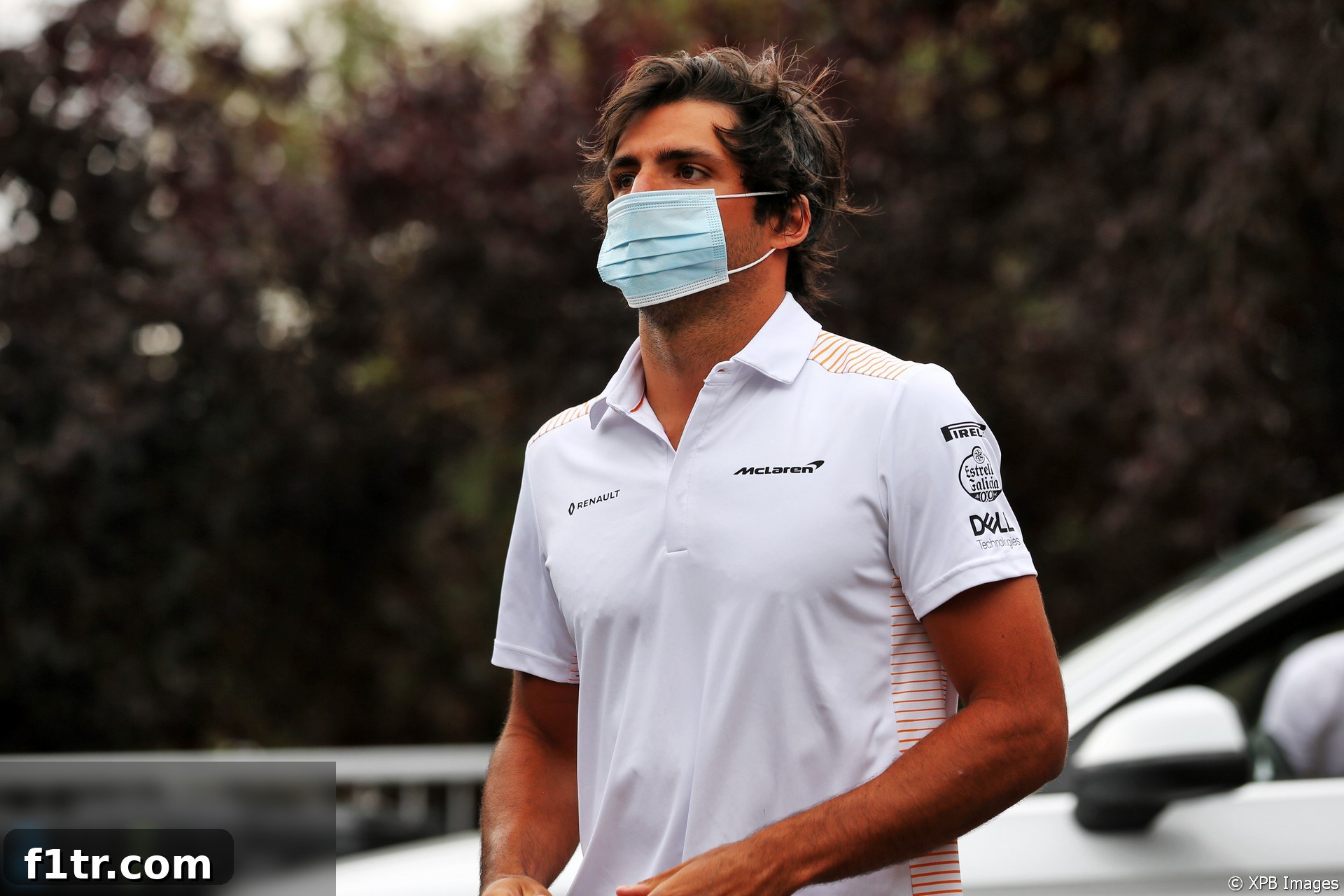
Carlos Sainz Jr., the highly regarded Formula 1 driver, has openly stated that Scuderia Ferrari needs to make substantial advancements with their power unit. His comments came in the wake of a challenging Belgian Grand Prix weekend, a race widely considered a definitive test for engine performance in the pinnacle of motorsport.
Advert | Become a Supporter & go ad-free
The historic Spa-Francorchamps circuit, with its long straights and fast sections, demands absolute peak performance from a car’s powertrain. Drivers spend approximately 78% of a lap at full throttle, making any deficit in engine power strikingly apparent. It was here, at one of the most revered and demanding circuits on the calendar, that Ferrari’s struggles became critically exposed during the 2020 Formula 1 season. Alarming statistics from the event revealed that Ferrari was the only team whose lap times were slower than their own performance at the same circuit in 2019, underscoring a significant step backward in their engine development and overall competitiveness. This stark regression raised serious questions about the direction and immediate future of the Italian racing giant, especially concerning the heart of their machinery: the power unit.
Sainz, who was poised to join the legendary Maranello outfit from McLaren for the subsequent season, did not mince words when discussing the team’s predicament. “Clearly Ferrari is the first one that is not happy right now,” he observed, acknowledging the deep frustration within the team. “I think you could see clearly how much they struggled.” His remarks highlighted the undeniable performance gap that had emerged, leaving Ferrari trailing behind their key rivals and far from their customary position at the front of the grid.
While Sainz conceded that the team “also had some problems with the overall grip of the car” during the critical qualifying sessions at Spa, he was unequivocal in identifying the primary area requiring urgent attention. “But in general, I would say that, yes, they need a very big step on the engine coming,” he affirmed. This assessment from an experienced and perceptive driver like Sainz pointed directly to the engine’s deficiency as the root cause of Ferrari’s performance woes, overshadowing other potential chassis or aerodynamic issues.
Despite the grim reality of Ferrari’s power unit performance, the former Renault driver expressed a palpable confidence in the team’s inherent capabilities and extensive resources. Sainz believes that Ferrari possesses the necessary infrastructure and expertise to bridge the widening gap to their competitors. His optimism stems from an understanding of the immense investment and historical commitment Ferrari has made to engine development throughout its storied existence in Formula 1.
“I know how tough it is because it took Renault a few years,” he reflected, drawing parallels with other manufacturers who have faced similar uphill battles in the highly competitive world of F1 engine development. “It’s taken Honda quite a long time also. But the fact that they are nearly there or at least Renault is nearly there, close to Mercedes, also shows that you can do it.” Sainz’s perspective is grounded in the observation that persistence and substantial investment in research and development can, over time, yield significant improvements, even in the face of initial setbacks.
For Sainz, Ferrari stands apart in its capacity to tackle such a formidable challenge. “For me, if there’s a team with facilities, if there’s a team with resources, if there’s a team with a lot of engine benches to try and improve, that’s Ferrari,” he declared. This statement encapsulates his firm belief in the Maranello factory’s unparalleled infrastructure, including state-of-the-art test benches and an extensive pool of engineering talent dedicated to pushing the boundaries of powertrain technology. The scale of Ferrari’s operations, backed by its long and successful history in motorsport, provides a robust foundation for future development.
Advert | Become a RaceFans supporter andgo ad-free
The Road Ahead for Ferrari and Carlos Sainz
The challenge of developing a competitive Formula 1 power unit is arguably one of the most complex engineering feats in modern sport. It involves harmonizing the internal combustion engine (ICE) with sophisticated hybrid components, including the MGU-H (Motor Generator Unit – Heat), MGU-K (Motor Generator Unit – Kinetic), energy store, and control electronics. Each component must not only deliver maximum performance but also adhere to stringent reliability and efficiency parameters, all while operating within tight regulatory frameworks. Ferrari’s 2020 struggles, particularly evident at power-sensitive tracks like Spa, Monaco, and Monza, highlighted a deficit across various aspects of their power unit, signaling a profound need for a holistic re-evaluation and aggressive development strategy. The public nature of these struggles, especially for a team with Ferrari’s legacy, placed immense pressure on the engineers and leadership in Maranello.
Carlos Sainz’s confidence, therefore, is not born out of naivety but from a deep understanding of what a team like Ferrari is capable of. He referenced Renault’s journey, which, after a period of relative underperformance following their championship-winning days, has steadily climbed the pecking order, closing the gap to the dominant Mercedes engine. More strikingly, he pointed to Honda, whose return to Formula 1 was initially marred by years of severe reliability and performance issues with McLaren. However, through sheer perseverance, massive investment, and a revised partnership with Red Bull Racing, Honda eventually developed a highly competitive, even championship-winning, power unit. These examples serve as powerful precedents, demonstrating that even significant setbacks can be overcome with sustained effort, strategic direction, and a commitment to excellence.
For Ferrari, the path forward involves leveraging its extensive resources, including multiple engine test benches that allow for concurrent development and optimization of various engine components. This capacity for rigorous testing and rapid iteration is crucial for accelerating progress in the highly competitive F1 landscape. Sainz’s role in this ambitious undertaking extends beyond his driving duties; his feedback, informed by his experience with different engine manufacturers like Renault and Honda (through McLaren’s use of Honda and then Mercedes engines), will be invaluable to Ferrari’s engineers. His insights can help refine development directions and provide a driver’s perspective on power delivery, driveability, and overall performance characteristics. The synergy between driver feedback and engineering expertise is often the catalyst for significant performance gains.
Sainz’s hope that Ferrari would have “improved a bit” by the time he joined them underlines the immediate and ongoing nature of the task. His arrival at Maranello was seen as a fresh injection of talent and perspective, eager to contribute to the team’s resurgence. The responsibility now lies with Ferrari to convert their unparalleled facilities and rich history into tangible performance gains on track. The ultimate goal remains clear: to return Scuderia Ferrari to the summit of Formula 1, challenging for race wins and world championships. This journey, as Sainz rightly points out, is challenging, but with the right focus and relentless effort, it is achievable.
2020 F1 Season: Related Articles
- Grosjean to make F1 test return tomorrow for first time since Bahrain horror crash
- Pictures: Wrecked chassis from Grosjean’s Bahrain fireball crash to go on display
- Bottas vs Rosberg: Hamilton’s Mercedes team mates compared after 78 races each
- F1 revenues fell by $877 million in Covid-struck 2020 season
- Hamilton and Mercedes finally announce new deal for 2021 season
Browse all 2020 F1 season articles