The exhilarating world of Formula 1 is a perpetual arena of innovation, where technological prowess meets relentless competition. To maintain a level playing field, enhance safety, and ensure thrilling races, the sport’s governing body, the FIA, constantly refines its technical regulations. For the 2020 F1 season, a series of crucial rule changes were approved, targeting critical areas from aerodynamic design and power unit integrity to driver control and fan experience. These adjustments, meticulously crafted by the FIA’s technical working group, aimed to close existing loopholes, promote fairer competition, and subtly reshape the engineering challenges faced by all ten teams on the grid. This comprehensive overview delves into the specifics of these significant regulatory tweaks, exploring their rationale, technical implications, and anticipated impact on the pinnacle of motorsport.
Brake Ducts Reclassified as Listed Parts: A Shift in Constructor Definition
The concept of “listed parts” is a fundamental pillar in Formula 1, defining what a constructor must design and manufacture in-house versus what can be sourced from external suppliers or other teams. This rule exists to ensure each constructor truly builds their own car, preventing the scenario of “customer cars” that could undermine the sport’s competitive integrity and technological diversity. Historically, listed parts have included the core structural components of the car, such as the monocoque, essential crash structures, and aerodynamic bodywork. Intriguingly, even cooling radiators have been categorized under aerodynamic bodywork within these regulations.
Previously, brake ducts, despite their clear aerodynamic influence and complex role, were not explicitly counted as aerodynamic bodywork under the listed parts rules. This allowed teams like Haas, known for their lean operating model, to procure these components from their technical partner, Ferrari, taking full advantage of the regulations to minimize their in-house manufacturing burden. Similarly, Toro Rosso (now RB) utilized Red Bull Technology for a streamlined approach to certain components.
However, the modern Formula 1 brake duct is far more than a simple cooling aperture. It has evolved into a sophisticated aerodynamic device, intricately designed to manage airflow around the wheels, influence tyre wake, and even contribute to tyre temperature management by directing heat to or away from the wheel assembly. Recognizing this critical shift in function, the FIA’s technical working group rightly decided to reclassify brake ducts as listed parts for the 2020 season. This change mandates that teams must now design and manufacture their own front and rear brake ducts.
The primary target of this rule change was clearly Haas, which had previously relied on Ferrari for these components. While it necessitates a slightly increased workload and R&D investment for teams that previously outsourced these parts, the overall performance impact was anticipated to be relatively contained. The regulation underlines the FIA’s commitment to ensuring that a significant portion of a car’s performance-critical components are genuinely unique to each constructor, fostering genuine technical innovation and expertise across the grid rather than a reliance on shared designs. This also prevents potential ‘grey areas’ where aerodynamic influences from one team’s design could inadvertently benefit another.
Refining Front Wing Endplate Construction for Enhanced Safety
The front wing is arguably the most aerodynamically sensitive component on a Formula 1 car, but its construction is also subject to rigorous safety standards. For many years, the front section of the front wing endplate has been governed by specific carbon fibre construction requirements, dictating the laminate structure. This critical regulation was introduced to minimize the risk of damage to other cars during close racing incidents and, crucially, to reduce the proliferation of sharp, potentially hazardous carbon fibre debris in the event of a front wing failure. Such debris can pose a serious threat, causing punctures to rival cars or, in extreme cases, becoming dangerous projectiles.
The 2020 rule refinements extended this safety focus beyond the carbon fibre itself to include other hardware integrated into the front of the endplate, specifically fasteners and inserts. While ensuring the carbon fibre composite is constructed to be safe and shatter-resistant is paramount, this benefit can be significantly undermined if the internal metal components do not adhere to similar safety principles. Metal hardware, if exposed or fractured during an impact, can create sharp edges or detach, potentially causing damage that the primary carbon fibre structure was designed to prevent.
To mitigate this risk, the new regulations stipulated the removal of such metal hardware from the front 30mm of the endplate. This prescriptive measure aims to prevent unwanted damage arising from front wing accidents, by eliminating the potential for sharp metallic protrusions. For the teams, the performance or construction impact of this specific rule was largely considered negligible. Some teams had previously bonded small metal skid plates into this area to protect the endplate’s undersurface from wear and tear. These components would simply need to be repositioned slightly further back or redesigned to comply with the new 30mm exclusion zone, with minimal effect on their protective function or the overall aerodynamic performance of the wing. This modification highlights the FIA’s continuous effort to meticulously refine safety standards, addressing even minute details that could contribute to risk on track.
Front Wing Profile Transitions: Eliminating Aerodynamic Loopholes
Formula 1 front wings are intricate aerodynamic masterpieces, typically comprising multiple elements designed to manage and direct airflow over and around the car. While regulations stipulate that a front wing can have no more than five elements, teams have historically found innovative ways to interpret and exploit these rules. One common strategy involved splitting a single element into two at certain points along the wing’s span, or conversely, merging two elements into one, as long as the total profile count remained within the five-element limit at any given cross-section.
The previous regulatory wording, however, was susceptible to a particular interpretation that allowed for the merging of the central neutral wing section – the mandatory, unprofiled section in the middle of the wing – into the five outer aerodynamic elements. Such a design could potentially offer an aerodynamic advantage by improving airflow attachment, optimizing vortex generation, or enhancing the interaction between the neutral section and the active elements, leading to a subtle but significant performance gain.
To close this loophole and enforce the true spirit of the regulation, the 2020 rule change directly addressed front wing profile transitions. It formalized a technical directive that had been issued in the previous year, explicitly preventing any attempt to merge the central neutral section with the outer elements. The regulation precisely defined that the five-element wing geometry could only begin 250mm outboard of the car’s centre line. This clear boundary ensures that the central neutral section remains separate and distinct, preventing teams from designing complex transitions that could effectively extend the active aerodynamic elements closer to the car’s centre, thereby gaining an unintended performance advantage. This rule reinforces the FIA’s proactive stance in monitoring and clarifying regulations, often responding to sophisticated interpretations by design teams to maintain fair competition.
‘Baby Shark Fins’ for Engine Numbers: Enhancing Fan Visibility
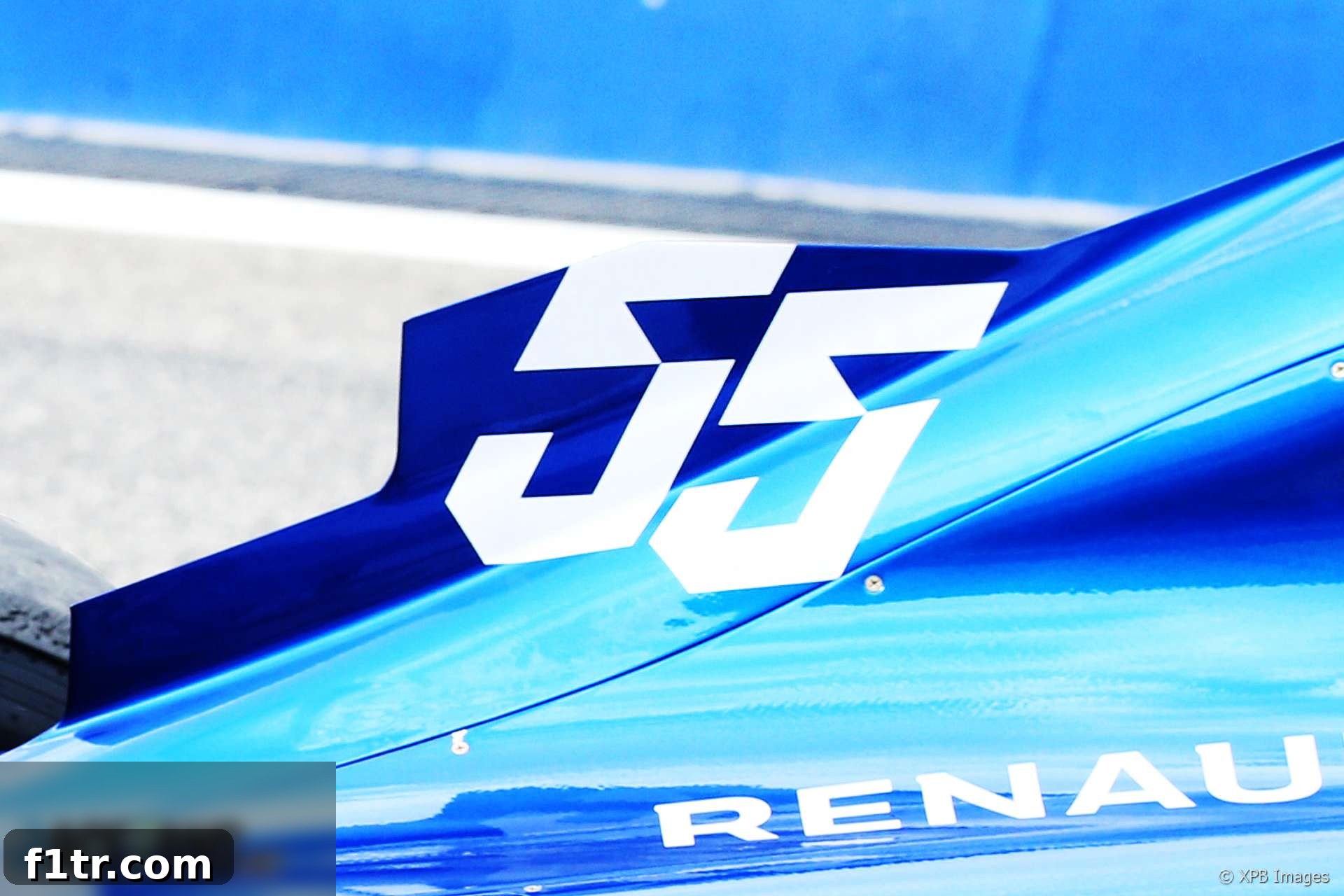
While most rule changes in Formula 1 are driven by performance, safety, or competitive integrity, some are introduced with a strong emphasis on fan engagement and experience. The reintroduction of a small “shark fin” on the engine cover for the 2020 season falls squarely into this category. For years, the visibility of driver race numbers on F1 cars has been a recurring issue for fans, especially during on-track action. The ban on larger shark fins two years prior had further exacerbated this problem, as it removed a significant area on the engine cover that was ideal for displaying prominent numbers.
In response to calls for better visibility, the FIA mandated that teams create a small shark fin on the spine of the engine cover. The dimensions for this “baby shark fin” were precisely defined in the technical regulations. This modification was designed to provide a dedicated, prominent, and easily visible location for driver numbers, making it easier for spectators both at the track and watching on television to identify their favorite drivers. McLaren had already experimented with a similar small fin design in 2019, and a comparable feature was also seen on the striking 2021 ‘India’ CFD concept car, demonstrating its potential for both practicality and aesthetics.
While the primary intent was marketing and fan-focused, the inherent nature of Formula 1 means that every surface, no matter how small or seemingly insignificant, is scrutinized for potential aerodynamic benefit. Even a tiny fin in this specific area, positioned low ahead of the top rear wing element, could potentially influence airflow. Teams might seek to optimize its shape and integration to condition flow to the rear wing, particularly when the car is cornering (in yaw conditions), potentially aiding in keeping the rear wing working more efficiently. Thus, what began as a fan-centric rule could inadvertently spark a micro-aerodynamic development race, showcasing the relentless pursuit of performance in F1.
Fuel Volume Outside Survival Cell: Cracking Down on Fuel Flow Exploitation
Since 2014, Formula 1 power units have operated under a stringent fuel flow restriction, capped at 100kg/hr. This regulation was introduced to promote fuel efficiency, control engine performance, and reduce the environmental footprint of the sport. To monitor and enforce this limit, a homologated fuel flow sensor is installed within the fuel tank of each car, allowing the FIA to precisely measure and record fuel consumption in real-time. However, the complex nature of fuel systems and the relentless drive for performance led to concerns that teams might be exploiting loopholes to temporarily exceed this flow limit.
The primary concern revolved around the possibility of accumulating a quantity of fuel outside the main fuel tank, in areas such as ancillary lines, pumps, or accumulators. If sufficiently large, this accumulated volume could then be rapidly injected into the engine, allowing it to momentarily operate above the 100kg/hr threshold. Such a surge of fuel could provide a significant, albeit brief, power boost, particularly valuable during critical phases like restarts, overtakes, or qualifying laps. This form of “trickery” represented a direct circumvention of the spirit and intent of the fuel flow regulations.
To counter this, the 2020 regulations drastically reduced the permissible volume of fuel allowed outside the fuel tank. The previous, more generous limit of 2,000ml (2 liters) was slashed to a mere 250ml. This significant reduction means that the only fuel permitted outside the tank is essentially what is contained within the necessary fuel lines, the high-pressure Gasoline Direct Injection (GDI) pump, and the fuel rails directly feeding the injectors. The new limit effectively eliminates any possibility of accumulating a meaningful quantity of “extra” fuel. This change was a direct response to various technical directives issued by the FIA post-2014, which had attempted to close such loopholes. The fact that a definitive rule change was deemed necessary indicates that some engine manufacturers were indeed suspected of engaging in such fuel flow exploitation, underscoring the constant “cat and mouse” game between regulators and engineers.
Engine Materials: Modernizing Manufacturing Terminology
In contrast to the more sensitive and performance-critical fuel volume rule change, the adjustment to engine material regulations for 2020 was a relatively straightforward update, reflecting the evolution of manufacturing techniques. This rule change pertained to the basic structure of the V6 turbo-hybrid engine, specifically components such as the sump, cylinder heads, and cylinder head cam covers.
Historically, engine components were predominantly manufactured through casting processes, where molten metal is poured into a mold. Alternatively, some parts might have been “wrought,” meaning they were shaped through hammering, pressing, or rolling. Older regulations often included terminology reflecting these traditional manufacturing methods. However, with advancements in material science and machining technology, it has become increasingly common for many of these engine parts to be precisely machined from solid blocks of aluminum or other advanced alloys. This technique, often involving sophisticated CNC (Computer Numerical Control) milling, offers greater precision, allows for more complex internal geometries, and can result in stronger, lighter components.
Recognizing this shift in industry practice, the 2020 rule change simply deleted the specific wording “cast or wrought” from the regulations. This update acknowledges that these particular manufacturing techniques no longer need to be explicitly enforced, as modern machining processes are equally, if not more, prevalent and effective. The impact of this rule change on teams was negligible, as it merely brought the regulatory language up to date with contemporary engineering practices without imposing new restrictions or opening up significant new avenues for performance gain. It was more about keeping the rulebook current and relevant to the actual methods employed by F1’s cutting-edge engine manufacturers.
Clutch Control: Re-Emphasizing Driver Skill at the Start
The race start in Formula 1 is one of the most dynamic and critical moments of any Grand Prix. A strong start can gain several positions, while a poor one can severely compromise a driver’s race. Over the years, the FIA has consistently updated regulations governing clutch control to reduce the reliance on sophisticated software systems and place greater emphasis on pure driver skill in modulating the clutch release. The 2020 rule changes represent a significant step in this ongoing effort, providing highly detailed specifications for clutch paddle design and operation.
Previously, some drivers utilized two clutch paddles on their steering wheel, although only one could be active for the race start. The second paddle typically served as a failsafe, allowing a driver to quickly disengage the clutch to prevent an engine stall during a spin or incident. Other drivers preferred a single paddle setup. The new rules clarified that if two paddles were present, they must be exact mirrors of each other and operate with identical software settings. This eliminated any possibility of a driver using a differently mapped or configured second paddle to gain an advantage.
Crucially, the 2020 regulations went further into the specifics of paddle operation:
- Pull-Only Action: Paddles must only be “pulled” towards the driver, not pushed. This standardizes the physical input and prevents alternative, potentially more precise, push-button mechanisms.
- Limited Movement: Each paddle was restricted to a maximum of 80mm of movement in one direction, ensuring a consistent physical range of input.
- Direct Correlation: The clutch movement must precisely match the paddle movement, with minimal ECU (Engine Control Unit) interference. This is a key provision designed to prevent software from smoothing out, phasing, or delaying the clutch release to optimize grip and prevent wheelspin, thereby shifting the responsibility back to the driver’s direct input.
- Consistent Torque Delivery: The rule specifies that the driver’s request for clutch release must deliver 90% of the engine’s torque for the majority of the clutch paddle’s travel. This prevents any software-assisted “slipping” of the clutch at specific points in the paddle’s travel to manage the car’s launch, ensuring a more linear and direct response based on driver input.
- No Physical Aids: Any means to define a specific “bite point” on the paddle’s travel was explicitly forbidden. This includes “detents” built into the pivot mechanism or drivers aligning their fingers/paddle with other hardware on the steering wheel. Some teams had previously engineered such aids, for example, by aligning the clutch bite point with an adjacent gear shift paddle, to provide tactile feedback to the driver for an optimal release point. This move ensures the driver relies solely on feel and experience.
By further defining and significantly restricting the parameters of clutch control, the FIA aimed to make race starts a more direct test of driver skill, rather than an exercise in software optimization. While this could initially lead to slower or less consistent starts as drivers adapt to the heightened manual control, history suggests that Formula 1 drivers are exceptionally skilled at mastering new challenges. Past instances where electronic aids (like traction control or automated gearshifts) were removed have shown that drivers quickly adapt and achieve similar levels of consistency and performance. This change was ultimately about enhancing the sporting spectacle and truly showcasing the unique talent of each driver at the beginning of a race.
Go ad-free for just £1 per month>> Find out more and sign up
Rear View Mirrors: Reining in Aerodynamic Creativity
In Formula 1, every surface of the car, no matter how minor, is viewed as a potential aerodynamic device. The rear view mirrors, ostensibly designed for driver visibility, proved to be no exception. Following rule changes for the 2019 season that altered mirror position and mounting guidelines, teams quickly identified and exploited new opportunities to integrate aerodynamic features into the mirror assembly and its supports. Elaborate mirror housings, complex stalks, and multi-element mounting structures began appearing on some cars, all subtly designed to condition airflow, generate beneficial vortices, or influence the wake behind the front wheels, rather than solely serving their primary function.
Recognizing this trend of “aerodynamic exploitation” in an area not intended for performance gains, the FIA introduced a significantly reworded set of regulations for 2020. These new rules aimed to precisely define and limit the excess seen in the 2019 mirror designs. The regulations provided clearer stipulations regarding the mirror surface itself, its housing, and crucially, its mountings. The intent was to ensure that the mirror assembly served its fundamental purpose of providing rearward visibility to the driver, without becoming an unintended area for significant aerodynamic development. While teams had indeed innovated in this area, the performance gain from these mirror designs was generally considered to be minimal. Consequently, no team was expected to suffer any obvious or significant performance deficit from having to comply with the more restrictive new regulations. This rule change was more about upholding the spirit of the regulations and preventing an unnecessary and costly aerodynamic arms race in a non-performance-critical area.
Cockpit Padding: Enhancing Driver Head Protection
Driver safety is a foundational principle in Formula 1, and the regulations are continuously updated to enhance protective measures. The 2020 rule changes included refinements concerning the cockpit padding, specifically the horseshoe-shaped padding around the driver’s head. While seemingly a minor detail, the exact construction and specifications of this padding are critical for absorbing impact forces and providing crucial cushioning in the event of a crash, protecting the driver’s head and neck from injury within the confined space of the cockpit.
This rule simply defined finer points to the part’s construction, likely addressing specific material properties, density, thickness, attachment methods, or impact absorption characteristics. These granular details ensure that all teams adhere to the highest and most consistent safety standards for this vital piece of protective equipment. Such continuous refinement of safety specifications underscores the FIA’s unwavering commitment to driver well-being, focusing on every component that contributes to mitigating injury risk.
Adapting Cockpit Rim Tests for the Presence of the Halo
The introduction of the Halo cockpit protection device in 2018 marked a revolutionary step in F1 safety, fundamentally altering the structural integrity and load paths of the monocoque. The Halo, a robust titanium structure, is designed to withstand immense forces, particularly in impacts with debris or other cars. Its integration into the car’s chassis required a reassessment of existing safety tests.
As part of the stringent load testing protocols for the monocoque – the central safety cell of the F1 car – the presence of the Halo necessitated revisions to how these tests are conducted and what load points are applied. This 2020 rule change was, therefore, a simple yet crucial revision of older regulations. It adapted the cockpit rim tests to account for the Halo’s structural contribution and the new ways in which forces are transmitted through the chassis with the Halo integrated. This ensures that the entire safety cell, including the Halo and its mounting points, continues to meet and exceed the extremely high standards of impact resistance and structural integrity required in Formula 1. It is a testament to the ongoing process of integrating new safety innovations into the holistic safety framework of the cars.
F1 Technology: A Glimpse into the Future
These detailed rule changes for the 2020 Formula 1 season collectively highlight the sport’s dynamic nature, its relentless pursuit of performance, and its unwavering commitment to safety and fairness. From closing aerodynamic loopholes and enhancing driver skill to modernizing manufacturing terminology and refining safety protocols, each amendment plays a vital role in shaping the competitive landscape. The constant evolution of F1 regulations ensures that the sport remains at the cutting edge of automotive engineering while consistently delivering thrilling and equitable racing for fans worldwide.
- McLaren, Red Bull and Ferrari bring rear corner updates to Imola
- Ferrari, McLaren and Red Bull bring upgrades again for Saudi Arabian Grand Prix
- McLaren introduce major floor upgrade for Norris’ car at Mexican Grand Prix
- McLaren, Mercedes and Red Bull detail upgrade packages for United States GP
- Red Bull remove engine cover ‘cannons’ in major RB20 update – but they may return
Browse all F1 technology articles