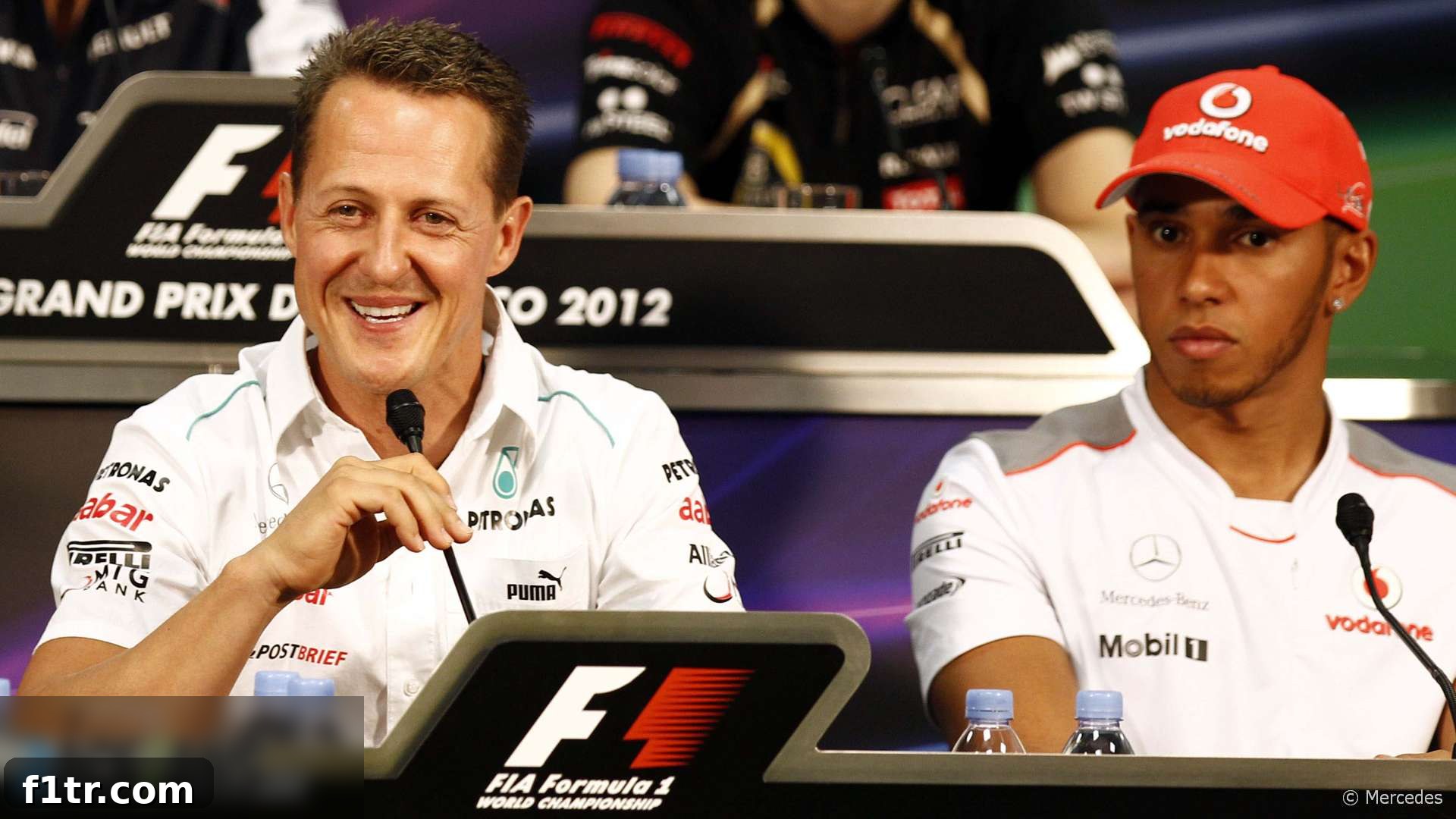
Lewis Hamilton’s Quest for Seven: Chasing Michael Schumacher’s Unrivaled F1 Record
In the high-octane world of Formula 1, records are made to be broken, yet some stand as monumental testaments to extraordinary talent and sustained dominance. Among these, Michael Schumacher’s seven World Championship titles remains the gold standard, a seemingly insurmountable peak. However, Lewis Hamilton, a titan of modern motorsport in his own right, cautiously admits that reaching this hallowed benchmark is “not impossible.” His journey, marked by relentless pursuit and unparalleled success, continues to captivate fans and pundits alike, raising the tantalizing question: Can he truly stand shoulder-to-shoulder with the legendary German? This exploration delves into Hamilton’s mindset, the challenges ahead, and the wider tapestry of recent motorsport events that shape the dynamic landscape of global racing.
Hamilton’s Perspective: On the Cusp of History
When reflecting on the prospect of equaling, or even surpassing, Michael Schumacher’s formidable record of seven World Championship titles, Lewis Hamilton offers a blend of humility and determination. The sheer scale of Schumacher’s achievement was once considered untouchable, a sentiment Hamilton himself acknowledges was widely held within the racing community. “Honestly, I don’t remember him getting the seventh title,” Hamilton confessed, attributing it to a self-professed “not great memory.” He continued, “But I think that was probably everyone’s thought in the business, is it’s unlikely anyone’s going to get anywhere near.” This widely shared perception underscores the magnitude of the task at hand, a challenge that Hamilton, now a multi-world champion himself, is uniquely positioned to address.
Lewis Hamilton’s remarkable consistency and winning form have positioned him uniquely to chase down records previously thought unattainable. His recent performance highlights the drive and ambition required for such a monumental task, underscoring his position as one of Formula 1’s all-time greats. The pursuit of greatness is a demanding journey, and Hamilton’s commitment to continuous improvement sets him apart.
Despite the enormity of the goal, Hamilton maintains a pragmatic outlook. “It’s not that it’s impossible, nothing’s impossible,” he stated, reflecting a mindset that has defined his illustrious career. This unwavering belief in the possible, even in the face of seemingly insurmountable odds, is a hallmark of champions. However, he also injects a dose of realism, acknowledging the unpredictable nature of top-tier motorsport and his own future. “Personally, I don’t know how long I’m going to race. And nothing’s promised. It’s not guaranteed every year we’re going to be able to compete the way we are and have an opportunity to win nine grands prix a year as we have the last couple. I’m not taking anything for granted.” This nuanced perspective reveals a deep understanding of the sport’s transient nature, where dominance can shift with regulatory changes, team dynamics, or even personal motivation.
“Honestly I don’t remember him getting the seventh title. I’ve not got a great memory so I don’t remember what I thought when he won that championship. But I think that was probably everyone’s thought in the business, is it’s unlikely anyone’s going to get anywhere near.”
“It’s not that it’s impossible, nothing’s impossible, but personally I don’t know how long I’m going to race. And nothing’s promised. It’s not guaranteed every year we’re going to be able to compete the way we are and have an opportunity to win nine grands prix a year as we have the last couple. I’m not taking anything for granted.”
“Of course I’m going to keep pushing, keep trying to win. And if the time comes that I’m close then so it shall be but we’ll see. It’s a long way until then.”
This balanced perspective—combining ambition with realism—is crucial. Hamilton understands that sustained success in Formula 1 requires a confluence of factors: a competitive car, a strong and cohesive team, unwavering personal dedication, and a fair share of strategic luck. His commitment, however, remains absolute. “Of course, I’m going to keep pushing, keep trying to win. And if the time comes that I’m close then so it shall be but we’ll see. It’s a long way until then.” This statement encapsulates the methodical approach of a seasoned champion, focusing intently on immediate performance while keeping an eye on the distant horizon of historical significance. The path to seven titles is long and arduous, demanding consistent excellence, continuous adaptation to evolving regulations, and the mental fortitude to withstand immense pressure. For Lewis Hamilton, the challenge is clearly understood and wholeheartedly embraced, fueling his ongoing pursuit of F1 immortality.
Quotes courtesy of Dieter Rencken
Advert | Become a RaceFans supporter andgo ad-free
Social Media Buzz: Reactions from the Motorsport World
Social media platforms have become an integral part of the motorsport landscape, offering immediate insights and reactions from drivers, teams, and fans. Recent events, particularly the harrowing Macau Grand Prix crash, sparked a wave of concern and discussion across various channels, highlighting the raw emotions and strong community spirit within racing.
My sincere thoughts go out to @SophiaFloersch and her family after her horrible crash in Macau. Stay strong Sophia. Fight the fight
— Robert Wickens (@robertwickens) November 18, 2018
The terrifying incident involving young German driver Sophia Floersch at the Macau Grand Prix sent shockwaves through the global motorsport community. Robert Wickens, himself recovering from a severe IndyCar accident, extended his heartfelt thoughts to Floersch and her family, embodying the solidarity that often emerges in the face of danger. His message, “Stay strong Sophia. Fight the fight,” resonated deeply, given his own battle with recovery and rehabilitation, serving as a powerful reminder of the inherent risks drivers face and the extraordinary resilience required to overcome such profound challenges in professional racing.
皆さんにご心配おかけしましたが、病院へ行き、精密検査もしてもらい、体は大丈夫です。25号車の彼女も命に別状はないそうです。取り急ぎご連絡致します。ヘルメットにも傷がついていましたが、本当に運が良かったです。 pic.twitter.com/kfFbRfxFPu
— 坪井翔 (@RaceSho) November 18, 2018
Japanese driver Sho Tsuboi, who was also involved in the multi-car accident that led to Floersch’s crash, quickly updated fans on his condition. His tweet, while in Japanese, conveyed a message of relief, stating that he was okay after hospital checks and that the driver of car number 25 (Floersch) was also out of life-threatening danger. He highlighted the “lucky” outcome despite significant damage to his helmet, emphasizing the sheer force of the impact and the thin line between safety and severe injury in such high-speed events. Tsuboi’s swift communication brought much-needed reassurance to fans following the incident closely.
Genuinely think that if Ticktum doesn’t get an opportunity to do the young driver tests in F1, there’s something not right in the system. I understand that a Friday FP1 licence maybe a different story but surely a double Macau winner is more than Qualified to test in F1…
— Karun Chandhok (@karunchandhok) November 18, 2018
Beyond the immediate aftermath of the crash, the Macau Grand Prix also sparked debate about talent progression in motorsport. F1 analyst Karun Chandhok weighed in on the eligibility of drivers like Dan Ticktum, a double Macau winner, for Formula 1 young driver tests. Chandhok’s tweet questioned the F1 licensing system, arguing that a driver with such an impressive junior record should undoubtedly qualify for testing opportunities, highlighting the sometimes bureaucratic hurdles faced by promising talents aiming for the pinnacle of motorsport. This discussion often resurfaces when exceptional junior talents struggle to navigate the complex pathway to Formula 1.
@LewisHamilton Errrr Whoops…….. I think I got this one wrong.
Congratulations on proving me wrong. 🙄 pic.twitter.com/ffwN1u9tIN— Andy Jones (@andyjones23) November 18, 2018
Amidst these serious discussions, social media also provides space for lighter moments and fan engagement. A notable tweet directed at Lewis Hamilton encapsulated the experience of many fans who had perhaps underestimated his championship potential. The user, Andy Jones, playfully admitted, “Errrr Whoops…….. I think I got this one wrong. Congratulations on proving me wrong. 🙄,” accompanied by an image. This exchange highlights the emotional connection fans have with their sporting heroes and the joy of witnessing a driver exceed expectations, a sentiment that Hamilton has undoubtedly inspired countless times throughout his illustrious career, continuously redefining what is possible in Formula 1.
- For more official F1 accounts and insights, explore our comprehensive F1 Twitter Directory, a valuable resource for staying connected with the sport.
Motorsport Roundup: Key Stories from Around the World
Beyond the headlines of Formula 1, the world of motorsport is a vibrant tapestry of diverse championships, dramatic races, and intriguing developments. This roundup brings you the most significant news from various corners of racing, offering a broader perspective on the global scene and highlighting the depth of talent and competition across different disciplines.
Advert | Become a Supporter & go ad-free
FIA WEC: Thrilling Victory for Toyota in Shanghai, Jackie Chan DC Racing Shines
The FIA World Endurance Championship delivered another dose of thrilling action at the Shanghai International Circuit, where the number seven Toyota TS 050 Hybrid, piloted by Mike Conway, Kamui Kobayashi, and Jose-Maria Lopez, secured a challenging back-to-back victory. This hard-fought win, coming off their success at Fuji, saw them edge out their sister car (number eight Toyota, driven by Fernando Alonso, Kazuki Nakajima, and Sebastien Buemi) by a mere 1.14 seconds. This narrow margin underscores the intense rivalry within the Toyota Gazoo Racing team and significantly tightened the championship battle, with the number seven crew closing to within five points of their stablemates. The event also saw Jackie Chan DC Racing celebrate a resounding home victory in the LMP2 category, adding a local flavour to the international endurance spectacle and showcasing the growing talent and competitive spirit in the non-hybrid prototype classes.
Macau Grand Prix: Sophia Floersch’s Miraculous Escape After Horrific Crash
The 2018 Macau Grand Prix will forever be remembered for the horrifying airborne crash involving Sophia Floersch. The incident, which saw her car launch into the air and penetrate the catch fence at high speed, resulted in a fractured spine for the young German driver. Miraculously, despite the graphic nature of the crash, Floersch underwent successful surgery and made a remarkable recovery, a testament to her resilience and the rapid response of medical teams. The impact was not limited to the driver, as two photographers—Minami Hiroyuki, who suffered a concussion, and Chan Weng Wang, with a lacerated liver—and a race marshal, Chan Cha, who sustained cuts and a broken facial bone, were also injured. This incident reignited critical discussions about track safety, particularly in challenging street circuits, and the robust design of modern racing cars, highlighting the ever-present dangers in motorsport and the heroic efforts of safety crews and medical staff in mitigating potential tragedies.
Formula 1: Williams’ Modernisation Imperative, According to Smedley
Pat Smedley, then Head of Vehicle Performance at Williams, voiced strong opinions on the historic team’s dire need for radical change. He emphasized that Williams, a team with a storied past and multiple constructors’ championships, required a complete overhaul across “all areas” to regain its competitive edge. Smedley pointed out that “there are areas that need modernisation, there are areas that need change and there are areas you should recognise that are strong compared to other Formula 1 teams but are not supported in other ways.” This candid assessment highlighted the significant challenges facing established privateer teams in an era dominated by manufacturer-backed giants, stressing the need for strategic investment, updated methodologies, and a fresh approach to team structure and operation to compete in the demanding, high-stakes environment of modern Formula 1. The struggle of Williams serves as a microcosm for the broader challenges faced by independent teams.
IndyCar: Schmidt Peterson Motorsports Strengthens Foundations Amidst Challenges
In the fiercely competitive NTT IndyCar Series, Schmidt Peterson Motorsports (now known as Arrow McLaren SP) was actively building on its foundations, a sentiment underscored by reports from IndyCar. The team was focused on strengthening its infrastructure and relationships, particularly in the context of driver Robbie Wickens’ recovery journey following his severe spinal cord injury. Acknowledging the profound impact of Wickens, the team expressed an unwavering commitment to him: “Regardless of when it happens, Robbie will be back in our team in some capacity or another because, in such a short time, he’s built quite a strong bond and friendship with people in the team.” This demonstrated the powerful human element within motorsport, where loyalty and personal connections often transcend purely performance-driven considerations, showcasing the enduring spirit of teamwork and support in the face of adversity.
F1 History: Aguri Suzuki, Japan’s First F1 Podium Finisher
Formula 1 periodically celebrates its rich history and the trailblazers who shaped it. A feature on Formula1.com highlighted Aguri Suzuki, the pioneering Japanese driver who achieved Japan’s first-ever F1 podium finish in 1990 at his home Grand Prix. Suzuki recounted his journey, emphasizing that he “always looked on 1990 as my first season of F1 racing after that,” signifying the pivotal year that cemented his place in F1 history. His achievement not only broke new ground for Japanese motorsport but also inspired a generation of drivers and fans, illustrating the global impact and cultural significance of Formula 1 beyond its traditional European heartland. Suzuki’s story is a reminder of the diverse talents that have contributed to the sport’s legendary status.
Motorsport Legend: Remembering David Morgan (1944-2018)
The motorsport community also paused to remember David Morgan, a significant figure who passed away. ESPN’s tribute recalled a notable incident involving Morgan and legendary F1 champion James Hunt. An RAC tribunal had issued a 12-month suspension to Morgan. Despite Hunt’s eloquent defense that likely swayed the tribunal in his favor, exonerating him, it was privately understood that Morgan’s punishment was disproportionate to the offense. Such stories from the past shed light on the complex dynamics and often fiery personalities that have shaped motorsport, providing valuable historical context to the sport’s evolution and regulatory challenges over the decades. Remembering figures like Morgan helps preserve the rich, intricate narrative of racing.
Bernie Ecclestone’s Reinvention: Life Beyond F1 at 88
Away from the tracks, even former Formula 1 supremo Bernie Ecclestone makes headlines. At 88, the billionaire businessman underwent laser eye surgery, allowing him to ditch his glasses in a bid to “reinvent himself.” Reports indicated that Ecclestone also adopted a new look, growing a goatee, and purchased a luxury party pad in Ibiza, playfully telling friends he aimed to live until he was 120. This anecdotal glimpse into Ecclestone’s post-F1 life offers a humanizing perspective on a figure who once wielded immense power in the sport, showing his continued zest for life and personal transformation. It’s a testament to his enduring character, even after stepping away from the helm of Formula 1.
We always endeavor to credit original sources. If you have a tip for a link to feature in the next RaceFans round-up please send it in here:
- Contact RaceFans
Advert | Become a RaceFans supporter andgo ad-free
Debating Team Sizes: The Evolution of F1’s Competitive Landscape
The increasing scale of Formula 1 teams has become a significant talking point, especially as outfits like Force India (now Aston Martin) outline ambitious expansion plans to reach “fighting weight.” This trend raises pertinent questions about the fundamental nature of competition in modern F1 and the sustainability of such large operations, prompting critical discussion among fans and experts alike.
The user @ColdflyF1 articulates a common sentiment regarding the growing demand for personnel:
It’s actually sad (not surprising though) that a team needs 500-plus staff to compete for a mere podium in F1. And that excludes all the staff at suppliers.
There must be a way that teams sized 250-300 can create sufficient diversity ingenuity and competitiveness to make the sport exciting. (standardise more parts I guess if a budget cap doesn’t work).
This observation highlights a crucial dilemma in Formula 1. The technological arms race has pushed team sizes to unprecedented levels, with many top teams employing upwards of 800-1000 staff members. The sheer complexity of designing, developing, manufacturing, and operating a modern F1 car, combined with relentless in-season development, necessitates vast human resources and an ever-expanding budget. As @ColdflyF1 notes, even competing for a podium spot—let alone a championship—requires an immense organizational effort, extending beyond just the core team to a vast network of suppliers and external partners, creating a colossal industrial ecosystem.
The call for smaller, more agile teams capable of delivering exciting competition resonates with many fans and stakeholders who long for a more balanced and unpredictable championship. The idea of standardizing more components or implementing stricter, well-enforced budget caps is often proposed as a solution to curb excessive spending and human resource deployment. The underlying goal is to foster a more level playing field where innovation and efficiency, rather than sheer financial might and headcount, become the primary determinants of success. A smaller team size could encourage greater ingenuity within confined parameters, potentially leading to more diverse technical solutions and a more unpredictable, engaging championship battle. This ongoing debate remains central to the future direction of Formula 1, as the sport strives to balance cutting-edge technological advancement with competitive fairness, economic sustainability, and accessibility for a broader range of participants.
F1 Community Corner: Happy Birthday!
A warm RaceFans shout-out to our community members celebrating their special day!
Happy birthday to Joao and Matteo!
If you wish for a birthday shout-out in our future round-ups, please don’t hesitate to inform us via our contact form or by adding your details to our dedicated list here. We love celebrating with our readers and acknowledge the vibrant community that makes RaceFans special!
On This Day in F1 History: Remembering Philippe Adams
Today, we look back at a notable moment in Formula 1 history and remember those who have contributed to its rich tapestry:
- Born today in 1969 was Philippe Adams, a Belgian racing driver who made his mark, albeit briefly, in Formula 1. Adams competed in two F1 races, both during the challenging 1994 season, a year marked by significant safety changes and intense competition. His debut came at his home Grand Prix, the 1994 Belgian Grand Prix, an iconic event on the F1 calendar. Although his F1 career was short, participating with the cash-strapped Lotus team during its twilight years, his presence adds another layer to the rich history of individuals who have graced the sport’s pinnacle, reminding us of the diverse talent pool that has contributed to F1’s enduring legacy throughout the decades.