In the high-octane world of Formula 1, where championship dreams hang by a thread and every single point can determine destiny, strategic decisions often walk a fine line between genius and controversy. Team orders, a recurring flashpoint for fans and pundits alike, represent one such contentious area. Despite facing a wave of criticism for their strategic interventions in the preceding Grand Prix, Mercedes-AMG Petronas F1 Team Principal Toto Wolff has unequivocally declared the team’s readiness to re-employ team orders if necessary at the upcoming Japanese Grand Prix.
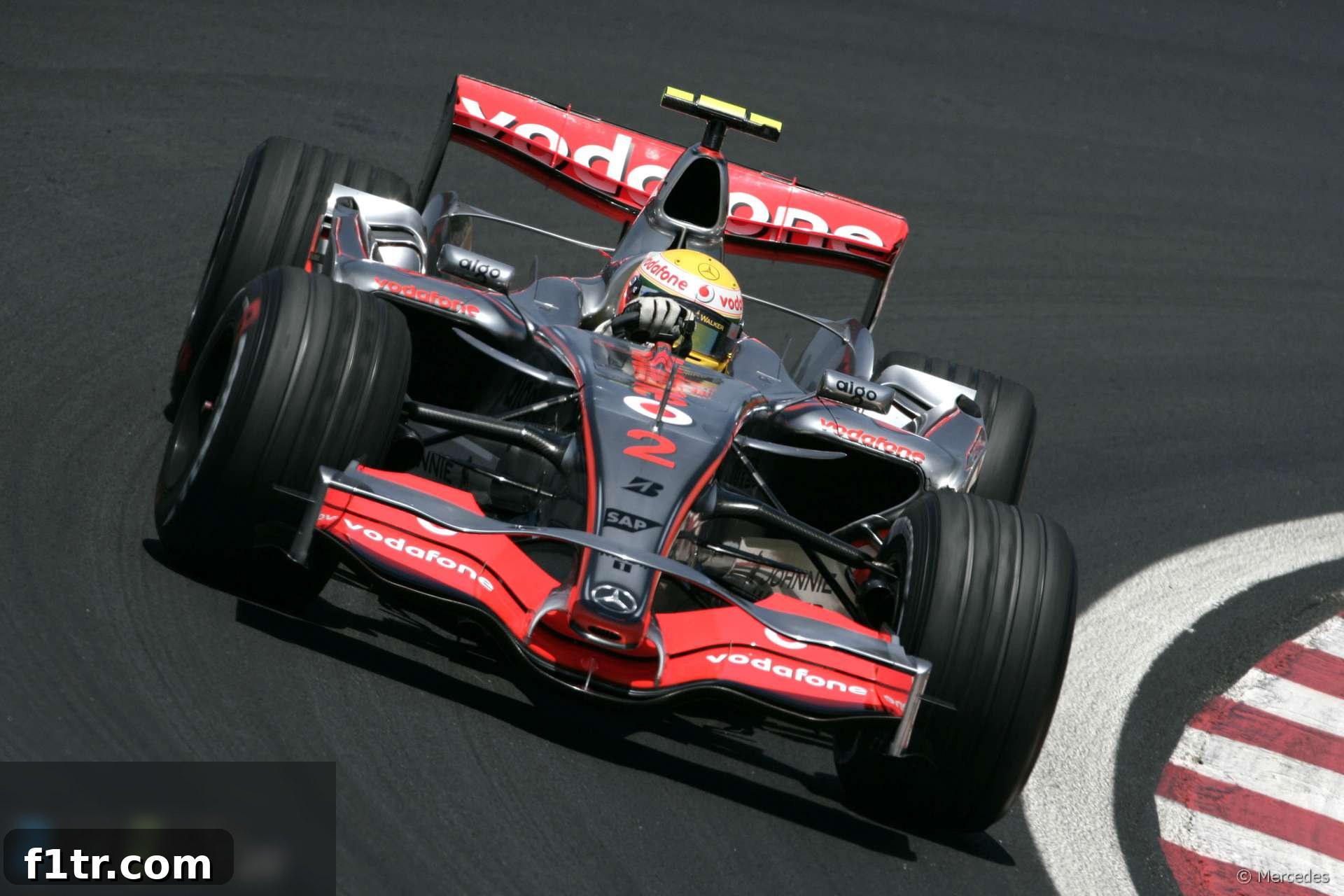
Wolff’s staunch defense of this pragmatic, albeit unpopular, approach stems from a profound understanding of the sport’s unforgiving nature and the razor-thin margins that separate triumph from despair. He highlighted a pivotal moment in Formula 1 history – the dramatic conclusion of the 2007 World Championship – as a stark reminder of why no opportunity to bolster their leading driver’s points tally can ever be overlooked. That season saw a young Lewis Hamilton, then driving for McLaren, lose the championship to Kimi Raikkonen by a solitary point in a nail-biting finale. The memory of such a devastating near-miss, a testament to how quickly an advantage can evaporate, clearly resonates deeply within the Mercedes camp.
“In 2007, with two races remaining, there was a gap between the drivers equivalent to 45 points in today’s scoring system, and he still lost the championship,” Wolff recounted, emphasizing the unpredictability of F1. “Would anyone have conceived it possible to lose 45 points over just two races? It seemed impossible at the time. Yet, it happened. This serves as a powerful historical precedent that dictates our current strategy and caution.”
The essence of Formula 1, as Wolff articulates, is that races are won on Sunday, and not always by the fastest car. There are myriad variables – a fortunate safety car, a rival’s unexpected mistake, a perfectly executed pit stop, or even a sudden downpour – that can turn the tide of a Grand Prix. Mercedes themselves experienced a period during the season where they weren’t the absolute quickest machine on track but still managed to clinch crucial victories through meticulous strategy and execution. This reinforces the need for relentless vigilance and an unyielding commitment to maximizing every possible outcome. “We had a spell over the summer where we weren’t necessarily the quickest car, but we still managed to secure several victories. I absolutely wouldn’t want to ease off the accelerator now, because a DNF in a freak race could see all our hard work and lead vanish in an instant. Therefore, our fundamental approach to the championship remains unchanged: maximize points at every opportunity.”
While the commitment to championship success remains unwavering, Wolff indicated a crucial evolution in their tactical mindset. The team intends to adopt a more flexible and adaptive approach to implementing team orders, moving away from rigid pre-planned scenarios. This shift is a direct lesson learned from the complexities encountered during the preceding Russian Grand Prix in Sochi. The fluid and unpredictable nature of racing demands agility, and sometimes the best-laid plans must give way to on-the-fly decisions born out of necessity.
“Perhaps the extensive discussion we had on Sunday morning in Sochi was well-intentioned, but it failed to fully account for the intense pressure we found ourselves under during the race,” Wolff elaborated. “We were in a challenging, sandwich-like situation, with Sebastian Vettel relentlessly pressuring Lewis from behind, while Max Verstappen was leading ahead of us. This dynamic scenario reminded us that even the most meticulously crafted plan often doesn’t survive its first contact with the enemy. And that’s precisely what unfolded in Sochi. Consequently, our future discussions will be framed differently, allowing ample scope to make swift, decisive actions that might be considered a necessary evil in the pursuit of victory.” This acknowledgment of strategic fallibility and the commitment to continuous improvement underscores Mercedes’ relentless pursuit of perfection, even in the most controversial of tactical domains.
The incident in Russia served as a poignant illustration of how fine the margins are and how quickly fortunes can turn due to strategic missteps. During his initial stint, Lewis Hamilton lost a critical track position to Sebastian Vettel after the team opted to keep him out for an additional lap. This seemingly minor delay had significant repercussions, allowing Vettel to capitalize. Post-race, Toto Wolff, with characteristic transparency, took full responsibility for the error. He clarified that at the precise moment the crucial decision was being made, he was engaged in communication with James Vowles, the team’s Chief Strategist, highlighting the intricate and often high-pressure nature of real-time strategy calls.
Wolff further detailed the sophisticated decision-making hierarchy and collaborative framework that underpins Mercedes’ race operations. This intricate system involves a core group of highly skilled individuals: himself as Team Principal, James Vowles as Chief Strategist, James Allison as Technical Director, and Andrew Shovlin as Chief Race Engineer. Each plays a distinct yet interconnected role in navigating the dynamic challenges of a Grand Prix weekend, ensuring that every strategic facet is meticulously considered and executed.
“James Vowles is, metaphorically speaking, the one flying the aeroplane,” Wolff explained, delineating the clear lines of authority and responsibility. “My role is to observe, comment, and provide feedback and input to him. However, ultimately, the final decision rests with James. While my rank within the team is higher, I make a conscious effort not to interfere directly with his call unless I am absolutely convinced that he has overlooked something critically important. It’s his final word.” This structure emphasizes trust and empowerment, recognizing Vowles’ expertise and the need for a singular, decisive voice in the heat of the moment.
The communication during a race is intense, often with multiple voices on the radio. Wolff humorously admitted to contributing to the noise, sometimes inadvertently distracting the core strategists. “We probably distract each other constantly,” he confessed. “Just today, James [Vowles] had to say, ‘Quiet on the radio now, apart from Shov [Andrew Shovlin],’ which I strongly suspect was directed at me, among others.” This anecdote provides a glimpse into the high-pressure, often chaotic environment of the pit wall, where clarity of communication is paramount.
Beyond the pit wall, the “Race Support Room” back at the factory in Brackley is also fully engaged, providing a continuous stream of data analysis and predictive modeling. However, Wolff also revealed a more personal coping mechanism within the team’s leadership. “I also have this special button, figuratively speaking, with James Allison,” he explained. “It’s a channel where we can offload all the ‘crap’ – all the worries, frustrations, and raw emotions – onto each other, vice-versa. The purpose of this is to prevent us from offloading that pressure onto the guys who are actually flying the plane, those making the critical, moment-to-moment decisions.” This insight reveals a sophisticated leadership strategy focused on protecting the primary decision-makers from undue emotional and psychological burden, allowing them to maintain peak performance and focus.
Wolff reiterated his unwavering trust in his team and the established decision-making process. “Unless I am 100 percent convinced that James [Vowles] has not spotted a crucial detail, something that could fundamentally alter our approach or outcome, I will not offer my direct input, nor will I interfere with his final decision,” he stated firmly. This commitment to non-interference, despite his ultimate authority, is a cornerstone of Mercedes’ operational philosophy, fostering an environment of trust, accountability, and disciplined strategic execution. It is this finely tuned symphony of expertise, experience, and strategic foresight that Mercedes relies upon to navigate the unpredictable currents of Formula 1 and ultimately clinch championships, even if it means making tough, unpopular calls like team orders.
2018 F1 season
- F1 feared “death knell” for Drive to Survive after Ferrari and Mercedes snub
- McLaren staff told us we were “totally crazy” to take Honda engines in 2018 – Tost
- ‘It doesn’t matter if we start last’: How Red Bull’s junior team aided Honda’s leap forward
- Honda’s jet division helped F1 engineers solve power unit problem
- McLaren Racing losses rise after Honda split
Browse all 2018 F1 season articles