Esteban Ocon Details Shock Over Late Tuscan GP Safety Car Restart
Esteban Ocon, the Renault driver, has openly expressed his astonishment regarding the unusually late timing of the Safety Car restart during the chaotic Tuscan Grand Prix. This particular restart, a pivotal moment in the race held at the iconic Mugello circuit, notoriously triggered a multi-car collision that ultimately led to the retirement of four prominent drivers, subsequently causing a full race stoppage.
Advert | Become a Supporter & go ad-free
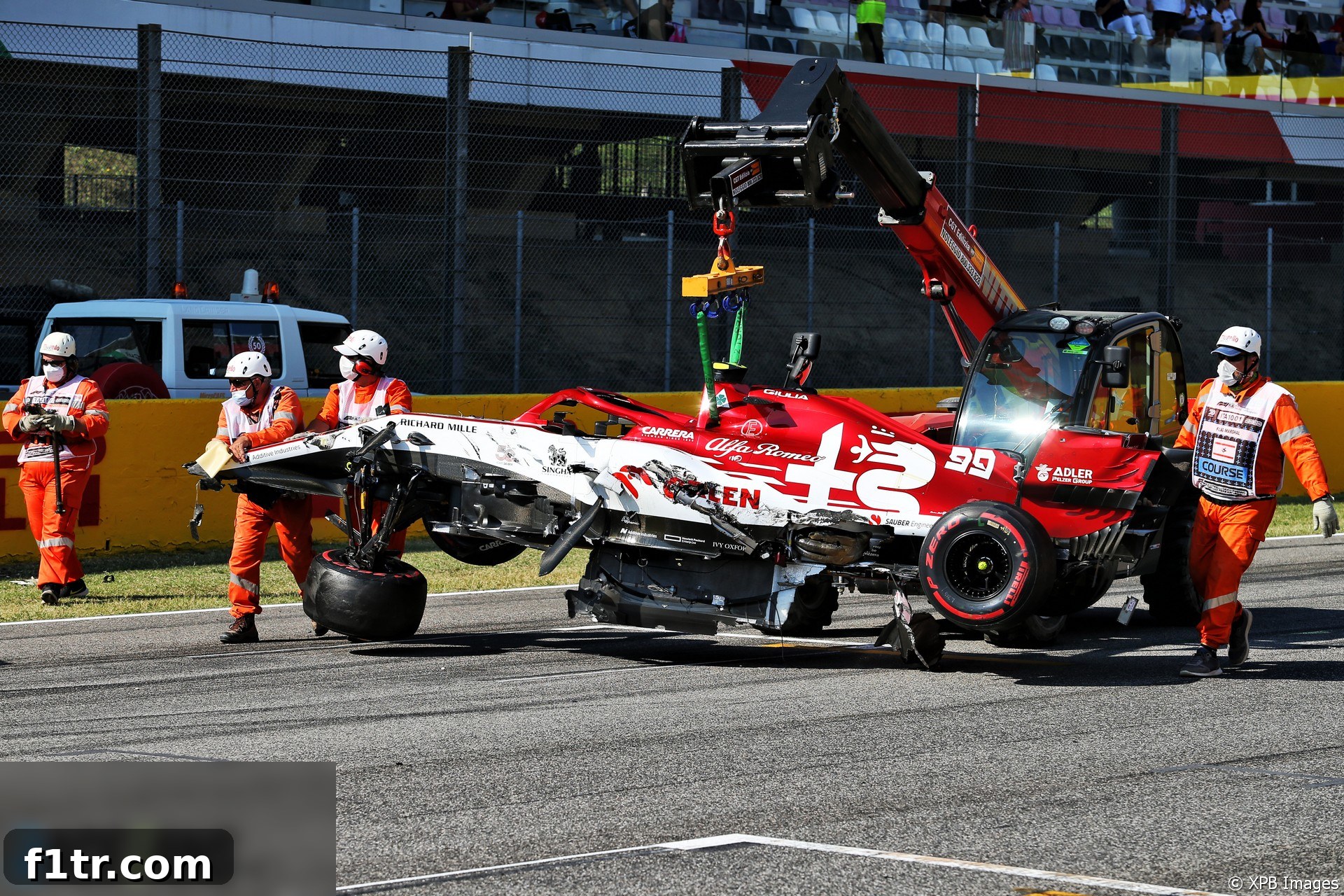
The incident, which unfolded with dramatic speed on the main straight, saw a dozen drivers – including Ocon himself – receive formal warnings from the stewards. These warnings were issued following a thorough review of their driving conduct in the moments immediately preceding the devastating crash. The pile-up abruptly ended the races of Carlos Sainz Jnr of McLaren, Haas’s Kevin Magnussen, Alfa Romeo’s Antonio Giovinazzi, and Williams driver Nicholas Latifi, casting a significant shadow over what had been a thrilling debut for Formula 1 at Mugello.
The Controversial Restart and Bottas’s Role
Valtteri Bottas, driving for Mercedes and holding a comfortable lead at the time, was at the forefront of the pack when the Safety Car prepared to re-enter the pits. Bottas himself later vocalized his belief that the belated decision by race control to signal the restart, indicated by the Safety Car’s lights being extinguished, was a significant contributing factor to the subsequent crash. This timing, according to Bottas and many other drivers, compressed the field in an unpredictable manner, setting the stage for the dramatic events that followed.
The standard procedure dictates that the Safety Car extinguishes its lights a lap before entering the pits, allowing the lead driver to control the pace and create a sensible gap to the cars behind. However, in this instance, the lights remained on for an extended period, leading to a much later switch-off than usual. This delay had a cascading effect, forcing drivers to react suddenly and adjust their speeds, a challenge particularly amplified on Mugello’s long, fast main straight.
Ocon, who was running in 10th position at the time of the restart, found himself just two places ahead of the first vehicle involved in the catastrophic chain reaction. His immediate post-race analysis, corroborated by video replays of the incident, solidified his conviction that the restart was initiated far later than the drivers had anticipated or were accustomed to. “Clearly the Safety Car lights got switched off a lot later than what we are used to in that race,” Ocon stated, highlighting the procedural deviation that caught many off guard.
Ocon’s Confusion and Near Miss
Recounting the moments leading up to the restart, Ocon elaborated on the confusion that permeated the cockpit of his Renault. As he navigated through Arrabbiata one, the notoriously challenging Turn 8 of the Mugello circuit, his team communicated that the Safety Car was coming in on that specific lap. Yet, the actions of the cars ahead of him suggested a different reality.
“From where I was sitting in the car I got told ‘Safety Car is in this lap’,” Ocon explained. “But the guys were still driving like if there was another lap. So I thought maybe there was a misunderstanding with me and the team, maybe we are going for another lap. And actually, no, it wasn’t.” This brief period of uncertainty, lasting only seconds, created a significant cognitive load for the drivers, forcing them to make split-second decisions under duress, further compounding the challenge of managing the accordion effect.
As the restart was finally declared, Ocon described a sequence of acceleration and deceleration. He initially accelerated to close the gap to Daniil Kvyat, who was ahead of him, only to then slow down abruptly. This was followed by another surge of acceleration as the race officially resumed. This ‘on-off-on’ throttle application was precisely what caught the attention of the stewards. Ocon, along with the other eleven drivers, received warnings for “inconsistent application of throttle and brake from the final corner along the pit straight” at the restart. This phenomenon, often referred to as the ‘accordion effect,’ is a critical concern during Safety Car restarts, as minor fluctuations at the front can translate into significant speed differences at the back of the pack.
The Accordion Effect and Its Perils
“We stayed for a very long time at slow speed,” Ocon explained, detailing how the lead cars maintained a deliberately reduced pace. “Obviously, there’s a short acceleration which increase from the back because the guys at the back are catching up more of a gap. So it’s a bit like traffic [on a] motorway.” This analogy perfectly encapsulates the dynamics of the situation: a sudden burst of speed from the front car, followed by an equally abrupt deceleration, forces those behind to react with increasing intensity. The closer a car is to the front, the less severe the reactions. The further back, the more exaggerated the speed changes become, creating a dangerous ripple effect.
The F1 Safety Car restart procedure is designed to ensure a fair and safe resumption of racing. The leading driver, once the Safety Car lights are off, dictates the pace until crossing the Safety Car line, which is usually at the pit lane entry. However, they are not allowed to accelerate and then slow down significantly, creating a dangerous trap for the trailing cars. This is exactly what the stewards determined had happened to varying degrees among the warned drivers. While the lead driver, Valtteri Bottas, maintained a consistent, albeit slow, pace, the collective actions of the drivers in the mid-pack, attempting to gain an advantage or simply avoid being overtaken, led to the dangerous concertina effect. The long main straight at Mugello, where slipstreaming is a significant factor, potentially exacerbated the drivers’ instincts to manage their speed for an optimal run into Turn 1, contributing to the stop-start nature of the pack.
Ocon, fortunately, managed to evade disaster, but he acknowledged the inherent danger of the situation. “It caught everyone by surprise just behind me. I got lucky to not get hit in the back, but some didn’t unfortunately.” His comments underscore the sheer unpredictability and peril faced by drivers caught in the immediate aftermath of the late restart signal. The margin for error was non-existent, and the consequences for those who misjudged the rapidly evolving situation were severe and immediate.
Advert | Become a RaceFans supporter andgo ad-free
Broader Implications for F1 Safety and Race Control
The Tuscan Grand Prix Safety Car incident sparked significant debate within the Formula 1 paddock and among fans about the nuances of restart procedures and the delicate balance between driver responsibility and race control’s decisions. Critics argued that the late extinguishing of the Safety Car lights gave drivers insufficient time to prepare for the restart, particularly on a circuit like Mugello with its high-speed straight and unique characteristics. This timing anomaly created an environment where even the most experienced drivers found themselves struggling to maintain optimal control and situational awareness.
On the other hand, the stewards’ decision to issue warnings to twelve drivers highlighted the ongoing expectation for competitors to manage their pace and maintain safe distances, regardless of the challenges presented by race control. The “inconsistent application of throttle and brake” rule is designed precisely to prevent the accordion effect and the resultant dangers. The incident served as a stark reminder of the fine line drivers walk between exploiting every possible advantage and ensuring collective safety, especially during high-tension moments like a Safety Car restart.
Ultimately, the Mugello crash prompted a renewed focus on Safety Car protocols and communications. While no immediate sweeping rule changes were implemented directly as a result of this specific incident, it undoubtedly contributed to ongoing discussions about enhancing safety in Formula 1. These discussions often involve how race control signals are conveyed, the timing of restarts, and the responsibilities of the leading driver and those following. The goal remains to create a safer racing environment without diminishing the competitive excitement that Safety Car periods often bring. The 2020 Tuscan Grand Prix will forever be remembered not only for its spectacular setting and exciting racing but also for the critical lessons learned from its controversial and impactful Safety Car restart.
2020 F1 season
- Grosjean to make F1 test return tomorrow for first time since Bahrain horror crash
- Pictures: Wrecked chassis from Grosjean’s Bahrain fireball crash to go on display
- Bottas vs Rosberg: Hamilton’s Mercedes team mates compared after 78 races each
- F1 revenues fell by $877 million in Covid-struck 2020 season
- Hamilton and Mercedes finally announce new deal for 2021 season
Browse all 2020 F1 season articles