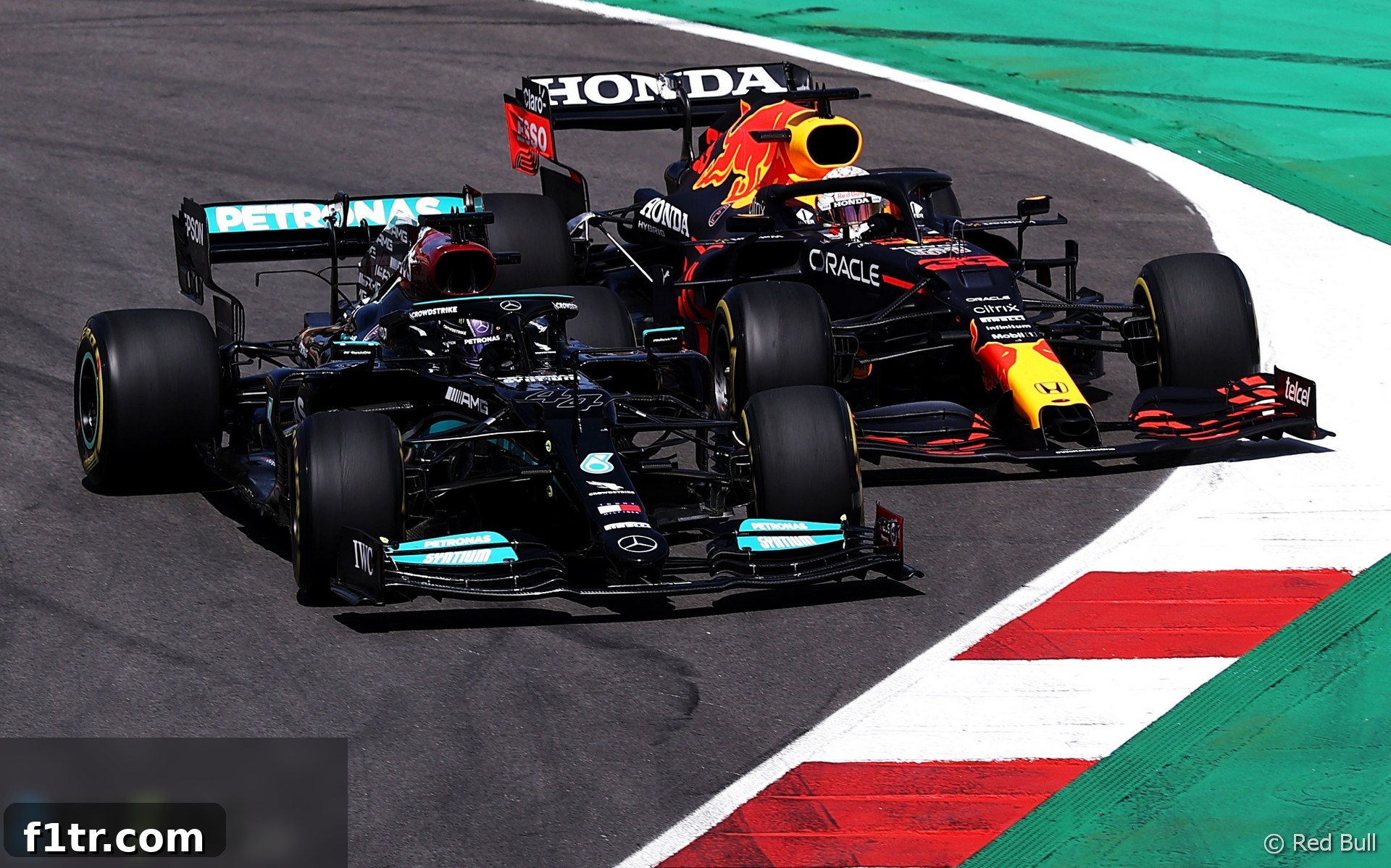
The electrifying crescendo of the Formula 1 season is upon us, and the championship battle between Lewis Hamilton and Max Verstappen promises to deliver unmissable drama. After two races where strategic power unit penalties largely kept these fierce title contenders apart on track, the motorsport world eagerly anticipates their return to wheel-to-wheel combat. All eyes now turn to the iconic Circuit of the Americas (COTA) in Austin, Texas, for the much-anticipated United States Grand Prix.
This weekend marks a crucial juncture in the championship narrative. Will we witness the gladiatorial spectacle of Hamilton versus Verstappen battling directly for supremacy, or will other factors like track conditions, evolving strategies, or even unexpected reliability issues play a decisive role? As Formula 1 lands in its vital North American market, the stage is set for a thrilling showdown that could significantly impact the destiny of the 2021 World Championship. Here’s an in-depth look at the key talking points dominating discussions as F1 prepares for a return to the Lone Star State.
Unleashing the Title Contenders: The End of Penalty Interference?
For the past two rounds, the intense rivalry between the championship protagonists has been somewhat muted by the strategic deployment of fresh engine components and their associated grid penalties. Both Max Verstappen and Lewis Hamilton have taken on new power unit elements, incurring the mandatory grid drops in an effort to secure maximum performance for the critical races ahead. While these penalties did keep them largely separated on track, the overall impact on the championship standings has been minimal, with Verstappen gaining just a solitary point lead over his rival during this period.
With these crucial penalties now absorbed and both title contenders possessing a refreshed stock of power unit parts, the anticipation is palpable for a return to uninhibited, direct competition. This scenario is undoubtedly music to the ears of Liberty Media, F1’s commercial rights holder, who are eager to showcase the sport’s dramatic appeal in the booming American market. Following the pandemic-induced cancellation of the 2020 race, the sport returns to the U.S. for the first time since 2019, hoping for an “all-thriller-no-filler” spectacle that captivates a growing fanbase.
However, F1’s intricate penalty system might paradoxically encourage teams to consider further power unit changes before the season concludes. The initial breach of the maximum allocation of power unit elements results in a hefty 10-place grid penalty. Subsequent changes, however, are met with a more lenient 5-place drop. As Red Bull team principal Christian Horner acknowledged, “A second engine penalty is only five places on the grid now so it’s not anywhere as significant as the first one.” This reduced penalty might become a tempting strategic option, especially for teams like Mercedes, which appear to suffer more pronounced performance degradation as their engines accrue mileage, increasing the incentive for a potential mid-season change.
It is important to note that the consecutive engine changes and penalties experienced by Valtteri Bottas at Monza and Sochi were primarily attributed to reliability concerns rather than strategic performance upgrades. “Reliability is going to play a key role,” Horner emphasized, highlighting the delicate balance teams must maintain. “It’s a question of making the right calls at the right time and keeping your head, keeping your nerve and doing the basics well.” The championship battle is not just about raw pace but also about flawless execution and robust engineering, making every decision, from engine changes to race strategy, potentially pivotal.
COTA’s Bumpy Road: More Undulations Than a Rodeo
The Circuit of the Americas, renowned for its flowing layout and challenging elevation changes, has unfortunately gained an additional, less desirable characteristic: significant track undulations. Since a severe flood in 2015 extensively damaged parts of its drainage infrastructure, the track operators have been locked in an annual struggle against the emergence of bumps. These surface imperfections have become a persistent concern for drivers across various motorsport categories, often leading to complaints about ride quality, car performance, and even safety.
The issue was particularly highlighted just a few weeks prior to F1’s visit, when Moto GP riders, inherently more susceptible to track undulations due to the precise setup and handling of their bikes, were vocally critical of the surface during their Grand Prix event. Their feedback often serves as a precursor to the challenges F1 teams might face, albeit F1 cars, with their sophisticated suspension systems and aerodynamic designs, react differently.
At such short notice, the options available to the track owners are limited primarily to attempting to grind down the most severe bumps. However, such measures are often temporary and may not fully resolve the underlying issues. The uneven surface has been linked to problems in previous F1 events at COTA, notably affecting Max Verstappen and Sebastian Vettel in 2019, and the Williams drivers in 2015, where aerodynamic performance and car stability were compromised. For the current title contenders, the prospect of a reliability-induced failure or performance drop due to unexpected impacts on their highly sensitive machinery is an especially troubling thought, adding another layer of complexity to an already high-stakes race.
F1’s American Dream: Is the Sport Truly Coming Home?
Since its acquisition by Liberty Media, an American company, Formula 1 has seen a consistent and significant increase in its influence and presence within the United States. This strategic pivot has transformed the sport’s engagement with the American market, moving beyond a niche interest to a rapidly expanding mainstream phenomenon. This growing American footprint is evident not only in the increasing popularity among fans but also through substantial investment and operational involvement from US entities within the sport itself.
Beyond the existing Haas F1 team – whose current Russian-themed livery belies its American ownership – new significant American capital has entered the paddock. Dorilton Capital, a US investment firm, famously acquired the legendary Williams Racing team, injecting much-needed funds and a new strategic direction. Similarly, MSP Sport Capital has made a significant investment in McLaren, further intertwining American business interests with one of F1’s most iconic brands. These investments signify a long-term commitment to F1’s growth and stability, reinforcing its presence in the global sports landscape.
Adding a touch of local flavor and cross-cultural appeal to the Austin Grand Prix weekend, McLaren Racing’s American CEO, Zak Brown, will loan his personal 1984 Chevrolet Monte Carlo NASCAR, once driven by the legendary Dale Earnhardt, for Daniel Ricciardo to demonstrate on the circuit. This gesture is designed to bridge the gap between F1 and America’s rich motorsport heritage, particularly NASCAR, appealing to a broader audience. Ricciardo, a known fan of American motorsport, expressed his excitement, stating, “He’s a big hero of mine, so to be able to drive one of his cars is going to be a surreal moment and a bit of a dream come true.” Such initiatives underscore F1’s concerted effort to connect with American fans on a deeper, more culturally resonant level.
The Prospect of New US Entries: Andretti’s Ambition and Herta’s Ascent
The momentum of American involvement in Formula 1 continues to build, with significant speculation surrounding a potential new entry from a truly iconic name in US motorsport. As previously reported, a company led by the legendary CART IndyCar champion and former F1 racer, Michael Andretti, is understood to be actively pursuing a takeover of Sauber, the outfit currently operating the Alfa Romeo F1 team. This potential deal, if finalized, would mark a historic return for the Andretti name to the Formula 1 paddock and significantly bolster the sport’s American ties. Further discussions regarding this high-profile move are widely anticipated to take place during the United States Grand Prix weekend, though an official announcement at this early stage remains unlikely.
Should the acquisition proceed, one of Andretti’s primary objectives would likely be to place his highly-rated junior driver, Colton Herta, into a Formula 1 seat. Herta, a rising star in IndyCar and a formidable talent, has consistently demonstrated his speed and racecraft. However, his immediate progression to F1 is currently hampered by the stringent FIA superlicence points system, which he does not yet fully meet. The prospect of an American-owned team featuring a promising young American driver would be a monumental development for F1’s growth in the US, potentially creating a powerful narrative that resonates deeply with local fans.
This situation raises an exciting question for the future of Formula 1: could the sport soon feature two fully American-owned teams, alongside the existing Haas F1 operation, complementing what is already set to become two US-based Grand Prix events next year? Such a scenario would unequivocally cement America’s position as a foundational market for Formula 1, further solidifying the sport’s global reach and diverse appeal. The potential for a truly homegrown F1 presence, from teams and drivers to races and investors, marks a pivotal moment in the sport’s evolution.
- Why Andretti’s latest attempt to take over an F1 team looks well-timed
Formula 1’s Expanding Horizon: Everything’s Bigger in 2023
The expansion of Formula 1’s footprint in America is not slowing down; it’s accelerating. Even before next year’s highly anticipated race at COTA, the series will further extend its reach across the United States with the thrilling addition of a second round: the new Miami Grand Prix. This new event will be hosted at a spectacular temporary circuit constructed around the Hard Rock Stadium in Miami Gardens, promising a distinctly different flavour of American motorsport excitement. The Miami Grand Prix is designed to offer a unique, high-energy urban experience, contrasting with COTA’s purpose-built track, and is poised to attract a new demographic of fans to the sport.
Crucially, the introduction of the Miami Grand Prix is not expected to jeopardize the future or standing of the established United States Grand Prix at COTA. Instead, these two distinct events are anticipated to complement each other, collectively reinforcing Formula 1’s presence and appeal across diverse regions of the U.S. This dual-race strategy underscores F1’s confidence in the American market’s capacity to support multiple high-profile events, reflecting the sport’s surging popularity.
However, this ambitious expansion, including the two US races, will contribute to a record-breaking 23-race 2022 F1 calendar. While a larger calendar offers more opportunities for fans and commercial partners, it has also become a significant cause for concern among some teams. The relentless schedule places immense logistical and human demands on their dedicated staff, raising questions about sustainability, work-life balance, and potential burnout. Teams must navigate the complexities of extended travel, increased operational costs, and the pressure of maintaining peak performance across a longer season, all while adhering to evolving budget caps. Expect these discussions surrounding the intensified demands of a burgeoning calendar to become a prominent talking point throughout the upcoming United States Grand Prix weekend, as the sport grapples with the challenges of its own success.
Engage with the United States Grand Prix!
Are you one of the lucky fans heading to Austin for this weekend’s United States Grand Prix at the Circuit of the Americas? We would love to hear about your experience! Share your thoughts, photos, and insights with our community:
- Forum: Going to the United States Grand Prix at Circuit of the Americas
As the grid prepares to light up, who do you believe will emerge as the dominant force in the United States Grand Prix? Will it be Lewis Hamilton extending his championship lead, Max Verstappen striking back, or an unexpected contender seizing the spotlight? Cast your vote and share your predictions in the comments section below.
And don’t forget to enter your predictions for this weekend’s thrilling race in our championship challenge. You have the flexibility to refine and edit your predictions right up until the start of qualifying:
- RaceFans Predictions Championship
2021 United States Grand Prix: Further Reading
- Mercedes encouraged despite ‘toughest race for a long time’ in Austin
- For the sake of the title fight, F1 must get a grip on its track limits problem
- Pit stop problems costing Ferrari “quite a lot of points” – Sainz
- Sold-out crowd of 380,000 at COTA shows F1 can add third US race – Brawn
- While the pressure’s off I can “push myself” more – Russell
Browse all 2021 United States Grand Prix articles