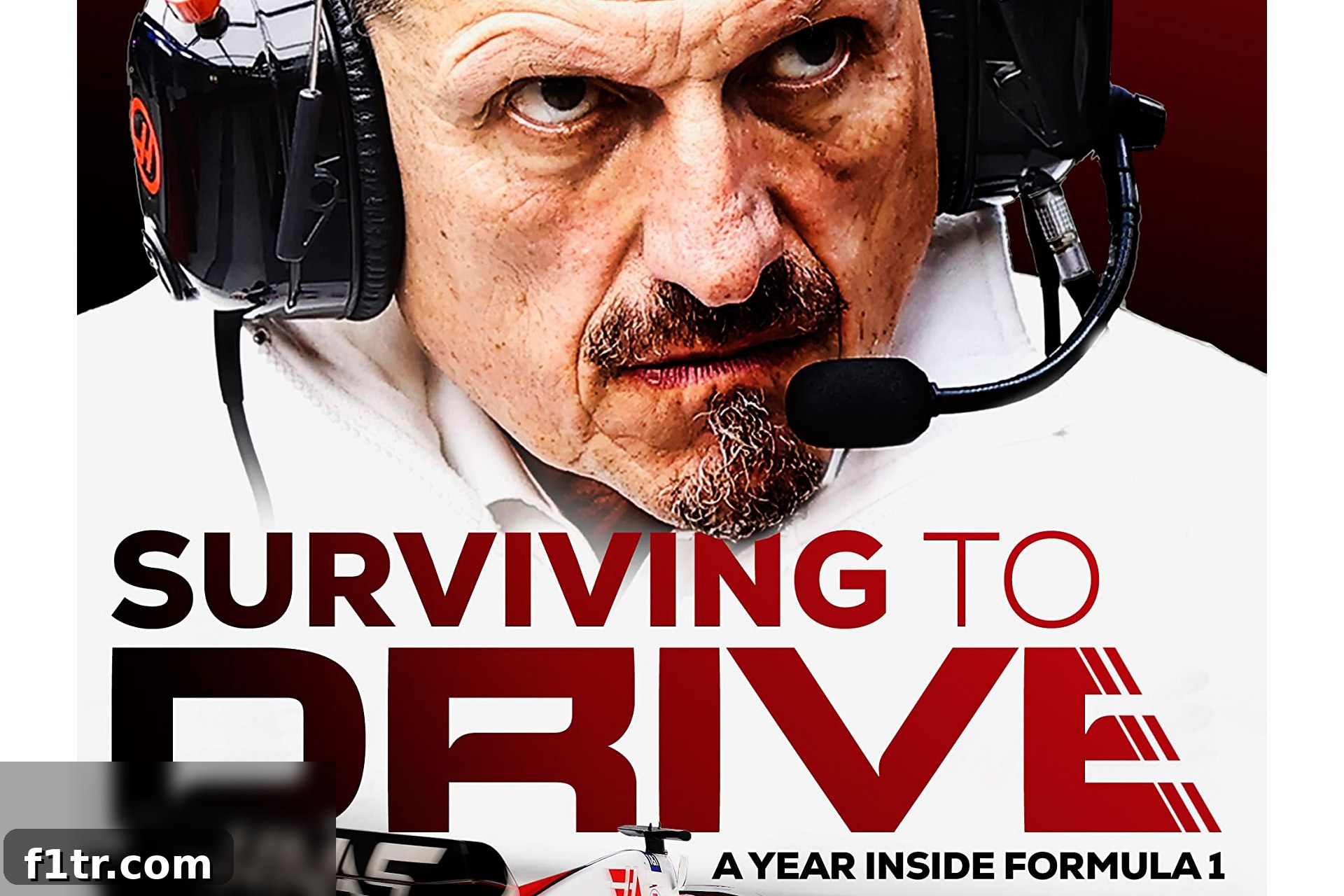
Guenther Steiner’s “Surviving to Drive”: An Unfiltered Look into the Haas F1 Team Principal’s World
In the high-octane realm of Formula 1, few figures have seen their public profile skyrocket quite as dramatically as Guenther Steiner, the charismatic and famously blunt team principal of the Haas F1 Team. His ascent to global recognition is largely attributable to the immense popularity of Netflix’s docu-series, “Drive to Survive.” While other F1 personalities, such as Daniel Ricciardo, were already well-established stars when the cameras first rolled, Steiner emerged as an unlikely breakout sensation, captivating audiences with his unfiltered commentary and often expletive-laden reactions to the rollercoaster fortunes of his team. This distinctive persona, a blend of plain-spoken honesty and raw passion, has now been distilled into his highly anticipated memoir, “Surviving to Drive.” This review delves into whether Steiner’s unique charm successfully translates from the screen to the printed page, offering readers an in-depth analysis of what this insider account delivers.
The Guenther Steiner Phenomenon: From Paddock to Pop Culture Icon
Before “Drive to Survive” premiered, Guenther Steiner was a respected but largely behind-the-scenes figure in Formula 1, primarily known within the sport for his extensive experience and leadership of the nascent Haas F1 operation. The Netflix series, however, propelled him into an entirely different echelon of public visibility. His candid interviews, marked by a thick South Tyrolean accent and a remarkable inability to self-censor, offered viewers an authentic glimpse into the pressures and frustrations of managing an F1 team. Phrases like “foksmash” and his exasperated expressions became instant memes, forging a connection with a diverse global audience, many of whom were new to Formula 1. This unexpected celebrity status created significant anticipation for “Surviving to Drive,” promising an extension of the personality fans had grown to love. The book aims to retrace the tumultuous 2022 Formula 1 season through Steiner’s eyes, interspersed with personal anecdotes and reflections on his storied career in motorsport. It’s an ambitious endeavor to capture the essence of a man whose appeal lies so heavily in his spontaneous, visual, and vocal delivery, raising questions about the efficacy of translating such a dynamic presence into a textual format.
Unpacking “Surviving to Drive”: Promises and Perceptions
“Surviving to Drive” positions itself as a direct conduit to Steiner’s thoughts and experiences, particularly focusing on the challenging 2022 F1 season. Readers expect an intimate narrative, rich with the same no-holds-barred candor that defined his “Drive to Survive” appearances. The book’s very title, a clever play on the Netflix series, sets an expectation for a continuation of that compelling, dramatic, and often humorous storytelling. Steiner recounts key races, team dynamics, strategic decisions, and the perpetual struggle for competitiveness that characterizes a smaller F1 outfit like Haas. Beyond the race-by-race commentary, the memoir promises to delve into his backstory, offering insights into the formative years and experiences that shaped the man now synonymous with gruff honesty. The intention is clearly to recreate his familiar voice, complete with his characteristic mannerisms and, notably, a heavy reliance on expletives, aiming to deliver an authentic Guenther Steiner experience directly to the reader. However, the true test lies in whether this textual rendition can sustain the charm and insight without feeling manufactured or repetitive.
A Double-Edged Sword: Steiner’s Unfiltered Voice in Print
The Profanity Predicament: Does “Fok” Work on Paper?
One of the most defining aspects of Guenther Steiner’s public persona is his prolific use of profanity, particularly his distinctive pronunciation of “fuck” as “fok.” “Surviving to Drive” leans heavily into this, with the original review noting over 300 instances of the word. While this might be seen as an attempt to maintain authenticity and deliver the “real” Steiner, its sheer volume in written form can be a significant point of contention for readers. On screen, a well-timed expletive can punctuate a moment of frustration or humor, adding to the raw appeal. In a book, however, constant repetition of profanity can become monotonous, losing its impact and potentially alienating a segment of the audience who might find it gratuitous rather than genuinely expressive. The context and delivery of spoken language often soften or justify such words in a way that plain text cannot replicate, risking a feeling of forced irreverence rather than natural emotion. For many, a book offers an opportunity for deeper reflection and nuance, which can be undermined by an overly aggressive use of language that might feel less like genuine expression and more like a performative adherence to a known characteristic.
Navigating the Narrative: Between “Banter Steiner” and Blandness
Beyond the linguistic choices, the overall narrative flow of “Surviving to Drive” struggles to maintain a consistent tone. There are passages where the attempt to channel “Banter Steiner” – the cheeky, often sarcastic, and always entertaining persona – feels strained and inauthentic. What comes across as natural wit on television can, in written prose, quickly devolve into a repetitive and grating style. This perceived artificiality is often juxtaposed with sections that read like thinly disguised press releases or official team statements, devoid of the unique perspective and critical insight one would expect from an active team principal’s memoir. This inconsistency creates a jarring experience for the reader, oscillating between a forced attempt at humor and dry, procedural explanations. The memoir promises an insider’s view, but often delivers a rehashed public narrative, leaving readers yearning for the genuine, unvarnished thoughts that “Drive to Survive” led them to expect. The balance between maintaining an entertaining persona and offering substantial content is a delicate one, and in “Surviving to Drive,” it frequently falters.
The Echo Chamber of Repetition: Missed Opportunities for Insight
A significant criticism of “Surviving to Drive” is its tendency towards repetition, not only in its self-references but also in its superficial recounting of the 2022 season. Many race summaries boil down to a familiar refrain of bad luck, unfortunate incidents, or external factors hindering the Haas team’s performance. While these factors are undoubtedly part of motorsport, the book often misses the opportunity to delve deeper into the strategic implications, the internal team discussions, or the emotional toll of such outcomes. Similarly, mentions of the “ongoing silly season” – the period of driver transfers and contract negotiations – appear with close succession, highlighting a lack of narrative development or fresh perspectives on a topic that is inherently dynamic and full of potential for revealing anecdotes. This repetitiveness creates a sense of stagnation, where valuable page space is consumed by reiterating points without adding new layers of understanding or analytical depth. For F1 enthusiasts seeking a genuine behind-the-scenes look, this lack of novel insight into the intricate workings of a Formula 1 team, particularly during a challenging season, represents a significant missed opportunity.
Glimmers of Gold: The Book’s Unexpected Strengths
Unearthing the Past: Engaging Early Career Anecdotes
Despite its shortcomings, “Surviving to Drive” truly shines in its scattered anecdotes from Guenther Steiner’s early career. These passages offer a refreshing departure from the 2022 season recount and the “Banter Steiner” persona, revealing a more nuanced and engaging storyteller. Perhaps because the author presumes readers are less familiar with these formative experiences, or simply because they are genuinely compelling, these sections are the most colorful and entertaining. They provide a valuable context to Steiner’s journey through various motorsport categories, from his early days in rallying to his progression through different F1 roles before founding Haas. These tales offer insights into the foundational principles that shaped his leadership style, his unwavering determination, and his pragmatic approach to problem-solving. They give readers a rare glimpse into the grind and passion required to climb the ranks of professional motorsport, detailing the often-overlooked struggles and triumphs that precede F1 stardom. These historical vignettes are not only informative but also genuinely humorous and heartfelt, making them the undeniable highlights of the book and offering a clearer window into the man behind the memes.
The Unvarnished Truth: A Team Principal Without Filters
Another admirable quality of “Surviving to Drive” is Steiner’s unwavering commitment to frankness. True to his reputation, he is unwilling to pull punches, offering candid assessments of situations and individuals within the F1 paddock. Figures like Andreas Seidl, the former McLaren Team Principal, receive largely good-humored banter, suggesting a level of mutual respect despite the competitive environment. However, not everyone escapes with such levity; Ralf Schumacher, for instance, comes under Steiner’s scrutiny, albeit without the same degree of humor and, notably, with his name misspelled in the original text. This directness is a rare commodity in the often carefully curated world of Formula 1, where team principals typically adhere to strict PR guidelines. Steiner’s willingness to name names and offer his unvarnished opinions provides a refreshing contrast to the usual corporate speak. This aspect of the book truly allows his personality to cut through, demonstrating a genuine conviction in his views and an admirable lack of concern for political correctness, thereby delivering on the promise of an authentic “Guenther Steiner” experience in these specific moments.
A Unique Perspective: An Active Team Principal’s Literary Venture
One of the most significant aspects of “Surviving to Drive” is its very existence as a memoir penned by an active Formula 1 team principal. In a sport where confidentiality, competitive advantage, and carefully managed public images are paramount, it is exceedingly rare for someone in such a critical, front-line role to put pen to paper while still actively competing. Most F1 autobiographies or insider accounts are typically released by individuals long after their direct involvement in the sport has concluded, allowing for a degree of retrospective reflection without the immediate pressures of current competition. Steiner’s decision to write this book, therefore, makes it a unique case study in motorsport literature. It offers a potentially unprecedented insight into the contemporary challenges, decision-making processes, and internal dynamics of a modern F1 team, observed in real-time. This bold move highlights Steiner’s unconventional approach and his willingness to break established norms. While the content itself may have its limitations, the sheer act of publishing such a book while still at the helm of Haas F1 makes “Surviving to Drive” an inherently interesting artifact for anyone fascinated by the inner workings of Formula 1 and the personalities that drive it forward.
Final Verdict: Is “Surviving to Drive” Worth the Read?
Guenther Steiner’s “Surviving to Drive” embarks on an ambitious journey to translate a beloved screen persona into a compelling literary work. While it succeeds in offering intermittent flashes of Steiner’s trademark wit and candor, particularly in the engaging anecdotes from his early career, the book ultimately struggles with consistency and depth. The relentless use of profanity, while authentic to his character, can become tiresome on paper, and the narrative often feels forced, oscillating between contrived “Banter Steiner” moments and bland, rehashed explanations of the 2022 season. Readers hoping for groundbreaking insights into the inner workings of the Haas F1 team or profound strategic analyses will likely find themselves wanting, as much of the content reiterates publicly known information without adding significant new perspectives. The book’s unique status as a memoir from an active F1 team principal makes it an interesting curio, offering a rare glimpse behind the curtain. However, this novelty alone is not enough to offset its narrative shortcomings, repetitive nature, and a general lack of fresh, compelling revelations. For die-hard fans of Guenther Steiner and “Drive to Survive,” there might be enough charm to warrant a casual read, but for those seeking a truly insightful or meticulously crafted motorsport biography, “Surviving to Drive” falls short of a strong recommendation.
Book Information
Author: Guenther Steiner
Publisher: Bantam Press
Published: 2023
Pages: 282
Price: £20.00
ISBN: 9781787636279
More Motorsport Book Reviews
- Next new F1 game to arrive in 2027, EA to offer 2026 season as paid DLC
- “F1 Insider: Notes from the Pit Lane” – Ted Kravitz’s new F1 book reviewed
- “Rennsport”: The RaceFans review
- “Grid to Glory: 75 Milestone F1 Moments” – Alex Jacques’ new book reviewed
- “Formula 3000: Where Legends Earned Their Stripes” reviewed
Browse All Reviews